What is a trichologist and when should you see one?

Why I'm telling you this
If your hair is falling out, you have less density than before, or you notice some problem with your scalp, you have probably come across a word while searching for information online: trichologist.
And the next question immediately arises: What is a trichologist?
The answer is simple, but it deserves an important clarification. Trichology is the field that studies hair, the hair follicle, the scalp and their diseases.
In medicine, these diseases fall fundamentally within the scope of Dermatology. In Spain, the Spanish Academy of Dermatology and Venereology even has a Spanish Group of Trichology and Onychology made up of dermatologists specialised in hair diseases.
That is why, when we talk about a dermatologist specialised in hair, we are talking about a physician who does not simply observe how much hair is falling out.
Their work consists of discovering why it is falling out.
And that difference is fundamental.
Trichologist — what is it exactly?
The expression trichologist — what is it — appears frequently among patients' searches.
Trichology studies the different problems related to hair and the scalp: hair loss, loss of density, follicle disorders, inflammatory diseases and different forms of alopecia.
The AEDV defines trichology as the area dedicated to the diagnosis and treatment of alopecias and hair problems.
Therefore, it is not simply a matter of trying to make hair 'grow more'.
It is first and foremost a matter of establishing a diagnosis.
Why is diagnosis so important?
Because hair loss is not a disease. It is a symptom.
Two patients may come in saying exactly the same thing: 'My hair is falling out a lot.' And have completely different conditions.
One may present with telogen effluvium.
Another with androgenetic alopecia.
Another with alopecia areata.
Another may have an inflammatory disease of the scalp.
And another a scarring alopecia capable of permanently destroying the follicles.
That is why there is no single treatment that works for every patient with hair loss. The American Academy of Dermatology points out precisely that effective treatment begins by first identifying the cause of the hair loss.
What problems does a trichology consultation treat?
There are many.
Among the most common reasons we see are: androgenetic alopecia, both male and female; telogen effluvium, when significant diffuse shedding appears; alopecia areata, frequently characterised by hairless patches; scarring alopecias, such as frontal fibrosing alopecia; inflammatory conditions of the scalp; certain hair shaft disorders; and hair loss related to diseases, medications, nutritional deficiencies or specific physiological events.
The AEDV includes among the conditions studied in trichology precisely: androgenetic alopecia, effluviums, alopecia areata, frontal fibrosing alopecia and other scarring alopecias.
When should you consult a trichologist?
You do not need to wait until you have a completely hairless area.
In fact, in certain conditions, waiting too long can reduce our therapeutic options.
It is worth having things assessed when you notice, for example: that you are losing far more hair than usual; that the shedding has persisted for months; that your density is progressively decreasing; that your hair parting is widening; that your hairline is gradually receding; that one or more hairless patches have appeared; that you are losing hair from your eyebrows or beard; or that there is itching, pain, scaling or inflammation of the scalp.
We must also pay particular attention to rapid hair loss or to signs that may suggest a scarring alopecia.
What happens during a trichology consultation?
The consultation begins with something far less technological than some people might imagine: talking with the patient.
When did the hair loss begin? Was it gradual or sudden? Is there a loss of density or mainly shedding? Has any illness occurred recently? Has there been fever, surgery, pregnancy, childbirth or significant weight loss? What medications are you taking? Is there a family history? Is there itching, pain or inflammation?
The clinical history can provide an enormous amount of information.
Next, we examine the hair and the scalp.
The dermatological evaluation of hair loss starts precisely with the history, examination of the scalp and, when indicated, additional tests.
What is trichoscopy?
One particularly important tool is trichoscopy.
We can consider it an enhanced examination of the hair and scalp using dermoscopy.
It allows us to study characteristics that may go unnoticed with the naked eye.
We can assess differences in hair shaft diameter, follicle characteristics, certain inflammatory signs and patterns compatible with different types of alopecia.
It does not replace the clinical history. It complements it.
Is a blood test always necessary?
No.
And this point is important because there is a widespread idea that any hair loss automatically calls for an enormous battery of tests.
That is not how it works.
Depending on the clinical history, we may need to investigate, for example, a complete blood count, iron metabolism, thyroid function, or other parameters.
In certain women, studying hormonal aspects may be indicated.
But tests are selected according to what we suspect.
The AAD equally notes that blood tests or a biopsy may be necessary when certain diseases, deficiencies, hormonal imbalances or infections are suspected; they are not necessarily mandatory for every patient.
And what about a scalp biopsy?
It is not usually necessary either.
But it can be extremely useful when there is diagnostic uncertainty, especially when certain scarring alopecias are suspected.
In these diseases, inflammation develops around the follicle and can ultimately destroy it.
That is why early diagnosis is even more important here.
Does a trichologist only treat hair loss?
No.
The trichology consultation also covers diseases of the scalp and the hair follicle.
Hair does not exist independently of the skin.
Psoriasis, dermatitis, infections and other dermatological conditions can affect the scalp and, in certain circumstances, also alter the hair.
This is precisely one of the reasons why medical trichology is closely integrated within dermatology.
Trichologist or dermatologist?
This question deserves a clear explanation.
The word trichologist describes a professional dedicated specifically to the study of hair.
But if a possible hair condition is present, what also matters is knowing what medical training the person making the diagnosis has.
In Spain, the AEDV states that trichology is part of dermatology and that the dermatologist is the medical specialist responsible for hair diseases.
For this reason, when facing hair loss that requires medical diagnosis and treatment, the appropriate reference is a dermatologist with specific training in trichology.
What if I want to have a hair transplant?
Even before considering a transplant, we need to know what type of alopecia we have.
Not all types of alopecia are suitable for transplantation.
Furthermore, in androgenetic alopecia, the hair that has not been transplanted may continue to miniaturise over the years.
That is why an appropriate hair strategy does not simply consist of counting how many follicles we can transplant.
First, we need to establish the diagnosis, understand the likely progression, and decide how to preserve the existing hair.
The AEDV itself recommends an assessment by Dermatology and Trichology before a transplant, in order to diagnose the type of alopecia and establish the appropriate treatment.
When should you not wait?
There are certain situations in which it is particularly worthwhile to seek advice soon.
If patches appear rapidly.
If there is inflammation.
If you have pain or a burning sensation on the scalp.
If you start to lose your eyebrows.
If the frontal hairline recedes in an unusual way.
Or if you notice a progressive decrease in density that continues for months or years.
It does not necessarily mean that there is a serious illness.
It means that the sooner we know what is happening, the sooner we can decide whether treatment is needed.
What I want you to remember
If you are looking up what a trichologist is, take this idea with you: trichology is not simply about making hair grow.
It is about understanding why a hair is changing, miniaturising, or disappearing.
Because behind the same phrase — 'my hair is falling out' — we can find completely different conditions.
And each one may require a different treatment.
That is why, before buying vitamins, shampoos, ampoules, or starting treatments on our own, there is a far more important question: What is the diagnosis?
In trichology, as in the rest of medicine, treatment begins there.
You may also like · Hair loss
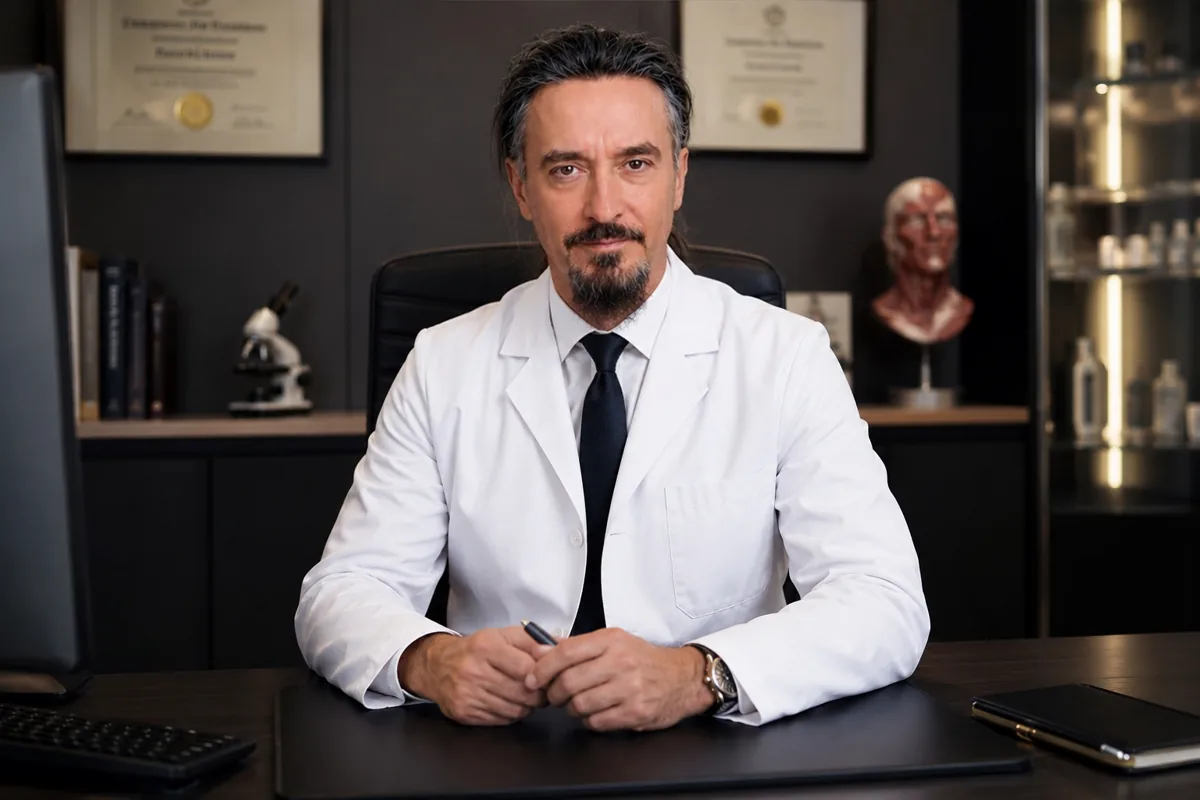
Doctor Florian A. Vallecillo Cabrera
The doctor explains
Informational content, written and reviewed by Doctor Florian A. Vallecillo Cabrera. It does not replace an in-person consultation or an individual diagnosis.
If you are experiencing hair loss and would like a personalised assessment, you can visit our trichology service in Marbella at Clínica Valorian.


