
Stress-related hair loss: scalp TGF-β/BMP pathways and the emerging role of topical nutraceutical-peptide combinations
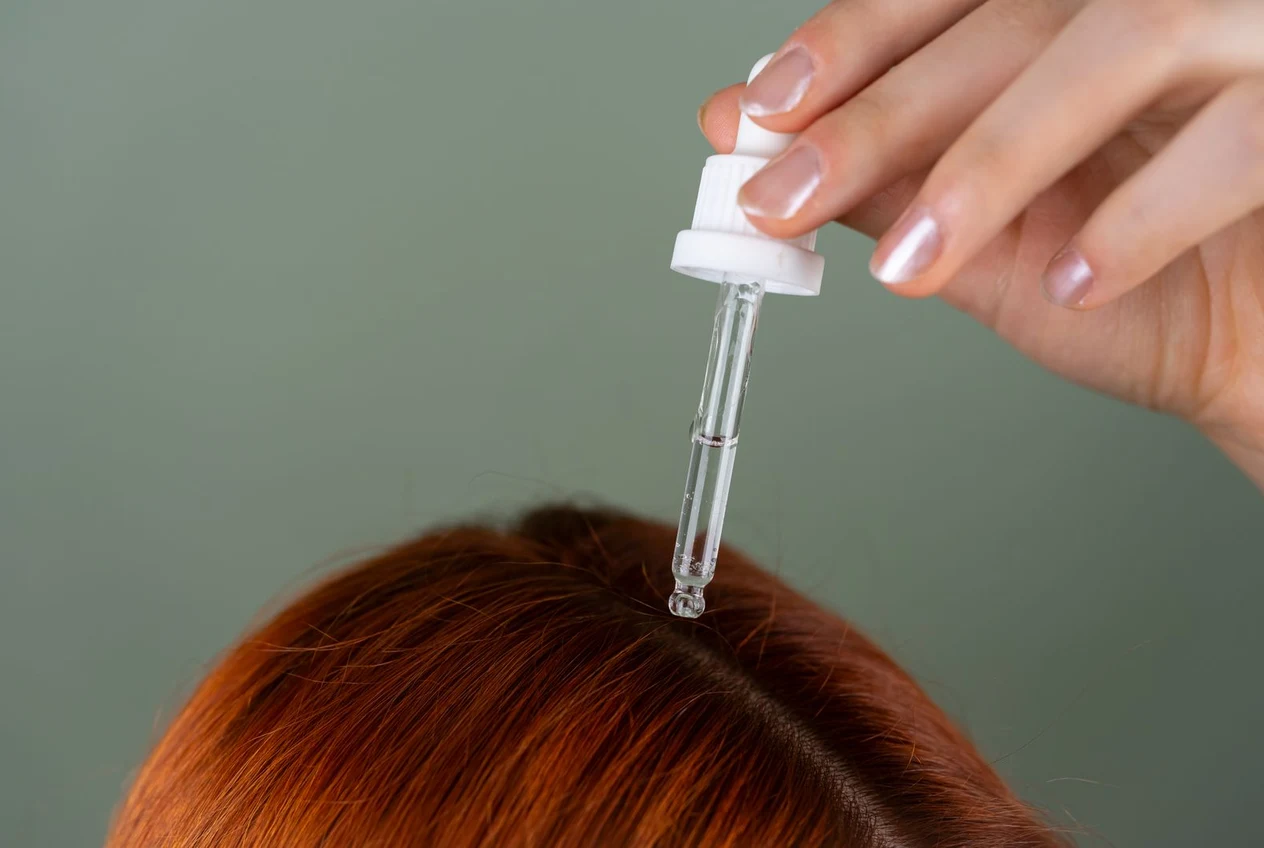
Hair shedding linked to stress is often described as telogen effluvium, but stress may also unmask or worsen female pattern hair loss or coexist with alopecia areata. A 2026 study of topical EGCG, biotin, and Pal-GHK suggests modulation of scalp TGF-β/BMP signaling in stress-induced alopecia, offering biologic plausibility but not yet broad clinical proof [1].
Introduction
“Stress-related hair loss” is a useful lay description, but it is not a precise clinical diagnosis. In many patients it refers to diffuse shedding consistent with telogen effluvium. In others, stress is better understood as a trigger that unmasks or worsens underlying female pattern hair loss, coexists with alopecia areata, or accompanies systemic illness, weight change, medication exposure, endocrine shifts, or nutritional deficiency. As a result, treating all shedding after stress as one entity oversimplifies a heterogeneous problem.
The most notable recent mechanistic update is a 2026 study evaluating a topical composition containing epigallocatechin gallate (EGCG), biotin, and the peptide Pal-GHK. The authors propose that this combination modulates TGF-β and BMP pathways in the scalp microenvironment to treat stress-induced alopecia [1]. The key contribution is biologic plausibility: it offers a local signaling framework for how stress might influence follicle cycling. Even so, mechanistic plausibility is not the same as broad, durable, patient-centered clinical efficacy [1].
How stress may affect the hair cycle
Hair follicles cycle through growth (anagen), regression (catagen), and rest (telogen). Acute or sustained stressors may shift a larger proportion of follicles out of anagen and into premature catagen or telogen. Visible shedding usually appears with a delay, often weeks to months after the inciting event. That lag is one reason patients frequently struggle to connect hair loss with a prior illness, surgery, bereavement, postpartum state, severe dieting, or prolonged psychological stress.
The 2026 paper is important because it frames this phenomenon in terms of local scalp signaling rather than only general stress physiology [1]. Broadly speaking, TGF-β is associated with inhibitory and catagen-promoting signals, whereas the BMP family helps regulate the follicular stem-cell niche and the balance between quiescence and activation [1]. If that balance is altered, earlier entry into resting phase or slower return to growth becomes biologically plausible. That matters conceptually, but it still does not prove that one topical formula can reverse the many real-world causes of diffuse shedding.
What the EGCG-biotin-Pal-GHK study actually adds
The EGCG-biotin-Pal-GHK study proposes that this combination modulates TGF-β/BMP pathways in the scalp in stress-induced alopecia [1]. That makes it more interesting than a purely cosmetic “hair tonic” narrative, because it targets the follicular microenvironment. Still, its implications need careful framing.
First, the article’s major value is mechanistic and translational [1]. Second, “stress-induced alopecia” is not always a uniform clinical entity in practice; it may include classic telogen effluvium, early patterned hair loss, or mixed presentations. Third, changes in signaling pathways or biomarkers do not automatically translate into clinically meaningful improvements in shedding, density, caliber, or long-term outcomes compared with established treatments for specific diagnoses.
Accordingly, this topical combination is best viewed as emerging and hypothesis-supporting rather than definitively proven for all forms of stress-associated hair loss [1]. If it has a place in practice, that role is currently adjunctive and diagnosis-dependent.
Stress does not always mean telogen effluvium
Before choosing therapy, clinicians need to identify the pattern of hair loss. Telogen effluvium typically presents with increased shedding and reduced global density without the characteristic miniaturization pattern of androgenetic loss. By contrast, female pattern hair loss may become more noticeable after stress because the patient newly recognizes loss of volume that had been slowly developing.
A 2026 24-month unicenter retrospective comparative study evaluated spironolactone versus bicalutamide for female pattern hair loss, focusing on effectiveness and safety [2]. Although this study is not about stress-related shedding itself, it is highly relevant clinically: if stress has unmasked female pattern hair loss, management should follow evidence specific to that disorder rather than remain anchored to a nonspecific stress explanation [2].
Alopecia areata is another essential differential diagnosis. Patients may associate it with stress, but a simple causal narrative is inadequate. Recent work emphasizes the disease’s immunologic and genetic complexity; a 2026 article highlighted that genetic context shapes interpretation of AIRE and Notch4 in alopecia areata [8]. In addition, a 2026 study examined whether benefits of switching JAK inhibitors in alopecia areata are independent of cumulative treatment exposure, underscoring that this therapeutic space operates very differently from telogen effluvium or cosmeceutical topical care [6].
Trichoscopy and population-specific normal findings matter
Trichoscopy can refine diagnosis, but accurate interpretation depends on understanding normal variation. A 2026 study described normal trichoscopic features and hair shaft parameters in healthy women of African descent, emphasizing that baseline findings differ across populations and should not be misclassified as disease [4]. This is especially important when evaluating diffuse shedding in diverse patient groups.
Likewise, causal attributions to recent medications should be made carefully. A 2026 response regarding alopecia after glucagon-like peptide-1 agonist therapy emphasized the limitations of observational data and the need to consider confounding factors such as weight loss and comorbidity [7]. In everyday practice, that supports a broader principle: stress may be part of the story, but it is rarely the only variable worth investigating.
Practical management
Management begins with identifying potentially correctable triggers and contributors. That may include recent illness, major weight loss, medication changes, or broader medical issues. Next comes pattern recognition: is this telogen effluvium, female pattern hair loss, alopecia areata, or something else? That distinction guides treatment and prognosis.
Within this framework, EGCG-biotin-Pal-GHK may be considered a promising adjunct if future clinical studies confirm benefit in well-defined patient subsets [1]. At present, however, it should be described as emerging rather than established.
Some patients with persistent density loss consider hair restoration procedures. A 2026 comprehensive review on safety in hair restoration procedures emphasized patient selection, careful assessment of alopecia type, and realistic counseling about risk [3]. This matters because active diffuse shedding or an unresolved diagnosis is not managed the same way as stable patterned loss.
Psychosocial burden and supportive options
Hair loss can worsen anxiety, self-image, and social functioning, regardless of whether stress was a trigger or a consequence. Temporary cosmetic support may therefore be clinically meaningful. A 2026 narrative review of cranial prosthesis policies for medical hair loss showed major variation in coverage and access across systems and countries, highlighting that wigs and related supports are part of comprehensive care for some patients [5].
Conclusion
Stress-related hair loss is not one diagnosis but a clinical starting point. The 2026 EGCG-biotin-Pal-GHK study adds an appealing biologic hypothesis centered on scalp TGF-β/BMP modulation [1]. Yet evidence-based care still depends on distinguishing telogen effluvium from female pattern hair loss and alopecia areata, using trichoscopy with awareness of normal population variation, and avoiding simplistic causal assumptions about stress or medications [2][4][6][7][8]. Nutraceutical-peptide topical combinations are therefore best seen as an emerging area whose real value will depend on stronger clinical validation and careful integration into diagnosis-led care [1].
References
[1] Authors not listed. EGCG-Biotin-Pal-GHK Composition Modulates TGF-β and BMP Pathways in Scalp Microenvironment for Treating Stress-Induced Alopecia. European journal of pharmacology (2026). https://pubmed.ncbi.nlm.nih.gov/42575238/ [2] Authors not listed. Spironolactone versus Bicalutamide for Female Pattern Hair Loss: A 24-Month Unicenter Retrospective Comparative Study of Effectiveness and Safety. Dermatology and therapy (2026). https://pubmed.ncbi.nlm.nih.gov/42565959/ [3] Authors not listed. Safety Considerations in Hair Restoration Procedures: A Comprehensive Review. The Journal of craniofacial surgery (2026). https://pubmed.ncbi.nlm.nih.gov/42594307/ [4] Authors not listed. Normal trichoscopic features and hair shaft parameters in healthy women of African descent. Journal of the American Academy of Dermatology (2026). https://pubmed.ncbi.nlm.nih.gov/42586273/ [5] Anaeme A, Lu J, Mann C. Global landscape of cranial prosthesis policies for medical hair loss: a narrative review. Frontiers in public health (2026). https://pubmed.ncbi.nlm.nih.gov/42529207/ [6] Authors not listed. Are the Benefits of JAK Inhibitor Switching in Alopecia Areata Independent of Cumulative Treatment Exposure? Journal of the American Academy of Dermatology (2026). https://pubmed.ncbi.nlm.nih.gov/42562101/ [7] Authors not listed. Response to Jean et al's "Alopecia after glucagon-like peptide-1 agonist therapy: A TriNetX Database active comparator retrospective cohort study". Journal of the American Academy of Dermatology (2026). https://pubmed.ncbi.nlm.nih.gov/42637046/ [8] Authors not listed. Genetic context shapes interpretation of AIRE and Notch4 in alopecia areata. JID innovations : skin science from molecules to population health (2026). https://pubmed.ncbi.nlm.nih.gov/42633099/
References
- EGCG-Biotin-Pal-GHK Composition Modulates TGF-β and BMP Pathways in Scalp Microenvironment for Treating Stress-Induced Alopecia.Source
- Spironolactone versus Bicalutamide for Female Pattern Hair Loss: A 24-Month Unicenter Retrospective Comparative Study of Effectiveness and Safety.Source
- Safety Considerations in Hair Restoration Procedures: A Comprehensive Review.Source
- Normal trichoscopic features and hair shaft parameters in healthy women of African descent.Source
- Global landscape of cranial prosthesis policies for medical hair loss: a narrative review.Source
- Are the Benefits of JAK Inhibitor Switching in Alopecia Areata Independent of Cumulative Treatment Exposure?Source
- Response to Jean et al's "Alopecia after glucagon-like peptide-1 agonist therapy: A TriNetX Database active comparator retrospective cohort study".Source
- Genetic context shapes interpretation of AIRE and Notch4 in alopecia areata.Source