Emergencies in aesthetic medicine: what happens when something goes wrong?
Video in Spanish · subtitles available
What happens if a medical emergency arises during an aesthetic treatment? In this video, I explain how to recognise syncope, anaphylaxis, cardiac arrest, vascular occlusion, visual loss, and local anaesthetic toxicity — and why safety depends on training and team preparedness.
An aesthetic medicine treatment is generally safe when it is properly indicated and performed, but risk never disappears entirely. In this video I review how to recognise and respond to the main emergencies: vasovagal syncope — never assuming that every loss of consciousness is a simple faint —, anaphylaxis, whose first-line treatment is intramuscular adrenaline, and cardiac arrest, which requires activating emergency services, starting chest compressions, and using the defibrillator as soon as it is available.
I also explain the complications specific to fillers: vascular occlusion caused by hyaluronic acid, in which hyaluronidase may be used within a professional protocol, and sudden visual loss, an emergency that requires urgent ophthalmological assessment. And systemic toxicity from local anaesthetics, for which a specific rescue treatment exists.
Safety depends on training, correct indication, and team preparedness: emergency equipment, protocols, and regular practice. Before choosing a treatment, ask who will be performing it, whether they are a legally qualified physician, and whether the centre is properly authorised.
Related article
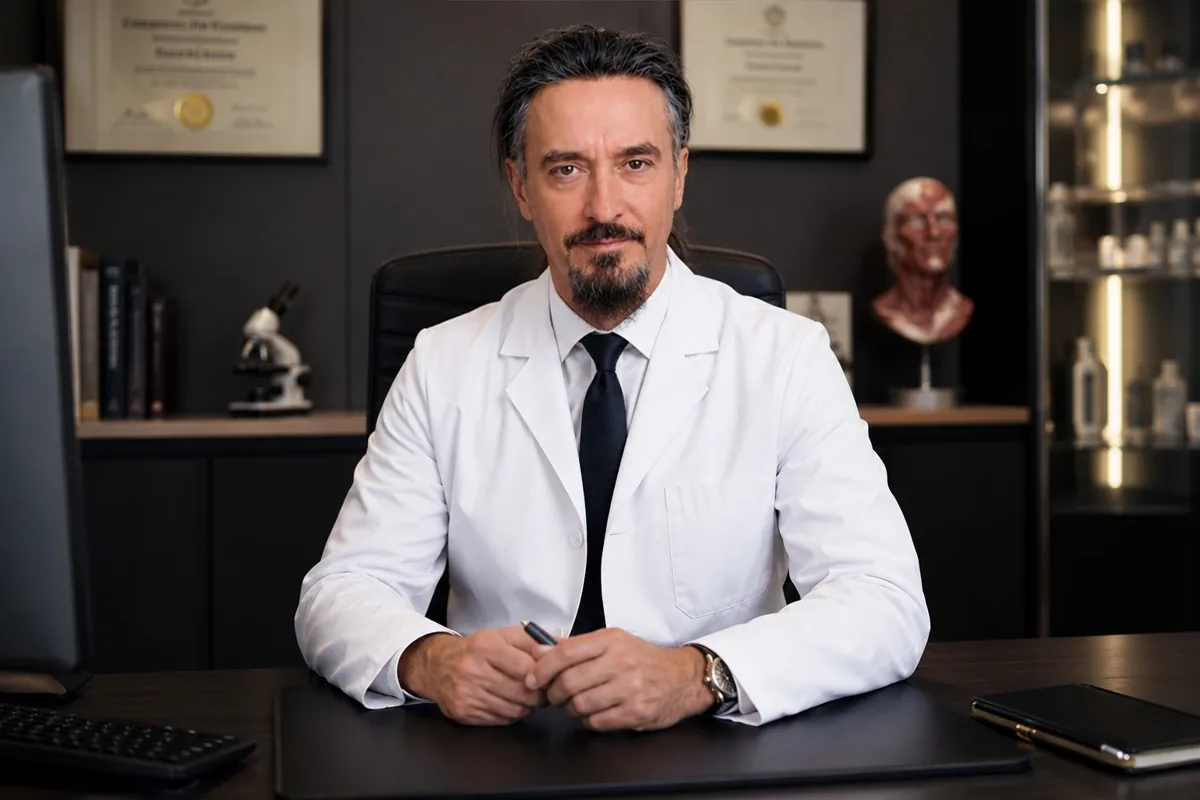
Doctor Florian A. Vallecillo Cabrera
The doctor on video
Informational content by Doctor Florian A. Vallecillo Cabrera. It does not replace an in-person consultation or an individual diagnosis.