
Acne: when does it stop being "normal" and when should you see a dermatologist?

Why I'm telling you this
Almost all of us have had a spot at some point. Especially during adolescence. That is why there is a tendency to think: "It's acne, it will go away on its own." And that is often true. But not always.
Because there is an important difference between having the occasional breakout and developing acne that is causing persistent inflammation, nodules, blemishes, or scars.
And this is where a fundamental question arises: when should we stop waiting and see a dermatologist?
The most important answer is this: before the acne leaves permanent scars. The risk of scarring increases the more severe and prolonged the acne is.
What is acne, really?
Acné vulgar is an inflammatory disease of the pilosebaceous unit. It is not simply a matter of having dirty skin.
Several mechanisms are involved: increased sebo production, altered follicular queratinización, proliferation of Cutibacterium acnes, and inflammation.
Depending on which mechanism predominates and on the depth of the inflammation, we may observe very different lesions.
Comedones: blackheads and whiteheads
Comedones are non-inflammatory lesions.
The so-called blackhead is an open comedón. The whitehead is a closed comedón.
At this stage, the acné may be relatively mild.
But even here, if there are many lesions or they persist for months, it may be worthwhile to begin appropriate treatment before the disease progresses.
Pápulas and pústulas
When inflammation appears, we see red, raised lesions.
Pápulas contain no visible pus. Pústulas do.
A small number may be part of mild acné.
But when they appear continuously, affect several areas of the face, or begin to leave acné marks, it is already worth considering a medical strategy.
Nódulos and quistes: here we should not wait
When deep, painful, hard lesions appear, we speak of acné nodular or nodulo-quístico forms.
These lesions develop more deeply in the skin and carry a much greater risk of leaving permanent acne scars.
The AAD recommends dermatological assessment in these cases precisely because early treatment can reduce the risk of scarring.
NICE also recommends specialist referral in nodulo-cystic or conglobata acne.
So, when should you seek a consultation?
I would use a few simple signals.
1. When acne starts to leave scars
This is probably the most important reason.
A red or brown mark may fade over time. A deep atrophic scar is a different matter entirely.
When inflammation damages deeper skin structures, we can develop permanent scars.
That is why I do not recommend waiting until you have many scars before starting a serious treatment.
Treating active acne is also preventing future scars.
NICE recommends considering specialist referral when acne is causing scarring or persistent pigmentary changes.
2. When deep or painful nodules are present
A superficial spot and a deep nodule do not carry the same risk.
If large, painful, inflammatory, or cystic lesions appear: seek a consultation sooner rather than later.
There is no need to wait months trying cosmetics.
3. When you have been trying to treat it for months and it is not improving
Acne treatments need time. We cannot evaluate a medical strategy after five days.
NICE notes that positive effects may take approximately 6–8 weeks to become evident, and uses courses of around 12 weeks to assess many initial strategies.
But if there is no improvement after correctly used treatments, we need to reconsider the diagnosis and the plan.
Continually switching products every two weeks can prevent any treatment from having time to work.
4. When acne affects your life
Acne is not merely a cosmetic condition.
It can have a significant impact on: self-esteem, social relationships, school, work, and psychological wellbeing.
And this can occur even when medically we classify the acne as 'moderate'.
NICE guidelines recommend taking into account the psychological impact of any degree of acne and considering specialist care when persistent distress is present.
We do not need to wait for acne to be physically severe in order to recognise that it is significantly affecting a person.
5. When acne appears in adulthood
Adult acne is common.
It may persist from adolescence or appear for the first time later in life.
In women, there may be a characteristic distribution along the jawline and chin, although the pattern alone does not diagnose a hormonal disorder.
Here it is worth evaluating: age, menstrual cycle, medication, cosmetic products, signs of hiperandrogenismo, and other possible contributing factors.
Is all adult acne "hormonal acne"?
No.
The term hormonal acne is used very frequently, especially on social media.
But not every jawline breakout means there is an underlying hormonal disorder.
In certain women, if additional signs are also present — irregular periods, hirsutism, androgenetic alopecia, weight gain, or other indicators — we may consider a targeted workup.
But ordering a full hormonal panel for every adult with acne does not make sense either.
6. When marks appear that do not fade
After a breakout, the following may remain: red marks, brown marks, or scars.
Acne marks are not necessarily scars.
Hiperpigmentación postinflamatoria may gradually lighten over time.
But if we continue to produce new inflammatory breakouts, we continue creating new marks.
That is why, once again: we first control the active acne. Then we treat the consequences.
What treatments are available?
Acne treatment depends on severity, lesion type, and the individual characteristics of the patient.
There is no single product that works for everyone.
Topical retinoids
Topical retinoids are one of the fundamental tools.
They help normalise the queratinización of the folículo and are especially useful for comedones, as well as forming part of strategies for inflammatory acné.
They require consistency. And at the start they can cause irritation if not introduced correctly.
Benzoyl peroxide
Peróxido de benzoilo has activity against Cutibacterium acnes and can be used alone or combined with other treatments.
It also has an important advantage: it does not generate antibiotic resistance in the same way that antibiotics do.
NICE includes combinations with peróxido de benzoilo and retinoides tópicos among the first-line options.
Antibiotics
Antibiotics can be useful in certain inflammatory acnés. But we must use them correctly.
They should not become: "I take an antibiotic for months every time I get acné."
Current recommendations advise against monoterapia antibiótica and emphasise the importance of limiting their use and combining them appropriately to reduce resistencia antimicrobiana.
And what about isotretinoína?
Isotretinoína is one of the most effective treatments we have for certain types of acné.
It may be indicated especially in severe, nodulo-quísticas, treatment-resistant forms or those with a significant risk of cicatrices.
However, it is a systemic medication that requires: appropriate patient selection, patient information, monitoring, and strict measures related to pregnancy in people of reproductive capacity.
It is not a cosmetic treatment. It is a highly effective medical medication when there is a correct indication.
Does diet cause acne?
The relationship between diet and acne is more complex than many social media platforms would have us believe.
We cannot simply say: 'chocolate causes acne.' Nor can we recommend extremely restrictive diets to every patient.
NICE considers that there is currently insufficient evidence to recommend a specific diet as a treatment for acne.
This does not mean that nutrition and metabolism cannot influence certain patients.
It means that there is no universal anti-acne diet validated for everyone.
Should I wash my face more often?
No.
Acne does not appear because the skin is dirty.
Washing the skin aggressively several times a day can disrupt the skin barrier and increase irritation.
A gentle cleanse is usually sufficient.
Continuously exfoliating does not magically 'unclog' all pores either. It can worsen inflammation.
Should you pop your spots?
It is not advisable.
Manipulating an inflamed lesion can increase: inflammation, risk of infection, hyperpigmentation, and scarring.
Especially with deep lesions, attempting to drain them manually can worsen the damage.
What do we do about scars?
First: control the active acne. Then we can treat the scars.
Because performing lasers or scar procedures while significant inflammatory lesions continue to appear is an incomplete strategy.
The AAD highlights that scar treatment typically begins after active breakouts are under control, and that the procedure must be tailored to the type of scar.
Not all acne scars are the same
We may have: ice pick scars, deep and narrow; boxcar scars, wider with defined edges; rolling scars, with an undulating appearance; or raised hypertrophic scars and keloids.
That is also why there is no single 'laser for scars'.
Treatment may include combinations of: fractional laser, subcision, TCA CROSS, peelings, microneedling, surgical procedures, or other techniques depending on the scar.
Is the CO₂ laser useful?
It can be useful for certain types of atrophic scars.
NICE includes the CO₂ laser, alone or combined with other techniques, among the options for certain severe persistent scars after acne has been brought under control.
But before reaching the point of laser treatment, there is something even better: trying to prevent the scar from forming in the first place.
What if I only have a few spots?
Not everyone needs a dermatologist.
Mild acne can respond well to correctly chosen and properly used topical treatments.
But if there is no improvement within a few weeks, if it recurs constantly, or if it starts to leave marks, an assessment can save months of trial and error.
The AAD notes that even people without severe acne can benefit from seeing a dermatologist, especially when standard treatments are not working.
When is it urgent?
There is a rare but important form called acne fulminans.
It can be accompanied by very intense inflammatory lesions and systemic symptoms.
NICE recommends urgent dermatological assessment, within 24 hours, when acne fulminans is suspected.
It is a completely different situation from ordinary acne.
What I want you to remember
Acne is common. But common does not mean trivial.
You do not have to wait until you have: deep scars, years of flare-ups, constant pain, or a significant psychological impact before seeking advice.
If you have nodular acne, deep lesions, scarring, persistent marks, or treatments that are not working, it is worth having an assessment.
Because treating acne is not only about eliminating the spot you have today. It is also about preventing the scar you could have tomorrow.
That is why, when someone asks me: 'Doctor, when does acne stop being normal?', my answer is: when it is leaving a mark. On the skin. Or on the person. And in both cases, it deserves treatment.
You may also like · Dermatology
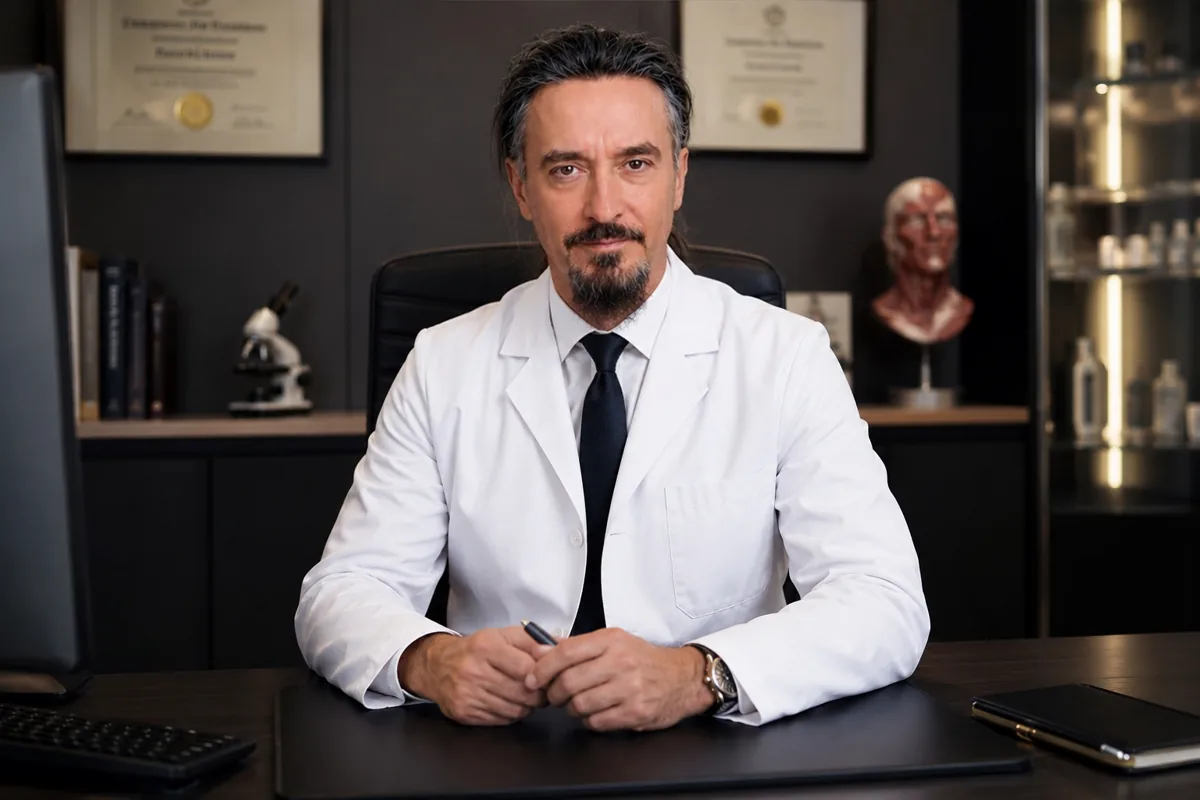
Doctor Florian A. Vallecillo Cabrera
The doctor explains
Informational content, written and reviewed by Doctor Florian A. Vallecillo Cabrera. It does not replace an in-person consultation or an individual diagnosis.


