
Vaccination by massage: can you really penetrate the skin without a needle?

Why I'm telling you this
One of the greatest barriers to getting vaccinated is not scientific, but emotional: the fear of needles. It is estimated that needle phobia accounts for around 10% of vaccine hesitancy — for example, regarding COVID-19 in the United Kingdom. That is why the idea of vaccinating without a jab is so appealing.
A study published in 2025 in the journal Cell Reports has demonstrated something remarkable: a simple 'massage' of the skin can open hair follicles enough for large molecules — including an inactivated influenza virus — to reach the dermis and activate the immune system. In mice, this cutaneous route generated ten times more antibodies than injection.
I am Dr. Florian Vallecillo, and today I want to explain what this study actually demonstrated, why it is fascinating, and — very importantly — why it does not yet mean that tomorrow we will be vaccinating ourselves with a cream.
First: why is the skin such an interesting site for vaccination?
The skin is not merely a wrapping: it is one of the body's most important immune organs. Most of the immune cells relevant to a vaccine are not on the surface but in the dermis, the layer located beneath the epidermis and above the hypodermis. If we manage to present an antigen — a fragment of the virus — to those cells, we can trigger a powerful immune response.
The problem: the skin barrier is designed to keep things OUT
The epidermis, and in particular its outermost layer (the stratum corneum), is designed precisely to prevent large molecules from entering the body. An inactivated influenza virus is an enormous molecule. For that reason, until now, it was thought that getting something like that all the way to the dermis required a needle or laser abrasion. Nobody expected that a massage could be enough.
The hair follicle: an unexpected gateway
Here the surprise protagonist appears: the hair follicle. Each follicle acts like a small channel that passes through the epidermis. The researchers discovered that when the skin is stretched and put under tension, an opening forms at the level of the follicle through which large molecules can penetrate. It is not a wound: it is a natural pathway that opens temporarily.
The study: who conducted it and how
The work was co-led by Elodie Segura, research director at Inserm in the Immunity and Cancer laboratory (Inserm/Institut Curie), together with the Institute of Pharmaceutical Science at King's College London, and was published in Cell Reports in 2025. The British team designed a small device approximately one centimetre across that is placed on the skin and, connected to a small pump, acts like a suction cup: it gently draws the skin upward and triples its tension, mimicking a massage.
What they observed: the skin opens without being damaged
The detail matters: when the skin was examined under the microscope after stretching, its structure was undamaged. The epidermis and the collagen of the dermis maintained a normal appearance. In other words, the stretching allowed molecules to enter non-invasively, without injuring the skin. This was confirmed in both mouse skin and human skin samples.
The most striking result: ten times more antibodies
When the inactivated seasonal influenza virus H1N1 — the same one used in the vaccine — was applied to the skin and the device was activated, the immune response in the dermis was very intense. According to the authors, cutaneous application was far more effective than injection: it produced ten times more circulating antibodies against influenza. An unexpected result.
The fascinating twist: the skin produced its own 'adjuvant'
This is the most interesting part from a scientific standpoint. Injected vaccines usually contain an adjuvant — aluminium salts, for example — that 'alerts' the immune system and multiplies efficacy. But the preparations used in this study contained no adjuvant whatsoever. The injected version was therefore suboptimal… and yet the cutaneous version worked better. How?
By opening the hair follicle, it was not only the virus that entered: fragments of bacteria from the skin microbiota also entered — that protective flora that covers our skin. These fragments acted as a natural adjuvant, stimulating the immune system to produce antibodies against the virus. The definitive proof: in mice engineered to lack a skin microbiota, the effect of stretching on immune cells was greatly reduced.
Why is this so elegant?
Because the body itself provides the alarm signal. Instead of adding an artificial adjuvant, the technique takes advantage of something we already have: our microbiota. It is a reminder that the skin and its bacteria are not enemies, but part of a very sophisticated defence system.
A word of caution: this was done in mice (and to some extent in human skin)
It is essential not to get ahead of ourselves. The majority of the study was carried out in mice, and mice have many more hair follicles than we do, meaning their skin could behave quite differently. The authors themselves stress that these findings will need to be verified in humans.
And what about human skin?
Researchers at the Institute of Pharmaceutical Science have already confirmed that fluorescent molecules penetrated human skin obtained after cosmetic surgery. And one curious finding: when massaging by hand, the quantity of molecules that penetrated was even greater than with the machine. It is a promising first step, but still a long way from a vaccine ready for use.
The effect is probably even underestimated
There is an interesting nuance: mouse skin is less permeable than human skin, and the tension applied by the small device is modest compared to what a real massage can produce. In other words, the potential in humans could be greater than the initial results suggest. But 'could' is not 'has been proven'.
What this study does NOT mean
It does not mean that a vaccine in cream form already exists. It does not mean that you can vaccinate yourself at home with a massage. And, above all, it does not mean that any product you apply with a massage will 'enter the bloodstream'. We are looking at fascinating preclinical research, not an available treatment.
The other side: what about creams and cosmetics?
This is a point I find especially relevant for those of us who work with the skin. If a massage can open the follicle and allow large molecules through, it is worth asking what happens with other products we apply every day. The authors themselves announce that they will study whether this mechanism could trigger allergic reactions — for example, after applying sunscreen or cosmetics.
Until now it has been assumed that these products remain in the epidermis, and their possible penetration into the dermis through the follicle is 'not taken into account' at this stage. This is no cause for alarm — we are talking about a hypothesis to be investigated — but it is a reminder of humility: we know less than we think about how substances penetrate our skin.
How this connects to aesthetic medicine
In aesthetic medicine, we have been using the idea of temporarily 'opening' the barrier to allow active ingredients to penetrate for years — that is the logic behind microneedling and fractional laser. This study adds another piece to the puzzle: the hair follicle as an entry route and the microbiome as a modulator of the response. It reinforces an idea I often repeat: applying many products to skin with a compromised barrier is not without risk, because the penetration — and its consequences — can be far greater than we imagine.
Will we ever see vaccines delivered by massage?
Perhaps. The idea is scientifically sound and addresses a real need: reducing needle phobia, making vaccination easier for children, and simplifying immunisation campaigns. But between a brilliant result in mice and an approved vaccine for humans lie years of work: human trials, dose standardisation, safety monitoring, and regulation. Promising, yes; available, not yet.
What I want you to remember
A study published in Cell Reports in 2025 demonstrated, in mice and in human skin samples, that massaging or stretching the skin opens hair follicles and allows large molecules — including an inactivated influenza virus — to reach the dermis and activate the immune system. The cutaneous route generated ten times more antibodies than injection, and did so without an artificial adjuvant, because the skin's own microbiome acted as a natural stimulant.
This is one of those pieces of research that reminds us that the skin is far more than a surface: it is an immune, ecological, and dynamic organ. But it is also a reminder of rigour: the study was conducted primarily in mice, human skin is different, and there is still a long way to go before thinking about real-world applications.
I am Dr Florian Vallecillo, and if there is one single idea I want to leave you with today, it is this: the most exciting science is not the kind that promises immediate miracles, but the kind that makes us look at familiar things — in this case, a simple hair follicle and the bacteria living on our skin — with fresh eyes. Vaccination by massage may come one day; in the meantime, the best attitude remains the same: enthusiasm for science and caution with conclusions.
What to remember
- —A study in Cell Reports (2025), from Inserm/Institut Curie and King's College London, shows that massaging or stretching the skin opens hair follicles.
- —Through this route, large molecules — including the inactivated influenza virus — reach the dermis, where most immune cells reside, without damaging the skin.
- —In mice, cutaneous application produced ten times more antibodies than injection, and without an artificial adjuvant.
- —The 'adjuvant' was natural: as the follicle opened, fragments of the skin microbiota entered and stimulated the immune response (the effect disappeared in microbiota-free mice).
- —This is preclinical research: it was conducted mainly in mice (which have more follicles than we do); in human skin, manual massage allowed even more molecules to penetrate, but clinical trials in people are still lacking.
- —A note regarding the skin: if massage opens the follicle, it is worth studying the penetration of creams and cosmetics; and remember that applying many products onto a compromised barrier is not without risk.
You may also like · Dermatology
- Cronkhite-Canada syndrome: when spots on the skin can tell us about the intestine
- Herpes simplex, genital herpes, and herpes zoster: why do they appear, why do they come back, and how are they treated?
- Acne: when does it stop being "normal" and when should you see a dermatologist?
- When should you see a dermatologist about a mole?
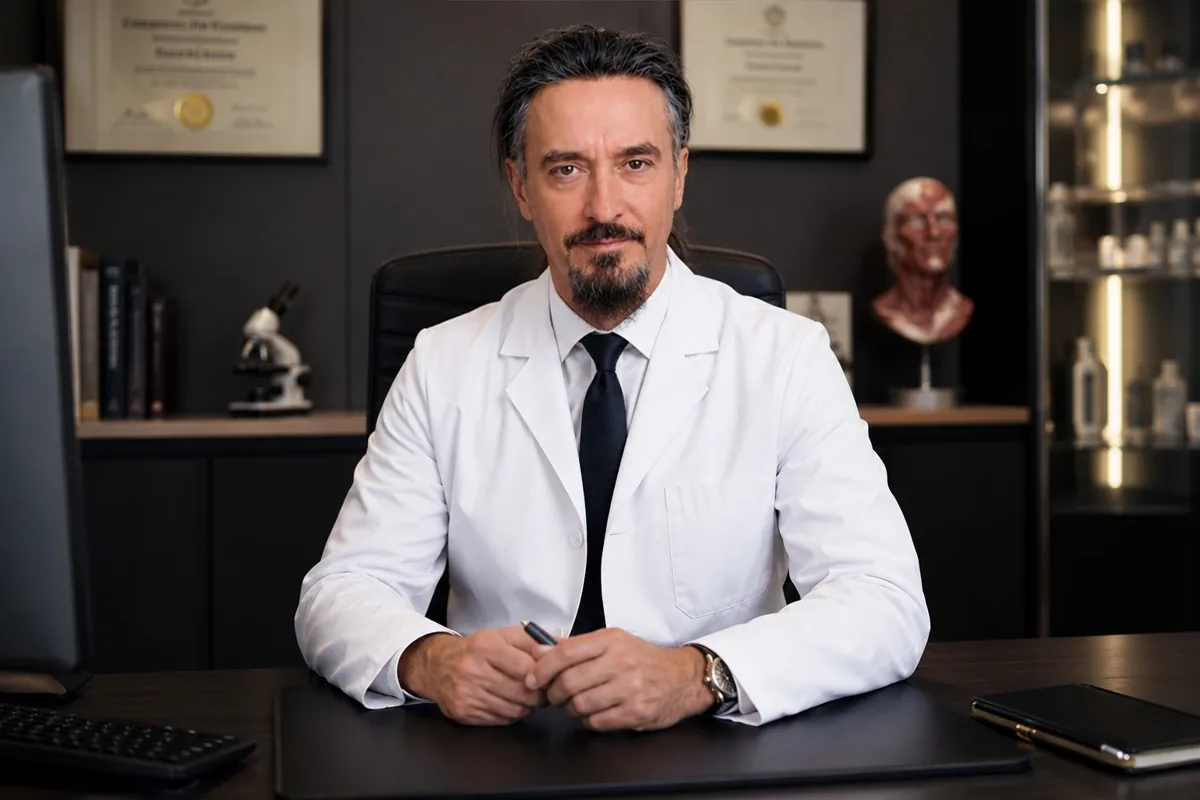
Doctor Florian A. Vallecillo Cabrera
The doctor explains
Informational content, written and reviewed by Doctor Florian A. Vallecillo Cabrera. It does not replace an in-person consultation or an individual diagnosis.


