Lichen planus: is it contagious? Why can it affect the genitals or cause hair loss?
Why I'm telling you this
"Doctor, how did I catch this?" That is probably one of the questions I am asked most often when I diagnose lichen planus, especially when it affects the genitals. The patient immediately thinks of an infection, a sexually transmitted infection, or wonders whether their partner passed it on to them.
And the first thing I want to explain is very simple: no, lichen planus is not a sexually transmitted infection, it is not contagious, and you did not 'catch' it from someone. It is an immune-mediated inflammatory disease: for reasons that are still not fully understood, the immune system triggers a reaction against certain cells of the skin, the mucous membranes, or, in certain forms, the hair follicles.
I am Dr Florian Vallecillo, and today I want to explain this condition to you, because it is far more varied than one might imagine: it can affect the skin, the mouth, the genitals, the nails, and even the scalp. And depending on where it appears, it can produce completely different symptoms.

Watch the video
Lichen planus: understanding it without fear
What exactly is lichen planus?
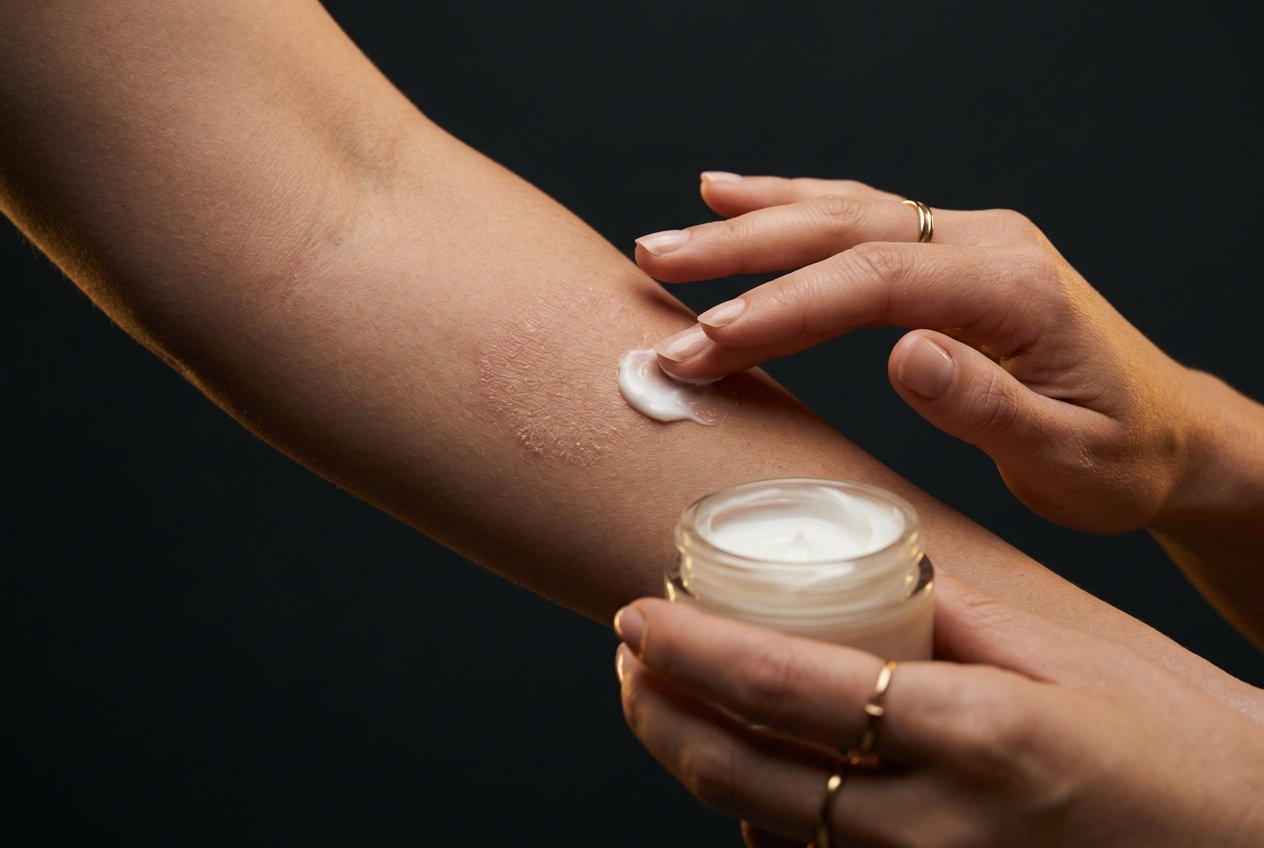
Lichen planus is an inflammatory condition in which certain cells of the immune system, particularly lymphocytes, attack the area at the junction between the epidermis and the underlying tissues. On the skin, this can produce small papules that are often purplish, shiny, and itchy. In the mouth or on the genitals, the presentation can look very different: whitish lines, plaques, red areas, erosions, burning sensations, or painful ulcerations. The same inflammatory mechanism can therefore produce clinical pictures that seem, at first glance, to have nothing in common.
Why does it appear?
This is probably the most difficult question: we do not yet fully know the initial cause. We know that the immune system plays a central role, but why does it trigger this reaction in one person at a given moment and not in another? There is no single answer. There is probably a combination of individual predisposition, immune and environmental factors, sometimes medications, and various triggers capable of altering the inflammatory response.
In certain parts of the world, an association between lichen planus and hepatitis C virus infection has also been observed. This association varies enormously across populations and obviously does not mean that every person with lichen planus has hepatitis C. It is therefore the medical context that determines whether further investigations are necessary.
So it really is not an STI?
No. And I want to emphasize this point, particularly regarding the genital forms. Genital lichen planus is not a sexually transmitted infection: you cannot transmit it to your partner during sexual intercourse, and your partner did not transmit it to you. It indicates neither infidelity, nor a lack of hygiene, nor any particular sexual behaviour. The genital location is simply one of the possible sites of an inflammatory condition that can also affect the mouth, the skin, or the scalp.
This explanation matters, because the diagnosis can cause a great deal of anxiety within a couple when there is in fact no infectious or sexual reason behind the condition.
What does genital lichen planus look like?
It depends on the sex of the patient and the form of the disease. In men, lichen planus can appear notably on the glans in the form of papules, ring-shaped lesions, whitish streaks, red areas, or, in certain forms, painful erosions.
In women, it can affect the vulva and sometimes the vagina. Certain forms produce essentially white streaks that are relatively few in symptoms, but erosive vulvovaginal lichen planus can be far more troublesome: burning, pain, significant itching, pain during sexual intercourse, pain when urinating, erosions or ulcerations, and sometimes vaginal discharge or minor contact bleeding. In severe chronic forms, abnormal scarring can also develop and gradually alter the local anatomy. This is why persistent genital forms require genuine dermatological or gynaecological-dermatological follow-up.
Why does it burn so intensely in some patients?
Because when a mucous membrane is eroded, it has lost part of its protective barrier. Imagine a small graze on the skin, then picture the same inflammation on a heavily innervated mucous membrane that is constantly subject to friction, moisture, urine, and sexual intercourse: the area can become extremely sensitive. It is therefore not 'in the patient's head' — erosive forms of lichen planus can be genuinely painful.
And in the mouth?
Oral lichen planus is also very common among the mucosal forms. It can appear as small, highly characteristic white lines resembling a network or lacework: these are traditionally called Wickham's striae. Some people have almost no symptoms at all; others present with an erosive form involving redness, ulcerations, burning, pain while eating, and sensitivity to spicy, acidic, or very salty foods.
The same person can sometimes have oral and genital involvement simultaneously. This is why, when lichen planus is diagnosed on one mucous membrane, it can be worthwhile to enquire about and examine the other sites depending on the clinical context.
And now, let's talk about the scalp
This is probably the form least known to the general public. When lichen planus attacks the hair follicles of the scalp, we refer to it as lichen planopilaris. And here, the problem becomes particularly serious, because we are no longer dealing with simple hair loss, but with a scarring alopecia: the inflammation progressively attacks an essential part of the follicle. If it destroys the follicular stem cells and the follicle is replaced by scar tissue, hair can no longer regrow in that area. This is why early diagnosis is particularly important.
How can lichen planopilaris begin?
Sometimes very subtly. The patient may simply say 'I'm losing my hair' or 'I feel like my density is decreasing.' However, certain signs can point in the right direction: scalp itching, burning, tenderness or pain, redness around the follicles, small scales around the hair shafts, and areas where the hair gradually disappears. Over time, certain areas become smooth and shiny because the follicular openings have disappeared: at that stage, the hair loss is scarring in nature.
Why can it sometimes be difficult to diagnose?
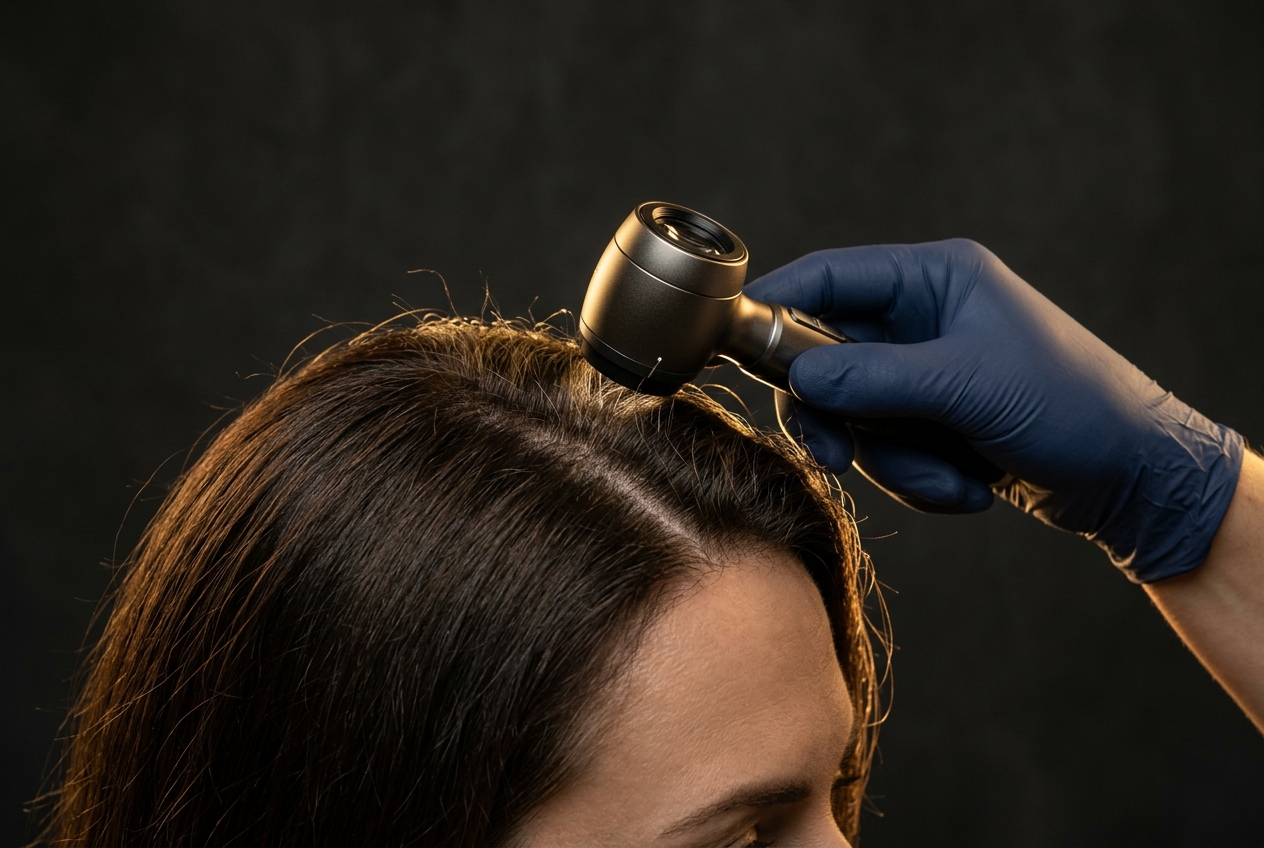
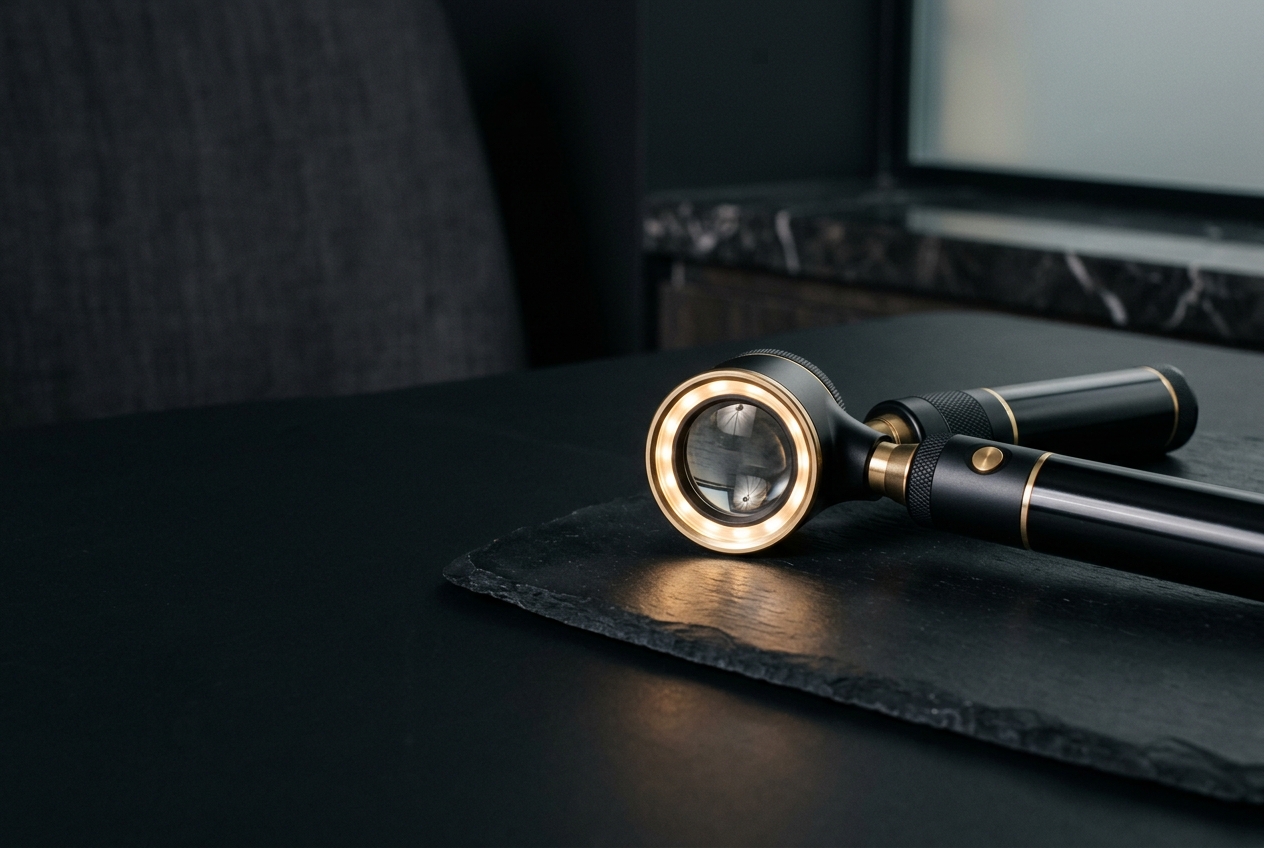
Because in the early stages, lichen planopilaris can resemble many other causes of hair loss: androgenetic alopecia, effluvium, inflammatory dermatitis, or another scarring alopecia. This is where trichoscopy becomes extremely useful: using a dermatoscope adapted for the scalp, we look in particular for scaling around the follicles, perifollicular redness, changes in follicular openings, scarred areas, and various characteristic signs.
And sometimes, a biopsy is necessary
When the diagnosis remains uncertain, a small scalp biopsy may be needed. But the choice of site matters: ideally, we do not take a sample from the centre of a large, fully scarred area, as all the inflammation may have already disappeared there. Instead, we look for an active zone, often at the border of the patch, where redness or scaling around the follicles is still present. Microscopic analysis can then reveal the characteristic lymphocytic inflammation around the follicle and the signs of scarring destruction.
Can the lost hair grow back?
This is where I prefer to be very clear with my patients. If the follicle has been permanently destroyed and replaced by scar tissue, it generally cannot produce a new hair. This is why the main goal of treating lichen planopilaris is not to 'regrow all the lost hair,' but to stop or slow the inflammation before it destroys further follicles. This is precisely why lichen planopilaris is sometimes regarded, in trichology, as a situation requiring prompt action: the 2026 EADV guidelines emphasise the importance of early diagnosis and early intervention to limit the progression of scarring alopecia.
How is lichen planus treated?
There is no single treatment. Everything depends on the location, severity, extent of involvement, symptoms, whether or not scarring is present, and how the condition evolves. But the underlying principle is almost always the same: controlling immune-driven inflammation.
Corticosteroids remain very important
In many forms, corticosteroids represent the first line of treatment. They can be used as a cream or ointment, on mucous membranes in appropriate formulations, as local injections into certain lesions, or sometimes systemically in more severe forms. Their aim is not to kill a micro-organism: they reduce inflammation. That is a fundamental distinction.
And if that is not enough?
In persistent or severe forms, we can use other immunomodulatory treatments. Depending on the location, certain calcineurin inhibitors such as tacrolimus or pimecrolimus may be used. And for some significant forms, particularly progressive lichen planopilaris, systemic treatments may be necessary: depending on the patient, medications such as hydroxychloroquine, certain antibiotics used for their anti-inflammatory effect, retinoids, immunosuppressants, or other specialised treatments. The strategy must be individualised, as responses vary and comparative evidence remains limited.
Can lichen planus be permanently 'cured'?
This depends greatly on the form. Classic cutaneous lichen planus can sometimes resolve spontaneously over several months or a few years — the NHS indicates that cutaneous forms often improve in around 9 to 18 months. On the other hand, mucosal forms can be far more chronic and may evolve over years, with periods of improvement, flare-ups, and then further improvement. Lichen planopilaris can also follow an unpredictable course. Our goal is therefore more focused on controlling the disease and preventing its consequences.
Why does stress sometimes seem to trigger flare-ups?
Many patients tell me: 'Doctor, it started during a period of stress.' Stress alone does not constitute a complete explanation for lichen planus, but there is a complex interaction between the nervous system, immunity, inflammation, and barrier function. In certain forms, particularly oral lichen planus, psychosocial stress is reported as a possible triggering or aggravating factor. I would therefore never say 'your condition comes from stress,' but I can acknowledge that a period of significant stress may, in some people, accompany or contribute to a flare-up.
Can trauma cause new lesions to appear?
Yes. There is a dermatological phenomenon known as the Koebner phenomenon: in some people with lichen planus, a new lesion can appear on an area that has been scratched, rubbed, irritated, or subjected to trauma. This once again illustrates that the disease depends on an interaction between an immunological predisposition and the local environment of the skin.
What about medications?
Certain medications can cause lichenoid eruptions — that is, lesions that closely resemble lichen planus. This can occur with several drug families, and in such cases the clinical history and timeline become particularly important. This is yet another reason why I always ask: 'What medications are you taking?'
Should an infection be investigated?
Pas comme s'il s'agissait d'une IST. Mais selon la situation, le médecin peut rechercher certaines associations ou certains diagnostics différentiels. Par exemple, dans un lichen génital, une mycose, une infection, un lichen scléreux, un psoriasis, une dermatite de contact ou une balanite d'une autre origine peuvent parfois entrer dans le diagnostic différentiel. C'est donc l'examen dermatologique qui permet de distinguer ces situations.
Can genital lichen planus be confused with an infection?
Très facilement. Et c'est probablement l'une des raisons pour lesquelles certains patients passent plusieurs mois à recevoir antifongiques, antibiotiques et crèmes diverses, sans réelle amélioration. Une zone rouge, douloureuse ou érosive sur les organes génitaux fait naturellement penser à une infection ; mais tout ce qui brûle ou gratte au niveau génital n'est pas infectieux. C'est justement là que l'examen dermatologique prend toute son importance.
Why is it sometimes necessary to monitor oral and genital forms over the long term?
Parce que les formes chroniques érosives des muqueuses nécessitent un suivi. Dans le lichen plan oral, certaines études rapportent un faible risque de transformation maligne à long terme, généralement inférieur à quelques pour cent, même si l'estimation exacte varie selon les études et les critères diagnostiques. Cela ne signifie absolument pas « lichen plan = cancer » — ce serait faux et anxiogène. Cela signifie simplement qu'une lésion chronique de muqueuse qui change, s'ulcère de manière persistante ou devient différente doit être contrôlée. Même principe pour certaines formes génitales chroniques.
What changes should prompt a return visit?
For example: an ulceration that does not heal, an area that becomes harder, a lesion that bleeds, an unusual change in a known area, a pain that changes in character, or an unexplained worsening. Follow-up is therefore not there to worry the patient: it is there, precisely, to be able to remain reassuring.
And what about nail lichen planus?
This is less well known, but lichen planus can also affect the nails. It can cause ridging, thinning, fissuring, progressive deformity, and in some significant forms, scarring of the matrix that may lead to permanent sequelae. Here again, active involvement of the nail matrix warrants relatively early management.
Is it a 'general' disease of the whole body?
Pas nécessairement. Un patient peut n'avoir qu'un lichen plan génital ; un autre uniquement un lichen oral ; un autre un lichen planopilaire ; et un autre encore peut présenter plusieurs localisations simultanément. Le fait d'avoir un lichen plan ne signifie donc pas que toutes ces zones seront forcément touchées.
Why do two patients have such different forms?
Because 'lichen planus' is almost a family name grouping together different phenotypes of the same inflammatory mechanism. In one person, the skin is mainly affected; in another, the mucous membranes; in yet another, the hair follicles. And these tissues obviously do not react in the same way to inflammation — which is what explains the diversity of symptoms.
The key point: never treat one location without looking at the rest
When a patient presents with lichen planus, it can be useful to ask a few simple questions: do you have lesions in your mouth? any genital discomfort? nail problems? unusual hair loss? scalp itching? Because some people have absolutely no idea that two very different symptoms can belong to the same disease.
What I most want you to take away from this
If you have lichen planus: you did not catch it, it is not an STI, it is not contagious, and it is not related to a lack of hygiene. It is an immune-mediated inflammatory disease whose exact cause remains incompletely understood. It can affect the skin, the mucous membranes, the genitals, the mouth, the nails, or the scalp — and the location involved completely changes what is at stake.
On the scalp, lichen planopilaris deserves particular attention because it can permanently destroy the hair follicles and cause irreversible scarring alopecia if the inflammation progresses. On the mucous membranes, particularly the genital or oral ones, chronic forms may require prolonged treatment and monitoring. The goal of treatment is therefore not to eliminate an infection: it aims to calm an excessive inflammatory response.
I am Dr Florian Vallecillo. And if I were to leave you with just one idea today, it would be this: lichen planus is not something you 'caught' — it is something your immune system has started doing, and understanding that difference completely changes the way you experience the disease. Instead of asking 'who gave it to me?', the right question becomes: 'what form of lichen planus do I have, is it active, and how can we control the inflammation before it causes lasting damage?' This is particularly important when it affects the mucous membranes, the genitals, or the scalp. In those situations, a precise diagnosis — sometimes complemented by dermoscopy, trichoscopy, or a biopsy — makes it possible to choose the appropriate treatment and to organise the necessary follow-up.
And when a patient comes in for a persistent genital lesion, oral involvement, unusual hair loss, or a suspected case of lichen planus, this assessment can of course be carried out at Clínica Valorian, in Marbella.
What to remember
- —Lichen planus is NOT an infection or an STI: it is not contagious and is not transmitted through sexual intercourse. It is an immune-mediated inflammatory disease (the immune system attacks the skin, mucous membranes, or follicles).
- —One disease, very different forms depending on the location: skin (pruritic violaceous papules), mouth (Wickham's striae, erosive forms), genitals, nails, and scalp.
- —Lichen planopilaris (scalp) is a SCARRING alopecia: the inflammation can permanently destroy the follicles. Early diagnosis and treatment are essential (EADV 2026 guidelines) — the goal is to stop the inflammation, not to 'regrow everything'.
- —Diagnosis: clinical examination plus trichoscopy/dermoscopy, and sometimes a biopsy (taken from an active area, at the edge of the plaque). Genital lichen planus is often mistaken for an infection, leading to months of unnecessary antifungals or antibiotics.
- —Treatment = controlling the inflammation (not a micro-organism): corticosteroids as first-line therapy, then calcineurin inhibitors (tacrolimus, pimecrolimus), and, in severe forms, individualised systemic treatments.
- —Cutaneous forms are often self-resolving (approximately 9–18 months, NHS); mucosal forms are more chronic and require follow-up (low risk of malignant transformation of oral lichen planus). Associated factors: hepatitis C in certain populations, Koebner phenomenon, lichenoid drug eruptions, stress.

Doctor Florian A. Vallecillo Cabrera
The doctor explains
Informational content, written and reviewed by Doctor Florian A. Vallecillo Cabrera. It does not replace an in-person consultation or an individual diagnosis.