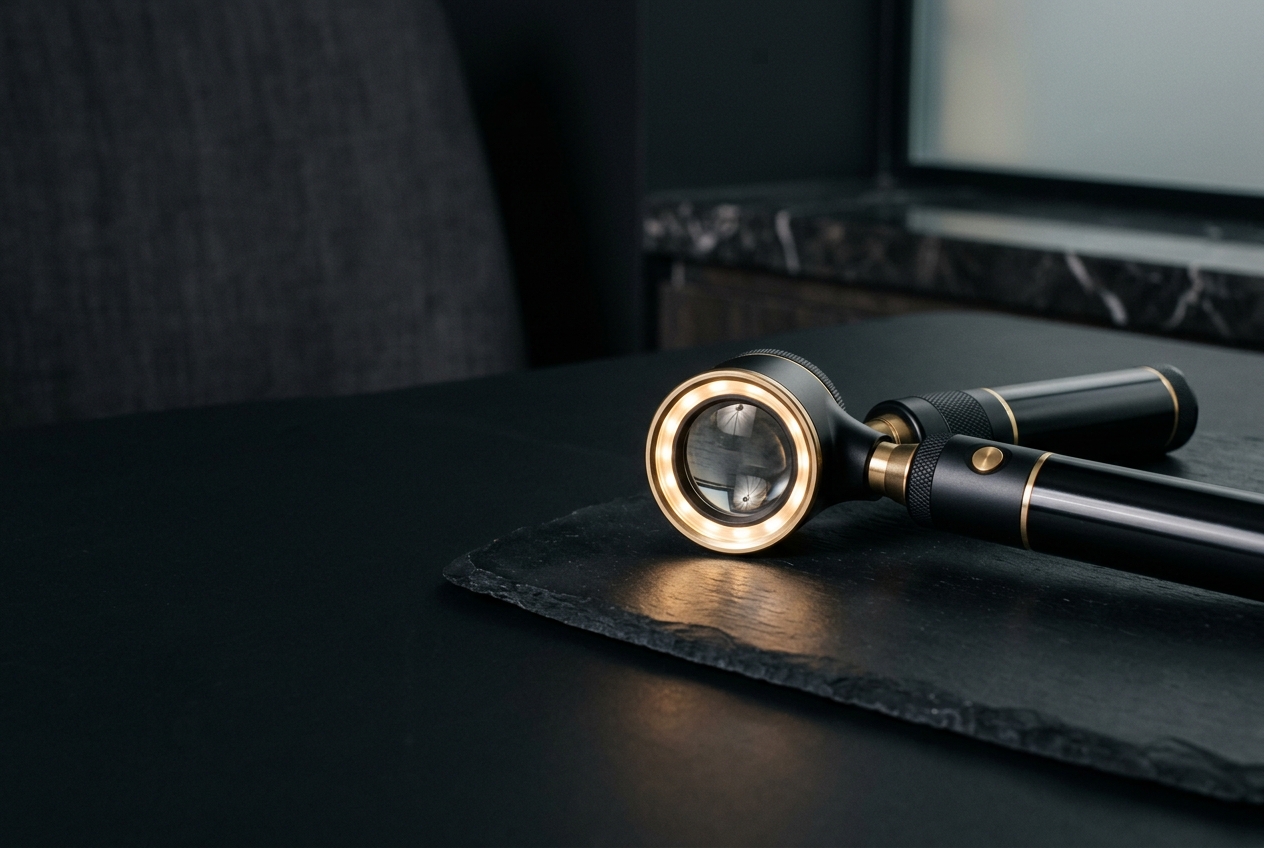
Hair loss: beware of 'hair charlatanism'
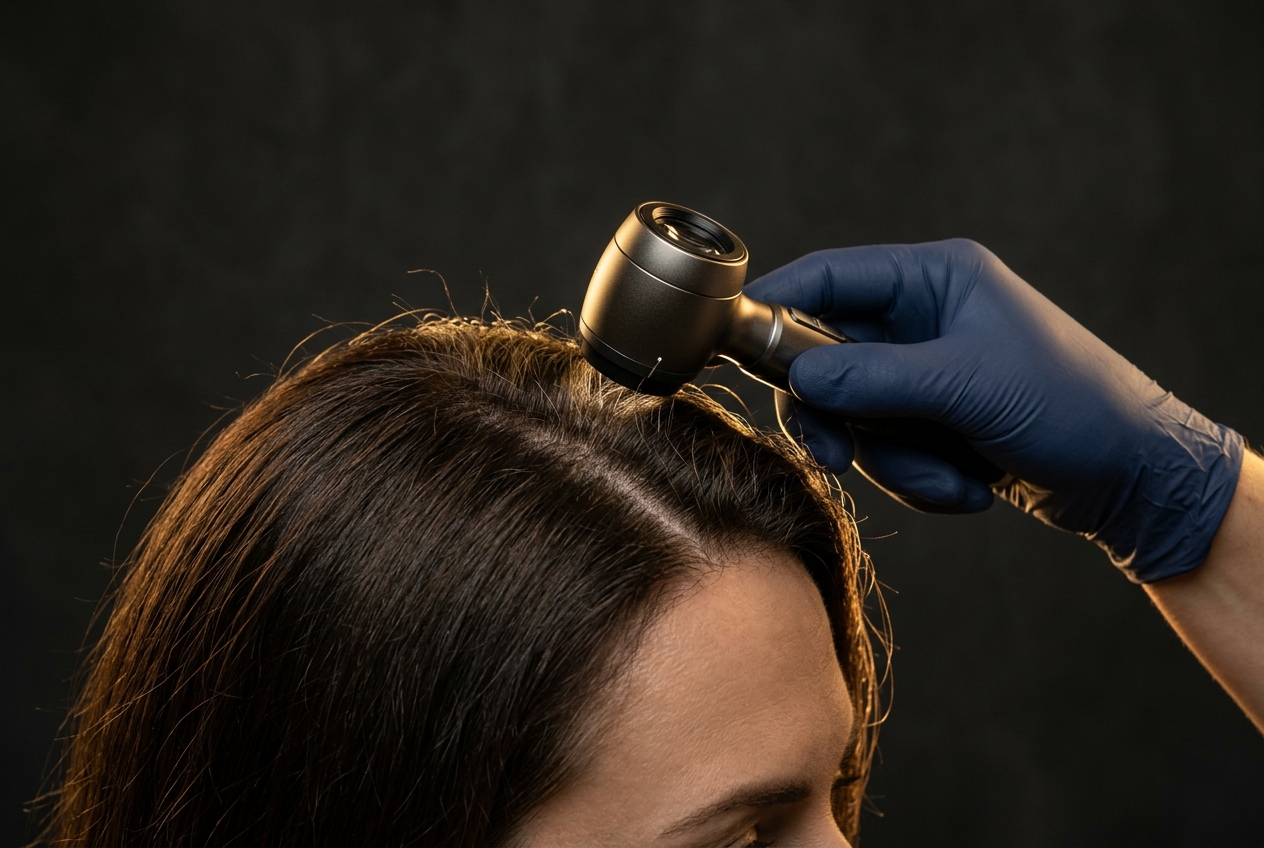
Why I'm telling you this
There is something I am seeing more and more frequently in my practice: patients who have been losing hair for six months, a year, or even longer. They have tried shampoos, ampoules, vitamins, serums, lotions, 'detox' treatments, 'strengthening' products… And when they finally come to a dermatological consultation, they tell me: 'Doctor, I already had my hair examined.' So I ask: 'By whom?' And very often the answer is: 'At the hairdresser's,' 'At a pharmacy,' 'Someone came with a camera and looked at my scalp.'
And here I want to be very clear: looking at a hair with a camera does not mean diagnosing alopecia. When a person without medical training uses a small camera, shows the patient a thin hair on a screen, and from there claims that 'your hair is weakened,' that 'your follicle is closed,' and that 'you need this treatment' — and, conveniently, the treatment you need happens to be precisely the product that same person is selling — to me, that very often crosses into the territory of charlatanism.
I am Dr. Florian Vallecillo, and today I want to explain why hair loss deserves much more than an enlarged photograph and an expensive shampoo.
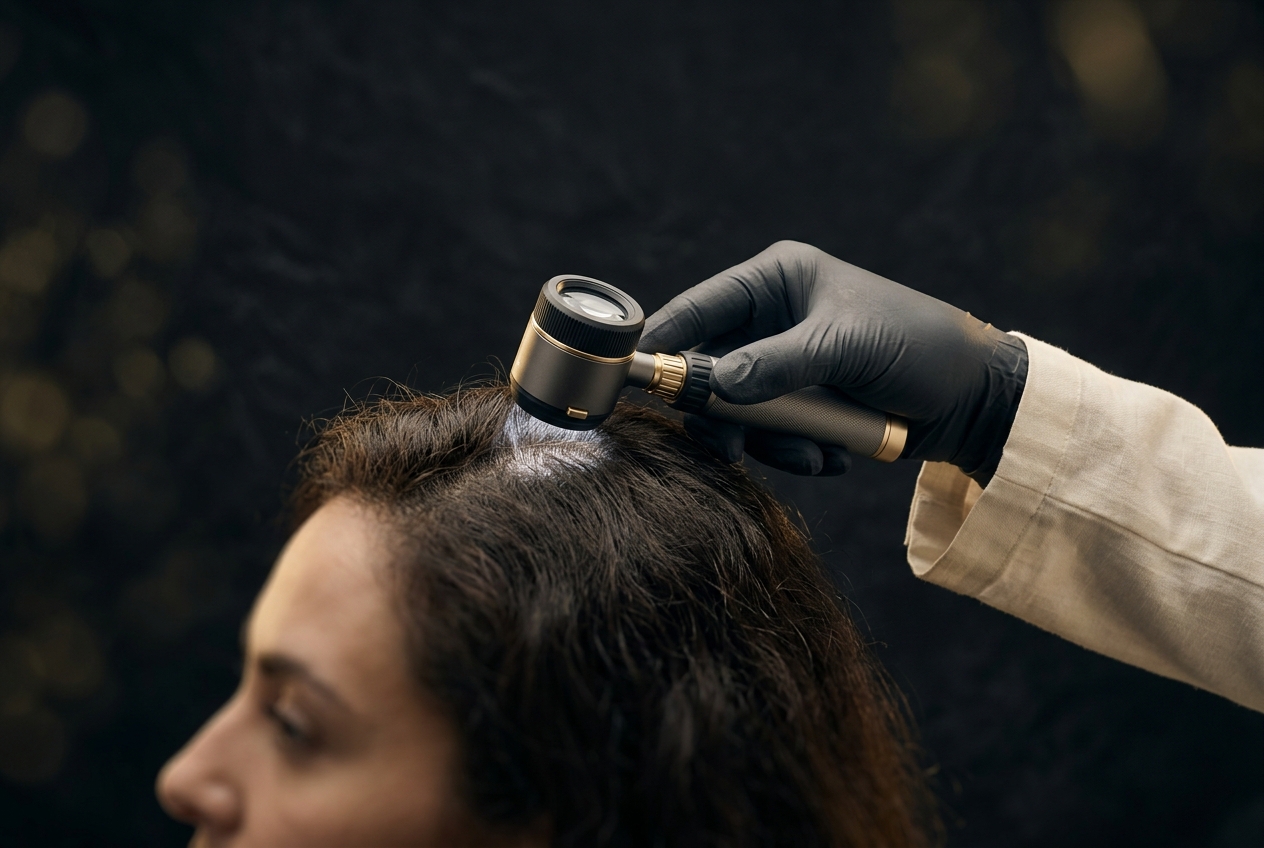
Watch the video
Is your hair falling out? Beware of hair-loss charlatanism
First: hair loss is not a diagnosis
This is the fundamental mistake. 'My hair is falling out' is a symptom, not a disease — just like saying 'I have a headache.' From there, we need to find out why. The same applies to hair loss: a person can lose hair due to androgenetic alopecia, telogen effluvium, iron deficiency, thyroid disease, physiological stress, rapid weight loss, pregnancy or the postpartum period, certain medications, inflammatory scalp conditions, dermatitis, alopecia areata, infections, autoimmune diseases, or scarring alopecias, among many other causes. That is precisely why there is no such thing as 'the treatment for hair loss': what exists is treatment of the cause of that hair loss.
Fine hair is not a diagnosis
This is probably one of the messages I most want to convey. A small camera is placed on the scalp, the image is magnified, thick hairs and thinner ones appear, and someone says: 'Look, this hair is too thin — your follicle is weakened.' That, in and of itself, diagnoses absolutely nothing. In a normal scalp, variability in hair diameter can exist, and in certain conditions that variability may be significant — for example, in androgenetic alopecia we can observe progressive miniaturisation of the follicles. But recognising pathological miniaturisation requires knowing the distribution, comparing different areas, analysing the percentage of variability, examining the scalp, looking for other trichoscopic signs, and correlating all of this with the clinical history. An enlarged photograph cannot replace any of that.
What is trichoscopy really?
Trichoscopy is an extraordinarily useful dermatological tool: we use a dermatoscope or an imaging system to observe the hair, the follicles, the vessels, the scalp skin, scaling, signs of inflammation, and multiple structures that we cannot properly see with the naked eye. But the device does not make the diagnosis — the diagnosis is made by the physician interpreting what they see, just as a stethoscope does not diagnose a cardiac condition on its own. The tool is no substitute for training.
You can buy a camera online; you cannot buy years of medical training
And this distinction strikes me as fundamental. Today, anyone can purchase a magnifying lens, a USB camera, a 'hair analyser,' or a small digital microscope on an online platform. The problem is not buying one: the problem is believing that owning the device automatically makes someone a specialist in trichology. That is not how it works. A dermatoscope in the hands of an untrained person is simply a camera that magnifies an image.
What concerns me most is not that a product is being sold
What truly concerns me is the time that is wasted. Because some hair problems are reversible and others are not entirely so, and in certain conditions every month matters.
Let us think about scarring alopecia
Este es el ejemplo más importante. En enfermedades como el lichen planopilaris, la alopecia frontal fibrosante y otras alopecias cicatriciales existe inflamación alrededor del folículo; si esa inflamación progresa, puede destruir de manera permanente estructuras esenciales del folículo, y cuando el folículo queda sustituido por tejido cicatricial, ese cabello ya no vuelve a crecer. Imagina entonces que una paciente pasa un año utilizando champús, ampollas, vitaminas y sérums porque alguien le ha dicho que simplemente tiene «el cabello débil»: durante ese año, la enfermedad puede seguir avanzando. Eso sí me parece grave.
There may also be a scalp condition behind it
Not every hair loss case begins with the hair itself; sometimes the problem lies in the skin surrounding it. For example, significant seborrheic dermatitis, psoriasis, folliculitis, an infection, or an autoimmune inflammation. A patient may experience itching, crusting, flaking, redness, pain, or burning — and if no one actually examines the scalp skin, the conversation keeps circling back to 'strengthening the hair' when what the patient actually needs is treatment for a dermatological condition.
An example I see in my practice
A patient may come in after many months of hair loss, and upon examination I find large scaling plaques, crusting, scalp inflammation, and pruritus. She has spent a year buying anti-hair loss products, yet no one has treated the underlying scalp dermatitis. The question then is not 'which supplement is she missing?' but rather 'why did no one diagnose the condition that was right there in front of them?'.
Pharmacies should not become alopecia clinics either
Quiero hacer otra precisión. El farmacéutico tiene una formación sanitaria y un papel muy importante: puede detectar un problema, orientar, explicar correctamente un producto y decir «esto merece una valoración médica». Perfecto. El problema aparece cuando en una farmacia se organiza una supuesta «consulta capilar» realizada por comerciales o por personas cuya finalidad principal es vender una determinada gama de productos: se hace una fotografía, se imprime un resultado y después, sorpresa, el «diagnóstico» conduce exactamente al producto que se vende al lado. Ahí debemos preguntarnos si estamos diagnosticando o haciendo marketing.
There is a very obvious conflict of interest
Si la persona que decide cuál es tu problema es también la que gana dinero vendiéndote la solución, tienes derecho a ser crítico. No significa que todo producto sea malo ni que toda recomendación comercial sea falsa, pero un diagnóstico médico necesita independencia. Yo no debería inventar una enfermedad para poder venderte un tratamiento, y tú tampoco deberías recibir un diagnóstico diseñado alrededor del catálogo de una marca.
Do anti-hair loss shampoos work?
I also want to dispel a misconception here. A shampoo can be excellent for cleansing the scalp, treating dandruff, managing seborrheic dermatitis, controlling oiliness, or improving certain superficial conditions. But a cosmetic shampoo alone will not correct androgenetic alopecia, cicatricial alopecia, thyroid disease, iron deficiency, or postpartum effluvium, because the problem does not necessarily lie on the surface of the hair.
What about hair vitamins?
Exactly the same applies. If you have a real deficiency, correcting it can be important; but if your levels are normal, taking more vitamins does not mean producing more hair. 'Hair vitamins' is one of those commercial categories where enormous quantities of products are sold to people who have never been shown to have any deficiency at all. A deficiency is treated; a normal vitamin level does not need to become 'supernormal.'
What about biotin?
It is one of my favourite examples. It is constantly marketed for hair, skin, and nails, yet a true biotin deficiency is uncommon, and taking it indiscriminately does not automatically turn an unhealthy follicle into a healthy one. Furthermore, high doses of biotin can interfere with certain laboratory tests, so even something that seems completely harmless can complicate a proper medical evaluation.
What should actually be done when someone is experiencing hair loss?
First, talk to the patient. That may sound obvious, but it provides an enormous amount of information: when did it start? Was the onset sudden or gradual? Is the hair falling out all over the scalp, or is a specific area thinning? Is there a family history? Has there been a recent illness — COVID or another infection, surgery, childbirth, significant weight loss, a restrictive diet, new medications, major physiological stress, heavy periods, hormonal changes, scalp itching or pain? Each answer helps point toward the diagnosis.
After: exploring the scalp
Y no simplemente ampliar un cabello. Hay que mirar la distribución de la densidad, las entradas, la zona frontal, la coronilla, la región occipital, el diámetro de los cabellos, los folículos, la piel, el eritema, la descamación, las costras y los signos de cicatrización.
Next, we use trichoscopy
La tricoscopia puede ayudarnos a diferenciar patrones: podemos encontrar signos compatibles con una alopecia androgenética, una alopecia areata, un lichen planopilaris, una alopecia frontal fibrosante, determinadas alopecias cicatriciales o enfermedades inflamatorias. Pero, de nuevo, lo importante no es tener el aparato, sino saber interpretar lo que muestra.
And sometimes you need to order blood tests
Depending on the patient and the type of hair loss, we may study a complete blood count, ferritin, iron metabolism, thyroid function, certain nutritional deficiencies, hormones in selected situations, metabolism, and other parameters according to the clinical history. There is no universal panel for everyone.
And sometimes a biopsy is necessary
This surprises some patients: 'A biopsy for hair loss?' Yes. When we suspect certain scarring or inflammatory alopecias, a small scalp biopsy can be essential: it allows us to examine the follicle, the type of inflammation, the affected area, the presence of fibrosis and other microscopic changes, and it can help differentiate conditions that look clinically very similar.
This is medical trichology
It is not about looking at whether hair appears thick or thin. Medical trichology means studying the follicle, the hair cycle, the skin, inflammation, hormones, nutrition when relevant, systemic diseases and genetics. Because hair is part of the body: it is not an isolated fibre sitting on top of our head.
The same hair loss can require completely different treatments
Androgenetic alopecia may require treatments targeting follicular miniaturisation; telogen effluvium requires identifying and correcting the trigger; seborrhoeic dermatitis requires controlling inflammation and Malassezia; alopecia areata requires immunological treatment; lichen planopilaris requires urgently halting inflammation to preserve the follicles; iron deficiency requires correcting the deficit when it has been demonstrated. Do you see the problem? No serum can be the right treatment for all of these conditions.
And that should be a major red flag
If someone offers you the same shampoo, the same ampoule, the same supplement or the same treatment for virtually any type of hair loss, be suspicious. Because they are probably not treating a diagnosis: they are selling a product.
«But I was given a diagnosis using artificial intelligence»
We are seeing this more and more as well. A photograph is taken of the hair and software analyzes the diameter, density and number of hairs. It can be an interesting tool, but an algorithm does not automatically replace a medical assessment either: it can measure, quantify and help track progress, but someone still has to answer why it is happening. And that is the truly medical part.
Can hairdressers not say anything about the scalp?
Of course they can observe, and a good professional can even be very helpful. A hairdresser can notice «your hair is falling out much more than usual» or «I have seen an area of the scalp that looks different» and say «consult a doctor». I think that is excellent: it is cooperation. The problem begins when observation is transformed into a medical diagnosis, and then that diagnosis is used to sell a supposed treatment. That is where the line has been crossed.
And that is why I am going to use a strong word: charlatanism
Yes. Because when someone without medical training claims to diagnose a disease, uses technology to create an appearance of authority, makes medical claims they cannot substantiate and then sells a product as a treatment, that can become charlatanism. Not for being a hairdresser, not for working in a shop, not for selling cosmetics, but for feigning a diagnostic capacity they do not possess.
The real price can be a one-year diagnostic delay
And the problem is not only the euros the patient loses. This is what worries me most: you can recover 300 euros spent needlessly, but what you cannot always recover is a follicle that has been destroyed. A scarring alopecia diagnosed too late can leave a permanent loss, and an inflammatory condition sustained for months can be far more difficult to control. Time is part of the prognosis.
When should you see a doctor about hair loss?
Especially when the shedding persists for months, density decreases progressively, clearly thinned areas appear, the scalp itches, hurts or burns, there are crusts or inflammation, follicular zones disappear, the loss is sudden or very intense, eyebrows are lost, patches appear, or cosmetic treatments make absolutely no difference. And, personally, I would add something even simpler: if it concerns you, get a diagnosis before you start spending money.
Don't start with the product
This is probably the sentence I want you to remember. When you lose hair, the first question should not be 'What do I buy?' but 'What do I have?' Because if we don't know the condition, we don't know the treatment, we don't know the prognosis, we don't know whether it is reversible, and we don't even know whether we are wasting precious time.
What I want you to remember
A camera bought online can magnify a strand of hair, but it cannot replace a clinical history, a dermatological examination, a correctly interpreted trichoscopy, blood work when indicated, or a biopsy when we need one.
I am Dr. Florian Vallecillo, and today I do want to leave a particularly clear message: beware of the charlatanism surrounding hair loss. The hair care market moves an enormous amount of money, and wherever there is great concern and great money, many promises also appear: 'miracle' products, instant diagnoses, follicle analyses carried out by untrained individuals, and treatments sold before anyone knows what the condition actually is. Do not confuse a magnified image with a diagnosis, or marketing with medical trichology; and, above all, do not spend months treating 'weak hair' when behind it there may be a genuine dermatological condition.
If you are experiencing persistent hair loss, decreased density, itching, inflammation, crusting or changes in the scalp, at Clínica Valorian in Marbella we can carry out a dermatological and trichological assessment aimed first at establishing the diagnosis. Because a serious hair loss treatment does not begin with a bottle: it begins with knowing why you are losing your hair.
What to remember
- —«My hair is falling out» is a symptom, not a diagnosis: androgenetic alopecia, telogen effluvium, iron deficiency, thyroid issues, scarring or inflammatory alopecias… all require different treatments. There is no universal «treatment» that fits all.
- —Fine hair seen on a camera is NOT a diagnosis: trichoscopy is useful, but it is the doctor — not the device — who interprets it; buying a dermatoscope is no substitute for proper training.
- —Beware of conflicts of interest: whoever 'diagnoses' you with a camera at a hair salon or pharmacy and then sells you their own product is usually doing marketing, not medicine.
- —Shampoos, ampoules, vitamins and biotin do not correct androgenetic or cicatricial alopecia, a thyroid condition or an iron deficiency; vitamins only help if there is a real deficiency (and biotin can interfere with lab results).
- —The most serious issue is not the money, it is the time lost: in cicatricial alopecias (lichen planopilaris, frontal fibrosing alopecia) every month counts and a destroyed follicle does not come back.
- —A thorough evaluation starts with the clinical history and examination of the scalp, with interpreted trichoscopy, blood work when appropriate, and a biopsy if cicatricial alopecia is suspected. Diagnosis first, product second.
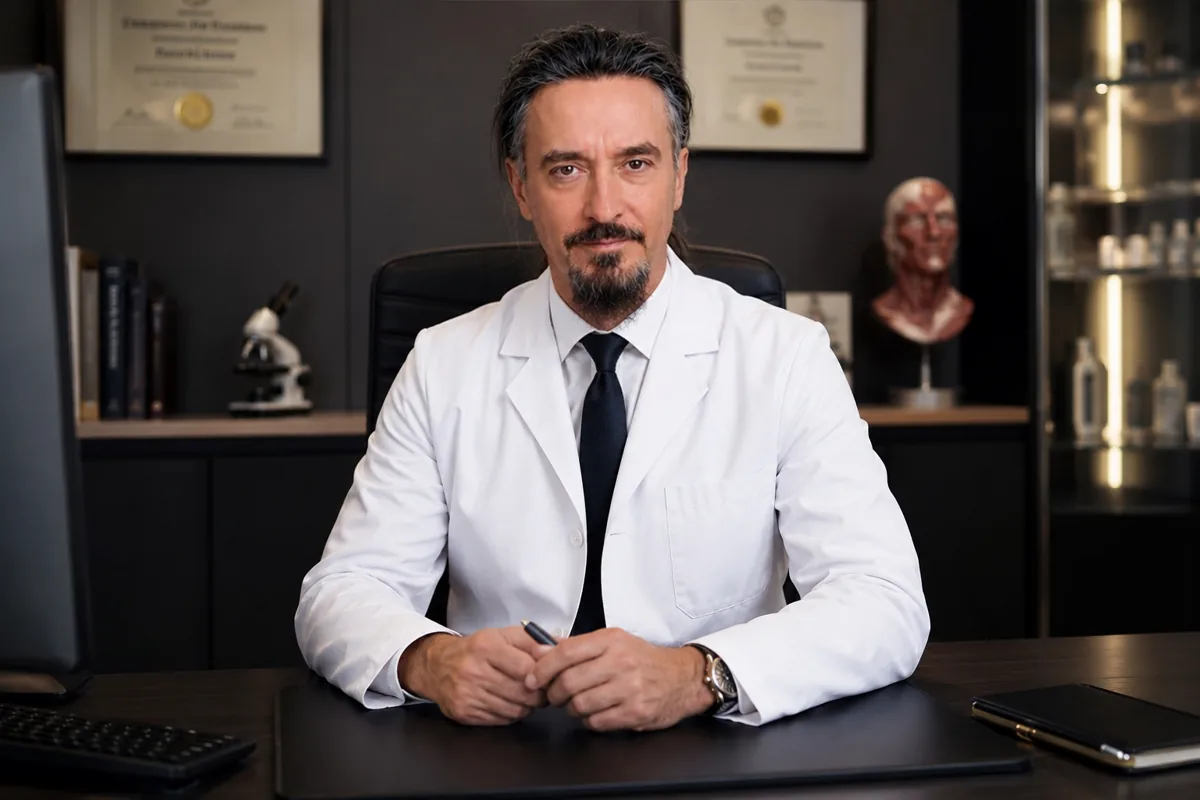
Doctor Florian A. Vallecillo Cabrera
The doctor explains
Informational content, written and reviewed by Doctor Florian A. Vallecillo Cabrera. It does not replace an in-person consultation or an individual diagnosis.