Atopic dermatitis and diet: are there foods that can worsen flare-ups?
Why I'm telling you this
When someone has atopic dermatitis, one of the first questions they tend to ask is: 'Could it be something I'm eating?' And then the search begins: gluten, milk, eggs, chocolate, tomato, nuts, sugar… Sometimes the patient ends up eliminating so many foods that their diet becomes extremely restrictive. And yet, the skin stays exactly the same.
I'm Dr. Florian Vallecillo, and today I want to explain what relationship truly exists between atopic dermatitis and diet.
Because yes, in some patients certain foods can have an influence. But it is also very important to avoid a mistaken idea: atopic dermatitis is not, in the majority of adults, a disease simply caused by a hidden food intolerance.
Watch the video
Atopic dermatitis: four simple answers
Atopic dermatitis begins in the skin and the immune system
Before we talk about food, it is worth remembering what this disease actually is. Atopic dermatitis is primarily a combination of an impaired skin barrier, an inflammatory immune response, a genetic predisposition, and environmental factors that can trigger or worsen flares. The skin loses water more easily, becomes dry, more reactive, and more sensitive to irritants; and, at the same time, certain immunological pathways become overactivated. Diet can influence this environment in some patients, but it is not the sole cause.
So, can a food trigger a flare?
Yes, but not in everyone. And that is the first key distinction. Some patients have a true food allergy: in these cases, a specific food can cause symptoms such as hives, itching, swelling, digestive discomfort, difficulty breathing, or, in some atopic patients, a worsening of the skin. But that does not mean that every person with atopic dermatitis has a food allergy. Especially in adults, the relationship between diet and dermatitis is usually far less direct than what is portrayed on social media.
A food allergy is not the same as an intolerance
This distinction is very important. A food allergy involves a specific immune response to a particular food — for example, milk, egg, peanut, tree nuts, wheat, fish, or shellfish. An intolerance, on the other hand, may involve other mechanisms: lactose intolerance, digestive difficulties with certain carbohydrates, or sensitivity to certain foods without a classic allergic mechanism. And none of these situations automatically means 'this food is causing my atopic dermatitis.'
What about children?
Here there is an important difference compared with adults. In young children with moderate or severe atopic dermatitis, especially when there is a compatible clinical history, food allergies are more common than in the general population; some children may be allergic to foods such as egg, milk, peanut, wheat, or soy. But even in children we should not eliminate foods without a clear clinical reason, because restrictive diets can lead to nutritional deficiencies and affect growth.
And what about adults?
In adults, when atopic dermatitis worsens, the most common causes tend to be something else entirely: dry weather, sweating, stress, harsh soaps, friction, contact with certain products, infections, lack of maintenance treatment, or skin barrier dysfunction. That is why, if an adult tells me 'Doctor, every time I eat tomatoes my skin gets worse,' I do not automatically tell them to cut out tomatoes forever. First, I try to understand: does it happen every time? How long afterwards? What symptoms appear? Are other foods involved? Is this really atopic dermatitis, or could it be hives, rosacea, contact dermatitis, or another condition?
What about dairy products?
It is one of the food groups that most patients eliminate on their own. But there is no general recommendation to eliminate dairy products for every person with atopic dermatitis. If a true allergy to milk protein exists, the context is different; but, in the absence of a demonstrated allergy, eliminating milk, yogurt, or cheese does not guarantee any improvement in dermatitis, and may even unnecessarily reduce the intake of proteins, calcium, vitamin B12, and other nutrients.
What about gluten?
Exactly the same. Celiac disease requires a strict gluten-free diet, and some people have other wheat-related reactions. But atopic dermatitis is not an automatic indication to eliminate gluten: if there is no celiac disease, wheat allergy, or other clinical indication, removing it simply 'just in case' is rarely a reasonable strategy.
What about sugar?
Here the story is a little different. We cannot say that 'sugar causes atopic dermatitis.' But a diet very high in sugary drinks, ultra-processed products, pastries, refined flours, and nutritionally poor foods can be associated with a less favorable metabolic and inflammatory environment. That does not mean that eating a dessert automatically triggers an eczema plaque; it means that, for overall health — and probably for the inflammatory environment as well — it is worthwhile to reduce excess ultra-processed foods.
What about histamine-rich foods?
This topic has become very popular: tomatoes, wine, aged cheeses, cured meats, fermented foods, canned fish, chocolate… Some patients claim that these foods cause more itching or redness. This can happen in certain cases, but so-called 'histamine intolerance' is a far more complex diagnosis than it is usually presented as on the internet. I do not recommend following extremely restrictive low-histamine diets without a proper evaluation, because we often end up eliminating numerous foods without knowing whether a true causal relationship actually exists.
What about alcohol?
Alcohol can indeed worsen the sensation of heat, vasodilation, and itching in some patients. It can also disrupt sleep, promote dehydration, and, in some people, make an inflammatory flare more apparent. This does not mean that alcohol causes atopic dermatitis; but if a patient repeatedly notices that 'every time I drink wine, I itch much more that night,' that association can have practical importance.
What about spicy food?
Something similar. Spicy food can increase vasodilation, sweating, and the sensation of heat; and let us remember that heat and sweat can worsen the itching of atopic dermatitis. That is why some people notice greater irritation after very spicy meals. But, again, this is not a universal rule.
So, what type of diet do I recommend?
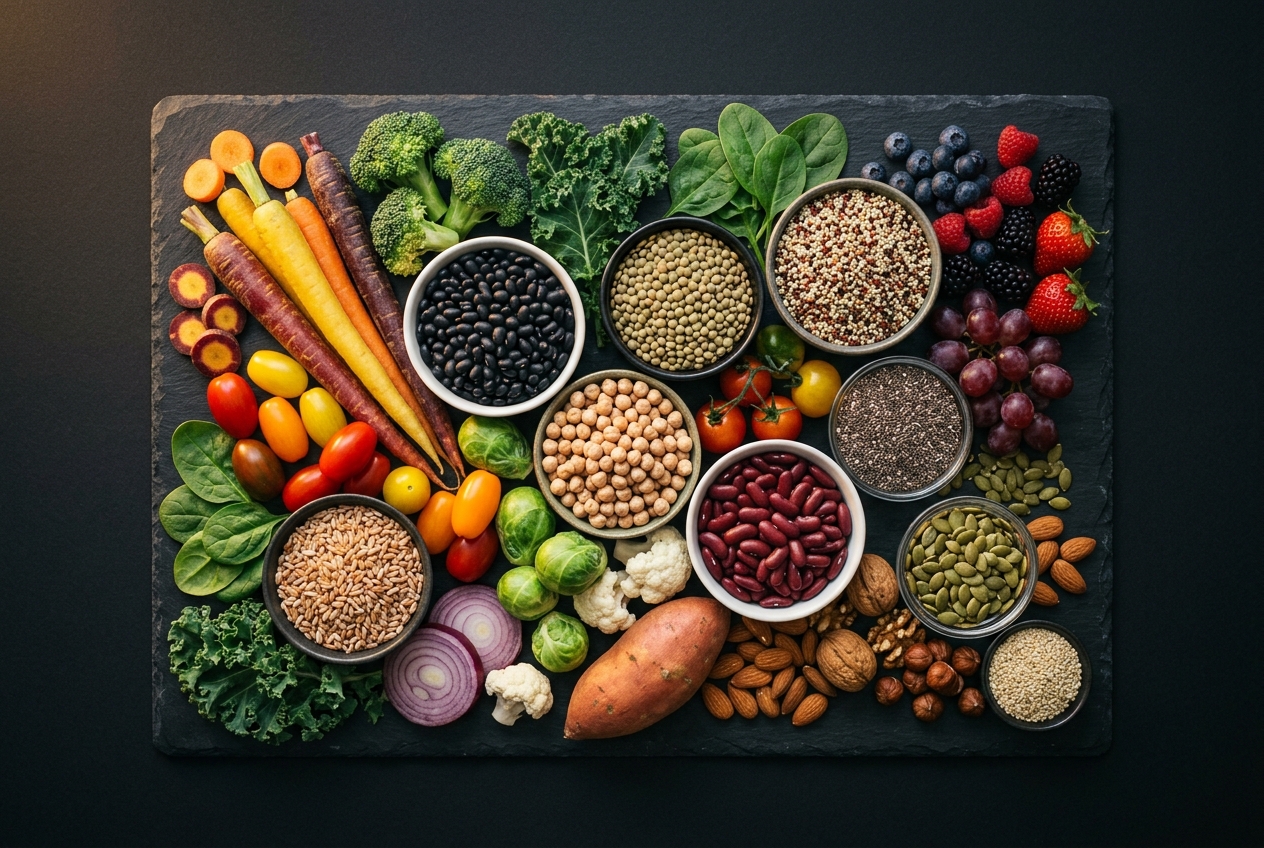
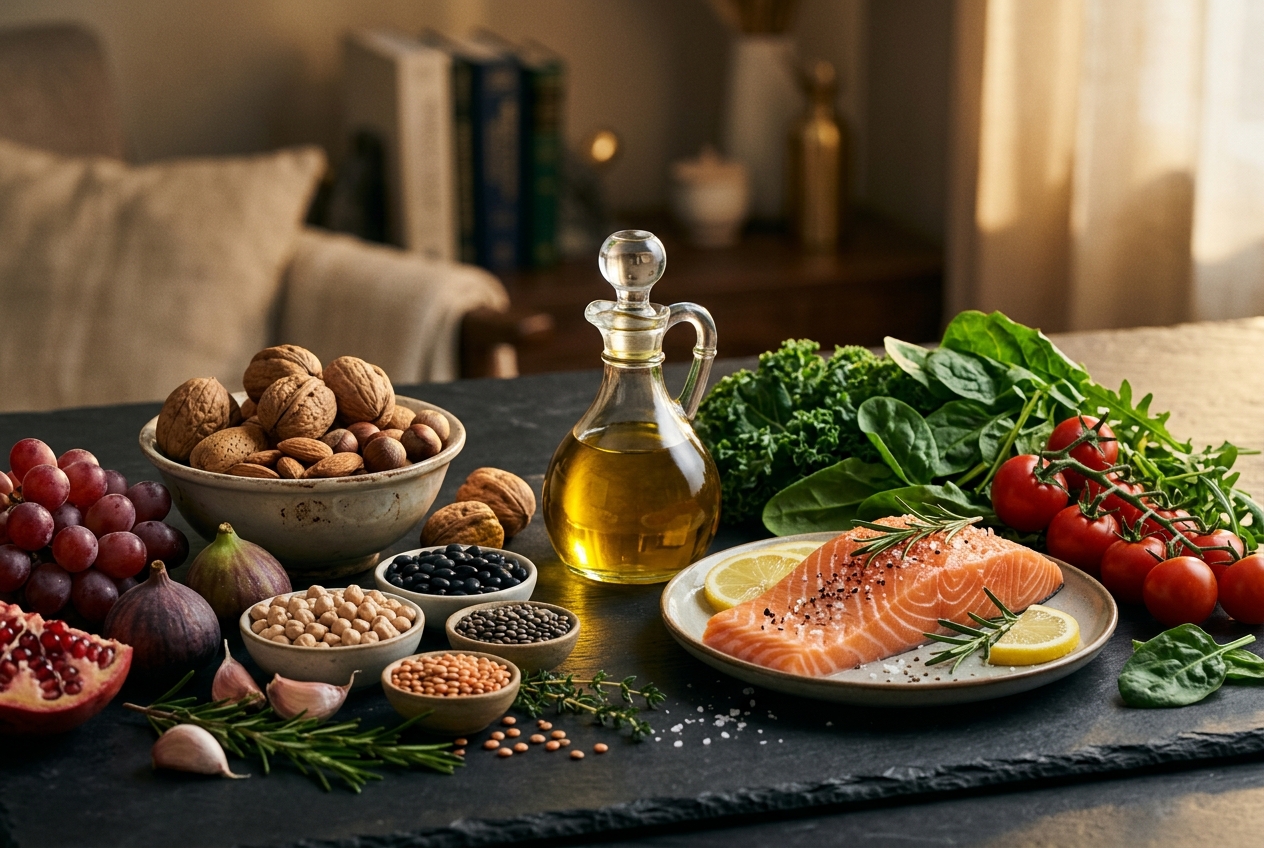
There is no such thing as a 'diet to cure atopic dermatitis.' But we can recommend an eating pattern that is compatible with good overall health and a favourable metabolic environment: a variety of vegetables, whole fruits, legumes, fish, olive oil, nuts if tolerated, adequate protein, whole grains where appropriate, and minimally processed foods. In other words, a Mediterranean-style diet. Not because it is a specific treatment for dermatitis, but because it is a healthy, broadly anti-inflammatory nutritional pattern.
Do omega-3s help?
It is a question I am asked frequently. Omega-3 fatty acids have interesting biological properties related to inflammation, but at present we cannot say that taking an omega-3 supplement will control atopic dermatitis on its own. They can be part of a healthy diet, but they do not replace emollients, topical treatments, or systemic treatments when those are indicated.
What about probiotics?
Another very popular topic. The gut microbiota is clearly linked to the immune system, and the relationship between the microbiota and atopic diseases is an area of intense research. However, there is currently no universal probiotic that effectively treats atopic dermatitis in all patients: study results vary and depend on the strain, age, context, and type of patient. That is why I do not recommend buying just any probiotic simply because the label says 'for skin' or 'for the immune system.'
So does the gut have no influence?
It does have an influence, but we must not oversimplify. There is a constant dialogue between the gut, the microbiota, the immune system, metabolism, and the skin — that is real. What we cannot do is reduce it to 'your eczema comes from gut dysbiosis.' In some patients there may be an interaction, but we have no simple test or universal treatment that allows us to say 'we fix the gut and the dermatitis disappears.'
When should I genuinely suspect that a food may be involved?
Above all, when there is a reproducible pattern: I eat a food, a symptom appears, I eat it again on another day, and the same thing happens again. Particularly if immediate symptoms arise, such as hives, swelling, intense itching, vomiting, difficulty breathing, or similar reactions. That scenario warrants an allergological evaluation.
Does everyone need allergy testing?
No. That is another common problem. A positive test does not necessarily mean a clinical allergy: a person can be sensitised to a food without eating it causing any symptoms. That is why test results must be interpreted alongside the clinical history, the symptoms, and, where indicated, specific tests carried out by specialists. Running a large food panel without any concrete suspicion can produce many results that are hard to interpret and lead to unnecessary elimination diets.
Elimination diets: do they work?
It can be useful in very specific situations, but it must be done with a concrete hypothesis in mind. Simply saying 'I'm going to cut out dairy, gluten, egg, soy, tomato and sugar and see what happens' is not enough — because if you improve, you still won't know which factor was actually important, and if you don't improve, you will have unnecessarily restricted your diet. When we suspect a particular food, a structured approach is far more useful: eliminate it for a defined period, observe how things evolve, and then — when it is safe and medically appropriate — reintroduce it to check whether a real relationship actually exists.
Let us not forget something fundamental: eating must also remain normal
This is especially important for people who have been living with skin conditions for years. When someone starts thinking 'everything I eat might be inflaming me,' they can develop a very complicated relationship with food. And that is not health either. Preventive medicine is not about creating fear around every food, but about identifying what truly matters.
A diary can be more useful than eliminating twenty foods
If you suspect that certain foods make your skin worse, it can be very helpful to keep a record for a few weeks of what you have eaten, which day a flare appears, how you slept, your stress level, the temperature, your physical activity and the products you have used on your skin. Because sometimes a patient thinks the problem was 'I ate chocolate,' but on that very same day they slept four hours, exercised in intense heat, used a new shower gel and were under an enormous amount of stress. Correlation does not always mean causation.
What if I have atopic dermatitis and a real food allergy?
In that case, the management does change. A confirmed food allergy requires a specific strategy: sometimes complete avoidance, education on reading food labels, an action plan in the event of a reaction, and — depending on severity — rescue medication. But this belongs to the management of a genuine allergy, not of a non-specific suspicion.
What I want you to remember
Diet can influence atopic dermatitis, but there is no universal list of forbidden foods. Not every patient needs to eliminate dairy, or gluten, or follow a low-histamine diet, or take probiotics; and a restrictive diet without a clear reason can do more harm than good. The right question is not 'which foods do I have to eliminate?' but rather 'is there really any food that, in my specific case, consistently makes my dermatitis worse?'.
I am Dr. Florian Vallecillo. And if I could leave you with just one idea, it is this: atopic dermatitis is not treated by looking for culprits on every plate. It is treated by understanding the skin barrier, the inflammation, the real triggers, sleep, stress, the environment and — when a clear relationship exists — diet as well. For most adults, a varied, Mediterranean-style, minimally processed diet is far more sensible than one full of restrictions.
And if you have persistent atopic dermatitis, frequent flares, or suspect that certain foods may be playing a role, a dermatological consultation at Clínica Valorian, in Marbella, can help you distinguish between a true dietary relationship, an allergy, an indirect trigger, or simply a coincidence. Because in medicine, eliminating foods is easy; proving that they are truly the problem is far more important.
Frequently asked questions about atopic dermatitis and diet
Does sugar make atopic dermatitis worse?
There is no simple relationship of the 'sugar = eczema' kind. However, a diet very high in ultra-processed foods and added sugars does not support overall metabolic health. Reducing them makes sense, but it should not be presented as a specific treatment for dermatitis.
Should I give up dairy?
Not automatically. It only makes sense to eliminate dairy when there is a proven allergy or a clear clinical relationship.
Can gluten cause atopic dermatitis?
In the majority of patients, no. Gluten should be avoided when coeliac disease, wheat allergy, or another specific indication is present.
Do probiotics help?
The research is interesting, but there is currently no universal probiotic proven as a treatment for atopic dermatitis in adults.
What is the best diet?
There is no specific diet. In general, a Mediterranean-style, varied diet rich in minimally processed foods, fibre, and quality proteins is a reasonable option for overall health.
How can I tell whether a food is making my eczema worse?
The best clue is a repeated, consistent pattern over time. A food and symptom diary can help, and if a true allergy is suspected, a specific medical evaluation should be carried out.
What to remember
- —Diet can influence atopic dermatitis in some patients, but it is not the cause of the disease: in the majority of adults, there is no hidden food intolerance behind the eczema.
- —There is no universal list of forbidden foods: eliminating dairy, gluten, or following low-histamine diets without a clear clinical reason rarely improves the skin and can lead to nutritional deficiencies.
- —Allergy is not the same as intolerance: only a proven food allergy (milk, egg, peanut, tree nuts, wheat, fish, shellfish…) justifies strictly avoiding a food.
- —Sugar, alcohol, and spicy foods can have an indirect influence (inflammatory environment, heat, sweat, vasodilation), but they do not 'cause' atopic dermatitis.
- —A positive allergy test does not equal a clinical allergy; it is advisable to avoid large panels without a specific suspicion and to use elimination diets only with a precise hypothesis and controlled reintroduction.
- —The most sensible approach is a Mediterranean diet, varied and minimally processed; a food and symptom diary helps distinguish a real relationship from a mere coincidence.
You may also like · Skin & spots

Doctor Florian A. Vallecillo Cabrera
The doctor explains
Informational content, written and reviewed by Doctor Florian A. Vallecillo Cabrera. It does not replace an in-person consultation or an individual diagnosis.