
Sun spots on the face: how to prevent and treat them

Why I'm telling you this
Over the years, small brown spots begin to appear on the face. On the hands too. On the décolletage. On the shoulders.
Many people simply call them 'age spots'. But in reality, most of them have much more to do with our history of sun exposure than with our age alone.
They are known as solar lentigines. And they tell us something interesting: our skin remembers the sun it has received over the years.
That is why, when we talk about sun spots on the face, we should not think only about last summer. We are talking about ultraviolet exposure accumulated over much of our lifetime.
What are sun spots?
Solar lentigines are benign pigmented lesions that appear mainly in areas chronically exposed to the sun.
They typically present as flat, brown, well-defined spots of varying sizes.
They are especially common on: the face, the backs of the hands, the décolletage, the forearms, the shoulders, and other sun-exposed areas.
Chronic exposure to ultraviolet radiation promotes local alterations in pigmentation and explains why these lesions become more frequent with age.
So why do we call them age spots?
Because they tend to become more visible over the years.
But age does not act alone.
A person who has accumulated significant sun exposure over decades is more likely to develop these lesions.
That is why we can also consider them one of the visible signs of photoaging.
Wrinkles, changes in texture, loss of elasticity, and pigmentary alterations are all part of the consequences of accumulated sun exposure.
Are all sun-related spots on the face lentigines?
No.
And this distinction is fundamental.
When someone looks up sun spots on the face, they may be referring to different conditions.
Sun exposure can promote or worsen: solar lentigines, melasma, and post-inflammatory hyperpigmentation, among other pigmentary disorders.
The appearance, mechanism, and treatment are not identical.
That is why simply saying: 'I have sun spots' does not always establish the diagnosis.
How can we tell a solar lentigo apart from melasma?
A solar lentigo is usually a relatively well-defined lesion.
We may have one, five, or many.
Melasma, on the other hand, tends to form more extensive and frequently symmetrical pigmented areas, especially on the cheeks, forehead, and upper lip.
Furthermore, melasma is a complex pigmentary disorder in which genetic, hormonal, vascular, and environmental factors are involved, including ultraviolet and visible radiation.
This matters a great deal because: a treatment that works very well for a solar lentigo may not be the best strategy for melasma.
Are sun spots dangerous?
A true solar lentigo is a benign lesion.
It does not need to be removed for medical reasons.
But there is a problem: not every brown lesion is a solar lentigo.
Certain keratoses, nevi, and malignant lesions can display pigmentation.
Even a melanoma can initially be mistaken for a 'spot'.
That is why, if a lesion has atypical features, we must first diagnose it — not remove it.
What signs should we pay attention to?
A spot deserves evaluation especially if: it is new and keeps growing, it changes progressively, it has multiple colors, it has an irregular shape or borders, it looks very different from the rest, it bleeds, it forms a wound, or it is simply evolving.
The ABCDE rule for melanoma — asymmetry, border, color, diameter, and evolution — remains a simple tool to help recognize lesions that warrant a dermatological evaluation.
And of all those letters, there is one that is especially important: E for evolution.
A lesion that changes deserves our attention.
Before removing a spot: dermatoscopy
In the consultation we can study a lesion using dermatoscopy.
The dermatoscope allows us to observe structures and patterns that we cannot adequately appreciate with the naked eye.
This is especially important before treating certain pigmented lesions.
Because there is a rule we must respect: a suspicious pigmented lesion should not simply be erased with a laser. First, we need to know what it is.
How can we prevent sun spots on the face?
Prevention begins with photoprotection.
And photoprotection does not mean simply applying sunscreen during the holidays.
It means reducing cumulative exposure to ultraviolet radiation.
Sunscreen every day
In an area with significant sun exposure like Andalusia, facial photoprotection should be part of the daily routine.
As a general rule, dermatological recommendations advise a sunscreen that is: broad-spectrum, water-resistant, and SPF 30 or higher.
But there is something we often forget.
SPF is not the only thing that matters
SPF primarily reflects protection against UVB.
But we also need adequate protection against UVA.
That is why we must choose broad-spectrum products.
And we must also apply a sufficient amount.
An SPF 50 applied in a minimal quantity does not, in practice, provide the same protection as that obtained under the standardized conditions used to determine that SPF.
Does it need to be reapplied?
Yes, especially during prolonged exposure.
The AAD recommends reapplying it approximately every two hours when we are outdoors, and after swimming or sweating.
But photoprotection does not end with sunscreen.
Hat, shade, and sunglasses
Physical measures are extraordinarily useful.
A wide-brimmed hat can protect areas of the face that receive direct sun exposure.
Seeking shade during peak radiation hours and wearing appropriate clothing also reduces the accumulated dose.
The best sunscreen works even better when we do not force it to do all the work on its own.
How are sunspots treated?
Once it has been confirmed that we are truly dealing with benign solar lentigines, there are different options available.
Not all of them are necessary.
If they are not aesthetically bothersome, we can simply leave them alone.
When a patient wishes to treat them, we can use different strategies depending on the number, depth, phototype, and characteristics of the lesions.
Is there a cream for spots on the face?
There are topical treatments capable of improving certain pigmentation problems.
Retinoids and various depigmenting agents can form part of selected strategies.
But when we are talking about well-defined solar lentigines, a face spot cream does not always produce the same result as certain procedures directed specifically at the pigment.
And again: the best cream for removing spots from the face depends on which spot we are treating.
There is no universal cream that eliminates every brown lesion.
Chemical peels
Certain chemical peels can help improve superficial pigmentation and, at the same time, other signs of photoaging.
The choice of acid, concentration, and depth depends on the phototype, the type of pigmentation, and the therapeutic objective.
An overly aggressive peel can cause inflammation and post-inflammatory hyperpigmentation.
That is why: stronger does not necessarily mean better.
What about laser?
Here we enter one of the most interesting options for certain solar lentigines.
There are lasers and light-based systems capable of selectively targeting pigment.
Depending on the lesion and the device, we can use different wavelengths and strategies.
Pigment lasers and certain light-based systems can achieve significant improvement of selected solar lentigines.
But the fundamental principle remains the same: diagnosis first, technology second.
Can a fractional laser help as well?
Depending on the type of pigmentation and the degree of photoageing, certain fractional technologies can form part of an overall strategy.
This can be particularly relevant when the patient presents not just a single isolated spot, but a combination of changes associated with sun damage: uneven pigmentation, texture, enlarged pores, fine lines, and other signs of photoageing.
In these cases, the goal may be to improve the overall quality of the skin, not simply to eliminate a brown spot.
Is a single session enough?
It depends entirely on the lesion and the chosen treatment.
Some lentigines respond very well to localised treatments.
Others require several sessions.
And a person with multiple signs of sun damage may benefit from a more comprehensive protocol.
There is no universal number of sessions.
Can the spots come back?
Yes.
We can correctly treat an existing lesion.
But we cannot erase the history of sun exposure across the entire skin.
Furthermore, if we continue to accumulate ultraviolet radiation, new spots may appear in other areas.
That is why treating without preventing is an incomplete strategy.
What is the best time to treat them?
For many procedures targeting pigmentation, it is particularly convenient to work during periods of lower sun exposure.
This facilitates subsequent photoprotection and can reduce certain risks of pigmentary alterations.
However, the specific indication depends on the procedure, the phototype, and the patient's habits.
In a sunny region like Marbella, rather than thinking solely in terms of 'winter or summer', we should ask ourselves: will this patient be able to carry out photoprotection correctly before and after the procedure?
What happens after treatment?
Depending on the technique, a spot may temporarily darken before lightening.
Redness, peeling, or small superficial scabs may appear.
The important thing is to follow the aftercare instructions and, above all: do not remove scabs or manipulate the area.
And to maintain rigorous photoprotection.
Can we completely prevent sun spots?
We cannot stop aging or avoid all environmental exposure.
But we can significantly reduce cumulative ultraviolet exposure.
Sun protection also offers a benefit that goes far beyond aesthetics.
UV radiation is one of the main environmental factors involved in the development of skin cancers.
That is why preventing sun spots and preventing skin damage share the same strategy.
What I want you to remember
Sun spots on the face do not appear simply because we are getting older.
They are, to a large extent, a visible manifestation of the exposure our skin has been accumulating over time.
We can treat them. With creams in certain cases. With peels. With lasers and other technologies when they are indicated.
But first we must confirm something essential: that we are truly dealing with a benign lesion that we can treat aesthetically.
Then we choose the right technology.
And finally we do something even more important: protect the skin to reduce the appearance of new lesions.
Because eliminating a spot without changing our relationship with the sun solves only part of the problem.
You may also like · Skin & spots
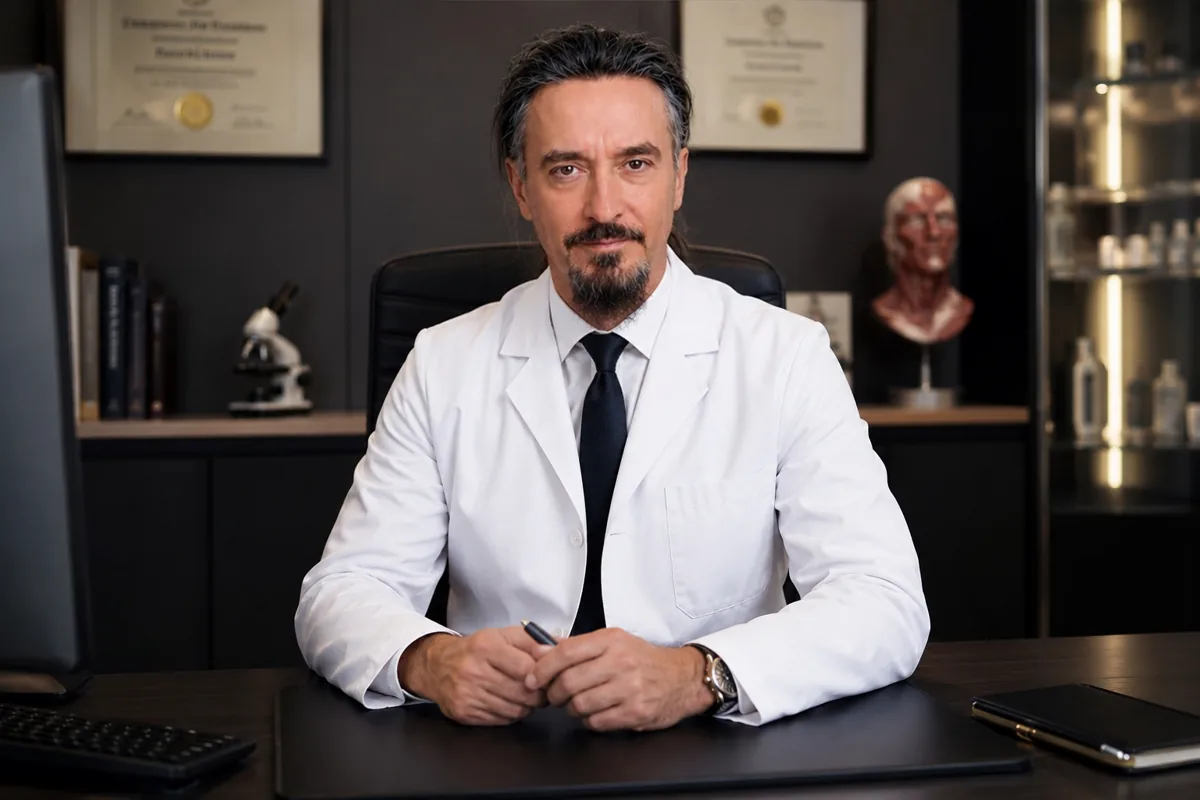
Doctor Florian A. Vallecillo Cabrera
The doctor explains
Informational content, written and reviewed by Doctor Florian A. Vallecillo Cabrera. It does not replace an in-person consultation or an individual diagnosis.
To assess your case with medical judgement, you can book an aesthetic medicine consultation in Marbella at Clínica Valorian.


