
Red light and mitochondria: when light becomes a genuine signal for our cells

Why I'm telling you this
What if light could do far more than illuminate our surroundings? What if certain wavelengths were capable of penetrating our tissues and sending a direct biological signal to our cells?
I am Dr Florian Vallecillo, and today I want to talk to you about a field I am particularly passionate about — one I have decided to integrate progressively into my approach to metabolic health, recovery, and healthy ageing: photobiomodulation using red and near-infrared light.
It is a technology that can seem very modern. And yet the biological principle on which it rests is extraordinarily natural: our cells are capable of responding to light. And at the heart of this story lies a set of tiny structures I often talk to you about: the mitochondria.
Before talking about light, let's talk about energy
Every second, your cells must produce energy: to contract a muscle, repair a tissue, keep your brain functioning, synthesize proteins, maintain your temperature, fuel your immune system, renew your skin… for just about everything that makes life possible.
A large part of this energy is produced in the mitochondria. They are often described as the cell's power plants: the image is simplified, but fairly accurate. They convert the energy from our nutrients into a molecule called ATP — essentially the energy currency used immediately by the cell. The more energy a tissue requires, the more critical mitochondrial function becomes.
Why is there so much talk about mitochondria today?
Because we have come to understand that they are not simply small energy factories. They are also involved in the stress response, the regulation of inflammation, cell death and renewal, muscle function, metabolism, brain function, and many of the mechanisms associated with aging.
When a mitochondrion is functioning well, it does more than produce ATP: it takes part in an entire biological conversation within the cell. And that is precisely where red light becomes interesting.
Red light is not the same thing as ultraviolet light
This is essential to understand. When I speak here of red or near-infrared light, I am not talking about the UV rays responsible for sunburn and DNA damage in the skin. Photobiomodulation devices primarily use wavelengths in the visible red and near-infrared range.
These wavelengths do not behave biologically in the same way as ultraviolet light: they can penetrate tissues to varying depths without causing the tanning or burning associated with UV. That is precisely the property we are looking to harness.
Why are certain wavelengths special?
Light is not a single thing: it is made up of different wavelengths, and our tissues do not absorb them all in the same way. Certain red wavelengths act primarily on relatively superficial tissues, which is why they are of interest at the level of the skin; near-infrared light, on the other hand, can penetrate more deeply.
This is why modern devices often combine several wavelengths. In the system I have chosen to use, for example, there are six: 630, 660, and 670 nm in the red range, and 810, 830, and 850 nm in the near-infrared range. The goal is to achieve broader stimulation, from the surface of the skin down to deeper tissues.
And what does light do when it enters our cells?
This is the fascinating part. Certain molecules in our cells are capable of absorbing photons; these are called chromophores. One of the main targets studied in photobiomodulation is found in the mitochondria: an enzyme called cytochrome-c oxidase.
You don't need to remember its name. Simply remember that it plays a role in the chain that mitochondria use to produce energy. Certain red and near-infrared wavelengths can influence this system, and this can trigger a whole cascade of cellular responses.
First consequence: supporting energy production
When mitochondrial function is stimulated under the right conditions, the cell can temporarily improve certain mechanisms related to ATP production. And this becomes particularly interesting in tissues that consume a great deal of energy: muscles, the nervous system, skin undergoing repair, tissues subjected to significant effort or stress. This is one of the reasons why photobiomodulation has been studied for years in the context of muscular recovery and performance.
Second consequence: acting on cellular signalling
But we shouldn't picture red light as a battery charger that simply sends more ATP. The reality is more interesting: photobiomodulation can also modify small quantities of reactive oxygen species, which you probably know as free radicals.
We tend to believe that all free radicals are harmful. That is incorrect. In small doses, some of these molecules serve as biological signals: they tell the cell that it needs to adapt, activate certain defence systems, repair itself, and respond to stress. This is a phenomenon we also see with exercise: a small, well-calibrated stress can trigger a beneficial adaptation.
This is sometimes called hormesis
Hormesis is a fascinating concept: a relatively mild stimulus can trigger an adaptive response that subsequently makes the organism more resilient. Exercise works partly in this way — when you do strength training, you impose stress on your muscle, and your body responds by repairing, adapting, and growing stronger. Certain responses to photobiomodulation can follow a similar logic. And this brings us to an absolutely fundamental concept: dose.
More light is not necessarily better
This is arguably one of the most important things to understand. In photobiomodulation, there is what is known as a biphasic response. In plain terms: too little light produces almost no effect; an appropriate dose can trigger an interesting biological response; but an excessive dose does not necessarily provide more benefits and can even diminish the desired effect.
This is why true photobiomodulation does not mean 'staying in front of a red light for as long as possible'. You need to control the wavelength, the intensity, the distance, the duration, the frequency of sessions, and the intended goal. And this is precisely why the quality of the device matters.
What can we expect from photobiomodulation?
There are today several particularly interesting areas, and I want to approach them with the same care for nuance as always.
Muscular recovery
Photobiomodulation has been studied in the context of exercise. Some data suggest that, with appropriate parameters, it may help improve certain recovery markers, reduce some muscle soreness after exertion, support functional recovery, and modulate certain mechanisms related to muscle fatigue. This is particularly interesting when combined with a well-structured training programme — because, as I often say, the goal is not to replace exercise, but to help the body respond to it more effectively.
The skin
This is an area where red light is particularly interesting. The skin contains cells called fibroblasts, which are involved notably in the production of collagen, elastin, and various components of the extracellular matrix. Certain studies on red and near-infrared light have observed favourable changes in parameters related to skin texture and quality, fine lines, tissue repair, and certain collagen-production mechanisms.
This is an approach that naturally interests me greatly in aesthetic medicine. Not to replace other treatments, but as a complementary tool that allows us to work on the very biology of the skin.
And this is where my vision of aesthetic medicine is evolving
For a long time, aesthetic medicine was primarily about modifying what we see: a wrinkle, a volume, a blemish, some sagging. But today, we can also ask ourselves a different question: what is the biological state of the tissue we are treating? How are its cells producing energy? How are they recovering? How are they responding to stress? How are they ageing?
I find this approach fascinating, because the aesthetic medicine of tomorrow will probably not be solely a medicine of correction: it will increasingly become a medicine of tissue quality.
And what about metabolism?
This is another area that interests me. Our metabolic health depends enormously on the capacity of our tissues to use and transform energy. Muscle is one of the body's largest consumers of glucose, and mitochondria are at the heart of its function. This is why researchers are interested in the interactions between photobiomodulation, mitochondrial function, exercise, and metabolism.
I therefore see red light not as a miracle treatment that would 'burn fat' without any effort — that would be false — but as a complementary tool within a comprehensive metabolic strategy. A strategy that always rests on appropriate nutrition, movement, strength training, sleep, circadian rhythm, body composition management, and, when indicated, personalised medical care. Photobiomodulation integrates into this whole.
And ageing?
When we talk about anti-ageing, I prefer to speak of cellular ageing and the maintenance of function. Over the years, there is a gradual decline in certain mitochondrial capacities, an increase in oxidative stress, low-grade chronic inflammation, loss of muscle mass, reduced recovery capacity, and changes in the skin.
We cannot stop time from passing, but we can act on some of these mechanisms. Physical exercise is probably one of the most powerful tools; good nutrition as well; sleep too. And photobiomodulation now joins this toolkit as a possible means of supporting certain cellular and tissue responses. It is in this sense that I find this technology particularly promising.
Photobiomodulation is not a heat lamp
Another common misconception: the goal is not simply to heat the tissues. Other medical technologies exist that are based on heat; here, we are primarily seeking a photobiological effect — photons are absorbed by certain cellular structures and trigger a response. This is very different from the reasoning 'I feel warm, therefore it is working'. One may indeed feel a certain warmth in front of a powerful panel, of course, but the biological objective does not come down to that heat.
Why I prefer to work with a professional device
You will find online today a multitude of devices: masks, bulbs, small panels, belts, gadgets, red lamps sold as universal solutions. Some of them perfectly produce red light, but that is not enough.
To know what is actually being delivered to a tissue, several parameters must be known: the wavelength (is it truly 630, 660, 810, 830, or 850 nm?), the irradiance (the light power received per unit area), the distance (a lamp at 5 cm and the same lamp at 50 cm obviously do not deliver the same dose), the time (intensity × time = an essential part of the dose received), the distribution of the light (a large panel irradiates large surface areas more homogeneously), and the ability to control these settings, as not all objectives require the same combination. That is why, in a clinical context, I prefer equipment whose technical characteristics are known and controllable.
The device I have chosen
As part of this approach, I have chosen a professional photobiomodulation panel allowing very broad full-body exposure, which combines several wavelengths in the red and near-infrared range. The advantage of this multi-band approach is being able to work simultaneously with photons having different penetration profiles: certain wavelengths oriented more towards superficial tissues, others that penetrate more deeply.
The device also allows control over the intensity of the different wavelengths, which opens up the possibility of progressively personalizing protocols according to the goal: skin and tissue quality, muscle recovery, support for physical activity, or broader protocols for metabolic health and healthy aging. The MITO LIGHT Master 5.0 system I have chosen uses six wavelengths — 630, 660, 670, 810, 830, and 850 nm —, has 990 LEDs, and allows individual adjustment of each wavelength.
Is one session enough?
No, and this is important to understand. Photobiomodulation is closer to exercise than to a medication taken just once: we generally seek a repetition of correctly dosed stimuli. Depending on the goal, we therefore build a protocol of several sessions, then observe tolerance, recovery, sensations, the clinical objective and progress — and then adjust the protocol accordingly.
Can you feel something from the very first session?
Some people quickly describe a sensation of relaxation, a pleasant warmth, a feeling of recovery, or a general sense of well-being. Others feel almost nothing during the session, and that does not mean the light has no biological effect: your mitochondria obviously do not send you a notification announcing "ATP increased by 12%." The goal is therefore not to seek a spectacular sensation, but to integrate photobiomodulation into a coherent and repeated strategy.
Does red light replace the sun?
No. The sun is an extremely complex light source, made up of a great many wavelengths. Photobiomodulation, on the other hand, is different: we deliberately select certain bands of light to obtain a precise biological stimulus. And, unlike the sun, we can control the wavelength, the power, the duration, and the distance, which allows us to work in a far more reproducible way.
What fascinates me about this technology
It is not simply that it is modern. It is that it represents a different way of interacting with the body. We are used to thinking that a treatment must necessarily be a medication, an injection, a molecule, or an intervention. But a photon can also transmit biological information. Using light to influence cellular function rather than simply treating a symptom: that is the idea I find particularly compelling, and it opens up an entire field of medicine that we are only just beginning to fully explore.
What I want you to take away from this
Red and near-infrared light can penetrate our tissues, and certain of these wavelengths interact with cellular and mitochondrial mechanisms. They can influence energy production, cellular signalling, the oxidative stress response, muscle recovery, tissue repair, and certain mechanisms of skin quality. Photobiomodulation is therefore a very interesting tool today within a modern approach to recovery, muscle health, skin quality, metabolism, and healthy ageing.
But there is one thing I consider essential: light is a dose. And a dose must be controllable. That is why I favour professional devices that allow you to know exactly the wavelengths, intensity, distance, and exposure time. A simply red light is not automatically a correctly dosed photobiomodulation.
I am Dr Florian Vallecillo, and if I were to leave you with a single idea today, it would be this: our cells do not respond only to the molecules we eat or the medications we take; they also respond to their environment, to movement, to sleep… and to light. We have learned a great deal about nutrition and exercise; we are now beginning to better understand how certain wavelengths can, in their own right, also become a tool in service of our biology.
It is precisely for this reason that I decided to gradually integrate photobiomodulation into some of my protocols: not to replace what we already know to be effective, but to add a tool capable of working directly at the cellular level. Because, when we talk about health, recovery, and healthy ageing, we sometimes need to start very small. Down to the mitochondrion.
What to remember
- —Photobiomodulation (red and near-infrared light, ~630–850 nm) has nothing to do with UV rays: it sends a biological signal to cells, with no tanning and no burning.
- —Its primary target is mitochondrial (cytochrome-c oxidase): it can support ATP production and cellular signalling — with small doses of free radicals acting as adaptive signals (hormesis, much like exercise).
- —Dose is essential and biphasic: too little does almost nothing, too much yields no additional benefit and may actually reduce the effect. Wavelength, intensity, distance, duration, and frequency must all be controlled.
- —The most promising areas: muscle recovery, skin quality (fibroblasts/collagen), metabolism, and healthy ageing — as a complement, never a replacement for exercise and nutrition.
- —This is not a heat lamp: the effect sought is photobiological, not thermal; 'feeling warm' is not a sign of efficacy.
- —A simple red light is not correctly dosed photobiomodulation: hence the value of a professional device with known and controllable parameters.
You may also like · Longevity & metabolism
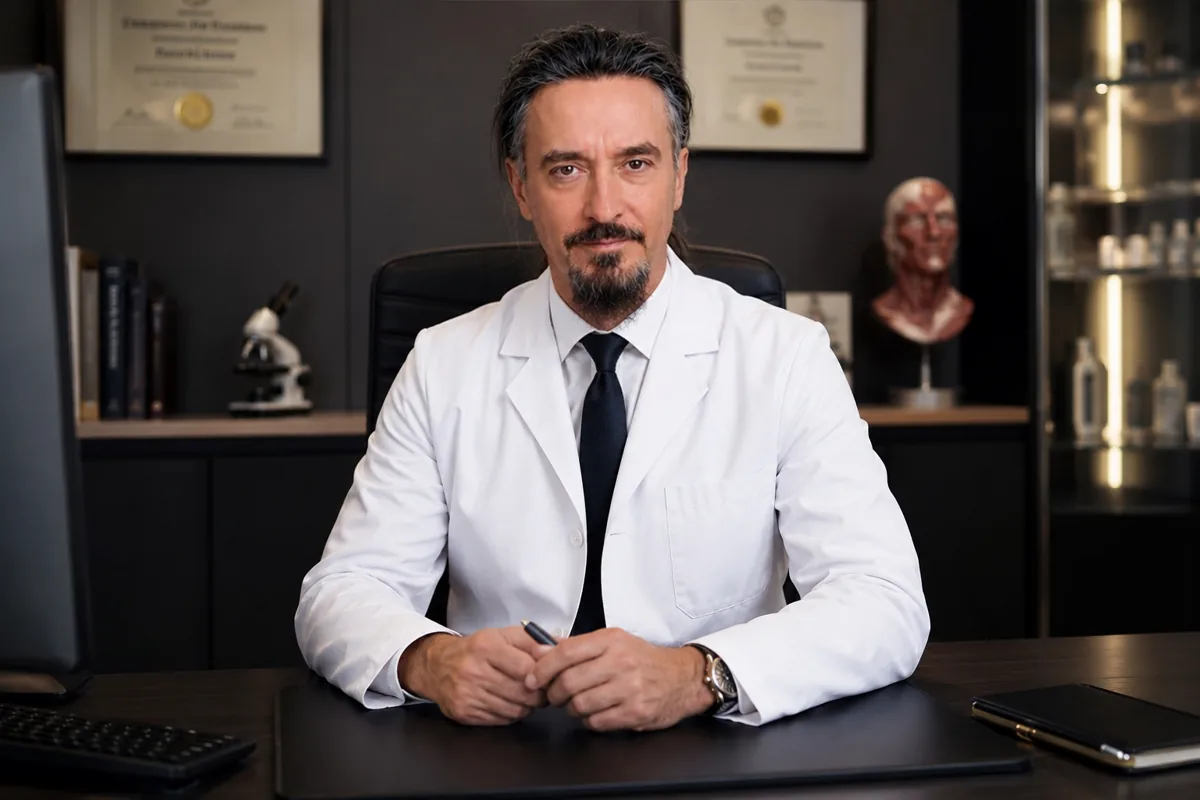
Doctor Florian A. Vallecillo Cabrera
The doctor explains
Informational content, written and reviewed by Doctor Florian A. Vallecillo Cabrera. It does not replace an in-person consultation or an individual diagnosis.


