
Why do I wake up with bags under my eyes if I sleep well? Causes, conditions, and treatments

Why I'm telling you this
It is not always due to lack of sleep, aging, or alcohol consumption. Under-eye bags can appear even in young people, athletes, and those with healthy habits. Understanding their origin is essential to choosing the right treatment.
Quick answer
Why do I have bags under my eyes when I wake up even though I sleep well?
Bags under the eyes upon waking can be due to nocturnal fluid redistribution, high salt intake, allergies, nasal congestion, anatomical predisposition, or eyelid inflammation. When the swelling subsides during the morning, an edema component is usually present. If it persists, worsens, or is accompanied by other symptoms, kidney disease, thyroid conditions, and other medical causes must be ruled out.
"Doctor, I sleep eight hours and I still wake up with puffy eyes"
Lately, during my consultations, I keep receiving a question that comes up quite frequently.
It does not come exclusively from older patients.
I also hear it from young patients, athletes, people who do not drink alcohol, maintain an apparently balanced diet, and sleep properly.
The question is usually very similar:
"Doctor, I don't understand what's happening to me. I sleep seven or eight hours, I exercise, I take care of myself, and yet when I wake up I have enormous bags under my eyes. Then, as the morning goes on, they seem to improve. Why does this happen?".
It is a very interesting observation.
Because we tend to associate under-eye bags with tiredness, ageing, or poor habits.
But the medical reality is considerably more complex.
The region surrounding the eyes has particular anatomical characteristics. The skin there is very thin, contains delicate connective tissue, and can show small variations in the amount of interstitial fluid.
Furthermore, not all under-eye bags are the same.
Some are the result of transient oedema.
Others are related to the anatomy of the orbital fat.
Others are caused by inflammation, allergies, or drainage disorders.
And, in a minority of patients, they may be a manifestation of systemic diseases that should be identified.
The first question should not be how to get rid of the bags, but why they appeared in the first place.
1. First, we must distinguish three different problems
1.1. Eyelid edema: when fluid accumulates
Eyelid edema is an excessive accumulation of fluid in the tissues surrounding the eyelids.
It can affect the upper eyelid, the lower eyelid, or both.
It typically produces a swollen appearance, sometimes soft and fluctuant.
In some patients it is more noticeable upon waking and gradually diminishes after getting up.
This pattern may point toward fluid redistribution or a transient inflammatory process.
But it does not by itself allow a definitive diagnosis to be established.
1.2. Fat bags: when anatomy takes center stage
Around the eyeball there are fat compartments that serve a protective function.
With certain anatomical characteristics or changes in the supporting tissues, this fat can become more visible and produce a prominence beneath the lower eyelid.
These bags can appear with age, but they also occur in young people due to a family predisposition.
They tend to be more consistent throughout the day.
A person can have anatomical fat bags and, in addition, present with morning edema.
In that case, both mechanisms overlap.
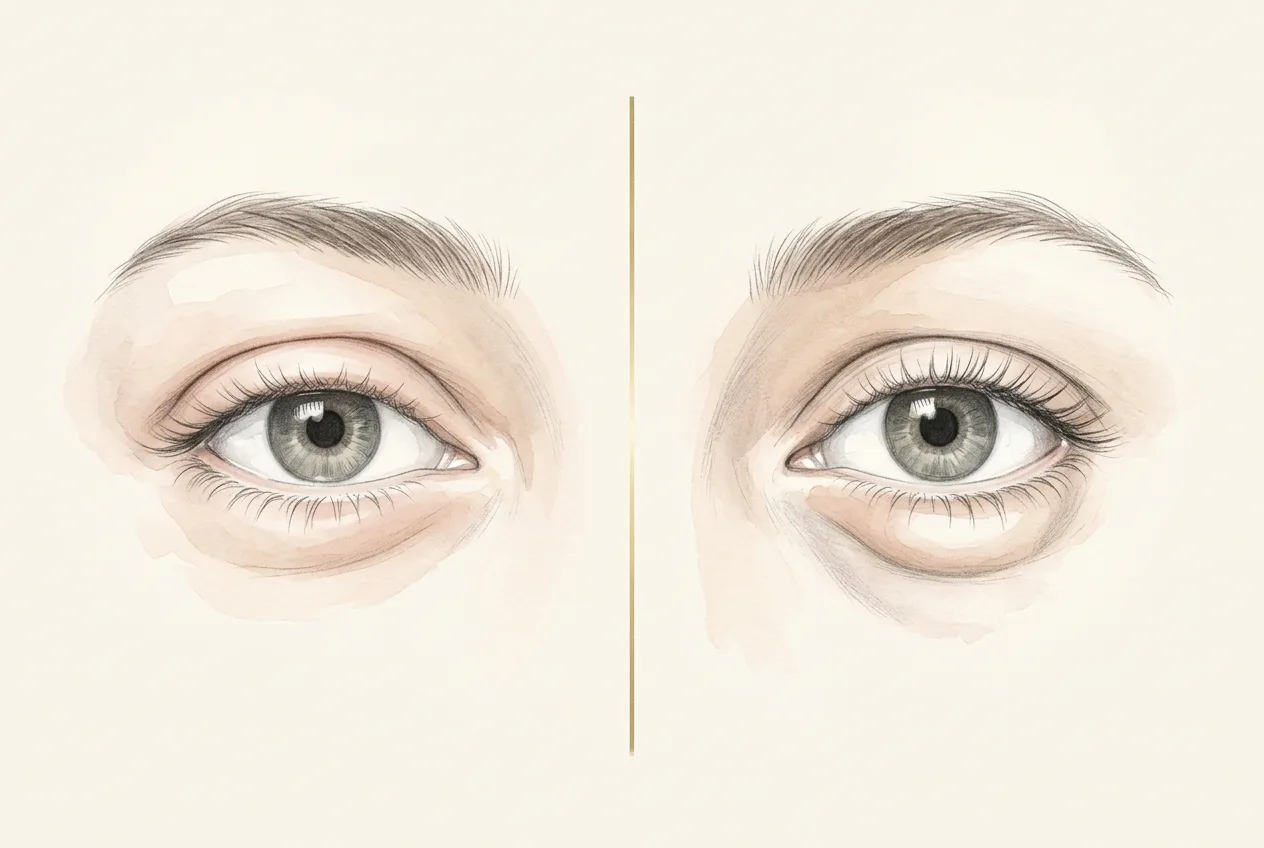
1.3. Dark circles and the tear trough: when it looks like a bag, but isn't
Dark circles can be caused by pigmentation, vessel transparency, anatomical shadows, or volume loss.
The tear trough is a depression that can cast a shadow beneath the eye.
Sometimes, the combination of a pronounced trough and a slight upper prominence creates the impression of a significant bag.
However, treating an anatomical depression is not the same as treating edema.
This distinction is essential before performing any aesthetic medicine procedure.
Eye bags and dark circles: why they appear and which treatments actually work
2. Why can the eyes become puffy during the night?
2.1. The horizontal position alters fluid distribution
During the day, gravity influences the distribution of bodily fluids.
When we are upright, there is a greater tendency for some fluid to accumulate in the lower regions of the body.
When we lie down, that distribution changes.
The horizontal position reduces the gravitational gradient between the limbs and the upper part of the body.
In certain individuals, this redistribution can promote greater visibility of fluid in the periocular tissues.
The skin of the eyelids, owing to its delicate structure, can display this phenomenon with particular ease.
That is why some people wake up with puffy eyes and notice a gradual improvement after getting up.
2.2. What role does lymphatic drainage play?
The lymphatic system plays a part in eliminating excess fluid and certain substances from the interstitial space.
The periocular region has lymphatic drainage pathways that contribute to tissue balance.
When inflammation, impaired drainage, or increased capillary filtration occurs, edema may appear.
However, it is worth avoiding an overly simplified explanation.
Not every case of morning puffiness means that the lymphatic system is diseased or blocked.
In many cases, normal physiological mechanisms combined with anatomical predisposition are involved.
2.3. Why does it improve after getting up?
When we get up and begin our daily activities, fluid distribution shifts once again.
Muscular activity and circulatory mechanisms contribute to the regulation of fluid balance.
In some patients, this coincides with a progressive reduction in periocular edema.
Swelling that appears in the morning and decreases throughout the day suggests a fluid component, but does not allow other causes to be ruled out.
3. Salt intake: a factor that often goes unnoticed
Sodium plays a role in regulating the body's fluid volume.
A high salt intake can promote water retention under certain circumstances.
That is why some people notice greater facial puffiness after particularly salty dinners.
It is not necessary to have consumed alcohol.
A dinner with very salty foods can coincide with a transient increase in puffiness the following day.
Among the products that can contribute significant amounts of sodium, we find certain cured meats, sauces, ready-made meals, salty snacks, and restaurant food.
However, the response varies considerably between individuals.
Not everyone develops periorbital edema after consuming salt.
Nor is it correct to automatically attribute under-eye bags to an excess of sodium without reviewing the clinical context.
The recommendation is not to eliminate salt entirely, but rather to avoid excessive consumption and maintain a balanced diet.
4. Allergies: a common cause even when we sleep well
4.1. Allergic rhinitis and periocular edema
Respiratory allergies can cause nasal congestion, sneezing, itching, and watery eyes.
They may also be accompanied by swelling around the eyes.
The allergic response involves inflammatory mediators that alter vascular permeability and promote certain changes in the tissues.
In some patients, symptoms are particularly evident upon waking.
4.2. Dust mites
Dust mites are an important source of domestic allergens.
They can be found in mattresses, pillows, bed linen, and other textile materials.
A sensitized person may experience symptoms at night or upon waking.
This can occur even in an apparently clean room.
The presence of dust mites does not necessarily mean that poor hygiene exists.
4.3. Can it worsen in autumn or winter?
Certain patients may notice a seasonal variation in their symptoms.
During the colder months, indoor environmental conditions, heating use, ventilation, and exposure to household allergens can all change.
There are also seasonal allergens that depend on the region and the pollination calendar.
However, there is no basis for claiming that cold, by itself, typically causes bags under the eyes.
The seasonal relationship must be evaluated on a case-by-case basis.
4.4. How can an allergic cause be suspected?
Some clues are:
• Eye itching.
• Tearing.
• Sneezing.
• Nasal congestion.
• Symptoms when cleaning the room.
• Worsening in certain environments.
• Personal history of rhinitis, asthma, or atopic dermatitis.
When these symptoms are present, an allergy evaluation may be indicated.
The nasal mycobiome and its curious relationship with asthma and allergic rhinitis
5. Contact dermatitis: when the problem lies in the products we use
The skin of the eyelids is particularly sensitive.
Some cosmetic products or substances present in the environment can cause irritant or allergic contact dermatitis.
Possible sources include:
• Facial creams.
• Eye contour products.
• Perfumes and fragrances.
• Cosmetic preservatives.
• Makeup.
• Hair products.
• Nail polishes and nail products transferred by touching the eyes.
• Certain topical medications.
Dermatitis can cause redness, flaking, itching, and swelling.
It does not always appear immediately after using a product.
Some allergic reactions are delayed.
For this reason, a cream used for weeks or months can also become a clinical suspect.
6. Blepharitis: a common inflammation of the eyelids
Blepharitis is an inflammation of the eyelid margin.
It can be related to Meibomian gland dysfunction, skin conditions, and other factors.
Patients may present with:
• A gritty sensation.
• Itching.
• Redness.
• Crusting on the eyelashes.
• Eye irritation.
• Eyelid swelling.
• Symptoms upon waking.
Blepharitis should not be confused with an anatomical fat pad.
Its treatment targets the inflammation and the mechanisms responsible for it.
7. Can nasal congestion influence the appearance of the eyes?
Nasal congestion and certain inflammatory conditions of the upper respiratory tract can be accompanied by visible changes around the eyes.
In patients with allergic rhinitis, dark under-eye circles may appear, sometimes referred to as allergic shiners.
Venous congestion and inflammatory changes can contribute to their appearance.
However, dark under-eye circles and palpebral oedema are not exactly the same phenomenon.
It is important to differentiate between them during the examination.
8. Genetics: why some young people have under-eye bags from a very early age
Not all under-eye bags appear as a consequence of ageing.
Facial anatomy has a hereditary component.
The position of the fat compartments, the bony structure, the supporting ligaments, and the transition between the eyelid and the cheek can mean that certain people present with visible bags from an early age.
Sometimes the patient mentions that their father, mother, or siblings have a similar appearance.
This background history can be a useful pointer.
An anatomical bag does not necessarily mean that pathological fluid retention is present.
And therefore it does not usually disappear simply by increasing water intake or by using creams.
9. Ageing of the periocular region
Over the years, changes occur in:
• Skin elasticity.
• Collagen quality.
• Support tissues.
• The relative position of orbital fat.
• The distribution of facial volume.
• The structure of the eyelid and cheek.
These changes can make lower bags more noticeable.
However, aging is not the correct explanation for all patients.
Especially when we are talking about young people with fluctuating edema.
10. What are malar bags and festoons?
This section is especially important in aesthetic medicine.
10.1. Malar edema
Malar edema appears in the upper cheek region, below the lower eyelid.
It can produce a prominence that does not correspond exactly to an orbital fat bag.
Its origin may include anatomical factors, drainage alterations, and fluid retention.
10.2. Malar mounds
Malar mounds are prominences of the malar region that may be related to soft tissue components and anatomical changes.
10.3. Malar festoons
Festoons are folds or prominences at the junction between the lower eyelid and the cheek, with variable involvement of skin, muscle, and soft tissues.
They may have an edematous component.
Their treatment is often complex.
They should not be confused with the fat pads of the lower eyelid or with the tear trough.
11. Can hyaluronic acid worsen under-eye bags?
Yes, in certain patients.
Hyaluronic acid fillers have hydrophilic properties and may be associated with edema in the periocular region.
The risk depends on various factors, such as the product's characteristics, the placement plane, the amount used, the anatomy, and the patient's predisposition.
In some cases, edema may appear or become evident some time after the injection.
Patients with malar edema, festoons, or a significant tendency toward periocular fluid retention require particularly careful assessment.
Not all dark circles or under-eye bags should be treated with fillers.
Before injecting, we must determine whether there is truly a volume loss that justifies the treatment.
In patients with edema associated with a previous filler, it may be necessary to assess its location and, in selected cases, consider dissolution with hyaluronidase by a qualified professional.
Hyaluronic acid fillers at Clínica Valorian: when are they indicated
12. Can botulinum toxin cause periocular swelling?
Under certain circumstances, botulinum toxin treatments around the eyes can modify muscle dynamics and be associated with changes in the periocular appearance.
Cases of eyelid edema have been described following these treatments.
It is not a frequent complication in all patients, but it should be considered when there is a clear temporal relationship.
The evaluation must differentiate between edema, muscular changes, and other causes.
Botulinum toxin — does it stay where it is injected? What science says
13. Kidney diseases: when under-eye bags are more than just an aesthetic concern
One of the medical causes we must not overlook is kidney disease.
The kidneys play a role in regulating water, sodium, and the elimination of substances.
Certain kidney diseases can cause fluid retention.
In particular, disorders that cause significant protein loss through the urine can reduce plasma oncotic pressure and promote the appearance of edema.
Periorbital edema can be a clinical manifestation, especially when it appears alongside other signs.
What symptoms should raise concern?
• Persistent or progressive swelling.
• Edema in the ankles or legs.
• Persistently foamy urine.
• Rapid weight gain due to fluid retention.
• High blood pressure.
• Changes in urine output.
• Fatigue or other general symptoms.
The presence of isolated under-eye bags does not mean that a kidney disease exists.
But when associated signs appear, the physician may consider an evaluation that includes kidney function tests and urinalysis.
14. Hypothyroidism and facial edema
The thyroid gland regulates numerous metabolic functions.
In hypothyroidism, tissue changes may occur and, in some patients, facial or periorbital swelling.
The myxedema associated with hypothyroidism has different mechanisms from simple transient fluid retention.
It may be accompanied by:
• Fatigue.
• Cold intolerance.
• Constipation.
• Dry skin.
• Hair changes.
• Weight alterations.
• Sluggishness or drowsiness.
The presence of these symptoms may justify measuring TSH and, depending on the results, other thyroid tests.
It is not necessary to request a complete hormonal profile for every person with morning puffiness.
15. Thyroid Eye Disease
Thyroid eye disease, frequently associated with Graves' disease, can cause inflammation of the orbital tissues.
Its manifestations include:
• Eyelid retraction.
• Ocular protrusion.
• Eyelid swelling.
• A sensation of pressure.
• Dry eye.
• Double vision.
• Ocular motility disturbances.
It should not be confused with ordinary cosmetic bags under the eyes.
Suspicion requires medical assessment and, where appropriate, ophthalmological evaluation.
16. Other systemic diseases
In certain circumstances, facial edema may be related to liver disease, heart disease, plasma protein abnormalities, or other systemic conditions.
These causes are far less likely in a young, healthy person with mild swelling that resolves quickly.
However, they should be considered when generalized edema, associated symptoms, or abnormal findings on examination are present.
The evaluation should be guided by the clinical history, not by an indiscriminate battery of tests.
17. Medications that may promote fluid retention
Some medications may be associated with edema through various mechanisms.
Examples include certain non-steroidal anti-inflammatory drugs, systemic corticosteroids, and some cardiovascular treatments.
Other medications may trigger allergic reactions or angioedema.
The exact list depends on the treatment being used.
It is important to review all medications, including those purchased without a prescription.
A prescribed treatment should never be discontinued without medical evaluation.
18. What is angioedema and why should we recognize it?
Angioedema is a swelling of deep tissues that can affect the eyelids, lips, tongue, and other areas.
It can have histaminergic or bradykinin-mediated mechanisms, among others.
Some forms are related to allergies and others to medications, such as certain angiotensin-converting enzyme inhibitors.
Sudden swelling of the eyelids accompanied by swollen lips or tongue, difficulty breathing, changes in voice, or trouble swallowing requires urgent medical attention.
Angioedema should not be treated as a simple cosmetic concern.
Cutaneous reactions to medications: how to recognize them and when they can be dangerous
19. Infections and inflammations requiring attention
Inflammation around an eye can also appear in the context of infections.
Among the diagnoses to consider are certain preseptal and orbital infections.
Warning signs include:
• Significant unilateral swelling.
• Pain.
• Fever.
• Intense redness.
• Pain with eye movements.
• Limitation of movement.
• Double vision.
• Decreased vision.
• Eye protrusion.
The presence of visual disturbances, pain with eye movements, or suspected orbital infection requires urgent evaluation.
20. Can sleep apnea be related to periocular problems?
Sleep-disordered breathing can be associated with certain ocular and eyelid abnormalities.
Among these, an association between obstructive sleep apnea and floppy eyelid syndrome has been described.
However, one should not conclude that a person with morning puffiness has sleep apnea.
The suspicion of sleep apnea depends on other symptoms, such as significant snoring, observed breathing pauses, daytime sleepiness, or non-restorative sleep.
A person can sleep eight hours and still not have good-quality sleep.
Sleep duration and sleep quality are not equivalent.
21. Does dehydration cause bags under the eyes?
There is a great deal of contradictory information on this topic.
Dehydration can alter the appearance of the skin and make certain shadows or depressions more visible.
But it does not represent a universal explanation for eyelid edema.
Drinking large amounts of water does not necessarily eliminate bags of anatomical origin.
Nor does it correct a kidney disease, a dermatitis, or a fat protrusion.
The recommendation is to maintain adequate hydration, avoiding both dehydration and excessive water intake without medical indication.
22. Is alcohol responsible?
Alcohol can influence sleep, hydration, and certain vascular processes.
In some people, it may coincide with a puffier facial appearance the following day.
But many people who have under-eye bags do not consume alcohol.
Therefore, it should not be used as an automatic explanation.
23. Does cold weather cause under-eye bags?
This is a particularly interesting question when autumn arrives or winter begins.
Cold weather can temporarily alter the skin's vascular response.
However, there is no solid evidence to support the claim that low temperatures are a frequent and direct cause of morning eyelid edema.
On the other hand, during the colder months, other factors may change:
• Use of heating.
• Indoor humidity conditions.
• Exposure to domestic allergens.
• Eye irritation.
• Dietary habits.
• Ventilation of the rooms.
• Sleep routines.
That is why, if a patient reports that the bags appear every winter, it is worth examining the full set of circumstances.
Seasonal coincidence alone does not prove a causal relationship with the cold.
24. How important is sleeping face down?
Sleep position can influence how fluids are distributed and the local pressure on facial tissues.
Some people notice greater puffiness when sleeping face down.
In certain cases it may be useful to observe whether there is a reproducible relationship with posture.
However, there is not enough evidence to guarantee that sleeping face up will eliminate the bags.
It should be considered a simple measure that can be tried, not a universal medical treatment.
25. Why do some people have bags and others do not?
The answer is usually multifactorial.
Two people may sleep the same number of hours and have a similar diet, yet present very different periocular appearances.
The reasons may include:
• Facial anatomy.
• Genetic predisposition.
• Skin characteristics.
• Distribution of orbital fat.
• Tendency to edema.
• Allergic diseases.
• Hormonal factors.
• Medications.
• Environmental conditions.
• Associated diseases.
There is no single valid explanation for all patients.
26. How to differentiate the causes during the consultation
| Characteristic | Possible orientation |
|---|---|
| Bilateral swelling upon waking that decreases during the morning | Fluid or postural component |
| Persistently present bags | Anatomical or fat component |
| Itching, tearing and sneezing | Allergy |
| Redness and scaling | Dermatitis |
| Crusting on eyelashes and a gritty sensation | Blepharitis |
| Persistent swelling with leg edema | Possible systemic cause |
| Foamy urine and generalized edema | Assess for kidney disease |
| Fatigue, dry skin and cold intolerance | Assess for hypothyroidism |
| Eye protrusion or double vision | Assess for orbital disease |
| Swelling after periocular fillers | Possible hyaluronic acid-associated edema |
| Sudden swelling with breathing difficulty | Medical emergency |
This table is for guidance only and does not replace clinical diagnosis.
27. What questions should the doctor ask?
A thorough clinical history can provide decisive information.
It is important to know when the bags appeared, whether they are new or long-standing, whether they affect both eyes, and how they evolve throughout the day.
It is also advisable to ask about allergies, nasal symptoms, cosmetic products, medications, prior aesthetic treatments, and family history.
In certain cases it is useful to compare photographs taken upon waking and several hours later, always under similar lighting conditions.
The examination should assess whether there is edema, fat prominence, skin changes, inflammation, or a combination of several factors.
28. What medical tests may be necessary?
Not all patients need laboratory work.
When the swelling is mild, bilateral, transient, and without other symptoms, an initial clinical assessment may be sufficient.
However, if the edema is persistent, progressive, or accompanied by suspicious signs, the physician may consider tests such as:
• Blood pressure.
• Creatinine and estimated glomerular filtration rate.
• Urinalysis.
• Urinary albumin-to-creatinine ratio or protein quantification when indicated.
• Serum albumin.
• TSH and other thyroid tests depending on the clinical context.
• Allergy evaluation when the clinical history justifies it.
• Ophthalmological assessment if relevant ocular signs are present.
Tests should be selected according to the clinical suspicion.
Ordering more tests does not always mean practising better medicine.
General medicine consultation at Clínica Valorian
29. What can we do at home if the bags are mild and transient?
When a relevant medical cause has been ruled out, some simple measures may help certain patients.
29.1. Review salt intake
Reducing excess sodium, especially in very salty dinners, may be helpful if there is a tendency toward fluid retention.
29.2. Maintain an adequate sleep routine
Getting a sufficient number of hours of sleep and keeping regular schedules supports overall well-being.
However, it should not be promised that sleep alone will eliminate all bags.
29.3. Try a different rest position
In some patients it may be helpful to avoid sleeping face down or to slightly elevate the head, as long as it is comfortable and there is no contraindication.
29.4. Apply gentle cold
A cool compress for a few minutes can temporarily reduce the sensation of puffiness.
Ice should not be applied directly to the skin, nor should extreme temperatures be used.
29.5. Manage allergies
When allergic rhinitis or conjunctivitis is present, properly treating the underlying condition can improve periocular symptoms.
29.6. Avoid irritating cosmetics
If dermatitis is present, identifying and avoiding the responsible agent is more important than adding multiple cosmetic products.
29.7. Do not use diuretics on your own
Diuretics are not a cosmetic treatment for under-eye bags.
Their unjustified use can cause dehydration, electrolyte imbalances, and other adverse effects.
30. Do eye contour creams work?
It depends on the problem.
Some formulations can temporarily improve hydration, skin appearance, or certain superficial signs.
Products containing caffeine may produce transient cosmetic effects in some people, although clinical evidence for eliminating persistent bags is limited.
No cream can guarantee the disappearance of significant orbital fat protrusion.
Nor does it replace the treatment of a renal, thyroid, or allergic disease.
It is important to avoid excessive advertising claims.
31. Is lymphatic drainage massage useful?
A gentle massage can provide a transient improvement in appearance in some patients.
However, evidence on its sustained efficacy for periocular bags is limited.
Intense massage should not be performed on inflamed, infected, or painful eyelids.
Nor should it be used as a substitute for medical evaluation when the edema is new or persistent.
32. What medical and aesthetic treatments are available?
Treatment depends on the diagnosis.
32.1. Allergy-related edema
The goal is to control the allergic condition and reduce exposure to identified triggers.
Treatment may include environmental measures and medications recommended by a doctor.
32.2. Eyelid dermatitis
It is necessary to identify the cause and treat the inflammation.
Eyelid skin is particularly delicate, which is why certain topical medications require specific precautions.
32.3. Blepharitis
Treatment may include eyelid hygiene and other measures targeting the underlying mechanism.
32.4. Edema associated with systemic diseases
The underlying disease must be treated.
Aesthetic procedures do not resolve the primary problem.
32.5. Anatomical fat bags
In certain patients, lower blepharoplasty or other oculoplastic techniques may be appropriate options.
The indication depends on anatomy, ocular status, and specialized evaluation.
32.6. Tear trough and volume loss
Some carefully selected patients may benefit from volume correction procedures.
However, hyaluronic acid is not appropriate for all anatomies and can worsen swelling in predisposed individuals.
32.7. Festoons and malar edema
These are complex problems that may require specialized approaches.
There is no single technique that guarantees their disappearance.
Treatment must be tailored to the predominant component: fluid, skin, muscle, or anatomy.
33. What role do lasers and skin quality treatments play?
Energy-based treatments can improve certain aspects of skin texture, laxity, or quality in selected patients.
But improving the skin does not necessarily mean eliminating a fat pocket or correcting edema.
Fractional CO₂ laser, for example, may have indications in periocular skin rejuvenation, with strict ocular safety precautions.
It should not be presented as a universal solution for any type of under-eye bag.
Fractional CO₂ Laser at Clínica Valorian
34. When should you seek urgent medical attention?
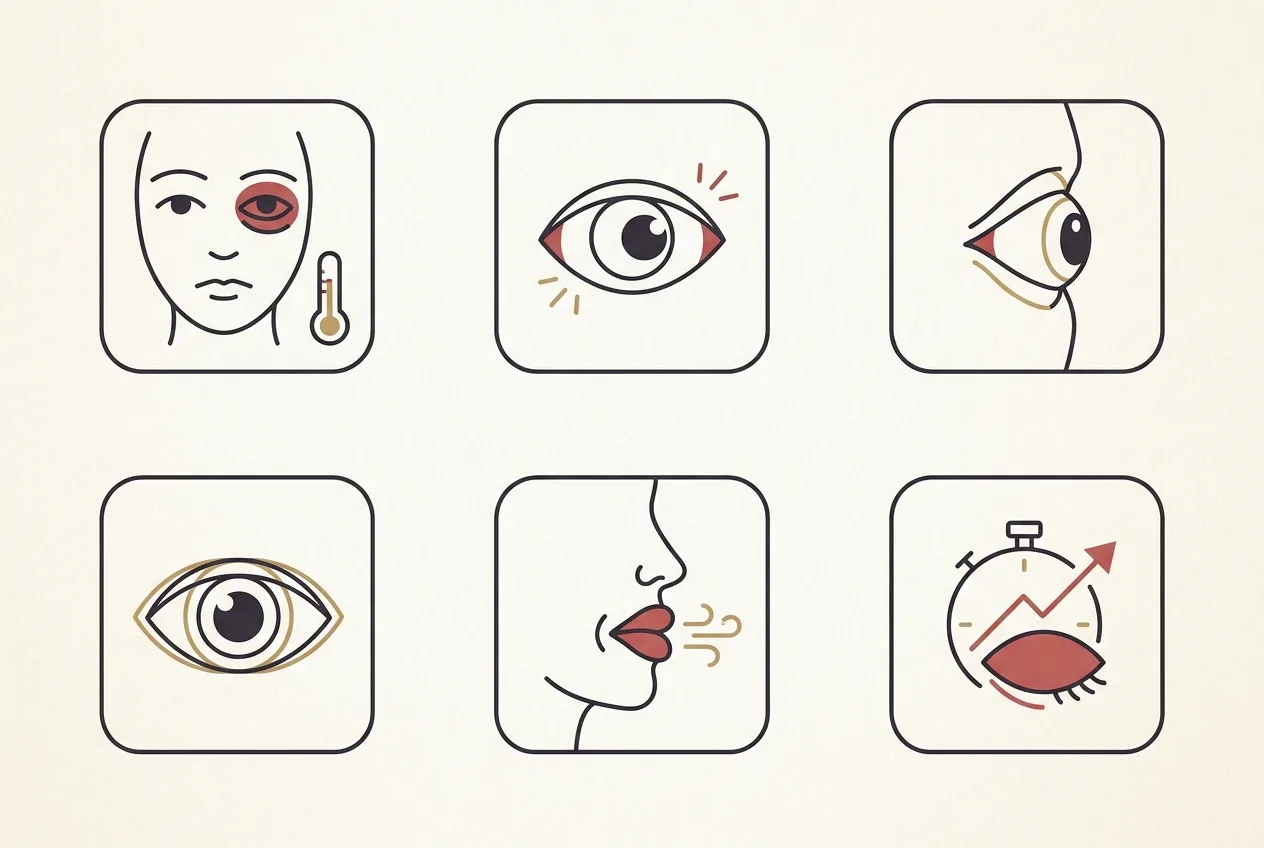
It is important to seek urgent evaluation if any of the following appear:
• Intense swelling of a single eye accompanied by pain or fever.
• Decreased vision.
• Newly onset double vision.
• Pain with eye movements.
• Acute eye protrusion.
• Significant redness with rapid worsening.
• Sudden swelling accompanied by difficulty breathing.
• Swelling of the tongue, throat, or lips with respiratory symptoms.
These signs may indicate problems requiring immediate attention.
35. When to seek a medical consultation without it being an emergency?
It is advisable to request an evaluation when the bags are new, persist throughout the day, progressively increase, are accompanied by other symptoms, or raise doubts about their origin.
An evaluation is also recommended before undergoing injections or aesthetic procedures in the periocular area.
A correct diagnosis avoids unnecessary treatments and can allow the detection of conditions that initially appear to be cosmetic problems.
36. Frequently asked questions
Why do I have bags under my eyes if I sleep eight hours?
Because sleep is not the only factor. Anatomy, fluid redistribution, allergies, and other causes can produce swelling even when rest is adequate.
Why do my eyes swell up in the morning and then go down?
There may be an edema component related to sleeping position and fluid distribution. If it happens frequently, it is worth reviewing possible associated factors.
Are under-eye bags caused by fluid retention?
Some are. Others correspond to orbital fat, anatomical changes, or skin-related issues. It is necessary to differentiate between them.
Can a 20-year-old have under-eye bags?
Yes. Genetic predisposition, allergies, and edema can appear at any age.
Do under-eye bags mean I have kidney problems?
Not necessarily. Most isolated under-eye bags do not allow a diagnosis of kidney disease to be made. However, persistent edema accompanied by other signs may warrant further investigation.
Does hypothyroidism cause swollen eyes?
It can cause facial and periorbital changes in certain patients. Diagnosis requires clinical evaluation and appropriate tests.
Can salt cause under-eye bags?
A high sodium intake may promote water retention in some people, although it does not explain every case.
Can allergies cause eyelid swelling during the night?
Yes. Allergies can cause ocular and palpebral inflammation, especially if there is exposure to allergens in the bedroom.
Does cold weather cause under-eye bags?
It has not been demonstrated that cold is a common direct cause. Seasonal changes may alter exposure to allergens and other environmental factors.
Does hyaluronic acid get rid of under-eye bags?
Not necessarily. In certain individuals it can worsen periocular oedema. Its indication requires careful anatomical assessment.
Do under-eye bags disappear with creams?
Creams may improve some superficial aspects, but they do not reliably eliminate an anatomical fat protrusion.
Is lymphatic drainage useful for under-eye bags?
It can provide temporary improvement in some cases, but the evidence on lasting results is limited.
Is laser treatment better than blepharoplasty?
It depends on the problem. A laser targeting the skin and surgery to correct fat bags have different objectives.
What can I do if I wake up with puffy eyes?
Monitor how the puffiness evolves throughout the day, check for allergies and possible irritants, reduce excess salt intake, and seek an assessment if the problem persists or shows warning signs.
37. Conclusion: not all under-eye bags are the same
When a young, athletic person with healthy habits wakes up with bags under their eyes, we should not automatically conclude that they sleep poorly or lead an unhealthy lifestyle.
The periocular region is anatomically complex.
The nocturnal redistribution of fluids, allergies, inflammation, genetic predisposition, and tissue characteristics can explain many cases.
In other instances, under-eye bags are a manifestation of a condition that requires attention.
And from the perspective of aesthetic medicine, there is one particularly important lesson.
We should not treat all bags as if they were a problem of volume loss.
A fat bag, palpebral edema, a malar festoon, and a tear trough are different conditions.
Hyaluronic acid, laser, surgery, and cosmetic treatments are not interchangeable.
The right choice always begins with identifying the cause.
That is why, when a patient tells me:
"Doctor, I sleep well, I exercise, and yet I still wake up with bags under my eyes,"
my first recommendation is not necessarily a cream or an injection.
It is to understand what is happening.
Because in medicine, and especially in aesthetic medicine, before correcting an appearance we must understand its origin.
Dr. Florian Vallecillo · The Doctor Explains · Clínica Valorian — Marbella
What to remember
- —Bags under the eyes do not always mean tiredness or aging: they can have physiological, anatomical, allergic, or medical causes.
- —Young people and athletes can also develop bags under the eyes, and morning edema is not the same as a fat pad.
- —Allergies, cosmetics, and other environmental factors can contribute to eyelid swelling.
- —Persistent edema, or edema accompanied by other symptoms, requires medical evaluation to rule out kidney disease, thyroid disorders, or other underlying causes.
- —Hyaluronic acid is not a universal solution and can worsen certain types of edema: a diagnosis must come before any cosmetic treatment.
Medical bibliography
- Mayo Clinic. Bags under eyes — Symptoms and causes. Información clínica sobre causas frecuentes, anatomía, retención de líquidos, alergias y envejecimiento. · Mayo Clinic
- Mayo Clinic. Bags under eyes — Diagnosis and treatment. Información sobre medidas conservadoras y opciones de tratamiento. · Mayo Clinic
- Merck Manual Professional Edition. Eyelid Swelling. Evaluación clínica del edema palpebral y diagnóstico diferencial de causas locales y sistémicas. · Merck Manual
- DermNet. Eyelid contact dermatitis. Dermatitis irritativa y alérgica de contacto en la región palpebral. · DermNet
- National Eye Institute. Blepharitis. Información médica sobre síntomas, causas y tratamiento de la blefaritis. · NEI
- National Eye Institute. Graves' Eye Disease. Información sobre enfermedad ocular tiroidea y manifestaciones orbitarias. · NEI
- National Kidney Foundation. Nephrotic Syndrome. Información sobre pérdida de proteínas por orina, edema y enfermedad renal. · NKF
- American Thyroid Association. Hypothyroidism. Información clínica sobre manifestaciones del hipotiroidismo. · ATA
- Sobel RK et al. Periorbital edema: a puzzle no more? Current Opinion in Ophthalmology, 2012;23(5):405–414. Revisión sobre diagnóstico diferencial y evaluación del edema periorbitario. · DOI · PubMed
- Newberry CI et al. Updated Management of Malar Edema, Mounds, and Festoons: A Systematic Review. Aesthetic Surgery Journal, 2020;40(3):246–258. · DOI
- Quah NQX et al. Contours and Confusions: A Review of Malar Mounds, Malar Edema, and Festoons. Journal of Craniofacial Surgery, 2026;37:2524–2533. · DOI
- Huerva V et al. Floppy eyelid syndrome in obstructive sleep apnea syndrome. Sleep Medicine, 2014. Asociación entre apnea obstructiva del sueño y síndrome del párpado flácido. · DOI
Do you wake up with bags under your eyes and don't know why? At Clínica Valorian, Marbella, an individualised medical assessment can help distinguish between fluid retention, anatomical alterations, inflammation, and other possible causes. The goal is to determine whether an appropriate treatment exists and to avoid unnecessary procedures.
You may also like · Aesthetic medicine
- After a laser, peel, or aesthetic treatment: what is your skin actually doing to repair itself?
- Stem cell-derived growth factors: the future of skin rejuvenation?
- Facial rejuvenation: what treatments exist and which one may be right for each skin type
- Forehead wrinkles: why they appear and how to treat them

Doctor Florian A. Vallecillo Cabrera
The doctor explains
Informational content, written and reviewed by Doctor Florian A. Vallecillo Cabrera. It does not replace an in-person consultation or an individual diagnosis.
At Clínica Valorian we carry out a personalised aesthetic medicine assessment in Marbella to select the treatment best suited to each patient.


