
Facial rejuvenation: what treatments exist and which one may be right for each skin type

Why I'm telling you this
«Doctor, I want to rejuvenate my face.» It is a phrase we hear constantly.
But a question immediately arises: what does rejuvenating actually mean? Eliminating wrinkles? Restoring volume? Improving dark spots? Minimising pores? Improving texture? Achieving a more radiant complexion? Looking less tired?
Because two people can ask for exactly the same thing: «I want a facial rejuvenation». And need completely different treatments.
The reason is simple: we do not all age in the same way.
Facial aging does not occur only in the skin
When we think of aging, we tend to picture wrinkles.
But the face ages at different levels.
What changes: the epidermis, the dermis, collagen, elastin, fat compartments, muscles, ligaments, and even the facial skeleton.
Current literature describes facial aging precisely as a three-dimensional process in which different layers are modified simultaneously and in different ways from one patient to another.
That is why: rejuvenating does not simply mean filling in wrinkles.
Diagnosis comes before treatment
When I assess a face, I try to answer several questions.
Is there excessive muscle activity? Is there a loss of support? Has the volume changed? Is the main alteration in the skin? Is there photoaging? Are there pigmentation spots? Is there a loss of elasticity? Are there scars or textural irregularities?
Because every problem requires a different tool.
And this is probably the most important idea in the entire article: we do not choose the treatment first. We identify the problem first.
1. When the main problem is expression lines
Forehead. Frown lines. Crow's feet.
Many of these lines appear primarily due to the repeated contraction of the facial muscles.
Here the main tool may be botulinum toxin, or neuromodulation.
Its function is to temporarily reduce the activity of specific muscles in order to soften dynamic lines. The AAD includes botulinum toxin among the procedures used to reduce certain signs of facial aging.
But the goal should not be: 'to freeze your face completely.'
The goal is to modulate. To preserve expression. To preserve anatomy. To preserve identity.
Which skin type is it suitable for?
Here, skin type matters less than muscle pattern and anatomy.
We can have excellent skin and yet a very powerful frontalis muscle that produces deep lines.
That is why not every rejuvenation begins by treating the skin. Sometimes it begins by treating movement.
2. When the face has lost support or volume
Over the years, the fat compartments and deep structures of the face change.
We may observe: loss of malar projection, temporal hollowing, certain grooves, changes in facial contour, or a more tired appearance.
In selected patients we can use hyaluronic acid to subtly restore support or volume.
Fillers are used precisely to restore lost volume and improve certain folds and depressions.
But there is a rule here that I consider fundamental: more volume does not mean more youth.
The mistake of trying to fill everything
For years, part of aesthetic medicine focused excessively on filling.
A groove appeared: we filled it. Another appeared: we filled it. And then another.
The problem is that facial aging does not simply consist of the face 'emptying out.' The anatomy changes in a far more complex way.
That is why trying to chase every line with hyaluronic acid can end up altering natural proportions.
The goal should be: restore when necessary, not inflate.
3. When the problem is skin quality
There are patients who barely need any volume at all.
What we observe is something else: thin skin, reduced elasticity, uneven texture, fine lines, loss of radiance.
Here our goal changes. We want to work on skin quality.
We can consider different strategies depending on the skin: biostimulation, skinboosters, polynucleotides, lasers, peelings, or selected combinations.
Not all of them have the same level of evidence, nor do they pursue exactly the same result, so they must be indicated on an individual basis.
4. Biostimulation: when we want to work on the dermis
Biostimulators seek to induce a progressive tissue response and promote dermal remodelling.
Among the products studied we find, among others, calcium hydroxyapatite and poly-L-lactic acid.
A systematic review has analysed these agents together with PRP/PRF as complementary facial rejuvenation treatments, although the evidence and characteristics differ for each procedure.
This is important: biostimulation is not the same as filling.
Although some products may also have structural effects, the goal can be fundamentally to progressively improve certain tissue characteristics.
5. Skinboosters: when we seek hydration and quality
Skinboosters generally use hyaluronic acid with different characteristics from the fillers intended to add volume.
The goal is not to create cheekbones. Nor to modify proportions.
We aim to work on skin characteristics such as hydration and surface quality.
They can be interesting when the problem is not: 'I lack volume' but rather: 'my skin has lost quality'.
6. What about polynucleotides?
Polynucleotides have progressively been incorporated into certain aesthetic medicine strategies focused on skin quality.
They may be considered in selected patients as part of an overall treatment plan.
But we should not turn every new development into: 'the new treatment that replaces all the others'.
In aesthetic medicine, it almost never works that way. A new tool does not automatically eliminate the usefulness of the previous ones.
The question remains: what does this skin need?
7. When photoageing is present
Here we may find: dark spots, uneven texture, fine lines, a dull appearance, pigmentation irregularities, and changes resulting from accumulated sun exposure.
In this context, treatments that act on the surface and the dermis can play an important role.
The AAD includes among the options used to treat different signs of sun damage: retinoids, chemical peelings, and laser resurfacing, as well as other techniques depending on the specific problem.
8. Fractional lasers: when we want to remodel the skin
Fractional láser fraccionado creates multiple microscopic treatment zones while leaving surrounding tissue that participates in the recovery process.
Depending on the technology used, we can address: texture, fine lines, certain pigmentary irregularities, scars, and signs of photoageing.
But saying: 'I want to have a laser treatment' is like saying: 'I want to take a medication.' Which one? For what? With what goal?
There are different wavelengths, depths, and mechanisms. The laser must be selected based on the problem we want to treat.
9. Ablative or non-ablative laser?
In simplified terms: ablative treatments produce a more intense controlled injury to the skin surface and usually involve a longer recovery period.
Non-ablative treatments aim to produce remodelling while better preserving the skin surface and generally have a shorter recovery time.
But within each category there are enormous differences.
That is why we cannot choose a laser simply by its brand name.
10. Peelings: a tool that still makes sense
Chemical peelings remain a useful dermatology tool.
Depending on the agent and depth, they can act on: texture, pigmentation, photoageing, certain lines, and other skin alterations.
In 2026 they continue to be part of the options used in aesthetic dermatology and can be combined with other strategies when there is an appropriate indication.
More technological does not automatically mean better. Sometimes a simple tool, correctly indicated, produces exactly the result we are looking for.
11. What if the main problem is pigmentation spots?
Then before talking about rejuvenation, we need to make a dermatological diagnosis.
Because a pigmentation spot can be: solar lentigo, melasma, post-inflammatory hyperpigmentation, keratosis, naevus, or a lesion that requires further study.
We should not simply fire a laser at any pigmented area.
First: what is it? Then: how do we treat it?
12. Sensitive skin or skin with rosacea requires a different approach
This is another example of why a universal protocol does not exist.
A person with active rosacea, inflammation, or a compromised skin barrier should not automatically receive the same treatment as someone with resilient, photoaged skin.
Sometimes the first step in rejuvenation is far less spectacular: bringing the skin condition under control first. Only then can we think about procedures.
Multimodal planning must take into account precisely those concomitant dermatological problems — such as pigmentation, rosacea, or volume loss — before selecting and ordering the procedures.
13. What about darker skin tones?
Phototype matters too.
Skin with a higher melanin content may carry a greater risk of pigmentary changes following certain inflammatory procedures.
That does not mean we cannot use lasers or peelings.
It means we must choose carefully: technology, parameters, depth, preparation, and aftercare.
Same treatment does not mean the same parameters for every skin type.
14. Do we need to combine treatments?
Sometimes, yes.
Because we may simultaneously have: dynamic wrinkles, loss of structural support, photoageing, and reduced skin quality.
A single procedure can hardly correct mechanisms that are entirely different from one another.
Recent literature on facial rejuvenation describes precisely multimodal strategies that act on different layers and structures of the face.
But combining treatments does not mean doing everything. It means choosing a few tools with specific objectives.
15. Do all treatments have to be done on the same day?
No.
Many times I prefer a progressive plan.
For example: first we correct the problem that most disrupts facial balance. We wait. We reassess. And only then do we decide whether we need the next step.
This has an enormous advantage: we can stop when we are already doing well.
Because overtreatment also exists.
In aesthetic medicine we talk a great deal about how to treat. But we should talk more about when to stop treating.
A face can accumulate: too much volume, too much toxin, too many procedures, and end up losing the characteristics that made it individual.
More treatments do not necessarily mean a better result.
What, then, is the best facial rejuvenation treatment?
There is no single one. And that, precisely, is the answer.
For one person it may simply be: photoprotection + topical treatment. For another: neuromodulation. For another: improving skin quality. For another: a laser. For another: discreetly restoring support. And for another: a progressive combination.
Current reviews insist that the modality must be adapted to the patient's characteristics, objectives, and needs.
What happens with age?
We do not treat an age either.
A 35-year-old person may present significant photoageing. Another person at 50 may have excellent skin quality but structural volume loss.
One person may have many dynamic wrinkles and virtually no pigmentation spots. Another may have few wrinkles but very noticeable pigmentary photoageing.
That is why: chronological age does not prescribe the treatment.
Which treatment has the shortest recovery time?
That also depends on the goal.
Some injectable treatments allow patients to resume most of their usual activities quite quickly.
Other procedures — certain lasers or peelings in particular — require several days of recovery.
The intensity of the treatment and the recovery time are usually part of the decision. Not every patient wants — or needs — the most intensive procedure.
And what about natural-looking results?
For me, this is one of the most important points.
Rejuvenating does not mean trying to reconstruct exactly the face we had at 20.
It means improving what bothers us while preserving: proportions, movement, expression and identity.
That is well-aging. Not fighting every sign of age. But trying to age better.
How much does facial rejuvenation cost?
This question comes up very often.
In fact, in our search-trend research we found a very strong interest in 'facial rejuvenation prices'.
But there is no single price because there is no single treatment either.
One patient may need one procedure. Another may need a progressive plan. And another may need only dermatology treatment and home care.
That is why the price depends on: what we want to correct, which treatment we use, how many sessions are needed, and whether we need to combine procedures.
First we design the plan. Then we can calculate how much that plan costs.
So how do you choose?
I would start with four questions.
1. What exactly bothers me? Wrinkles, spots, texture, sagging, volume loss…
2. What is the cause? Movement, photoageing, structural changes, pigmentation…
3. Which treatment actually addresses that cause? Not the trend of the moment. The mechanism.
4. How much treatment do we need? And here my answer is usually: the minimum necessary to achieve the goal we have defined.
What I want you to remember
Facial rejuvenation is not a treatment. It is a strategy.
We can use: botulinum toxin, hyaluronic acid, bioestimulación, skinboosters, polinucleótidos, lasers, peelings, topical treatments and photoprotection.
But none of these tools is 'the best'. Because each one does something different. Aesthetic dermatology today has precisely a wide range of options that must be selected according to the problem we want to correct and the characteristics of the patient.
That is why, when someone asks me: 'Doctor, what treatment do you recommend for rejuvenation?', I do not start by looking at a machine. Nor a syringe. I start by looking at the face.
Because the right question is not: "What treatment is trending?" The right question is: "What has changed, and what do we actually need to treat?"
And very often, when we answer that question correctly, we discover something important: to achieve a natural result, we do not need to do more. We need to choose better.
You may also like · Aesthetic medicine
- Does collagen in cream or capsule form rejuvenate the skin? What we actually know
- Botox: does it really stay where it's injected? What science says
- How to choose a good aesthetic physician: warning signs before a treatment
- Radiofrequency and facial HIFU: why I personally do not recommend them for facial rejuvenation
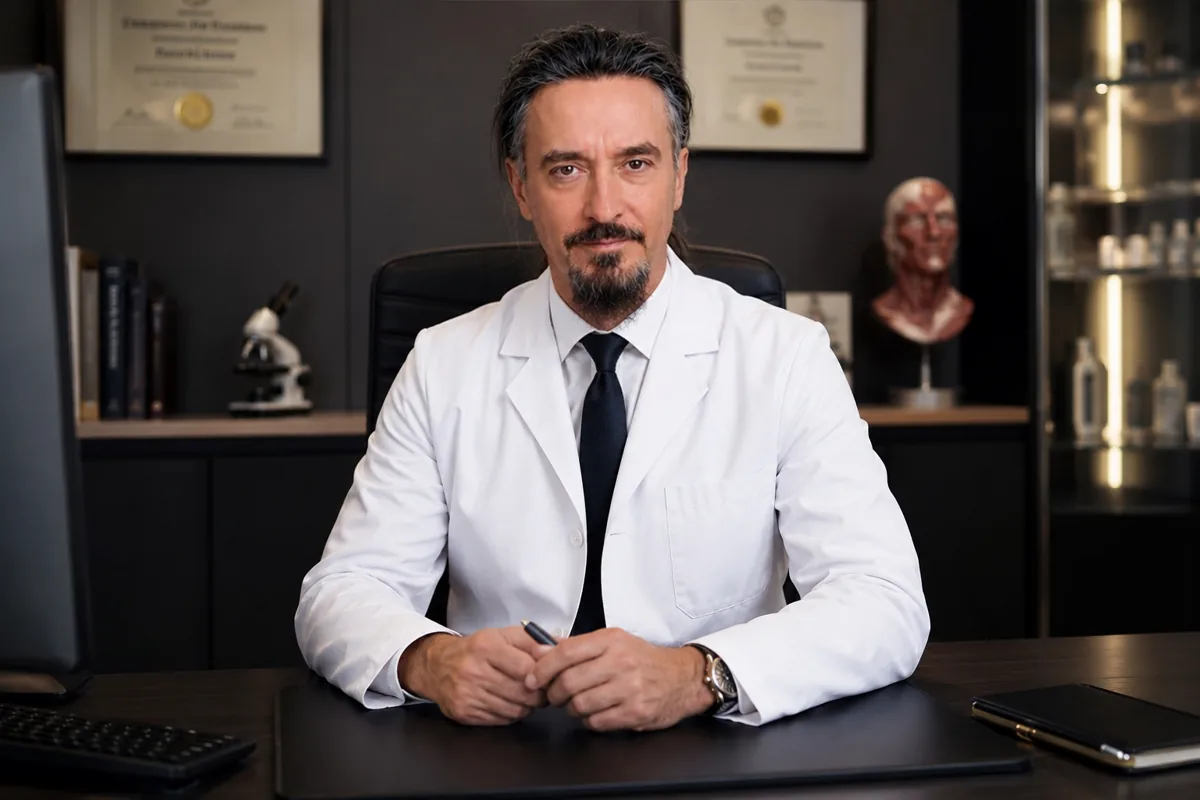
Doctor Florian A. Vallecillo Cabrera
The doctor explains
Informational content, written and reviewed by Doctor Florian A. Vallecillo Cabrera. It does not replace an in-person consultation or an individual diagnosis.
At Clínica Valorian we carry out a personalised aesthetic medicine assessment in Marbella to select the treatment best suited to each patient.


