Are there fungi in your nose? The nasal mycobiome and its curious relationship with asthma and allergy
Why I'm telling you this
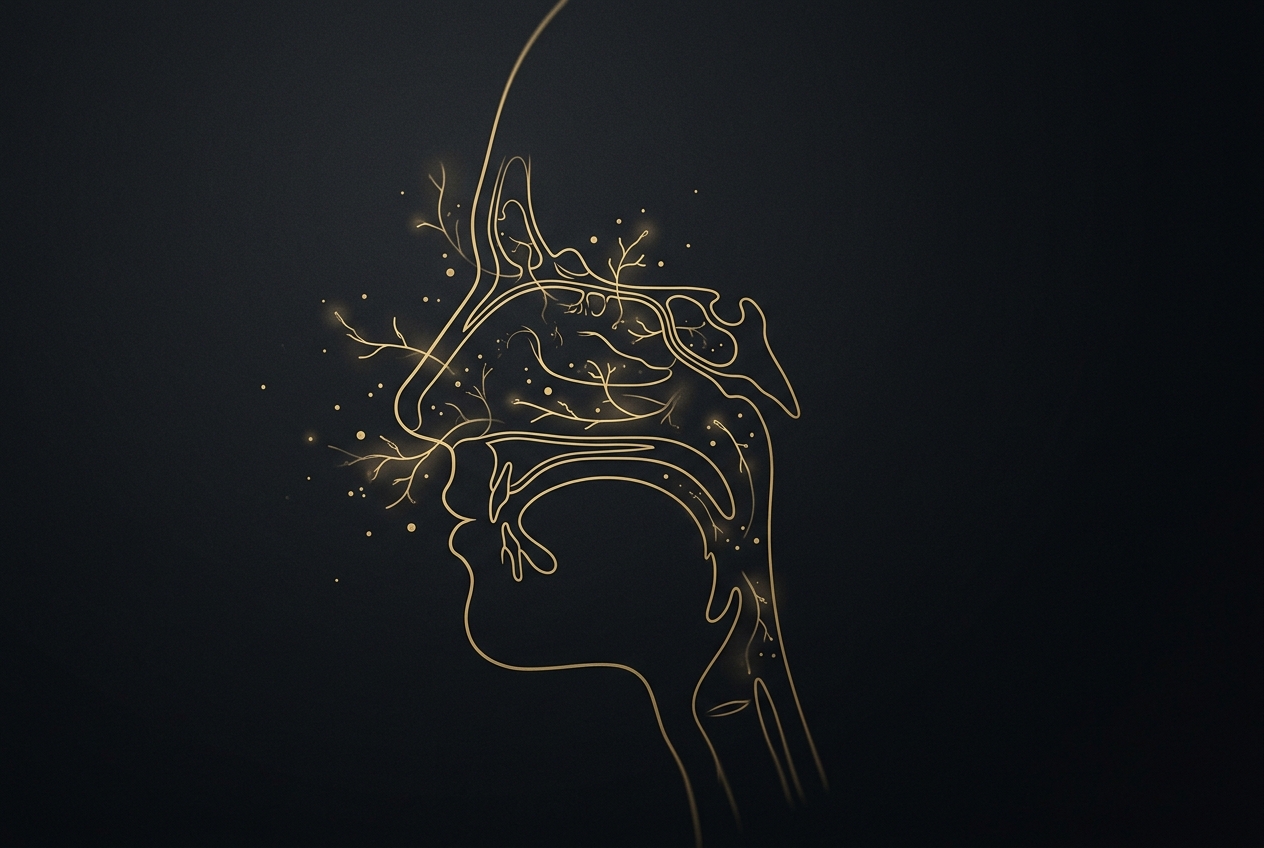
We have all heard about the gut microbiota, that community of bacteria in the intestine that has almost become famous. But there is a much lesser-known neighbourhood that is no less fascinating: the collection of fungi that inhabit the walls of our nose. Scientists call it the nasal mycobiome.
I am Dr. Florian Vallecillo, and today I want to explain a finding that I find very interesting: people with asthma or allergic rhinitis have a considerably more diverse population of fungi in their nose than healthy individuals. What does this mean? Do fungi cause allergy, or do they simply accompany the disease? Let us look at this calmly and without exaggeration.
What the nasal mycobiome is (and why we barely knew it existed)
Our nose is not a sterile tube. On its walls, microorganisms naturally coexist: bacteria, viruses, and fungi. We call this community of fungi the nasal mycobiome. The word comes from the Greek «mykes», fungus, and «bios», life.
For years, almost all research focused on bacteria. We knew very little about the fungi lining the upper airways and their possible relationship with allergic diseases. And yet, the nose is the first gateway for air — and for everything floating in it: pollen, dust mites, fungal spores — so it makes perfect sense to ask what role those fungi play in respiratory allergies.
The study: more than 300 noses analysed
A team from the University of Porto (Portugal) set out to answer that question. They collected nasal mycobiome samples from more than 300 participants — children and young adults — using a simple nasal swab. Approximately half had asthma, allergic rhinitis, or, in most cases, both. The other half were healthy individuals who served as a comparison group. The work was published in the scientific journal Frontiers in Microbiology.
The researchers did not look directly for each fungal species, but rather for their 'fingerprints': molecules called purines, which are essential to fungal activity (fungi use them to receive signals, obtain energy, and build their DNA). By analysing these fingerprints, they were able to reconstruct which fungi were present and how active they were.
The finding: greater fungal diversity in people with allergy or asthma
The main result is striking. The nasal mycobiome is composed primarily of two large groups of fungi and fourteen distinct genera. Of those genera, 71% appeared at a significantly higher frequency in people with allergic rhinitis and asthma than in healthy individuals.
Among the more frequently found fungi were names familiar in medicine — such as Penicillium, Aspergillus, Candida, and Malassezia — genera recognised for their capacity to act as allergens or as opportunists (meaning they can take advantage of a state of weakness to cause problems). It was not just a matter of greater variety: the composition, structure, and even the metabolic functions of that fungal community were different in the patients.
Put simply: the nose of a person with respiratory allergy harbours a fungal 'ecosystem' that is different — and more diverse — than that of a healthy person.
The most important point: association is not the same as causation
This is where I ask you, as always, for a little caution. The fact that two things appear together does not mean that one causes the other. This study captures a snapshot of the situation at a specific moment in time: it tells us that fungi and allergy coincide, but it cannot tell us which came first.
There are at least two possible explanations. Those fungi may alter the immune environment of the nose and contribute to allergic inflammation. Or it may be the other way around: a nose that is already inflamed and allergic may become a more hospitable environment for fungi to proliferate. From a single snapshot, it is impossible to distinguish cause from effect. For that, studies would be needed that follow the same individuals over time.
Why this fits with what we know about allergic asthma
The idea that fungi enter the equation is not far-fetched. Asthma is a disease in which the airways become inflamed and narrowed, and in a large proportion of cases that inflammation is allergic in origin: in adults, approximately half; in children, the majority. Asthma and allergic rhinitis frequently go hand in hand.
Defensive cells called eosinophils play a role in that inflammation — they are activated by allergens such as pollen, dust mites, smoke, and pollution, and also, notably, by certain fungi. The fact that the fungal map of the nose differs in people with allergies adds one more piece to a puzzle we are still assembling.
Can this help us better treat or diagnose allergies?
Not yet. This is a promising line of research, not a test you can request at an appointment or a treatment that is currently available. The authors themselves state it clearly: if future studies confirm this relationship and manage to identify how these fungi influence the immune system, the nasal mycobiome could one day become a target for diagnosis or treatment. But that 'one day' requires, first, a great deal more science.
In the meantime, the management of asthma and allergic rhinitis continues to be based on what we already know works: identifying and reducing exposure to allergens, controlling inflammation with the appropriate treatments, and maintaining adequate medical follow-up.
When is it worth seeking medical advice?
It is worth seeking advice if you have persistent nasal symptoms — congestion, sneezing, itching, or a runny nose that does not improve — if symptoms of asthma appear (coughing, wheezing, a sensation of breathlessness, or chest tightness), or if a known allergy worsens or stops responding to your usual treatment. In children, any repeated breathing difficulty warrants an assessment.
I am Dr. Florian Vallecillo, and as always I prefer to explain the reasons behind things. This study does not change your treatment today, but it does open a fascinating window: one in which the nose is understood not as a simple passage, but as a small living ecosystem whose balance may have more to do with our allergies than we had imagined.
What to remember
- —The nasal mycobiome is the collection of fungi that live naturally on the walls of the nose; until recently, it had been studied very little compared to bacteria.
- —A study from the University of Porto (Frontiers in Microbiology, 2024) analysed the nasal mycobiome of more than 300 children and young people, either healthy or with asthma and allergic rhinitis.
- —People with respiratory allergy had a more diverse nasal mycobiome: 71% of fungal genera were more frequent than in healthy individuals.
- —Among the most common fungi were well-known allergenic or opportunistic genera, such as Penicillium, Aspergillus, Candida, and Malassezia.
- —This is an association, not a cause: the study cannot determine whether fungi promote allergy or whether an already allergic nose facilitates their proliferation.
- —For now, this does not change diagnosis or treatment; the management of asthma and allergic rhinitis continues to be based on avoiding allergens, controlling inflammation, and medical follow-up.
Sources

Doctor Florian A. Vallecillo Cabrera
The doctor explains
Informational content, written and reviewed by Doctor Florian A. Vallecillo Cabrera. It does not replace an in-person consultation or an individual diagnosis.