Microbiome: what if we stopped trying to add bacteria?

Why I'm telling you this
For years, whenever the subject of the gut microbiome came up, the answer seemed almost automatic: 'Take probiotics.' A few billion Lactobacillus, some Bifidobacterium, sometimes a yeast such as Saccharomyces boulardii, all packed into a capsule with the promise of 'rebuilding the gut flora.'
Personally, I find myself questioning this reasoning more and more forcefully. Not because all probiotics are useless — certain strains have well-defined indications and interesting clinical data.
But because the idea that we could restore an extraordinarily complex intestinal ecosystem simply by arbitrarily adding a handful of industrially selected micro-organisms now strikes me as far too simplistic. And above all because modern microbiome research is gradually compelling us to shift our entire paradigm.
Watch the video
Microbiota: feeding the ecosystem
Our gut is not an aquarium that simply needs a few extra bacteria
The gut microbiota is an ecosystem. It comprises hundreds of microbial species, thousands of strains, and a vast network of interactions between bacteria, yeasts, viruses, intestinal cells, the immune system, diet, and metabolites. These micro-organisms cooperate, compete, feed on one another, and occupy extremely precise ecological niches.
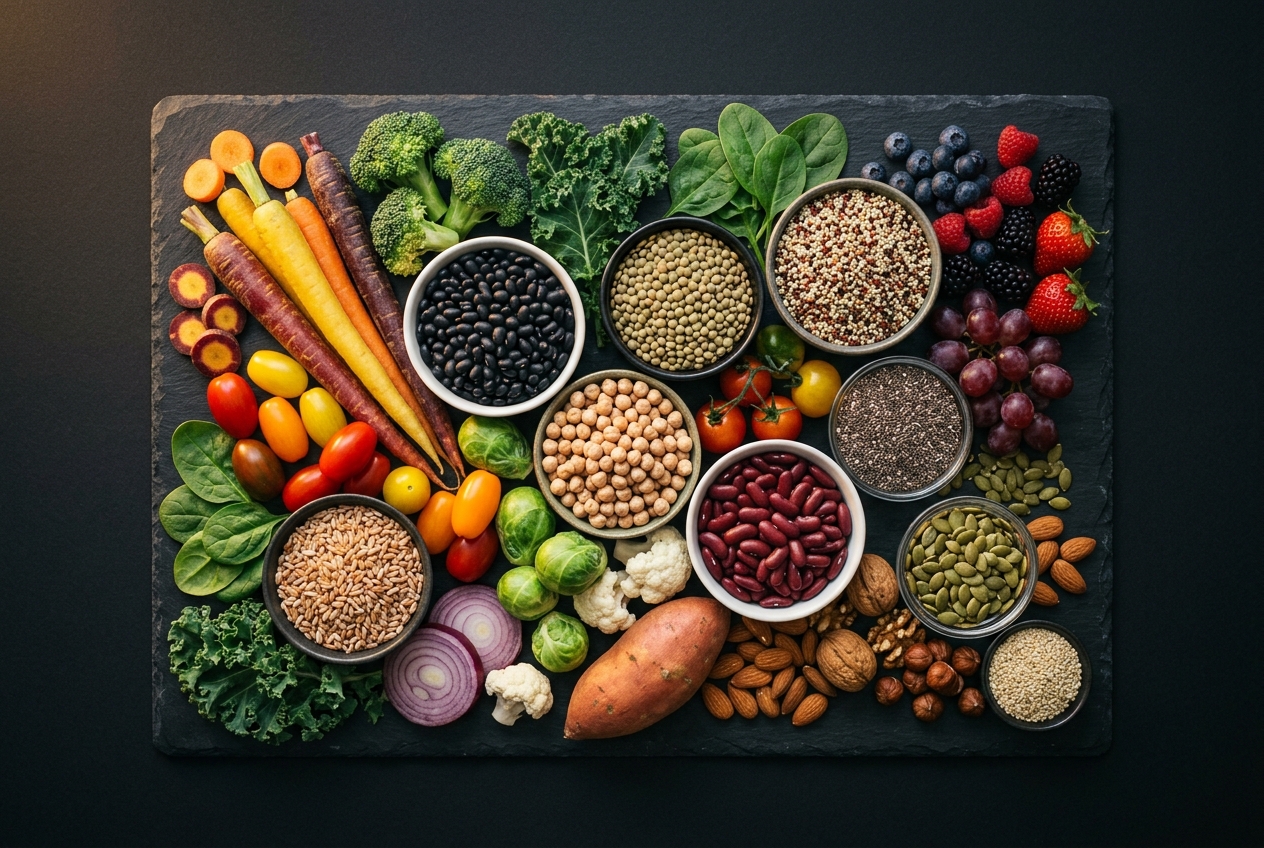
This is why I like to use a simple comparison: a microbiota is not an aquarium to which you add a few fish — it is a forest. And when a forest is weakened, you do not restore its biodiversity by mass-planting three randomly chosen tree species: you begin by restoring the soil, the water, the nutrients, and the conditions that allow the ecosystem to function again. This is exactly how I believe we must gradually learn to think about the gut microbiota.
The problem with the 'probiotics = good flora' paradigm
The word probiotic is enormously appealing. It intuitively suggests: good bacteria → gut → better microbiota. But the biological reality is considerably more complex.
A probiotic is, by definition, a living micro-organism that, when administered in adequate quantities, delivers a demonstrated benefit to the host. This absolutely does not mean that it will permanently colonise the gut, take the place of a missing bacterium, automatically increase microbial diversity, rebuild the original microbiota, or spontaneously restore what we might call a 'normal flora'. This distinction is essential.
A study that profoundly changed the way we think about probiotics
In 2018, a team led by Eran Elinav and colleagues published a particularly important study in Cell. The researchers administered a mixture containing eleven probiotic strains to volunteers, then examined not only their stools but also different regions of the digestive tract directly.
The result was particularly striking: colonisation by the probiotics was highly individual. In some individuals, certain strains managed to temporarily colonise specific intestinal regions; in others, the resident microbiota mounted a genuine resistance to colonisation. This response could be linked to the initial characteristics of both the microbiota and the host.
In other words: the same probiotic, given to two different people, does not necessarily produce the same effect. And finding the strain in the stools does not necessarily mean it has truly colonised the intestinal mucosa. This is a fundamental observation.
Even more surprising: after antibiotics, some probiotics delayed microbiota recovery
A second study published simultaneously in Cell, by Suez and colleagues, is probably even more unsettling for our conventional view of probiotics. Following antibiotic treatment, the researchers compared several strategies for microbiota recovery.
One might intuitively imagine that giving probiotics quickly would allow the microbiota to rebuild faster. Yet the results showed exactly the opposite in this experiment: compared with spontaneous recovery, the group receiving the probiotic mixture displayed delayed and persistently incomplete reconstitution of the native gut microbiota and mucosa.
The probiotics did indeed have an effect, but that effect was not necessarily the one we had imagined: they could temporarily occupy certain niches and interfere with the return of the individual's own microbiota.
We must of course be rigorous: this study does not demonstrate that 'probiotics cause dysbiosis' in every situation. But it demonstrates something far more interesting: adding bacteria considered beneficial is not necessarily equivalent to restoring a person's microbiota. And that is a major distinction.
So, rather than adding bacteria… why not nourish the ones we already have?
This is where prebiotics, to my mind, come into their own. A prebiotic is not a bacterium. According to the consensus definition of the International Scientific Association for Probiotics and Prebiotics, it is a substrate that is selectively used by the host's micro-organisms and confers a health benefit.
This is an intellectually very different approach. With a probiotic, we decide: 'I am going to introduce this bacterium.' With a prebiotic, we propose instead: 'I am going to supply the gut ecosystem with the substrates that certain microbial communities need in order to function.' We are no longer simply trying to seed: we are trying to nourish.
Nourishing the microbiota rather than trying to replace it
Fermentable dietary fibres, certain oligosaccharides and resistant starch reach the colon partially or entirely undigested by the small intestine. They then become substrates for intestinal bacteria. Among the most studied compounds are inulin, fructo-oligosaccharides (FOS), galacto-oligosaccharides (GOS), certain resistant starches and various fermentable fibres, as well as, in a broader dietary conception, a wide diversity of plants rich in fibre and polyphenols.
But their value does not consist solely in 'growing a good bacterium'. The microbiota functions through metabolic chains: one bacterium uses a fibre and produces a metabolite; a second species uses that metabolite and produces another; a third species uses it in turn. This is what is known as cross-feeding between micro-organisms. And it is this orchestration that makes the microbiota so fascinating.
The example of butyrate
Butyrate is probably one of the best illustrations of this logic. It belongs to the family of short-chain fatty acids, along with acetate and propionate. It is produced in the colon when certain bacteria ferment substrates derived from our diet. Some intestinal bacteria are particularly important in these butyrate-producing networks, notably species belonging to the Faecalibacterium, Roseburia, and Eubacterium groups.
Butyrate has several particularly interesting physiological functions: it serves as a major energy source for colonocytes, contributes to the maintenance of the epithelial barrier, and is involved in the regulation of various immune and inflammatory pathways. Short-chain fatty acids are now recognised as one of the main identified links between diet, the microbiota, the intestinal barrier, and immunity.
This is why, for me, the question becomes far more interesting when we stop asking: 'Which bacterium should I take?' and instead begin to ask: 'How do I create, within my gut, the conditions that allow my microbiota to produce the metabolites it needs?'
Can one take butyrate directly?
Yes. Butyrate also exists in various supplemental forms, notably as sodium butyrate or in microencapsulated formulations. Clinical research on the subject is advancing: recent controlled trials are examining its potential benefit in certain inflammatory bowel diseases and in various metabolic contexts.
But I personally distinguish between two things: supplying butyrate, and restoring the intestinal ecosystem's capacity to produce butyrate on its own. These are not quite the same medicine. Supplementation may have its place in certain situations, but from a physiological standpoint, my primary goal remains to encourage a sustainable, endogenous production of beneficial metabolites by the microbiota itself.
Dietary diversity probably matters more than multiplying the number of capsules
We also have interesting data showing that diet can profoundly alter the function of the microbiota. A randomised prospective study published in Cell in 2021 by Wastyk and colleagues at Stanford compared a diet enriched in plant fibres with a diet enriched in fermented foods.
The high-fibre diet notably increased the microbial enzymatic potential for breaking down complex carbohydrates, with very different responses depending on each individual's baseline microbiota. The fermented food intervention, in this study, increased microbial diversity and reduced several inflammatory markers. Here again, one lesson stands out: the microbiota responds to its nutritional environment, and that response is individual.
The microbiota we have also depends on what we feed it
The experimental work of Sonnenburg and collaborators has also shown how microbiota-accessible carbohydrates, found in particularly high amounts in dietary fibre, contribute to maintaining intestinal microbial communities. In their model, a diet chronically deficient in these substrates progressively led to a decline in certain microbial populations and a loss of diversity across generations.
This was experimental work in mice, and its results should therefore not be extrapolated too freely to humans. But the biological message is powerful: an ecosystem that is no longer fed will eventually lose some of its functions and some of its inhabitants.
My position: should we stop probiotics?
No. Medicine must never become ideological. There are specific situations in which certain probiotic strains have efficacy data: a given strain may have a given indication.
What I do challenge, however, is the normalisation of reasoning that is far too simplistic: 'Do you have a gut problem? Take probiotics.' Or worse: 'The more strains and the more billions of bacteria in the capsule, the better your microbiome will be.' We have no serious scientific reason to believe that the functioning of such a complex ecosystem can be reduced to this.
I therefore prefer to turn the question around. Before seeking to introduce foreign bacteria, let us ask ourselves why the patient's microbiome is not functioning well: is it lacking fermentable fibre? Is their diet too monotonous? Is it lacking resistant starch? Have there been repeated courses of antibiotics, an extremely restrictive diet, disrupted bowel transit, digestive inflammation, an underlying condition, or excessive exposure to factors that disturb the intestinal ecosystem? That, in my view, is where genuine reflection begins.
"Feed the microbiome before you seed the microbiome"
If I had to sum up this philosophy in one sentence, it would be this: before trying to seed the microbiome, let us start by feeding it. The goal is not to artificially manufacture a 'perfect flora' — that perfect flora probably does not exist, and every individual has a different microbiome.
The goal is rather to help this ecosystem become resilient, diverse and functional, capable in particular of producing the metabolites necessary for the dialogue between the gut and the rest of our body. And that is achieved far more through dietary diversity, fibre, prebiotic substrates, resistant starches and the endogenous production of metabolites such as short-chain fatty acids than through the systematic and indiscriminate consumption of capsules containing a handful of microbial species.
What I tell my patients today
I don't systematically look to add bacteria. My first step is to understand how to nourish the intestinal ecosystem the patient already has. Depending on the context and digestive tolerance, this may involve a gradual increase in plant diversity and dietary fibre, as well as the considered use of certain prebiotic substrates such as FOS, GOS, inulin, resistant starches or other fermentable fibres.
In some patients, additional strategies — targeted probiotics, postbiotics or butyrate — can of course be considered, but they must address a specific therapeutic question, not a trend.
Changing the way we think about the microbiome
For a long time, we tried to classify gut bacteria into two categories: the good and the bad. The reality is far more nuanced. The microbiome is a dynamic metabolic ecosystem.
And perhaps part of tomorrow's microbiome medicine will be less about deciding which bacteria we should swallow, and more about understanding which microbial functions we want to restore, which substrates can promote them, and which metabolites we want to see return.
This is, in my view, a major paradigm shift. We should no longer simply ask: 'Which probiotics should I take?' but rather: 'What should we feed our microbiome so that it does its job properly?' That is the question I find most compelling today.
General medical information: nutritional or supplementation strategies must be tailored to the individual clinical context and do not replace a medical evaluation when one is needed.
What to remember
- —The gut microbiome is a complex ecosystem — a 'forest,' not a fish tank: you cannot restore it by arbitrarily adding a few strains in a capsule.
- —A probiotic is not synonymous with 'restored flora': colonisation is highly individual, and finding a strain in the stool does not prove that it has colonised the gut mucosa.
- —After a course of antibiotics, certain probiotic blends were shown in one study to delay the return of a person's own microbiome compared with spontaneous recovery.
- —Prebiotics — fermentable fibres, inulin, FOS, GOS, resistant starches — nourish the microbiome already present rather than adding foreign bacteria to it.
- —Promoting the endogenous production of metabolites such as butyrate (short-chain fatty acids) is often more important than multiplying capsule intake; supplementation retains specific, well-defined indications.
- —The priority remains dietary diversity and fibre intake: probiotics are not to be dismissed, but should be reserved for a precise therapeutic question, not followed as a trend.
Sources
- Zmora N. et al. Personalized Gut Mucosal Colonization Resistance to Empiric Probiotics Is Associated with Unique Host and Microbiome Features. Cell. 2018;174:1388–1405. PMID 30193112.
- Suez J. et al. Post-Antibiotic Gut Mucosal Microbiome Reconstitution Is Impaired by Probiotics and Improved by Autologous FMT. Cell. 2018;174:1406–1423. PMID 30193113.
- Gibson GR. et al. The International Scientific Association for Probiotics and Prebiotics (ISAPP) consensus statement on the definition and scope of prebiotics. Nature Reviews Gastroenterology & Hepatology. 2017;14:491–502. PMID 28611480.
- Wastyk HC. et al. Gut-microbiota-targeted diets modulate human immune status. Cell. 2021;184:4137–4153.e14. PMID 34256014.
- Sonnenburg ED. et al. Diet-induced extinctions in the gut microbiota compound over generations. Nature. 2016;529:212–215. PMID 26762459.
- Mann ER, Lam YK, Uhlig HH. Short-chain fatty acids: linking diet, the microbiome and immunity. Nature Reviews Immunology. 2024;24:577–595.
You may also like · Longevity & metabolism

Doctor Florian A. Vallecillo Cabrera
The doctor explains
Informational content, written and reviewed by Doctor Florian A. Vallecillo Cabrera. It does not replace an in-person consultation or an individual diagnosis.