Can we naturally stimulate our GLP-1 through diet?

Why I'm telling you this
You have probably heard about GLP-1: Ozempic, Wegovy, and other medications used today for diabetes and obesity management. But what many people don't know is that GLP-1 is not a medication: it is first and foremost a hormone that your own body produces naturally.
And, even more interesting: what you eat influences its secretion.
I am Dr. Florian Vallecillo, and today I am going to explain which foods can support our natural GLP-1, and how to build a diet that intelligently harnesses this satiety system we already possess.
First, what is GLP-1?
GLP-1 stands for Glucagon-Like Peptide-1. It is a hormone produced mainly by specialized cells in our intestine, called L-cells. When we eat and nutrients reach the intestine, these cells receive various signals and release GLP-1.
And GLP-1 then sends several extremely interesting messages: to the brain, 'we have eaten'; to the pancreas, 'glucose is arriving, adjust insulin secretion'; to the stomach, 'let's slow down the arrival of food into the intestine a little.' It therefore plays a role in satiety, blood sugar regulation, glucose-dependent insulin secretion, and the slowing of gastric emptying. It is a true physiological meal-regulation system.
So why is there so much talk about GLP-1 medications?
Because our natural GLP-1 has one drawback: it does not remain active for very long. It is rapidly broken down, notably by an enzyme called DPP-4. GLP-1 receptor agonist medications were developed to activate this same system in a far more powerful and, above all, far more prolonged way.
Let us be very clear: eating lentils does not produce the effect of a semaglutide injection, and it would be wrong to claim otherwise. But that takes nothing away from an extremely interesting question: can we use our diet to support our own GLP-1 system? The answer is yes — and certain foods are particularly noteworthy.
Number 1: proteins
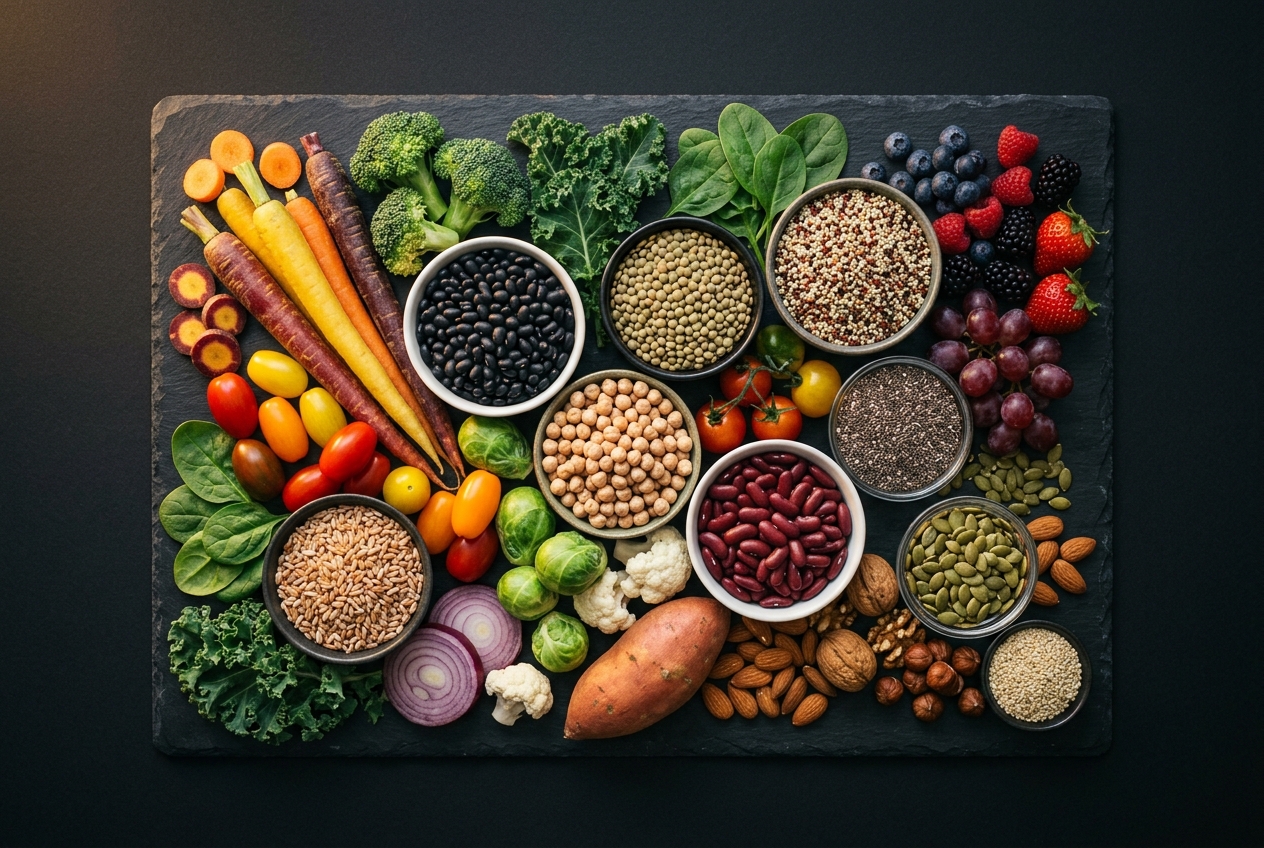
If I had to start somewhere, I would start here: include a genuine source of protein in your meals. When proteins are digested, they release peptides and amino acids; these molecules are detected by various receptors in the intestine and can stimulate the release of GLP-1. In practical terms, eggs, fish, chicken and other minimally processed meats, Greek yogurt or skyr, fromage blanc, legumes, and seafood are all ways to increase the protein density of a meal.
A particularly well-studied protein: whey
Whey, or whey protein, is interesting because it has been studied specifically for its metabolic effects when consumed before a meal. A meta-analysis of randomized trials showed that a whey intake before a meal reduced postprandial blood sugar, slowed gastric emptying, and could increase GLP-1.
But this absolutely does not mean that everyone should take whey. What it shows us, above all, is something physiologically interesting: proteins send a powerful signal to the intestine indicating that nutrients have arrived. And that is one of the reasons why a sufficiently protein-rich meal is generally far more satiating than a meal made up mainly of refined carbohydrates.
Number 2: legumes
And here, for me, we have a particularly clever food category: lentils, chickpeas, beans, split peas. Why is this interesting? Because you combine several things in the same food: plant-based proteins, fibre, relatively slowly digested carbohydrates and, depending on the food and its preparation, resistant starch. Legumes are therefore particularly interesting for satiety and metabolic health. And fibre will lead us to another fascinating player: your gut microbiome.
Number 3: feed your gut bacteria
Certain fibres are not completely digested in the small intestine: they therefore reach the colon, where they become food for certain bacteria in our microbiome. These bacteria ferment these fibres and produce, among other things, what we call short-chain fatty acids — including acetate, propionate and butyrate. These molecules can interact with receptors found notably on intestinal L-cells and participate in the signalling that promotes GLP-1 secretion. That is why your microbiome also plays a role in your metabolism.
Concretely, to feed this microbiome: lentils, chickpeas, beans, oats, barley, vegetables, whole fruits, seeds, nuts and whole grains. We do not eat fibre simply 'to go to the bathroom': fibre also constitutes a metabolic substrate for our microbiome.
A word of caution: not all fibres do the same thing
This is an important nuance. A review published in 2026 examined 52 studies in 1,085 participants looking at different fibres and their influence on GLP-1 and satiety. And the results are far less straightforward than 'fibre = increase in GLP-1': certain types of fibre show interesting results, but others are far less consistent. Even resistant starch, which is talked about enormously on social media, does not systematically increase GLP-1 in human trials. So eat fibre for its full range of metabolic benefits, not in search of a miracle food that would send your GLP-1 through the roof.
Number 4: oats
Oats are particularly interesting. They provide notably soluble fibres called beta-glucans, increase the viscosity of digestive contents, contribute to satiety and have interesting effects on glycaemic response and lipid metabolism. Studies comparing oat-based meals with low-fibre cereals have notably found greater satiety and a reduction in subsequent food intake.
A breakfast consisting solely of orange juice, white bread and jam therefore does not send the same metabolic message as a meal containing oats, skyr or Greek yoghurt, seeds and some fruit.
Number 5: nuts
Walnuts, almonds, pistachios, hazelnuts: they bring together fibre, plant-based proteins and predominantly unsaturated fats depending on the nut. This combination is interesting for satiety and the overall quality of the meal, and the literature on nutritional modulation of GLP-1 actually lists nuts among the foods likely to favourably influence its secretion. Obviously: a handful, not the whole bag, because these are energy-dense foods.
Number 6: avocado
Same logic. Avocado provides fibre, predominantly monounsaturated fatty acids and a satiating food matrix. It is also among the foods studied in the context of nutritional modulation of GLP-1.
Number 7: olive oil
Here too, we have something interesting. Lipids can stimulate various intestinal hormones, and some human studies show that olive oil can trigger a significant GLP-1 response after ingestion. An older study, in diabetic patients, even found a higher GLP-1 response after a meal enriched with olive oil compared to a meal enriched with butter.
But be careful not to fall into a new trap: do not drink olive oil to boost your GLP-1! One tablespoon of oil provides a lot of energy. The goal is to use olive oil as a quality dietary fat, particularly as part of a Mediterranean diet — not as a GLP-1 supplement.
And eggs?
Yes, they are interesting too. They provide complete proteins and lipids, two categories of nutrients capable of activating different intestinal sensing pathways, and they are among the foods studied in the context of nutritional stimulation of GLP-1. Above all, they have one enormous practical advantage: they are filling. Two or three eggs with vegetables do not produce the same satiety experience as an ultra-processed breakfast rich in refined flour and sugar.
Number 8: fish and seafood
They are excellent sources of protein, and oily fish also provide polyunsaturated fatty acids, including omega-3s. Again, I am not telling you 'eat salmon because it is a GLP-1 medication'; I am telling you: build your meals around foods that simultaneously provide protein, micronutrients and satiety. GLP-1 is one of the mechanisms that contributes to this response.
And carbohydrates?
Here is something that may surprise you: glucose itself can stimulate GLP-1 secretion. Saying 'sugar does not stimulate GLP-1' would therefore be wrong, because intestinal cells have mechanisms capable of detecting monosaccharides. But this obviously does not mean 'eat sugar to boost your GLP-1'.
Why? Because we need to look at the overall metabolic effect of a meal, not at a single hormone in isolation. A sugary drink can stimulate gut hormones while rapidly delivering a large amount of glucose and very little lasting satiety. This is precisely why physiology must never be reduced to: 'this food raises a certain hormone, therefore this food is good'.
Let's build a genuinely satiety-friendly plate
Here is how I would do it. Start with a real protein source: eggs, fish, chicken, skyr, Greek yoghurt, tofu, lentils or chickpeas. Then add plenty of vegetables — broccoli, courgette, spinach, tomatoes, peppers, aubergines, salad leaves, artichokes, cabbage — to increase fibre intake and the nutritional density of the meal in particular.
Add a source of fermentable fibre and/or minimally refined carbohydrates according to your needs: lentils, chickpeas, beans, oats, barley, whole grains, whole fruits. And round it off with a reasonable amount of healthy fats: olive oil, avocado, walnuts, almonds, seeds.
A few very simple examples
Salmon, lentils, a large salad and olive oil: you have protein, fibre, unsaturated fats, micronutrients and substrates for your microbiome. Another option: chicken, chickpeas, vegetables and olive oil. Or alternatively: an omelette, vegetables, avocado and beans. And for breakfast: skyr, oats, seeds, a few walnuts and whole fruits. These are meals designed not around a caloric obsession, but around four guiding principles: protein, fibre, nutritional quality and satiety.
Eat real food
This is very important, because the food industry knows exactly how to do the opposite. It can offer you a food that is very easy to chew, very rapidly digested, low in fibre, low in protein, highly palatable, energy-dense, and that you can eat very quickly — and twenty minutes later, you are hungry again. The goal of metabolically intelligent eating is almost the opposite of that.
Don't look for 'the Ozempic food'
It doesn't exist, and I feel strongly about saying that. You will probably see more and more videos along the lines of 'eat this food to make your own natural Ozempic'. No: no food replicates the pharmacological effect of a GLP-1 receptor agonist. What we can do, however, is build a diet that makes better use of the physiological satiety mechanisms our body already has. And that is far more interesting.
My 'GLP-1 friendly' plate
If you want to take away one very simple message: for protein, think eggs, fish, chicken, skyr, Greek yoghurt and legumes; for fibre, vegetables, lentils, chickpeas, beans, oats, barley and whole fruits; for healthy fats, olive oil, avocado, walnuts, almonds and seeds; and for the microbiome, a varied plant-based diet rich enough in fibre to feed the bacteria capable of producing metabolites such as short-chain fatty acids. That is far simpler than searching for a miracle dietary supplement.
Add my other favorite tip
You've finished that meal? Go for a walk, even just ten to twenty minutes. Because you're then combining two strategies: your meal stimulates different intestinal systems involved in satiety and nutrient management, and then your muscles start working and increase their glucose uptake. Gut, pancreas, and muscle: that's what I call working with your physiology, rather than against it.
The key takeaway
Your body naturally produces GLP-1 when you eat, and different nutrients can contribute to this secretion: proteins and amino acids, the digestive products of fats, carbohydrates, and certain compounds produced by the fermentation of fiber by the gut microbiome. But if your goal is metabolic health and satiety, I would focus above all on quality proteins, legumes, vegetables, oats and other suitable whole grains, whole fruits, nuts and seeds, avocado, olive oil, fish and seafood.
Not because any one of these foods is a 'natural Ozempic,' but because together they create a dietary environment that promotes satiety, nutritional quality, microbiome health, and better metabolic regulation.
I'm Dr. Florian Vallecillo, and if I were to leave you with just one idea today, it would be this: before seeking to pharmacologically mimic a hormone, it is fascinating to understand why our body produces it naturally. And for your GLP-1, start with something very simple: put proteins, fiber, and real food on your plate. Don't try to find a miracle food — build a meal that speaks properly to your gut.
What to remember
- —GLP-1 is not a medication: it is a satiety hormone that the intestine (L-cells) produces naturally when we eat, and diet influences its secretion.
- —No food replicates the effect of a GLP-1 agonist (such as semaglutide): the 'Ozempic food' does not exist — but we can make better use of our own satiety physiology.
- —Proteins (eggs, fish, chicken, skyr/Greek yogurt, legumes, whey before a meal) send a strong signal to the intestine and provide greater satiety than refined carbohydrates.
- —Fermentable fibers feed the microbiome, which produces short-chain fatty acids (butyrate…) that participate in GLP-1 secretion — but not all fibers are equal (2026 review: heterogeneous results).
- —Good fats (olive oil, avocado, nuts) are valuable for satiety as quality foods, never to be 'consumed in large amounts' just to boost a hormone: it is the overall effect of the meal that matters, not any single hormone in isolation.
- —The right plate = proteins + fiber + real foods + good fats; and a 10–20 minute walk after the meal adds the muscle (glucose uptake) to the intestinal and pancreatic response.
You may also like · Longevity & metabolism

Doctor Florian A. Vallecillo Cabrera
The doctor explains
Informational content, written and reviewed by Doctor Florian A. Vallecillo Cabrera. It does not replace an in-person consultation or an individual diagnosis.