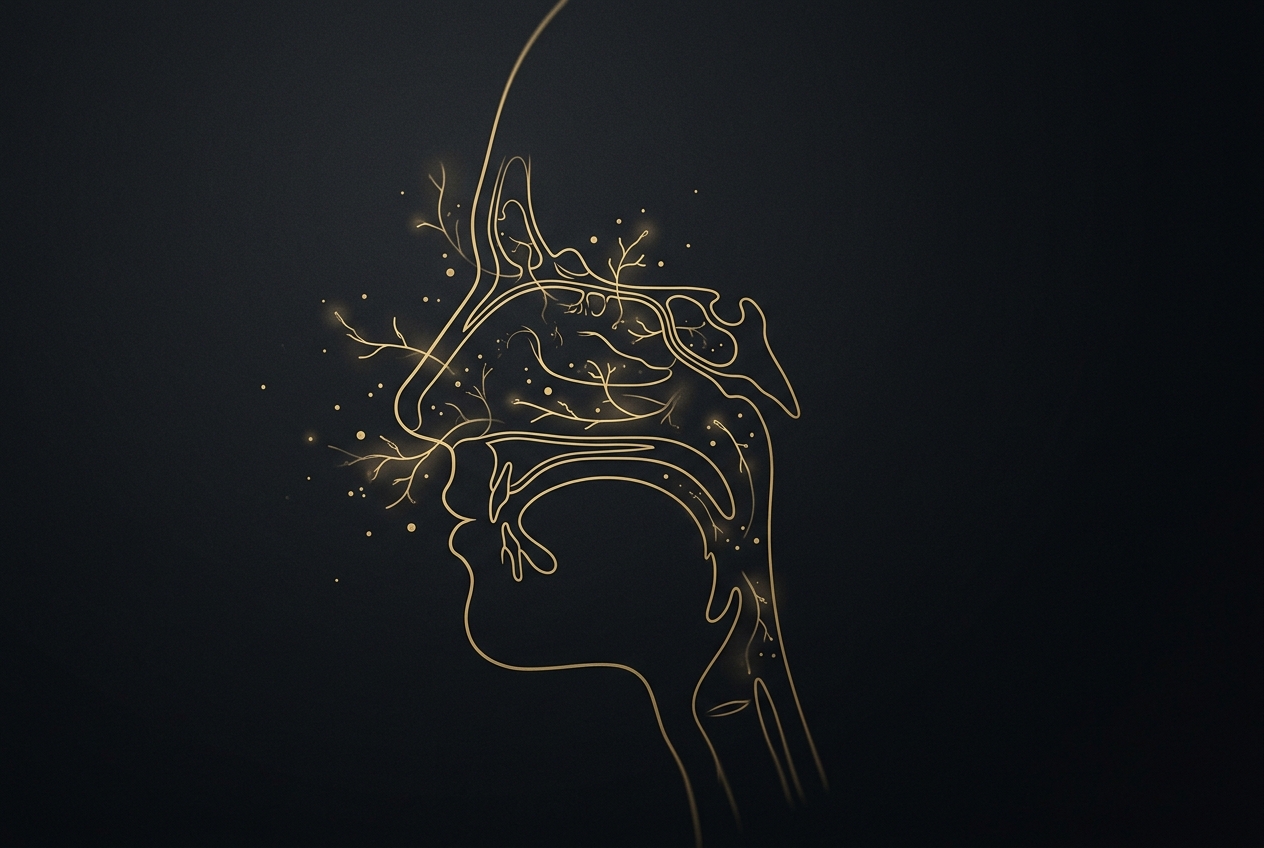
Personalized nutrition based on your microbiome: science or marketing?
Why I'm telling you this
More and more companies are offering to analyze your gut microbiome in order to design a 'tailored' diet just for you. The idea is very appealing: if every person has different bacteria, why not adapt your diet to match yours? But it's worth asking yourself something before paying for it: is this actually backed by science?
I'm Dr. Florian Vallecillo, and today I want to explain what we do and don't know about personalized nutrition based on the microbiome, and which recommendations are genuinely supported by evidence today.
What is the microbiome and why does it matter so much?
Trillions of microorganisms coexist in our gut — up to one hundred billion bacteria per gram in the colon — in a symbiotic relationship with our body. Since the early 2000s, metagenomics, which makes it possible to directly analyse the DNA of bacteria present in stool samples, has vastly improved our understanding of this microbiome. One of its best-known functions is the fermentation of fibre: fermentable fibres that are not digested in the small intestine reach the colon, where bacteria ferment them and produce essential molecules such as butyrate, which nourishes the cells of the colon and helps regulate the immune system.
The problem: there is no definition of a 'healthy microbiome'
Despite the advances made, there is still no agreed definition of what a healthy microbiome actually is, as Mélanie Deschasaux-Tanguy, coordinator of the microbiome section of the large NutriNet-Santé cohort, reminds us. In fact, scientists have gradually moved away from the idea of a 'core' of identical bacteria shared by all healthy individuals, preferring instead to speak of a 'functional core': not the same bacteria in everyone, but similar functions carried out by different microorganisms. In other words, two healthy people can have very different bacteria doing, at the end of the day, the same job.
Does personalised nutrition based on your microbiome actually work?
Here is the honest answer for today: not yet, or at least not in the way it is promised. Despite some general recommendations, it is currently not possible to design reliable personalised diets based on the microbiome. Specialists working in this field agree that, in the short term, these approaches make more sense as a targeted therapy for specific situations than as a 'tailor-made diet' for the general population. This is why it is worth being cautious about commercial tests that promise to tell you exactly what to eat based on your bacteria: they promise more than the science can support.
Diversity matters more than any single specific bacterium
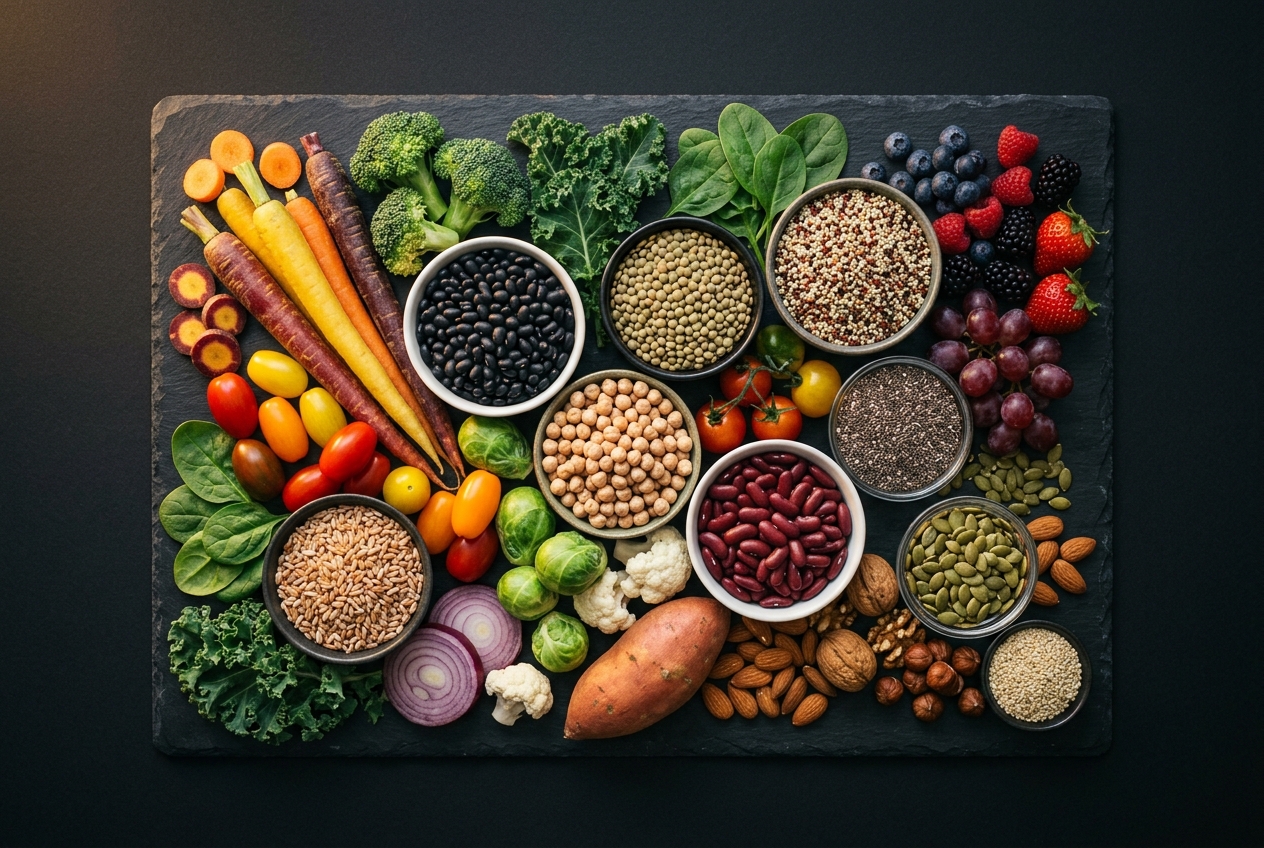
If there is one thing we know with reasonable certainty, it is that microbiome diversity is key: the greater it is, the better the body resists pathogenic bacteria and the more it benefits from favourable interactions with other organs. To promote it, the classic 'five portions of fruit and vegetables a day' is simply not enough: experts such as Joël Doré (research director at INRAE) recommend above all consuming around thirty different plant foods per week — fruits, vegetables, pulses, wholegrains, nuts and seeds. A variety of fibres feeds a variety of bacteria.
Ultra-processed foods and emulsifiers
On the other side of the scale sit ultra-processed foods. Benoît Chassaing, from the Institut Pasteur, has described how certain additives — such as some emulsifiers — can alter the microbiota and promote chronic inflammation associated with diseases like type 2 diabetes. But there is an important and very telling nuance: these effects are not uniform. Some people appear highly sensitive to emulsifiers, while others tolerate them without any problem. And that individual variability is, precisely, one of the reasons why personalising diet according to the microbiota is so difficult.
So, what can I actually do today?
The good news is that you do not need to know the exact map of your bacteria in order to take care of them. What has solid backing today is simple and powerful: eat plenty of vegetables — and, above all, a wide variety of them (the idea of getting close to thirty different plant foods per week is an excellent guideline) —, prioritise fibre (legumes, wholegrains, vegetables, fruit, nuts and seeds) and limit ultra-processed foods and additives such as emulsifiers. By doing that, you support the diversity of your microbiota and its production of beneficial molecules like butyrate, with no test required.
How to read commercial microbiota tests
Tests that analyse your microbiota can be interesting for research purposes and, in certain specific cases, for targeted medical situations. But today they cannot tell you, with solid evidence, exactly what you should eat in order to be healthier. If a test promises a 'diet tailored to your bacteria' with guaranteed results, you are looking at a marketing claim that is running ahead of the science. And in health, that is always a signal to proceed with caution.
What I want you to remember
The microbiota is fascinating and genuinely important: it plays a role in digestion, immunity and inflammation. But the science of personalising diet according to the microbiota is still young. The good news is that there is no need to wait for it to mature: the most powerful lever is already known to us and it is universal — a varied diet, rich in plants and fibre, and low in ultra-processed foods.
I am Dr Florian Vallecillo. Take care of your microbiota with what we already know works, and be wary of anyone selling you certainties that science does not yet have. In nutrition, as in aesthetic medicine, what is truly serious almost never comes packaged as a promise of tailor-made miracles.
What to remember
- —The gut microbiome (up to 100 billion bacteria per gram in the colon) is key to digestion, immunity, and inflammation; it ferments fiber and produces beneficial molecules such as butyrate.
- —There is no agreed-upon definition of a 'healthy microbiome': today researchers speak of a 'functional core' (the same functions carried out by different bacteria), not a set of identical bacteria shared by all people.
- —Today it is NOT possible to design a reliable personalized diet based on your microbiome. In the short term, these approaches make sense as targeted therapy, not as a 'tailored diet' for the general population.
- —What does work and is well supported: plant diversity (aim for around 30 different plant foods per week) and plenty of fiber (legumes, wholegrains, vegetables, fruit, nuts, and seeds), which nourish a diverse microbiome.
- —Be cautious with ultra-processed foods and certain emulsifiers: they can disrupt the microbiome and promote inflammation, with considerable individual variability (some people are highly sensitive and others are not) — yet another reason why personalization is difficult.
- —Be wary of commercial tests that promise a 'diet tailored to your bacteria' with guaranteed results: they are running ahead of the evidence. You don't need a test to take care of your microbiome.
You may also like · Longevity & metabolism

Doctor Florian A. Vallecillo Cabrera
The doctor explains
Informational content, written and reviewed by Doctor Florian A. Vallecillo Cabrera. It does not replace an in-person consultation or an individual diagnosis.