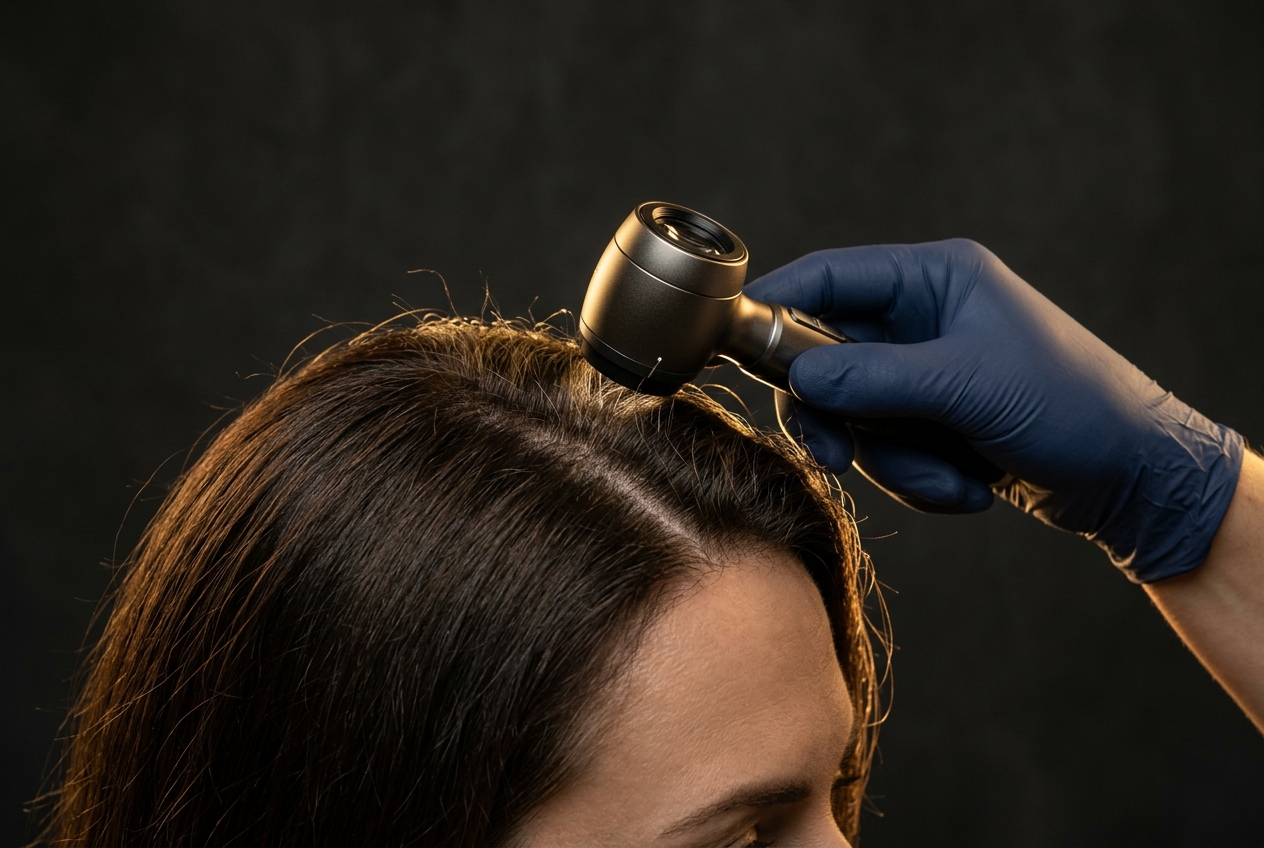
How to choose a good aesthetic physician: warning signs before a treatment

Why I'm telling you this
Aesthetic medicine has grown enormously in recent years, and with it have come new treatments, new devices, new products, and new promises. The problem is that, for a patient, it is becoming increasingly difficult to distinguish between a sound medical recommendation and a clever marketing campaign.
I am Dr. Florian Vallecillo, and today I want to explain what I consider important before you entrust your face or body to an aesthetic medicine treatment. There is no perfect formula, but there are certain warning signs that should give you pause.
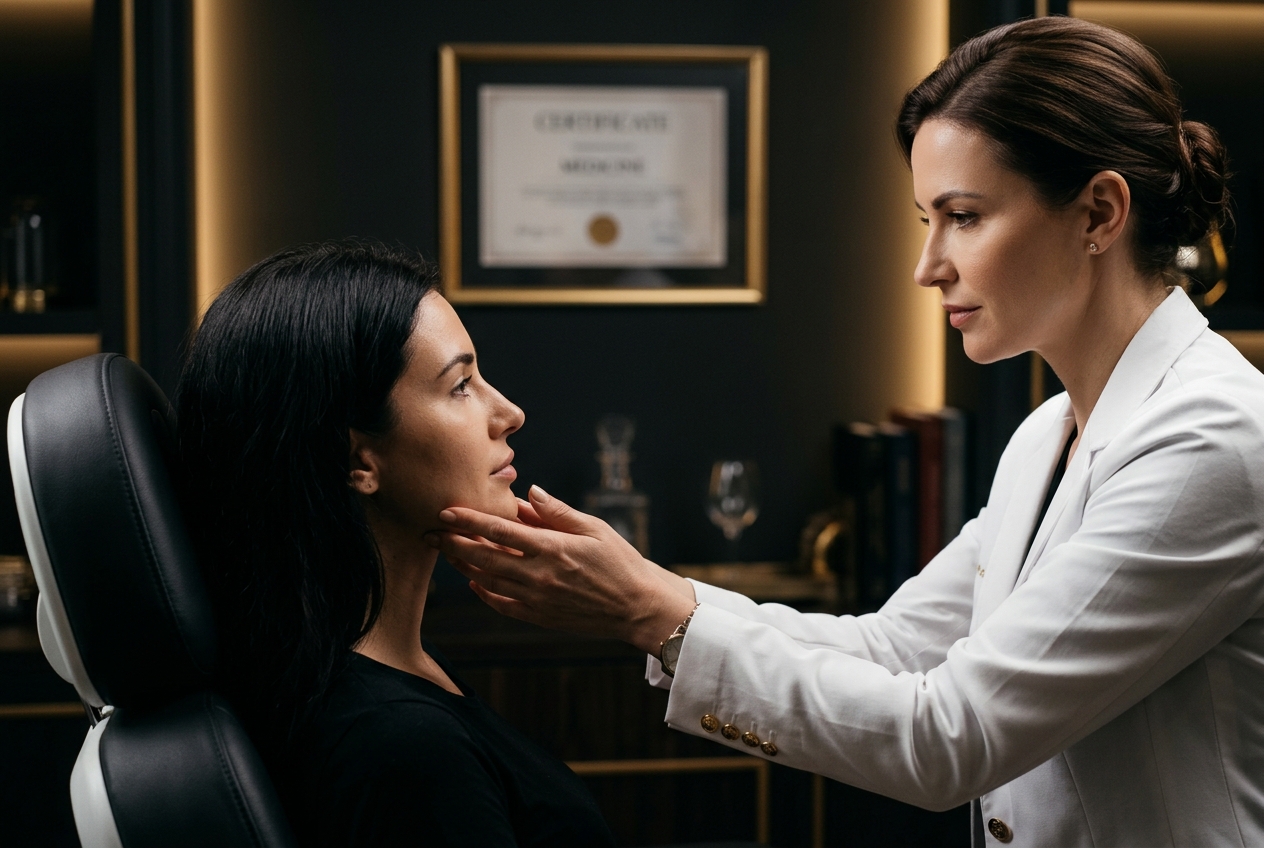
Watch the video
How to recognize a good aesthetic physician
First sign: they promise you a guaranteed result
In medicine, that does not exist. We can talk about probabilities, expected outcomes, response rates, risks, and limitations. But we cannot promise 'it will turn out perfect,' 'you will look ten years younger,' or 'it will definitely work for you.' Every patient responds differently: anatomy, age, skin quality, metabolism, product type, technique, healing, and many other factors all play a role. A serious physician explains possibilities — they do not guarantee results.
Second sign: they tell you there is no risk at all
Another phrase that should make you suspicious: 'it has no side effects whatsoever.' There is no medical procedure without risk. Even an apparently simple injection can cause bruising, swelling, asymmetry, infection, or an inflammatory reaction, and some treatments carry more significant complications, even if they are rare. A physician's duty is not to frighten you — it is to inform you properly: what can go well, what can go wrong, which complications are common, which are rare, and what we would do if they occurred.
Third sign: the doctor says yes to everything
This is one of the things I consider most important. A patient comes in saying 'I want fuller lips,' 'I want a more defined jawline,' 'I want to get rid of this fat,' or 'I want this treatment because I saw it on Instagram,' and the practitioner always says yes. That is not necessarily good medicine. A physician is not there solely to carry out whatever the patient requests; they are also there to say 'you don't need that,' 'you are not a good candidate,' 'that could make your face look worse,' 'that treatment is not right for you,' or 'I would not do it.' For me, an important part of aesthetic medicine is knowing how to say no, because the goal is not to sell a procedure — it is to select the right patient for it.
Fourth sign: everyone receives the same treatment
Another very common problem: you walk into a clinic and it seems as though every patient leaves with the same skin booster, the same radiofrequency session, the same HIFU treatment, the same protocol, and the same number of syringes. That should prompt you to ask: 'Are they treating me as an individual, or are they selling a product?' Because two patients of the same age can have completely different concerns: one may need volume, another may need improved skin quality, another may need pigmentation treatment, and another, quite simply, may need nothing at all. Aesthetic medicine should begin with a diagnosis, not a catalogue.
Fifth sign: the treatment is chosen based on trends
Every year something new appears: a new device, a new molecule, a new name, a new technique that promises to 'revolutionize aesthetic medicine.' And suddenly everyone needs it. That warrants caution. Innovation is wonderful — I also use new technologies when they make sense — but a physician should not use a treatment simply because it is fashionable, but rather because there is a clear indication, they understand the mechanism, they know the risks, and they believe it is appropriate for that particular patient. Following the science is good; following trends is not the same thing.
Sixth sign: 'before and after' photos that look too perfect
Photographs can be useful, but they can also be manipulated enormously: with different lighting, a different angle, make-up, facial expression, head position, distance, or digital editing. Even a small difference in lighting can make skin appear smoother, firmer, or less wrinkled. That is why a 'before-and-after' photograph should be interpreted with caution. And, moreover, the fact that a treatment has worked very well for someone else does not mean it will produce exactly the same result for you.
Seventh sign: they do not explain exactly what they are going to use on you
This, for me, is fundamental. If you are going to receive an injectable product, you have the right to know what the product is, the brand, the composition, the quantity, the batch number, the expiry date, and where it will be injected. You should not leave a consultation without knowing what you have been given: traceability is a basic part of medical safety.
Beware of one word: 'dilution'
Some products are reconstituted or diluted according to specific protocols, and that can be perfectly correct, but there must be a medical and technical reason for it. The problem is not the word 'dilution': the problem would be a patient paying for a certain amount of product and receiving something different from what they believe they are receiving. Transparency, always.
Eighth sign: the price seems incredibly low
I want to be careful here: inexpensive does not automatically mean poor quality, and expensive does not automatically mean good quality. But when a procedure costs far less than the usual market price, I would indeed ask which product is being used, in what quantity, who is performing the procedure, whether it is an authorised product, whether traceability exists, and what follow-up is included. Because certain medical products have a real cost, and a serious treatment also includes training, sterile materials, facilities, follow-up, and the capacity to manage complications. Price alone cannot diagnose quality, but an extraordinarily low price deserves extraordinarily clear questions.
Ninth sign: no one asks about your medical history
Before a procedure, the professional should know some basic things about you: medication, allergies, illnesses, pregnancy, a history of herpes, autoimmune conditions, previous treatments, and prior aesthetic interventions. Depending on the procedure, there will be more specific questions. If you walk in, lie down, and five minutes later you are already being injected with virtually no clinical history taken, I would have my doubts.
Tenth sign: there is no plan for complications
This is a question almost no patient asks, but it is one of the most important ones: 'what happens if something goes wrong?' If hyaluronic acid is used, is hyaluronidase available? Do they know how to recognise a vascular occlusion? Is there a protocol in place? If a laser is used, what do they do in the event of a burn? If an infection develops, who reviews your case? The standard of a clinic is not demonstrated only when everything goes well: it is also demonstrated in how prepared it is when something goes wrong.
Eleventh sign: they pressure you to decide on the spot
Phrases like 'the offer ends today,' 'if you don't do it now, you lose the discount,' or 'we should take advantage of the fact that you're already here' — I don't like them in medicine. An aesthetic treatment is usually elective: you are not treating a heart attack. You can think it over, you can ask questions, you can go home, and you can decide not to go ahead. Real consent requires time, information, and freedom.
Twelfth sign: they make you feel worse in order to sell you more
This strikes me as particularly important. A consultation should not begin by turning small, normal features of your face into flaws: 'you need to correct this,' 'this has drooped,' 'this has aged,' 'this needs volume.' If you walk in feeling quite happy with your face and leave thinking you need six treatments, ask yourself what just happened. Aesthetic medicine should help a person improve something that genuinely concerns them — not create new insecurities in order to sell procedures.
So, what do I look for in a good aesthetic physician?
Not someone who says yes to everything. I look for someone who examines, explains, selects, prioritises, and sometimes says no — someone who distinguishes between what is necessary, what is optional, and what is simply not worth pursuing. A good physician does not start by asking 'what do you want done?': they may ask what concerns you, which is different. They should then analyse the anatomy, skin quality, volumes, proportions, expression, age, and previous treatments, and go on to explain what options exist, rather than simply performing whatever treatment the patient saw on a social media platform.
Aesthetic medicine should not erase every distinctive feature of a person
A young, attractive face is not necessarily perfectly symmetrical, free of every single line, expressionless, with the same lips, the same jaw, and the same cheekbones as everyone else. The goal should be to preserve identity, maintain naturalness, and correct when there is a sound indication — not to manufacture standardised faces.
Experience matters, but so does prudence
We sometimes assume that the best physician is the one who performs the most procedures. I am not so sure: a physician who knows when not to perform them can also be an excellent doctor. Technical skill is fundamental, but so are clinical judgement, knowledge of anatomy, diagnostic ability, and prudence — because knowing how to inject is not the same as knowing when to inject.
And what about social media?
It can be useful for getting an idea of a professional's work, but it should not be your only criterion. Number of followers does not equal medical quality, viral videos do not equal training, and a visually spectacular clinic on Instagram does not necessarily guarantee sound clinical judgement. Social media shows communication — not all the medicine that exists behind it.
And what about online reviews?
I would not use them as a primary criterion either. Today there are genuine reviews, biased reviews, organised campaigns, fake testimonials, and services that sell ratings. Therefore, a high star count does not automatically mean better medicine. A reputation can provide some information, but it does not replace training, clinical judgement, safety standards, or a proper medical consultation.
Questions you can ask before a treatment
I would ask very simple questions: what product are you going to use on me?, why this treatment and not another?, what result do you consider realistic?, how long does it last?, what are the risks?, what alternatives do I have?, what happens if I do nothing?, what happens if I have a complication? And probably one of my favorites: 'if I were a member of your family, would you recommend I have it done?'. The answer can say a lot.
A good doctor should not be bothered by your questions
On the contrary: an informed patient makes for better medicine. Asking about risks, products, experience and alternatives is not a sign of distrust — it is making an informed decision.
What I want you to remember
Choosing an aesthetic physician is not about finding the cheapest, the most famous, the one who performs the most treatments, or the one who promises the most spectacular change. Look for someone who diagnoses before treating, who explains limitations and risks, who uses traceable products, who knows the anatomy, who has a plan in case of complications, and who knows how to say no to you.
I am Dr. Florian Vallecillo, and if I want to leave you with just one idea today, it is this: a good aesthetic physician does not try to sell you the greatest number of treatments — they try to prevent you from having the ones you do not need. Aesthetic medicine done well can produce very beautiful and natural results, but it is still medicine, and that means that before the product, the device, or the trend of the moment, there should always be the diagnosis, the indication, the safety, and the medical judgement. Because the most sophisticated treatment in the world is still a poor treatment if it was not indicated for you.
What to remember
- —Be wary of guarantees: in medicine, there is no such thing as 'it will turn out perfect' or 'it carries absolutely no risk.' A responsible physician explains probabilities, limitations, and potential complications — they do not promise results.
- —A good physician knows how to say NO: they are not there to carry out every request you make or to treat everyone with the same protocol (the same skinbooster, HIFU, or number of syringes). Aesthetic medicine begins with a diagnosis, not a catalogue or a trend.
- —Demand transparency and traceability: the product, brand, composition, quantity, batch number, and expiry date. Be cautious about 'dilutions' without medical justification and about extraordinarily low prices — both deserve clear questions.
- —Safety first: your medical history must be reviewed, and there must be a plan for managing complications (hyaluronidase and a vascular occlusion protocol for hyaluronic acid, as well as management of burns or infections).
- —Signs of commercial malpractice: pressure to decide 'today,' and making you feel worse about yourself — turning normal features into 'flaws' — in order to sell you more. Followers and reviews are not a substitute for medical judgment.
- —Useful questions: why this treatment and not another? What realistic result can I expect? What are the risks and alternatives? What happens if I do nothing? And: 'If I were your family member, would you recommend this to me?' The goal is to preserve your identity and to avoid treatments you do not need.
You may also like · Aesthetic medicine
- CO₂ Laser: why deliberately creating a micro-injury in the skin can regenerate it?
- Skinboosters, polynucleotides, collagen inducers: what is the real difference?
- Radiofrequency and facial HIFU: why I personally do not recommend them for facial rejuvenation
- Botox: does it really stay where it's injected? What science says
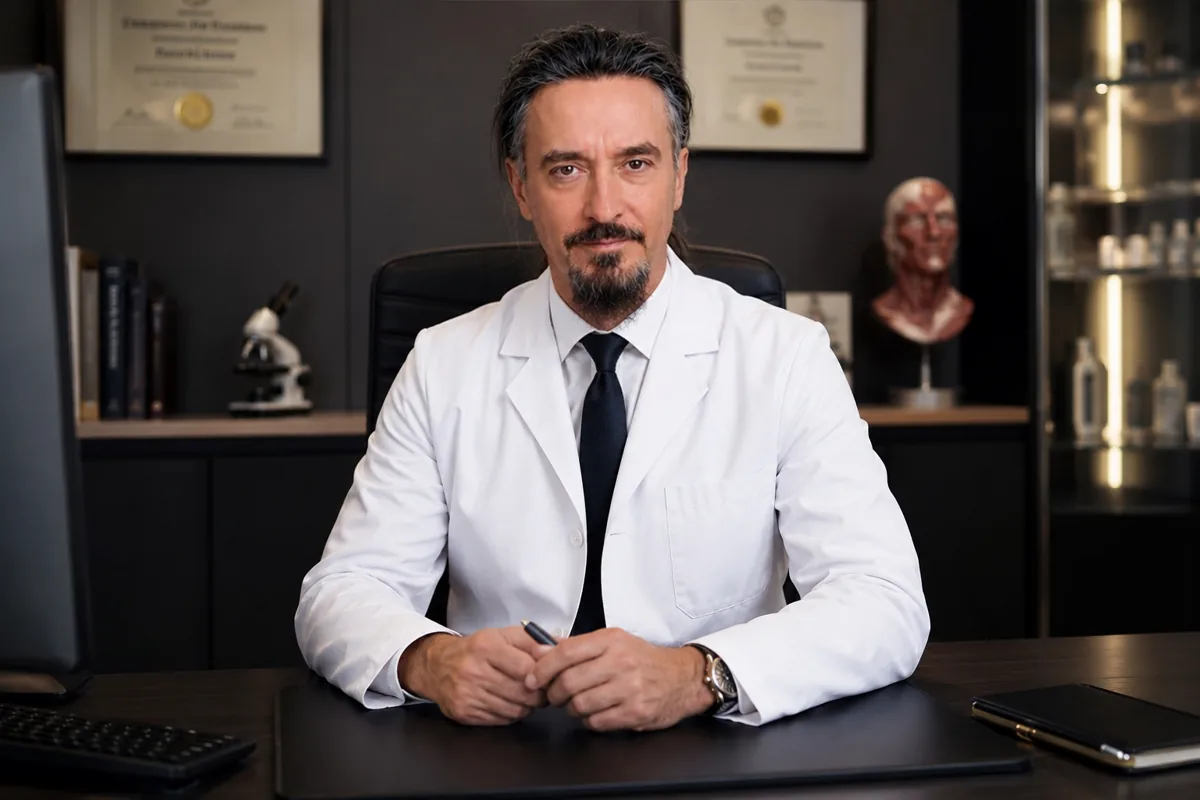
Doctor Florian A. Vallecillo Cabrera
The doctor explains
Informational content, written and reviewed by Doctor Florian A. Vallecillo Cabrera. It does not replace an in-person consultation or an individual diagnosis.