
PCOS: why insulin is often at the heart of the problem

Why I'm telling you this
When you hear about polycystic ovary syndrome, or PCOS, you probably think immediately of the ovaries: irregular periods, acne, excessive hair growth, difficulty getting pregnant, sometimes weight gain.
And yet, in many women, a significant part of the story unfolds elsewhere: in their metabolism. And more specifically, in the way their body responds to a hormone you certainly know well: insulin.
I am Dr Florian Vallecillo, and today I am going to explain to you the fascinating link that exists between insulin, the ovaries, and sex hormones.
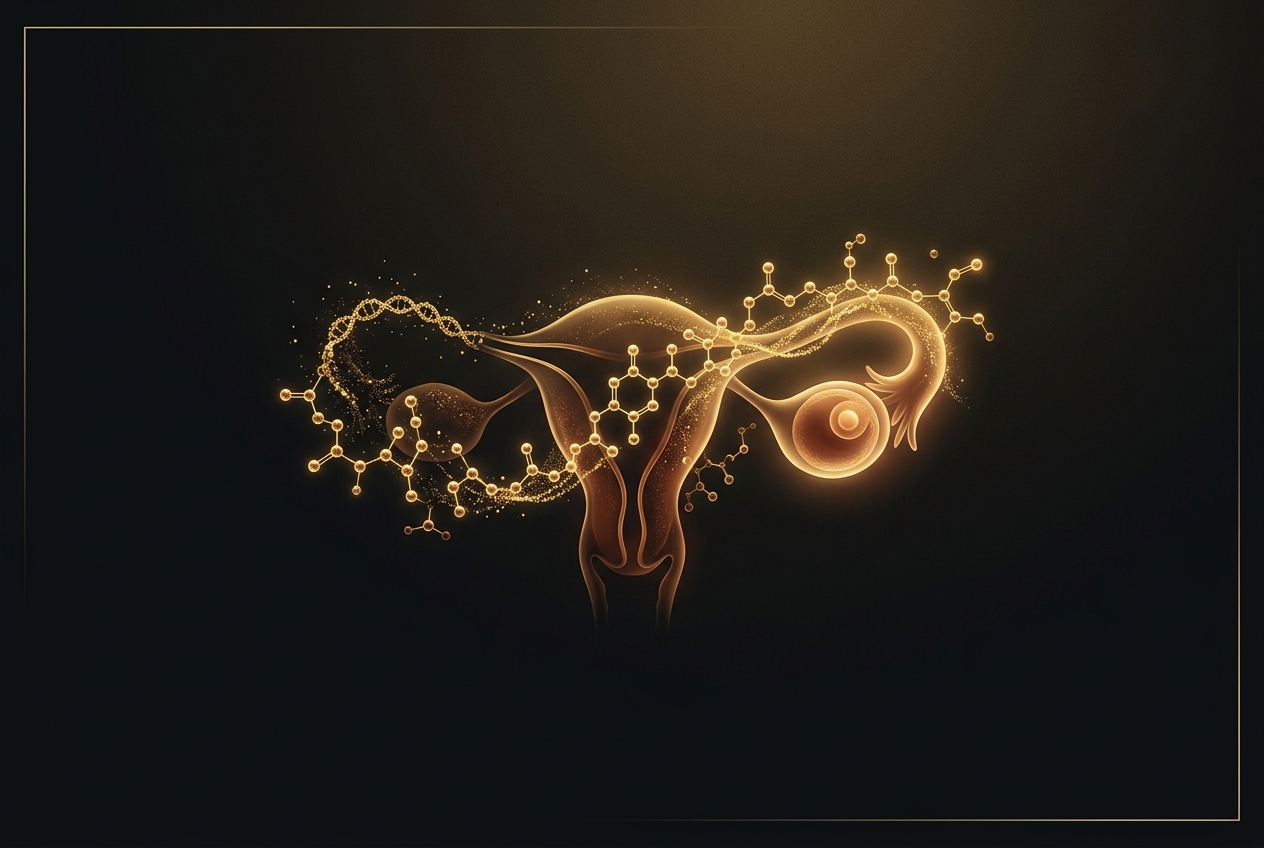
Watch the video
PCOS and insulin: a vital connection
Let's start with insulin
When you eat — carbohydrates in particular — your blood glucose rises. Your pancreas then secretes insulin, whose job is, among other things, to allow various tissues to properly use and store that energy.
But some people develop what is known as insulin resistance: their cells respond less efficiently to the insulin signal. The pancreas then adapts and tells itself, in a manner of speaking: "My message isn't getting through clearly enough? I'll speak louder." And it produces more insulin.
Blood glucose can therefore remain perfectly normal for a long time. But to maintain that normal blood glucose, the body sometimes has to produce far more insulin than it used to: this is what is called compensatory hyperinsulinaemia. And this is precisely why looking at blood glucose alone can sometimes tell only part of the story.
But what does this have to do with the ovaries?
This is where things get fascinating. Insulin does not act solely on sugar: it is also a hormone that communicates with the ovaries. When it is present in large amounts, it can stimulate certain ovarian cells — the theca cells in particular — and promote their production of androgens, including testosterone.
Women naturally produce testosterone: that is entirely physiological. The problem arises when there is an excess of androgens.
And insulin acts a second time
Because the story does not end at the ovaries. The liver produces a protein called SHBG (Sex Hormone-Binding Globulin): think of it as a carrier that binds a proportion of the sex hormones circulating in the blood. Now, elevated insulin levels can reduce hepatic SHBG production.
You therefore potentially end up with two simultaneous phenomena: the ovary produces more androgens, and a greater proportion of those androgens may remain biologically available. This is one of the important connections between metabolism and the hormonal manifestations of PCOS.
What can this excess of androgens cause?
In some women, it can manifest as acne, excessive hair growth (hirsutism), androgenetic hair loss, irregular menstrual cycles, and ovulation disorders. And when a woman does not ovulate regularly, this can obviously lead to difficulties conceiving.
But beware of a common misconception: PCOS absolutely does not mean permanent infertility. Many women with PCOS can have children, either spontaneously or with appropriate management.
And there is a genuine vicious cycle
This is probably the most important part to understand. Insulin resistance promotes hyperinsulinaemia; hyperinsulinaemia can promote hyperandrogenism; the ovarian hormonal environment becomes dysregulated; ovulation can become irregular; and certain metabolic imbalances associated with PCOS can in turn perpetuate insulin resistance.
Metabolism and sex hormones are in constant communication. PCOS is therefore not simply 'an ovarian problem'.
But not all women with PCOS are overweight
This is extremely important. When insulin resistance is mentioned, many people immediately picture someone who is overweight. That is incorrect: a slim woman can have PCOS, and she can also have insulin resistance.
Excess adipose tissue, particularly visceral fat, can obviously worsen insulin resistance when present. But weight alone does not determine a person's metabolic health: a slim, athletic 22-year-old woman can therefore have PCOS.
And conversely: not every woman with insulin resistance has PCOS
This is the other essential nuance. If you have insulin resistance, it does not mean you will develop PCOS. And if you have PCOS, it does not automatically mean that insulin explains your entire condition.
PCOS is multifactorial: there is a genetic component, hormonal dysregulation, disruption of ovarian function, metabolic factors, and probably different phenotypes of the disease. This is precisely why two women with PCOS can present with completely different clinical pictures.
How is PCOS actually diagnosed?
And here I want to correct another very widespread misconception: PCOS is not diagnosed simply because an ultrasound shows several follicles in the ovaries. The diagnosis is based on a set of criteria.
In adults, the physician looks in particular for ovulatory dysfunction (often visible through irregular cycles), clinical or biological signs of hyperandrogenism, and/or polycystic ovarian morphology according to precise criteria. And above all, the physician must rule out other conditions capable of producing a similar picture. It is therefore a genuine medical diagnosis.
So how do we investigate insulin resistance?
This too is more complex than social media sometimes suggests. A glucose sensor can be interesting for observing individual glycaemic responses to different meals or activities, but it does not diagnose insulin resistance on its own. Why? Because, remember, your pancreas may be producing large amounts of insulin precisely to keep your glucose within normal values: you could therefore have an apparently reassuring blood glucose level while still presenting with compensatory hyperinsulinaemia.
So what can we look at? Depending on the clinical context, the physician may pay particular attention to fasting blood glucose, HbA1c, and sometimes perform an oral glucose tolerance test, which is especially relevant in PCOS for assessing carbohydrate metabolism. In some metabolic approaches, fasting insulin can also be measured and a HOMA-IR calculated. But it is important to understand: no single figure tells the whole story of your metabolic health — results are always interpreted in context.
And if insulin resistance is present, can something be done about it?
Yes, and that is probably the positive message I would like to convey: insulin resistance is not something you simply have to watch evolve. Physical activity is extremely important, and strength training in particular — because muscle is one of the main tissues involved in glucose utilisation. More broadly, physical activity improves insulin sensitivity, and walking after meals can also help reduce postprandial glycaemic excursions.
Diet also matters
It is not necessarily about eliminating all carbohydrates. It is above all about building a diet that improves metabolic health: adequate protein, vegetables, fibre, minimally processed foods, good-quality fats, and far less in the way of sugary drinks, added sugars and ultra-processed products.
In a woman with excess body fat, even a relatively modest reduction in weight can significantly improve certain metabolic and reproductive parameters. But in a lean woman with PCOS, making someone lose weight when they do not need to lose weight is obviously pointless: the goal is metabolic health, not an arbitrary number on the scale.
What about medication?
Medication clearly has its place when indicated. Management depends first and foremost on the problem one wishes to address: cycle irregularity, hyperandrogenaemia, acne, hirsutism, metabolic risk, or a desire to conceive. In certain situations, metformin may notably be used for its metabolic effects; other treatments will be preferred depending on the patient's symptoms and goals. There is therefore no single treatment for PCOS.
What I would most like young women to understand
If you have very irregular or absent periods, increasing body hair, significant and persistent acne, hair loss, difficulty losing weight despite consistent efforts, or difficulty achieving a pregnancy, do not simply treat each symptom in isolation. Sometimes you need to look at the whole picture: your ovaries, your hormones and your metabolism.
This is a wonderful illustration of something I often try to explain to my patients: our body does not function as a collection of independent organs. The pancreas talks to the liver, the liver talks to the hormones, the hormones talk to the ovaries, and the muscles influence metabolism. And all of this is in constant communication.
I am Dr Florian Vallecillo. And if you have polycystic ovary syndrome, do not look only at your ovaries: also look at your metabolic health. Because understanding why an imbalance exists often makes it easier to choose how best to act.
What to remember
- —PCOS is not simply a disease of the ovary, nor purely a disease of insulin: in many patients, insulin resistance and hyperinsulinaemia are a major piece of the puzzle.
- —Elevated insulin levels can promote ovarian androgen production and reduce SHBG produced by the liver, increasing androgenic activity (acne, hirsutism, irregular cycles, ovulation disorders).
- —Weight does not make the diagnosis: a slim woman can have PCOS and insulin resistance, and not every insulin-resistant woman has PCOS (a multifactorial condition with several phenotypes).
- —PCOS is a genuine medical diagnosis (ovulatory disorders, clinical/biological hyperandrogenaemia, ovarian morphology according to criteria) made after excluding other causes — not simply an ultrasound showing follicles.
- —A normal blood glucose level does not rule out insulin resistance (compensatory hyperinsulinaemia): fasting glucose, HbA1c, and sometimes an OGTT or fasting insulin/HOMA-IR are interpreted in their clinical context.
- —There is room for action: physical activity and strength training, walking after meals, a metabolism-friendly diet, and targeted treatments (sometimes including metformin) tailored to the patient's goals — and infertility is by no means definitive.
You may also like · Longevity & metabolism

Doctor Florian A. Vallecillo Cabrera
The doctor explains
Informational content, written and reviewed by Doctor Florian A. Vallecillo Cabrera. It does not replace an in-person consultation or an individual diagnosis.