Leser-Trélat Sign: When the Skin Can Warn Us of an Internal Problem
Why I'm telling you this
Some people come to my clinic and tell me: 'Doctor, I've suddenly developed so many little brown bumps all over my chest and back,' 'I had a few before, but now many more have appeared in just a few months,' 'and on top of that, they itch.' In most cases, what are known as seborrheic keratoses are completely benign lesions that are very common with age. However, there is a particular, uncommon situation that every physician must know about: the Leser-Trélat sign.
I am Dr. Florian Vallecillo, and today I want to explain what this sign means, why it may be linked to certain internal diseases, and, above all, why we should not turn it into an unnecessary source of fear.
First: what is a seborrheic keratosis?
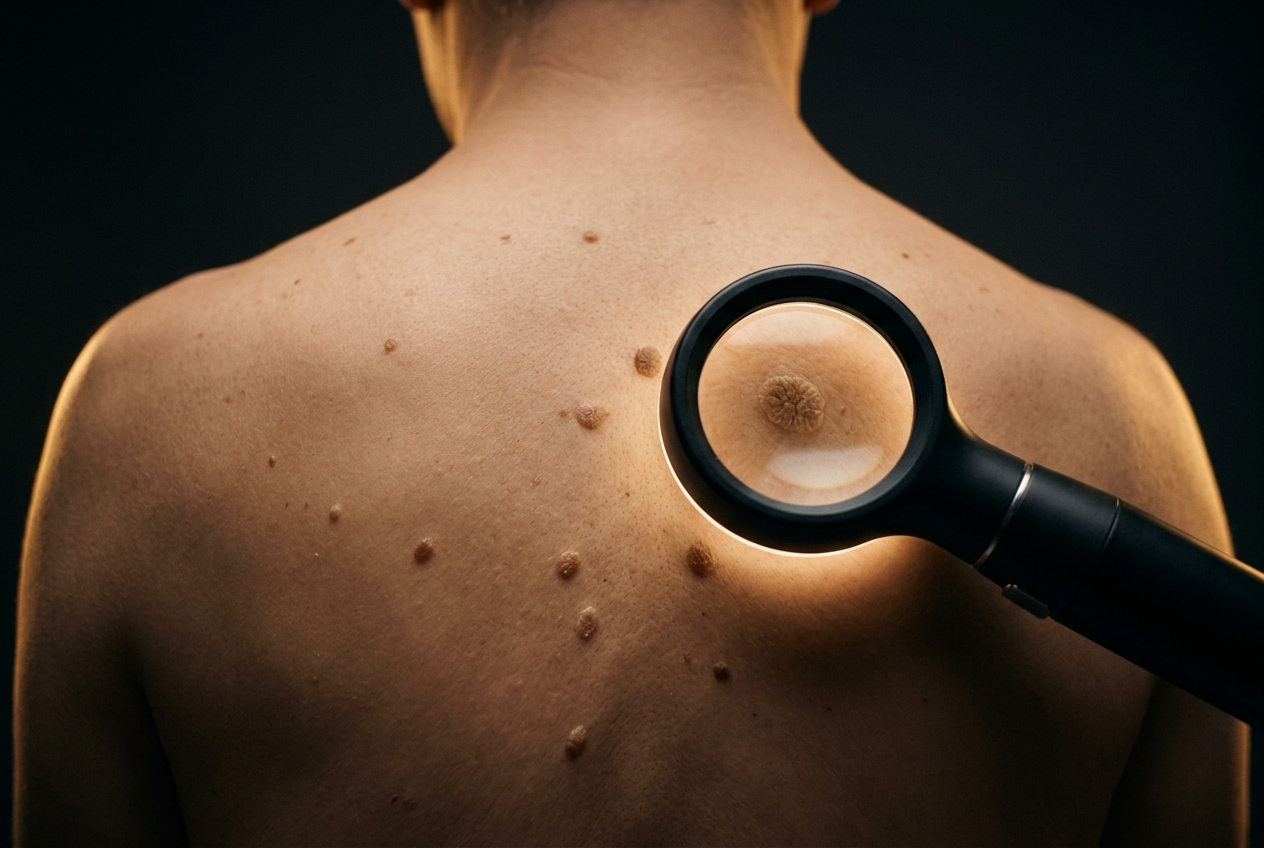
Seborrheic keratoses are benign skin lesions. They typically appear as small plaques or raised areas that are brown, beige, grayish, or sometimes nearly black in color, with a somewhat warty or waxy surface; many look as though they are literally 'stuck' onto the skin. They are extremely common, especially from the age of 40 or 50 onward, and can appear on the trunk, back, chest, neck, face, and other areas. Under normal circumstances, they are not cancerous.
So, what is the Leser-Trélat sign?
The Leser-Trélat sign describes the sudden appearance of multiple seborrheic keratoses over a relatively short period of time, traditionally associated with the presence of an internal neoplasm. The key word here is 'sudden.' We are not talking about a person who has been gradually accumulating keratoses over twenty years — that is very common — but rather someone who notices many new lesions within a few months, in a way that is clearly different from their usual pattern of progression.
Why has it been linked to cancer?
Historically, this phenomenon was described in patients with certain internal neoplasms. The most frequently reported associations have been with gastrointestinal adenocarcinomas, gastric cancer, colon cancer, and breast cancer, and cases have also been described in connection with tumors of the pancreas, liver, kidney, and lung, as well as with hematological diseases. But it is important to understand something crucial: there is no single 'typical' cancer associated with the Leser-Trélat sign, and the association is not specific enough to say that these lesions mean that a particular tumor is present.
How could a tumor cause skin lesions?
The classic hypothesis is that some neoplasms may release growth factors, cytokines, and other signaling molecules into the bloodstream. These substances could stimulate the growth of keratinocytes and promote the rapid appearance of numerous seborrheic keratoses. Among the factors implicated are those related to TGF-alpha, EGF, and amphiregulin. But let us be precise: the exact mechanism has not been fully established.
The sign is controversial
This is fundamental. Both seborrheic keratoses and internal cancers are very common in older individuals, and for this reason a question has persisted for decades: is the association truly causal, or is it sometimes simply a coincidence? Some case-control studies found no greater frequency of eruptive seborrheic keratoses in cancer patients than in age-matched controls. For this reason, the most reasonable view today is that the Leser-Trélat sign may exist as a paraneoplastic phenomenon, but it is rare and does not have absolute specificity.
Should I be worried if I have many keratoses?
Not necessarily. If you are 60 years old and over the past fifteen years you have been gradually developing ten, twenty, thirty, or more seborrheic keratoses, that may simply be part of the normal aging process of the skin and genetic predisposition. It does not mean cancer. What draws our attention is not the accumulated number, but the sudden change.
What draws our attention most is a sudden change
There are certain situations that lead a doctor to pay closer attention: the appearance of many lesions within a few weeks or months, a rapid increase in their number or size, a change that clearly differs from the usual pattern of progression, significant itching, the simultaneous appearance of other skin signs, and — above all — the presence of associated general symptoms. For example, unexplained weight loss, marked fatigue, anaemia, abdominal pain, digestive changes, bleeding, loss of appetite, or other persistent symptoms. In that context, it is indeed worthwhile to evaluate the patient in a more comprehensive way.
Itching can also be a clue
In several published cases, the eruptive lesions associated with the Leser-Trélat sign caused itching; a case review described pruritus in approximately half of the reported patients. But, once again, itching alone does not turn a seborrhoeic keratosis into a sign of cancer: a normal keratosis can also itch or become inflamed from friction. What matters is the overall clinical picture.
Can the Leser-Trélat sign appear without cancer?
Yes, and this is precisely another reason not to cause alarm. There are cases of a 'pseudo-Leser-Trélat sign', in which multiple seborrhoeic keratoses appear suddenly but no internal neoplasm is found. Eruptions have also been described in relation to medications, inflammatory diseases, and other non-malignant conditions. That is why Leser-Trélat does not equal cancer: it is a sign that, when the clinical picture fits, may justify a more thorough evaluation.
What does the doctor do?
The first step is to confirm that the lesions really are seborrhoeic keratoses, because other lesions can look similar: naevi, warts, lentigines, actinic keratoses, melanoma, and other pigmented lesions. Dermatoscopy can be very helpful, and if any lesion appears atypical, a biopsy may be necessary.
Next, the clinical history needs to be reviewed
We ask when the lesions appeared, how many were present before and whether they have increased rapidly; whether they itch; whether there are any other symptoms; whether there has been weight loss, digestive changes, bleeding, or unusual fatigue; what medications the person is taking; and what personal and family medical history exists. The clinical history is essential.
Does everyone need a CT scan?
No, and this is also important. It makes no sense to perform an endless battery of tests on every person with seborrhoeic keratoses. The evaluation must be tailored to the individual's age, symptoms, medical history, physical examination, pending oncological screenings, and clinical context. For some patients, updating the age-appropriate preventive check-ups may be sufficient; for others, if warning signs are present, a more extended work-up may indeed be necessary.
So, which cancer is being looked for?
There is no single test. Historically, the sign has been associated particularly with gastrointestinal adenocarcinomas, but also with many other neoplasms. That is why the work-up does not consist of 'looking for gastric cancer because there are keratoses', but rather of carrying out a medical evaluation guided by the patient's symptoms and individual risk.
Do keratoses disappear if the cancer is treated?
In some reported cases, the lesions have improved after treatment of the tumor; in others, they have not changed, and recurrences coinciding with disease progression have also been described. This supports the idea of a possible paraneoplastic phenomenon in certain patients, but it does not always occur.
Do seborrheic keratoses need to be removed?
Not necessarily. If they are benign and not causing any discomfort, they can be left perfectly well alone. They can be removed for cosmetic reasons, due to friction, inflammation, itching, or because they are repeatedly traumatized, and, depending on the lesion, we can use cryotherapy, curettage, electrocoagulation, laser, or other techniques. But removing the keratosis does not treat the possible underlying cause: if Leser-Trélat is suspected, the important thing is to evaluate the patient.
Something I want to prevent: fear after reading on the Internet
This is probably the most important message. A patient searches for 'many brown warts cancer' and five minutes later thinks they have a malignant disease. That is not how it works. Seborrheic keratoses are extremely common and almost always benign; the Leser-Trélat sign is rare and, moreover, its exact relationship with cancer continues to be scientifically debated. Therefore, the point is not to count your keratoses, but to observe how they have appeared.
A person with 40 keratoses does not necessarily have a higher risk than one with five
The number alone does not diagnose the Leser-Trélat sign. What matters is the sudden onset, the eruptive nature, the change relative to the previous situation, and the clinical context.
Skin and internal disease: a fascinating relationship
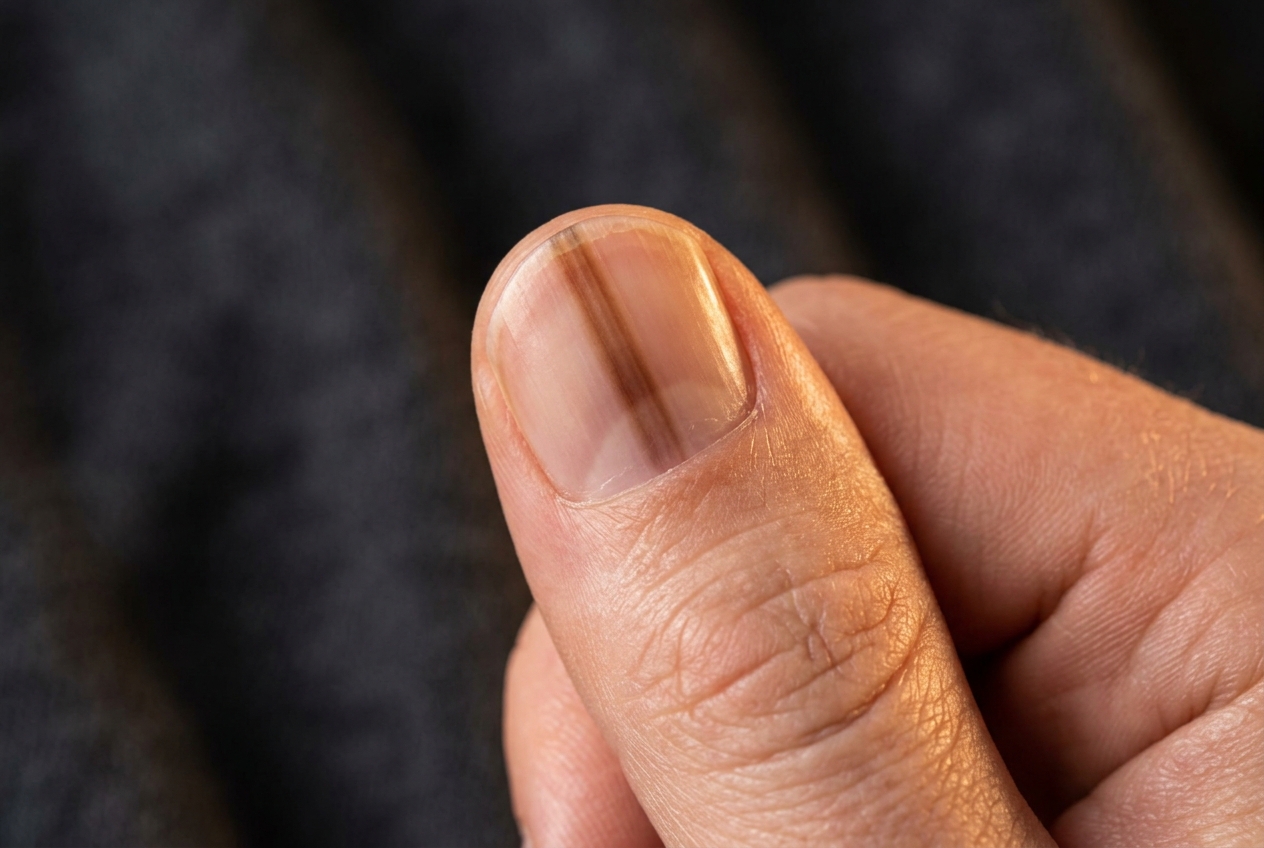
This sign is part of a particularly interesting field of dermatology: cutaneous paraneoplastic syndromes. Sometimes an internal disease can manifest in the skin, hair, nails, or mucous membranes even before other symptoms appear. The skin then becomes a kind of window into the body — not because any skin lesion means an internal disease, but because certain specific patterns can give us a clue.
What I want you to remember
Seborrheic keratoses are benign and extremely common skin lesions: having them does not mean having cancer. The Leser-Trélat sign refers to a much more specific situation — the sudden and eruptive appearance of numerous seborrheic keratoses, classically described in association with an internal neoplasm — but the association is rare, not specific, and remains the subject of scientific debate.
I am Dr. Florian Vallecillo, and if I could leave you with just one idea today, it would be this: don't worry about having seborrheic keratoses — pay attention if your skin suddenly changes its behavior. If you have had a few lesions for years and then dozens of new ones appear within a few months, especially if they are accompanied by significant itching, weight loss, fatigue, digestive symptoms, or any other general change, it is worth consulting a doctor. Not because that automatically means cancer, but because in medicine a sudden, unexplained change deserves to be understood. And if you have multiple new lesions, are unsure whether they are truly seborrheic keratoses, or have noticed a rapid change in your skin, you can arrange a dermatological assessment at Clínica Valorian, Marbella: very often we will simply be able to reassure you, and when the pattern truly turns out to be unusual, we can decide whether it is necessary to look a little further than the skin.
What to remember
- —Seborrheic keratoses are benign skin lesions that are very common with age. Having them — even many of them — does not mean you have cancer.
- —The Leser-Trélat sign is the SUDDEN, eruptive appearance of multiple seborrheic keratoses over the course of a few months, classically associated with an internal neoplasm. The key is the rapid change, not the accumulated number.
- —The association with cancer is rare, non-specific, and scientifically controversial — there is even a 'pseudo-sign' with no neoplasm whatsoever. Leser-Trélat does not equal cancer.
- —What warrants attention: appearance over weeks or months, rapid growth, significant itching, and — above all — general symptoms such as weight loss, fatigue, anemia, digestive changes, and bleeding.
- —The physician first confirms that the lesions are indeed keratoses (using dermatoscopy, or a biopsy if atypical) and then tailors the workup to the individual based on age, symptoms, medical history, and routine screenings. A CT scan is NOT ordered for everyone.
- —Final message: don't count your keratoses — pay attention to how they appear. A sudden, unexplained change — with or without general symptoms — deserves a medical evaluation, without any cause for alarm.
Related question · Ask the doctor

Doctor Florian A. Vallecillo Cabrera
The doctor explains
Informational content, written and reviewed by Doctor Florian A. Vallecillo Cabrera. It does not replace an in-person consultation or an individual diagnosis.