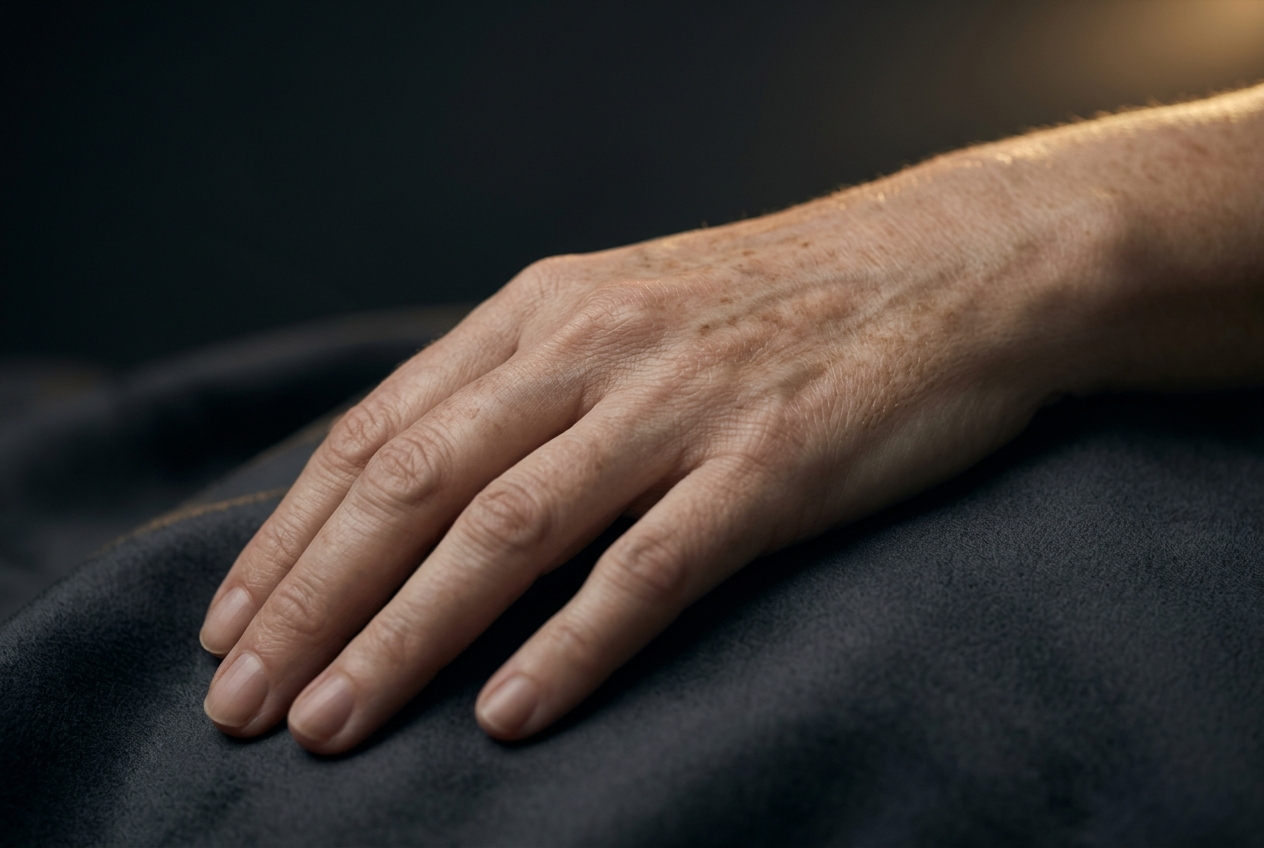
End of summer: the right time to have your skin checked

Why I'm telling you this
Summer is coming to an end. Your tan is still there. Perhaps you spent a lot of time in the sun, perhaps you had one or more sunburns. And perhaps you noticed a new spot, a mole that looks different to you, a small lesion that won't heal, or simply something on your skin that you had never really looked at before. This is precisely the right moment to take a close look at your skin.
I am Dr Florian Vallecillo, and today I would like to talk to you about something that is particularly close to my heart as a physician: the prevention and early detection of skin cancers — an essential subject in dermatology.
Because our skin has an extraordinary characteristic: it is one of the few organs we can examine directly. And when a skin cancer is detected early enough, managing it is generally much more straightforward.
Watch the video
Check your skin at the end of summer
After summer, your skin has a story to tell
For several months, we have generally exposed our skin more to ultraviolet radiation: the beach, swimming pools, sport, walks, terraces, gardening, travel. And here, in the south of Spain, this sun exposure can obviously be particularly significant. The sun has an enormous number of pleasant effects and we are not meant to live shut indoors, but ultraviolet radiation is also the main avoidable risk factor for skin cancers.
And there is something fundamental to understand: the skin remembers our exposures. UV-related damage accumulates gradually over the course of a lifetime, and a tan is itself a response of the skin to aggression by UV rays. This obviously does not mean that every person who has been exposed to the sun will develop skin cancer; but it does mean that prevention must be part of our health hygiene.
Not all skin cancers are melanomas
When I talk about skin cancer with my patients, they immediately think of melanoma. And indeed, melanoma is the one we are particularly concerned about because of its potential to spread. But there are also other extremely common skin cancers, such as basal cell carcinoma and squamous cell carcinoma, which can look very different from a worrying dark mole.
A skin cancer can in fact resemble a small wound that does not heal, a lesion that heals and then comes back, a small persistent pinkish area, a crust that keeps returning to the same spot, a lesion that bleeds easily, or a persistent rough or scaly area. That is why I often tell my patients: do not only monitor your moles — monitor your skin.
And there are also precancerous lesions
This is particularly important after years of sun exposure. Some people develop what we call actinic keratoses: often small rough, scaly areas, sometimes red or skin-coloured, frequently located on chronically sun-exposed areas — the face, the scalp in people with thinning hair, the ears, the décolleté, the forearms, or the backs of the hands.
Not all actinic keratoses obviously become cancers, but some can progress to squamous cell carcinoma. Identifying them therefore also allows us to act before a true cancer develops. And that is exactly what prevention means.
A doctor does not simply look at a mole
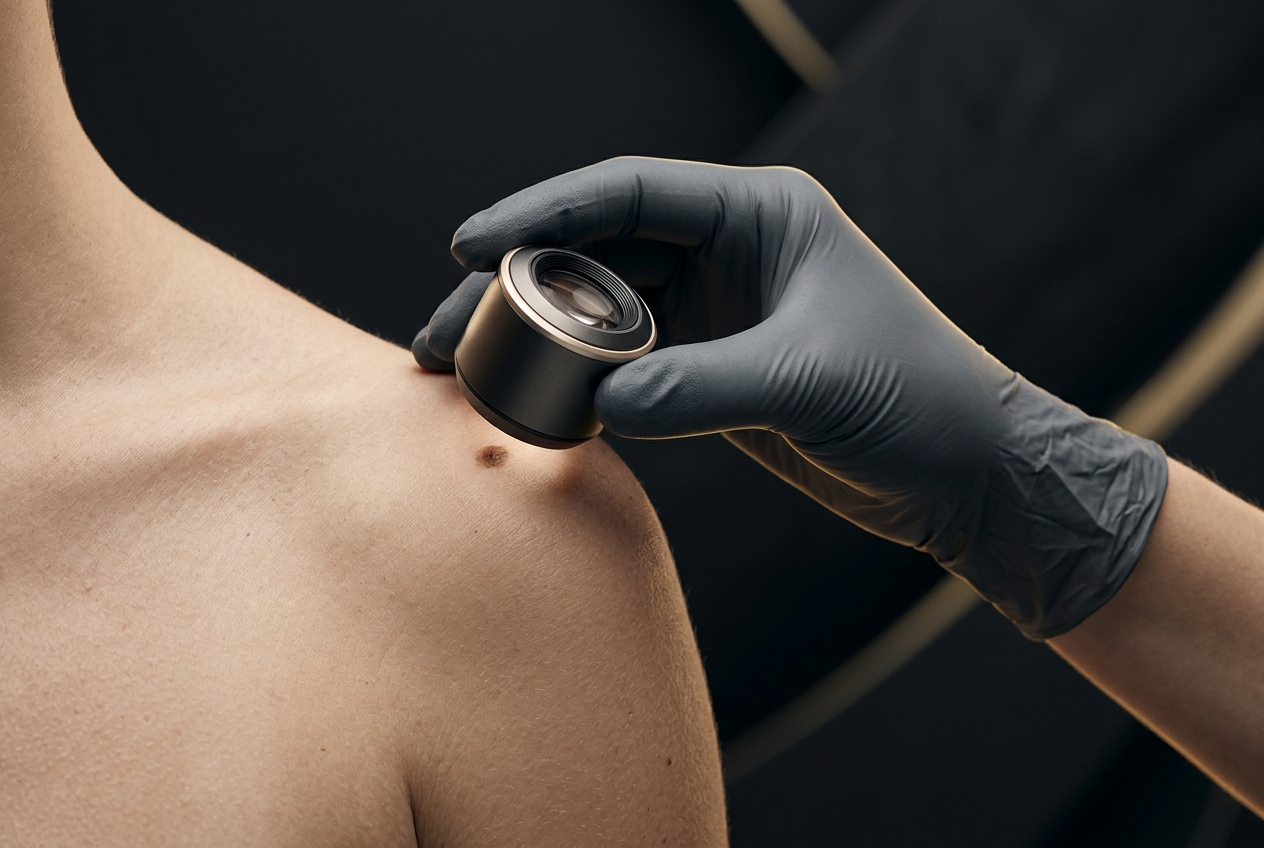
During a dermatological check-up, we first observe the skin as a whole. Then, when a lesion warrants closer examination, we can use an extremely useful tool: the dermatoscope. This is an optical system that allows us to observe structures within the skin that are not properly visible to the naked eye.
Dermoscopy allows us to analyse the pigmentation, the internal structures of a naevus, certain pigment networks, the blood vessels, and various signs that help guide the diagnosis — all with far greater precision. It is therefore not simply a matter of 'I look at your mole and think it looks odd': we are looking for specific, well-defined criteria.
You can monitor your own skin too
Between check-ups, you are probably the person who knows your skin best. And there is an extremely simple rule for monitoring pigmented lesions: the ABCDE rule.
A for Asymmetry: one half of the lesion does not match the other. B for Border: the edges become irregular, poorly defined, or scalloped. C for Colour: several colours appear within the same lesion — brown, black, red, and sometimes white or bluish. D for Diameter: a diameter greater than approximately 6 mm has traditionally been considered a warning sign, but bear in mind that a melanoma can be smaller than that. And E for Evolution — probably the criterion I consider most important: something changes. A lesion grows, changes shape, changes colour, thickens, starts to itch, bleeds, or simply looks different from what it used to be. These are signs that should prompt you to seek a medical opinion.
And another rule I am particularly fond of: the ugly duckling
Imagine you have thirty moles. Twenty-nine of them look alike, and there is one that appears completely different. That is the one that interests me. We call this the 'ugly duckling' sign, because sometimes it is not necessarily a lesion that perfectly meets all the ABCDE criteria — it is simply the one that does not look like the others. And that difference sometimes deserves to be examined.
Also look at the places you never think about
When people check their skin, they generally look at the face, arms, abdomen, and legs. But a melanoma can appear almost anywhere, including in areas that are relatively rarely exposed to the sun. You should therefore also check the scalp, behind the ears, the back, the buttocks, the armpits, the palms of the hands, the soles of the feet, between the toes, and around and under the nails. For the back and scalp, you may want to ask your partner or a close relative for help. The American Academy of Dermatology specifically recommends regularly examining the entire surface of the skin, including these hard-to-see areas.
'But Doctor, I have barely ever had sunburn'
This is obviously a good thing, but it does not mean the risk is zero. Sun exposure is a major factor, but skin cancers are multifactorial: skin phototype plays a role, genetics plays a role, family history plays a role, the number of nevi plays a role, and cumulative exposures over a lifetime play a role. And above all, as I have already explained in another article, certain skin cancers can appear in areas that receive very little sun. This is why we examine a person as a whole, and not simply the areas that tanned over the summer.
Who should be particularly vigilant?
Certain people require closer monitoring: in particular those who have many moles, atypical nevi, very fair skin, a tendency to burn easily in the sun, a history of numerous sunburns (particularly during childhood or adolescence), significant sun exposure (occupational or recreational), use of tanning booths, a family history of melanoma, a personal history of skin cancer, or immunosuppression. In these situations, the frequency of monitoring should be decided with your doctor based on individual risk.
Is an annual check-up after the summer strictly necessary?
Not necessarily for everyone, and I prefer to be precise: there is no universal frequency that applies to every person. A 25-year-old with no atypical nevi, no particular medical history, and limited sun exposure obviously does not carry the same risk as a 60-year-old with fair skin, a great many nevi, and several decades of sun exposure. Monitoring must be personalised.
That said, the end of summer is an excellent opportunity to ask yourself one very simple question: 'When did I last have my skin checked?' And if the answer is 'never', 'I can't remember', or 'I've actually noticed something that has changed', then it is probably time to discuss it with your doctor.
Don't wait until next September if something concerns you
This is essential. The post-summer check-up is a good habit, but a suspicious lesion does not wait for the calendar. If you notice a new unusual lesion, a mole that is changing, a lesion that looks different from the others, a wound that won't heal, a crust that keeps coming back, a lesion that bleeds, a lesion that itches persistently, or simply something that seems abnormal to you, seek medical advice without delay. The very purpose of screening is to detect skin cancers while they are still at an early stage, when they are generally far easier to treat.
Make September the month when you look at your skin
We have our car serviced, our teeth checked, our blood pressure measured, our blood tests done… yet we sometimes forget to check the organ we can actually observe every single day: our skin. So, as summer draws to a close, take a good look at yourself. Pick up a mirror, look at your back, your feet, your scalp, compare your moles, and ask yourself: 'Has anything changed?' It takes just a few minutes, and it can truly make a difference.
And prevention continues after summer
Sun protection doesn't stop just because the holidays are over. Here in the south of Spain, UV exposure remains significant for a large part of the year. Prevention relies in particular on avoiding excessive sun exposure, seeking shade when radiation is intense, wearing appropriate clothing, hats and sunglasses, and correctly applying sun protection when the skin remains exposed. The European Code Against Cancer reaffirmed in 2026 that solar UV rays and those from tanning booths represent the most significant risk factor for skin cancers, and recommends avoiding excessive exposure and not using UV tanning booths.
Key takeaways
The end of summer is an excellent time to examine your skin, spot any new lesion, compare your moles, look for a lesion that is changing, and have your skin checked when your situation warrants it. The majority of lesions we examine are, thankfully, benign; our goal is not to be afraid of every mole, but to make sure we don't miss the one that isn't.
I am Dr Florian Vallecillo. And if there is one idea I would like you to take away today, it is this: in dermatology, catching something early can change everything. A mole that is evolving, a small wound that won't heal, a scab that keeps coming back, a lesion that looks different from the others — don't tell yourself 'I'll take a look in a few months'; have it examined.
And if you would like to use this end of summer as an opportunity to have your skin lesions and moles checked, you can contact Clínica Valorian directly to arrange a medical screening consultation. Skin cancer prevention starts with something very simple: looking at your skin, and knowing when to have it examined by a doctor.
What to remember
- —The end of summer is an ideal time to examine your skin: your tan, sunburns, and any new lesions tell the story of your UV exposure over the past few months, and the skin 'remembers' accumulated exposures.
- —Not all skin cancers are melanomas: basal cell and squamous cell carcinomas can look like a wound that won't heal, a scab that keeps coming back, or a persistently rough area — keep an eye on your skin, not just your moles.
- —Actinic keratoses (rough or scaly patches on sun-exposed areas) are precancerous lesions: identifying them early allows action to be taken before a squamous cell carcinoma develops.
- —Self-monitoring: the ABCDE rule (Asymmetry, Border, Colour, Diameter, Evolution) and the 'ugly duckling' sign (the lesion that doesn't look like the others); also check the scalp, back, palms, soles of the feet, and nails.
- —Risk is multifactorial (skin phototype, genetics, family history, number of naevi, UV tanning beds, immunosuppression): the frequency of follow-up is decided with your doctor and is not the same for everyone.
- —A suspicious lesion cannot wait for a convenient appointment: a new lesion, a mole that is changing, a wound that won't heal or that bleeds → seek medical advice without delay; and sun protection continues all year round (European Code Against Cancer, 2026).
Clínica Valorian
Do you have a mole that worries you?
Early detection of skin cancer saves lives. If a mole changes size, shape or colour, bleeds or won't heal, don't wait.
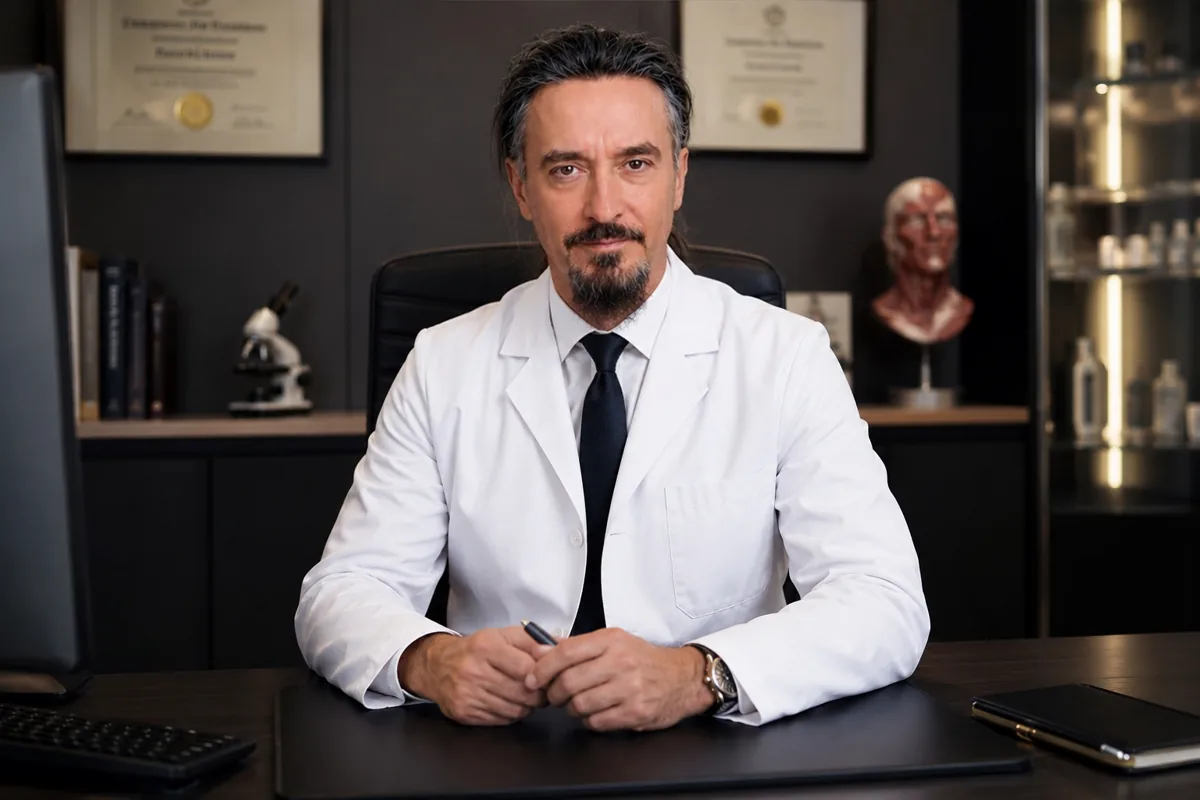
Doctor Florian A. Vallecillo Cabrera
The doctor explains
Informational content, written and reviewed by Doctor Florian A. Vallecillo Cabrera. It does not replace an in-person consultation or an individual diagnosis.