Menopause hormone therapy: neither the poison you were told about nor the elixir of eternal youth

Why I'm telling you this
Few things cause as much fear in my practice as these two words: hormone therapy. Many women rule it out straight away because of something they heard years ago. Others, on the other hand, expect miracles from it that it simply cannot deliver.
And caught in the middle of all that noise are women with hot flushes that keep them from sleeping, not even knowing whether they have the right to consider a treatment that might actually help them.
I am Dr Florian A. Vallecillo Cabrera, and today I want to explain to you, calmly and without drama, what the evidence currently says: what it is genuinely useful for, what risks it carries, and, above all, for whom it may make sense. Because this is not a one-size-fits-all 'yes or no': it is your decision — informed and shared.
Where does so much fear come from?
Almost all of the fear stems from how a major study — the Women's Health Initiative — was reported about two decades ago. The initial headlines were alarming and led millions of women to abandon treatment almost overnight.
Over the years, subsequent analyses substantially nuanced those conclusions. And we came to understand something fundamental: the balance between benefit and risk depends on who you are. On your age, on how long ago you went through menopause, on the type of hormones, the dose, and the route of administration.
Put another way: starting hormone therapy at 51 with hot flashes that are destroying your nights is not the same as starting it at 65, many years after menopause. Context changes everything.
What is it actually good for?
Its best-established indication is relieving the hot flashes and night sweats that are making your life miserable. And on this point I am unequivocal: for that purpose, hormone therapy is the most effective tool we have. Nothing comes close.
It also helps a great deal with symptoms affecting the genital and urinary area — dryness, discomfort during intercourse — which are often treated with local estrogens that act primarily where they are applied. And it helps protect bone against the loss of bone density that accompanies the drop in estrogen.
But let me tell you with equal clarity what it is NOT. Hormone therapy is not an 'anti-aging' treatment, it does not make you younger, and it is not something every woman should take simply because she is getting older. Anyone who sells it to you that way is selling you smoke and mirrors.
The risks you need to know about (without dramatizing)
Like any treatment, it carries risks, and these must be laid on the table. They depend on the type of therapy and your individual profile, and include a possible increase in the risk of thrombosis, a small increase in the risk of breast cancer with certain regimens and prolonged use, and cardiovascular considerations that vary depending on age and the point at which treatment is started.
One detail that matters a great deal to me: the route of administration makes a difference. Estrogens delivered via patch or gel (transdermal) are associated, according to the available evidence, with a lower risk of thrombosis than those taken orally. And if you still have your uterus, a progestogen must be added to protect the endometrium. That is not an arbitrary requirement — it is part of doing this properly.
None of this is decided 'in general.' It is decided with you in front of me, looking at your symptoms, your medical history, and what you want.
So, who might it make sense for?
As a general rule — and always on an individualized basis — the balance tends to be more favorable in women with symptoms that are affecting their quality of life, who are under 60 or within ten years of menopause, and who have no contraindications.
And there are situations that call for particular caution, or in which it is simply not indicated: a history of certain hormone-dependent cancers, of thrombosis or cardiovascular problems, or of severe liver disease, among others. That is why a prior medical evaluation is not a formality — it is essential.
And how is the right decision made?
A good decision starts with listening to you: what symptoms you have and how much they affect you, your medical history, a physical examination and whatever tests are needed. From there, if it makes sense, the type, dose and route are chosen; the minimum effective dose is used for as long as it provides benefit; and it is reviewed along the way.
It is not a case of 'start and forget'. It is a journey that is accompanied and adjusted with you.
If I had to sum it up for you
Hormone therapy is neither the danger to be avoided at all costs nor the fountain of eternal youth. It is a useful medical tool, with clear indications and known risks, that can greatly improve the lives of the right women.
So if you have symptoms that are affecting you, do not hold on to inherited fear or resignation. Get informed, ask questions, consider it with your doctor. The best decision is always the one made with knowledge, and together.
What to remember
- —Hormone therapy is the most effective option for hot flushes and night sweats that affect quality of life, and it helps with genitourinary symptoms and bone health.
- —It is not an 'anti-ageing' treatment: it has specific indications and is not for every woman simply by virtue of growing older.
- —The benefit-risk balance is more favourable when starting before the age of 60 or within 10 years of menopause, and in the absence of contraindications.
- —The transdermal route is associated with a lower risk of thrombosis than the oral route; when the uterus is intact, a progestogen must be added.
- —It is an individual, informed and shared decision, requiring prior evaluation and regular follow-up; it is not indicated in the presence of certain medical histories.
Sources
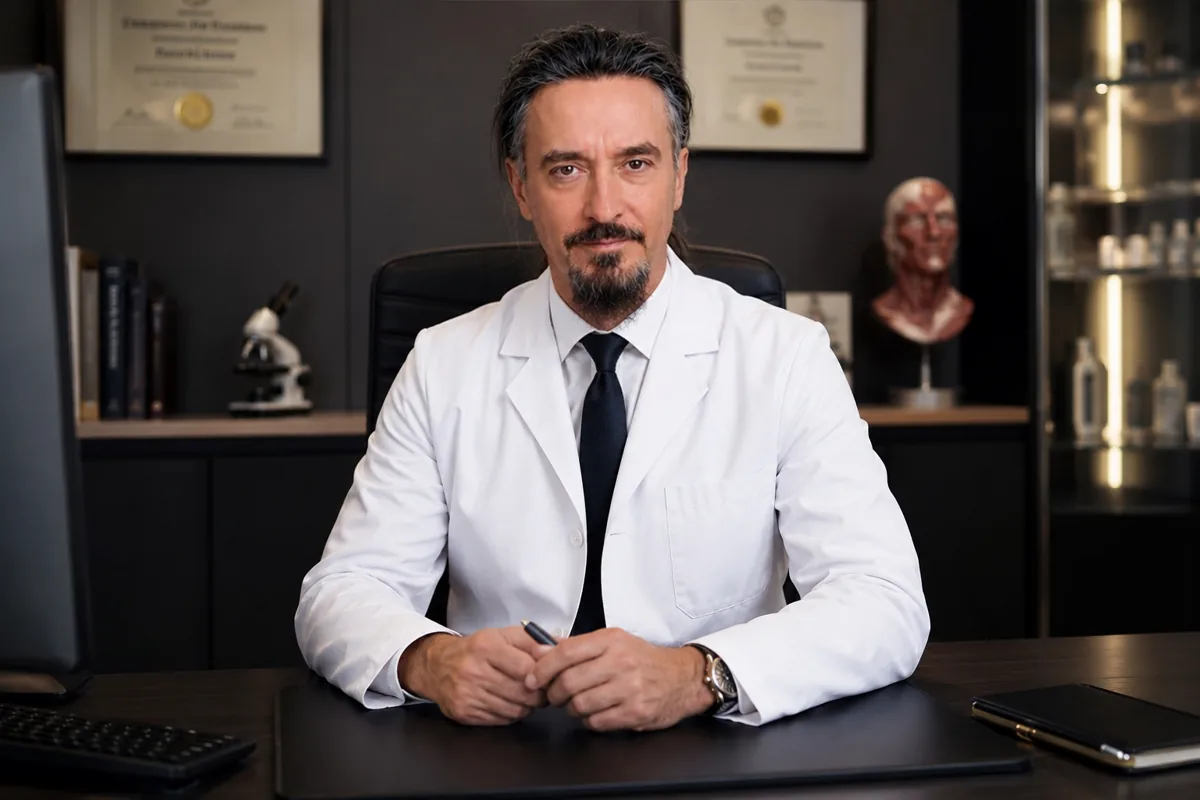
Doctor Florian A. Vallecillo Cabrera
The doctor explains
Informational content, written and reviewed by Doctor Florian A. Vallecillo Cabrera. It does not replace an in-person consultation or an individual diagnosis.