
RNA vaccine against melanoma: what you need to know about this breakthrough
Why I'm telling you this
The promise of RNA vaccines against cancer is beginning to become reality. On August 19, 2026, the biotechnology company Moderna — creator of one of the most widely used vaccines against coronavirus — announced very positive results from a phase III trial of a vaccine against melanoma, a particularly dangerous form of skin cancer.
I am Dr. Florian Vallecillo, and today I want to explain to you, calmly and without exaggerating, exactly what this vaccine is, how it works, and why — even though this is hopeful news — it is worth clearly understanding who it is intended for and what its limitations are.
The vaccine does not prevent cancer, but rather relapse
Unlike traditional vaccines, which protect us from a disease before we have ever had it, Moderna's vaccine does not really protect against getting sick, but against the risk of relapse. In other words, it would only be useful for people who have already had melanoma and have had it surgically removed. After that removal, tumor cells may remain, even if the cancer is no longer detectable. Those cells can multiply later and generate a new tumor. It is precisely to prevent that risk that the vaccine would be effective: it would help the body attack those remaining cells and, in doing so, eliminate the cancer completely.
How it helps the body attack tumor cells
These tumor cells accumulate genetic mutations that can alter the structure of certain proteins. The vaccine makes use of those abnormal proteins to identify the dangerous cells, since they will be different from those produced by the body's other cells. Thanks to those differences, the body could detect those proteins with antibodies — but it needs help to produce them. That is where the vaccine comes in.
Moderna's researchers analyze, with the help of artificial intelligence, the genome of the tumor removed from the patient in order to identify the mutations that would be most easily detected by the immune system. Each vaccine is therefore personalized: it contains RNA sequences that reproduce the mutated sequences of those proteins, carrying only the mutations found in the tumor cells of each individual patient. And unlike classical vaccines, which target a single protein, the RNA vaccine can target up to 34.
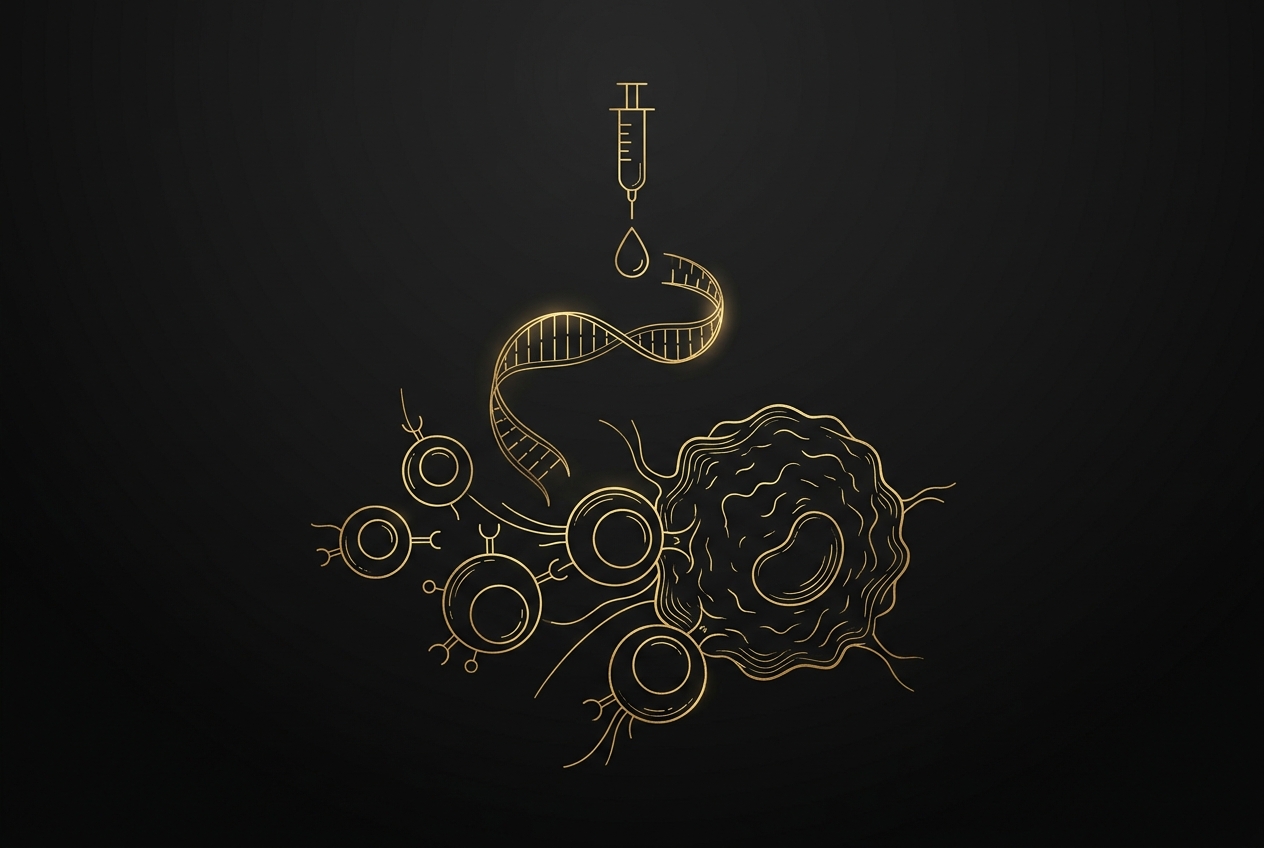
The vaccine, called Intismeran (formerly mRNA-4157), introduces these messenger RNAs into the body so that cells can use those instructions to produce the mutated proteins in large quantities. The immune system then identifies those abnormal proteins and produces specific antibodies to attack them. It thus learns to recognize tumor cells, which are now identifiable thanks to those antibodies.
The vaccine does not act alone
To facilitate the destruction of tumor cells, the RNA vaccine is administered at the same time as a medication that helps the immune system attack them. This assistance is necessary because cancer has the ability to inactivate the immune system by binding to lymphocytes, immune cells that direct the body's defenses. These cells carry on their surface a receptor (PD-1) that tumor cells recognize through the protein PD-L1. The medication, called Keytruda (produced by the company Merck), allows the body to produce antibodies against PD-L1, which block the interaction between tumor cells and lymphocytes, thereby releasing the latter.
The dual treatment would cut the risk of relapse in half
This dual Intismeran/Keytruda treatment had already been successfully tested in 2022 in a phase II trial. This new randomized, double-blind phase III trial sought to confirm its efficacy in a larger number of patients: 1,137 people at high risk of relapse following the surgical removal of a melanoma. Some of the participants received up to nine doses of the combined treatment, and they were compared with patients who received Keytruda alone. According to the announcement, the risk of relapse was reduced by the treatment in a statistically significant way: over five years of follow-up, the risk of relapse would fall by 49%, and the risk of metastasis and death would drop by 59%.
Promising news that still needs to be confirmed
These highly positive results are certainly encouraging, but they have not yet been officially presented in scientific publications. That means they have not yet been validated by other experts (peer review). We will therefore need to wait before we can be certain of their validity and before we can learn the details of the study, particularly regarding possible side effects. In medicine, exercising caution in the face of a promising announcement is not pessimism — it is rigour.
What I want you to take away from this
Melanoma is a rare but serious form of skin cancer. This RNA vaccine is a truly promising step forward, but it is important to keep it in perspective: it is not a preventive vaccine for the general population, but rather a treatment designed to reduce relapse in people who have already had a melanoma surgically removed. It does not change, today, what each of us can do to protect ourselves.
And on that point, as a physician, I want to emphasise what is genuinely within our power and saves the most lives: daily sun protection, avoiding sunburn and tanning beds, and keeping a close eye on our skin. If a mole changes in size, shape or colour, bleeds or itches, do not let it go unchecked — make an appointment with your doctor. Early detection remains, by far, the best weapon against melanoma. I am Dr. Florian Vallecillo, and I am glad to see science moving forward, while never losing sight of the basics.
What to remember
- —On August 19, 2026, Moderna announced very positive results from a phase III trial of its RNA vaccine against melanoma, administered alongside the drug Keytruda.
- —It is not a preventive vaccine: it is designed for people who have ALREADY had a melanoma surgically removed, with the aim of reducing the risk of recurrence by eliminating any tumor cells that may remain.
- —It is personalized: an artificial intelligence analyzes each patient's tumor mutations, and the RNA (Intismeran, formerly mRNA-4157) can target up to 34 different mutated proteins.
- —It works together with Keytruda (pembrolizumab, by Merck), which unleashes lymphocytes by blocking the PD-1/PD-L1 pathway that the tumor uses to "switch off" the immune system.
- —In 1,137 high-risk patients, at five years the risk of recurrence would be reduced by 49% and the risk of metastasis or death by 59% compared to Keytruda alone.
- —A word of caution: the results have not yet been published or peer-reviewed. Sun protection and early detection (monitoring moles and consulting a doctor) remain the best prevention against melanoma.
Clínica Valorian
Do you have a mole that worries you?
Early detection of skin cancer saves lives. If a mole changes size, shape or colour, bleeds or won't heal, don't wait.

Doctor Florian A. Vallecillo Cabrera
The doctor explains
Informational content, written and reviewed by Doctor Florian A. Vallecillo Cabrera. It does not replace an in-person consultation or an individual diagnosis.