Is itching a form of pain? Why we scratch (and why we shouldn't)
Why I'm telling you this
"Is itching a kind of pain?" It's a question I'm often asked, and the short answer is fascinating: not exactly. But itching and pain are very close relatives — so close that they sometimes get confused and, above all, counteract each other.
I'm Dr. Florian Vallecillo, and today I want to explain what really happens beneath the skin when something "itches," why scratching brings relief for a few seconds… and why, for that very reason, the itch almost always comes back worse.
Itching has its own 'direct line' to the brain
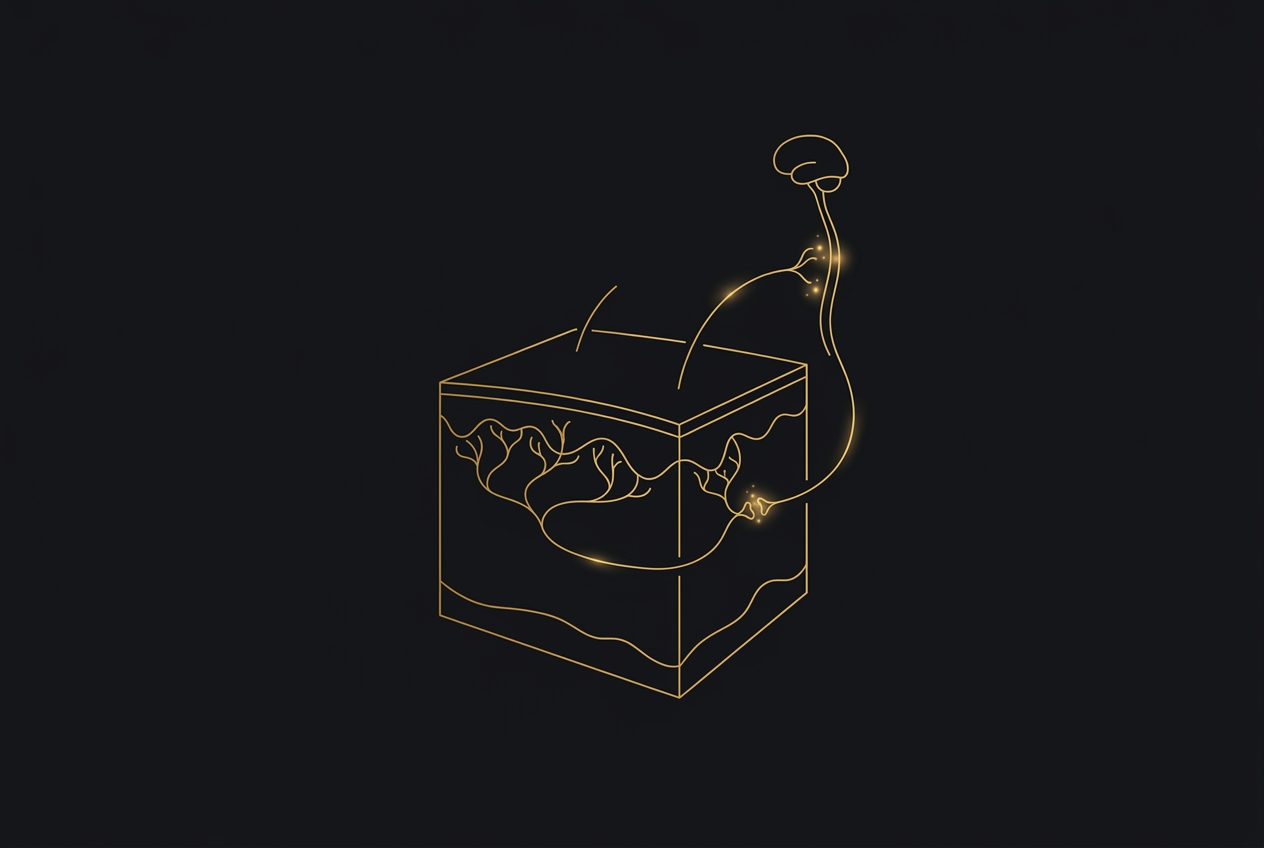
It all starts in the skin. Itching — what we in medicine call pruritus — begins when specialised receptors located in the most superficial nerve endings, the pruriceptors, are activated. From there, the signal travels along a chain of three neurons: the first travels from the skin to the spinal cord, the second acts as a relay within the spinal cord, and the third carries the message to areas of the brain associated with sensations and emotions, where we finally become aware that something 'itches'.
That architecture closely resembles that of pain, and it is no coincidence: the two systems are intimately connected. But — and this is the key point — they travel through different fibres and receptors. For decades it was thought that itching was simply 'low-intensity pain'; today we know that is not the case. Neuroscience has identified neurons and molecules dedicated specifically to itching.
Its own neurons and molecules: why itching is not pain
In recent years, research in animal models has uncovered a true 'dedicated line' for itching. In the skin, certain nerves carry a receptor called MrgprA3 that marks them as itch neurons: when they are eliminated, the animal stops scratching in response to itch-producing stimuli… but continues to feel pain normally.
And something similar occurs in the spinal cord: a specific relay exists based on a molecule, gastrin-releasing peptide (GRP), and its receptor (GRPR). When the neurons carrying that receptor are silenced, the animals stop scratching but retain their pain responses intact. This is the most elegant proof that itching has its own circuit, separate from pain even though it runs right alongside it.
So why does scratching bring relief?
Here lies the most interesting paradox. If scratching soothes the itch, it is precisely because itching is not pain… yet it can be silenced by it. Our skin has a second type of sensor, the nociceptors, specialised in pain. When we scratch, we inflict a small assault on ourselves — a micro-pain, a mild burning sensation — sufficient to activate those nociceptors.
When those pain signals reach the spinal cord, they inhibit the itch signals: it is like a biological priority switch that momentarily mutes the 'noise' of pruritus. Hence the immediate relief. The problem is that it lasts very briefly.
The itch–scratch cycle: why it comes back worse
That relief comes at a cost. The neurons involved have been over-activated and, as soon as the effect of the micro-pain fades, the itch returns, often with greater intensity. Moreover, scratching releases inflammatory mediators in the skin and damages the skin barrier, generating even more itching. This is the well-known itch–scratch cycle: the more you scratch, the more you itch.
That is why, when I tell you 'try not to scratch', it is not a moral admonishment: it is because scratching, which seems like the solution, is in reality fuel for the fire. Local cold, proper moisturisation and, above all, treating the underlying cause tend to break that cycle far more effectively than a fingernail.
Itching and pain: two 'cousin' alarm signals
So, to answer the question: no, itching is not a form of pain in the strict sense. It is a sensation with its own identity, with its own receptors and pathways. But itching and pain are very close cousins: they share a neighbourhood in the spinal cord and the brain, they mutually inhibit each other, and at their core they serve the same purpose — to warn us that something is happening in the skin.
One calls for protection; the other, for the compulsive reaction of scratching. And understanding how they communicate explains many things in real life: why cold or a pinch can calm an itch, why certain morphine-derived analgesics can, on the contrary, produce it, or why chronic pruritus is so difficult to treat.
When does itching warrant a medical consultation?
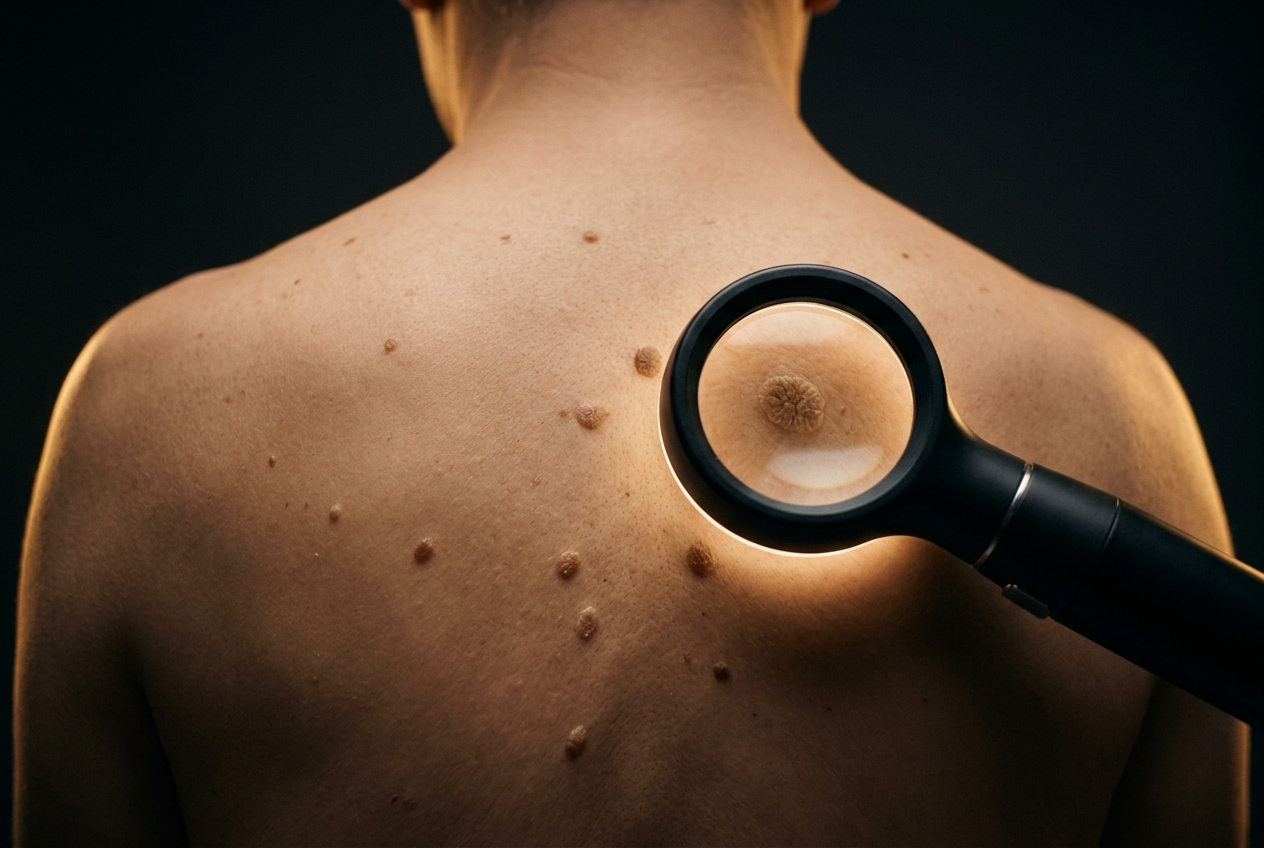
An occasional itch is nothing to worry about. But it is worth seeking advice if the itch is intense or persistent (lasting more than a few weeks), if it wakes you at night, if it affects the whole body without a rash to explain it, or if it is accompanied by other symptoms (weight loss, fatigue, changes in the skin or in moles). Sometimes the skin itches because of a purely dermatological problem; other times, pruritus is the body's way of signalling something deeper. Telling one from the other is, precisely, a doctor's job.
I am Dr. Florian Vallecillo, and as always I prefer to explain the why to you: understanding why it itches — and why scratching is not the solution — is the first step towards caring for your skin properly.
What to remember
- —Itching (pruritus) is not "mild pain": it has its own neurons, receptors (such as MrgprA3), and a dedicated nerve pathway, distinct from those involved in pain.
- —The itch signal travels along a chain of three neurons from the skin to areas of the brain linked to sensation and emotion.
- —In the spinal cord, a specific relay (the peptide GRP and its receptor GRPR) transmits the itch signal; blocking it stops scratching behavior, while pain responses remain fully intact.
- —Scratching brings relief because it generates a micro-pain that activates nociceptors, and pain signals inhibit itch signals in the spinal cord — a "biological priority."
- —That relief lasts only seconds and triggers a rebound effect: scratching over-activates neurons, causes inflammation, and damages the skin barrier, feeding the itch–scratch cycle.
- —Seek medical advice if the itch is intense or lasts for weeks, wakes you at night, is widespread without a rash, or is accompanied by other symptoms: it may be signaling something deeper.
Sources
- Sun YG, Chen ZF. A gastrin-releasing peptide receptor mediates the itch sensation in the spinal cord. Nature. 2007;448(7154):700-703. PMID 17653196.
- Sun YG, Zhao ZQ, Meng XL, Yin J, Liu XY, Chen ZF. Cellular basis of itch sensation. Science. 2009;325(5947):1531-1534. PMID 19661382.
- Han L, Ma C, Liu Q, et al. A subpopulation of nociceptors specifically linked to itch. Nat Neurosci. 2013;16(2):174-182. PMID 23263443.
- LaMotte RH, Dong X, Ringkamp M. Sensory neurons and circuits mediating itch. Nat Rev Neurosci. 2014;15(1):19-31. PMID 24356071.
- Dong X, Dong X. Peripheral and Central Mechanisms of Itch. Neuron. 2018;98(3):482-494. PMID 29723501.
You may also like · Skin & spots

Doctor Florian A. Vallecillo Cabrera
The doctor explains
Informational content, written and reviewed by Doctor Florian A. Vallecillo Cabrera. It does not replace an in-person consultation or an individual diagnosis.