Do food additives increase the risk of cancer and diabetes? What the new French studies show
Three NutriNet-Santé studies (May 2026) link certain colourings and preservatives to a higher risk of diabetes, cancers and cardiovascular disease — without proving causation.

Doctor Florian A. Vallecillo Cabrera
Author
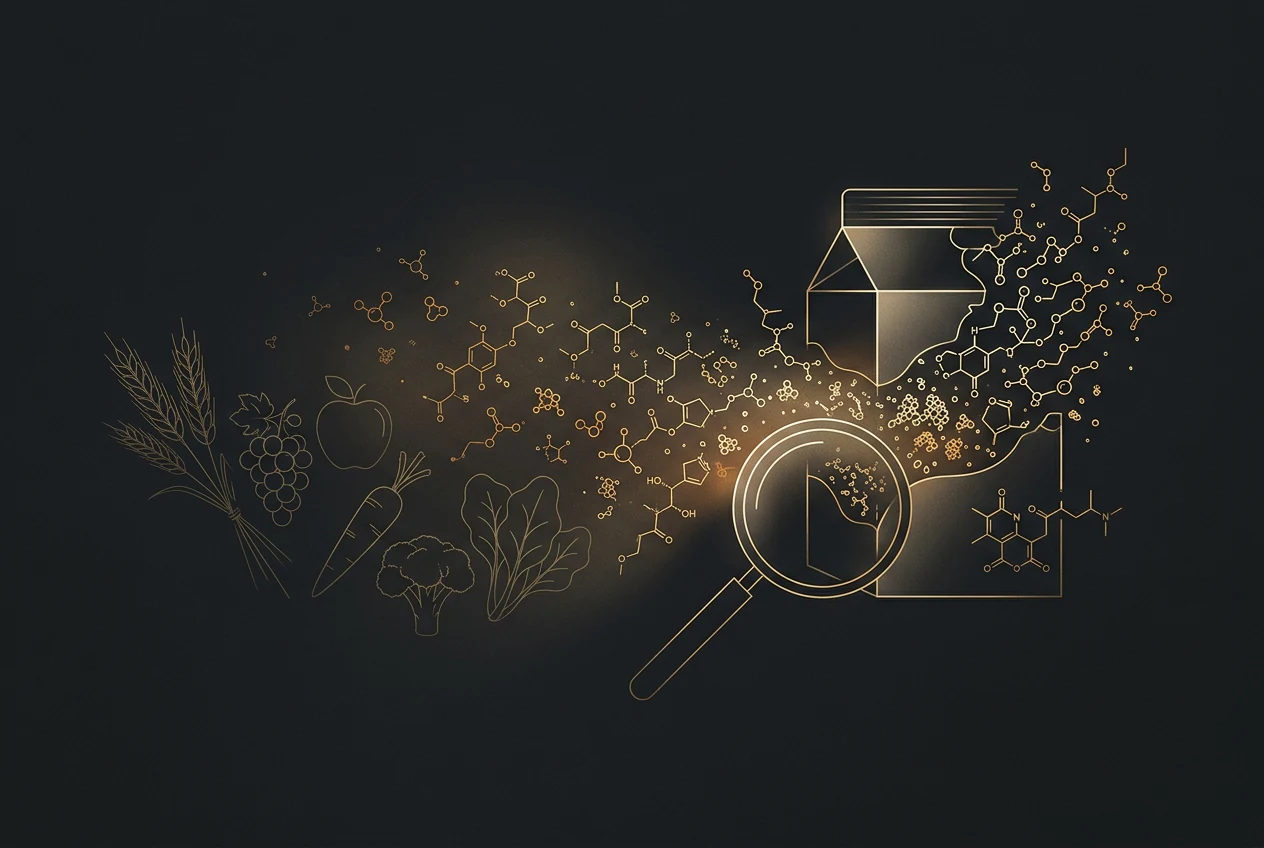
Three French studies (NutriNet-Santé, > 100,000 participants) link high exposure to certain colourings and preservatives with an increased risk of type 2 diabetes, some cancers and cardiovascular disease. Associations, not proof of causation: the message remains to limit ultra-processed foods, without demonising every additive.
Summary
Ultra-processed foods have for several years been associated with an increased risk of chronic diseases. A new series of three French studies provides additional data, showing that certain food colourings and preservatives could themselves contribute to this increased risk.
The researchers observe associations between a high intake of certain additives and an increased risk of type 2 diabetes, some cancers, high blood pressure and cardiovascular diseases.
These results do not demonstrate a causal link, but they reinforce an already very substantial body of evidence on the potentially harmful effects of ultra-processed foods.
What is a food additive?
Additives are substances added to foods in order to:
- extend their shelf life;
- improve their colour;
- modify their texture;
- stabilise their taste;
- facilitate industrial manufacturing.
In Europe, they are identified by a code preceded by the letter E. For example:
- E100 to E199: colourings;
- E200 to E299: preservatives;
- E300 to E399: antioxidants and acidity regulators.
The presence of an « E » number does not automatically mean an additive is dangerous: many are considered safe within authorised limits of use. However, the effects of chronic exposure to mixtures of additives remain an active field of research.
What does this new study show?
The researchers studied the dietary habits of more than 100,000 French people followed over several years. The results show that the people most exposed to certain food colourings had:
- a 38% higher risk of developing type 2 diabetes;
- a 14% increased risk of cancer;
- a 21% increased risk of breast cancer;
- a 32% increased risk of breast cancer after menopause.
Regarding certain preservatives, the most exposed participants also had:
- a 24% higher risk of high blood pressure;
- a 16% increased risk of cardiovascular disease.
These figures correspond to statistical associations observed in this population.
Why are ultra-processed foods a problem?
Additives are probably only part of the problem. Ultra-processed foods are often also:
- rich in added sugars;
- rich in salt;
- low in fibre;
- low in micronutrients;
- very energy-dense;
- quickly consumed.
They can also alter the gut microbiome, promote chronic inflammation and disrupt several metabolic mechanisms. Together, these factors could explain part of the observed risks.
Are all additives dangerous?
No. It is important to avoid any generalisation. More than 300 additives are authorised in Europe after evaluation by health authorities. The new studies do not show that all present the same level of risk. They mainly identify certain associations concerning specific families of additives and call for further research.
The main message remains to limit the consumption of ultra-processed foods rather than focusing on a single additive.
What do other studies say?
The results are part of an already very consistent body of data. According to the authors, more than 100 international studies have explored the links between ultra-processed foods and health. The vast majority find an association with an increased risk of:
- type 2 diabetes;
- cardiovascular disease;
- obesity;
- certain cancers;
- premature mortality.
Even if all these studies do not prove cause and effect, their convergence strengthens the credibility of these observations.
Should all industrial products be eliminated?
No. The goal is not to ban all processed foods. It is above all to favour a diet made up mostly of:
- fruit;
- vegetables;
- legumes;
- whole grains;
- nuts and seeds;
- fish;
- minimally processed foods.
Ultra-processed products should remain occasional rather than form the basis of the daily diet.
Practical tips
To naturally reduce your exposure to additives:
- read ingredient lists;
- favour products with few ingredients;
- cook more from raw products;
- limit sugary drinks;
- reduce industrial sweets and snacks;
- choose fresh foods whenever possible.
It is not necessary to completely eliminate all products containing additives: the frequency of consumption and the overall balance of the diet remain the most important elements.
What this study does not demonstrate
It is essential to interpret these results correctly. This study does not prove that:
- colourings directly cause cancer;
- preservatives alone are responsible for diabetes;
- all additives are dangerous;
- a food containing an additive should be systematically avoided.
These are observational studies that show associations but do not demonstrate a causal relationship.
The Valorian analysis
This series of studies represents an important advance in understanding the potential effects of ultra-processed foods on health. Its strength lies in the quality of the NutriNet-Santé cohort, the large number of participants and simultaneous publication in three recognised international scientific journals.
The main message is not that every additive is dangerous, but that the accumulation of a diet rich in ultra-processed products could have long-term consequences on the risk of chronic diseases. The results reinforce recommendations already made by many learned societies: favour minimally processed foods, rich in fibre and nutrients, while limiting highly processed industrial products.
At Valorian, we consider that nutritional prevention is not about creating a fear of additives, but about promoting a simple, varied and sustainable diet based on whole foods. It is this holistic approach that today has the highest level of scientific evidence.
Conclusion
The message is clear: it is not about fearing every additive, but about reducing ultra-processed foods overall and favouring a varied diet based on whole foods.
Key points
- ◆Three NutriNet-Santé studies (May 2026) link certain colourings/preservatives to a higher risk of diabetes, cancers, hypertension and cardiovascular disease.
- ◆Notable figures: +38% risk of type 2 diabetes and +32% post-menopausal breast cancer among those most exposed to certain colourings.
- ◆These are observational associations, not proof of causation — not all additives carry the same risk.
- ◆Additives are only part of the problem: sugar, salt, low fibre and effects on the microbiome also count.
- ◆Key message: limit ultra-processed foods and favour a whole-food diet, rather than hunting down a single additive.
Valorian level of evidence
- Scientific quality(5/5)
Three studies published simultaneously in European Heart Journal, European Journal of Epidemiology and Diabetes Care, conducted on more than 100,000 participants of the NutriNet-Santé cohort.
- Current clinical application(4/5)
The data support existing recommendations to reduce consumption of ultra-processed foods, without justifying the systematic avoidance of all additives.
- Future potential(5/5)
This work should contribute to a better assessment of the safety of food additives and guide future public health policies as well as the development of healthier foods.
References
- Trois études françaises publiées le 21 mai 2026 dans European Heart Journal, European Journal of Epidemiology et Diabetes Care.
- Sanam Shah, Anaïs Hasenböhler, Pr Mathilde Touvier (Directrice de recherche, INSERM) — cohorte NutriNet-Santé (plus de 100 000 participants).
Frequently asked questions
Do food colourings cause cancer?
The study shows a statistical association, not cause and effect. It does not prove that a colouring directly causes cancer. The message is to limit ultra-processed foods overall.
Should all additives (E numbers) be avoided?
No. More than 300 additives are authorised in Europe and many are considered safe within usage limits. One should not generalise or systematically avoid a food because it contains an additive.
What should you actually do?
Read ingredient lists, favour products with few ingredients, cook from raw products, limit sugary drinks and industrial snacks, and choose fresh foods when possible. It is frequency and overall balance that matter.
How robust are these results?
High in terms of consistency: NutriNet-Santé cohort (> 100,000 participants), simultaneous publication in three international journals and convergence with more than 100 studies. But these are observational studies.