
TCA CROSS in Marbella: medical treatment for deep acne scars
Specialised medical technique to improve certain atrophic acne scars through the localised application of trichloroacetic acid.
Key points
- Localised application of trichloroacetic acid on selected scars
- Main indication: deep ice pick scars
- Usually between 3 and 6 sessions, depending on individual assessment
- Available in Marbella and the Costa del Sol
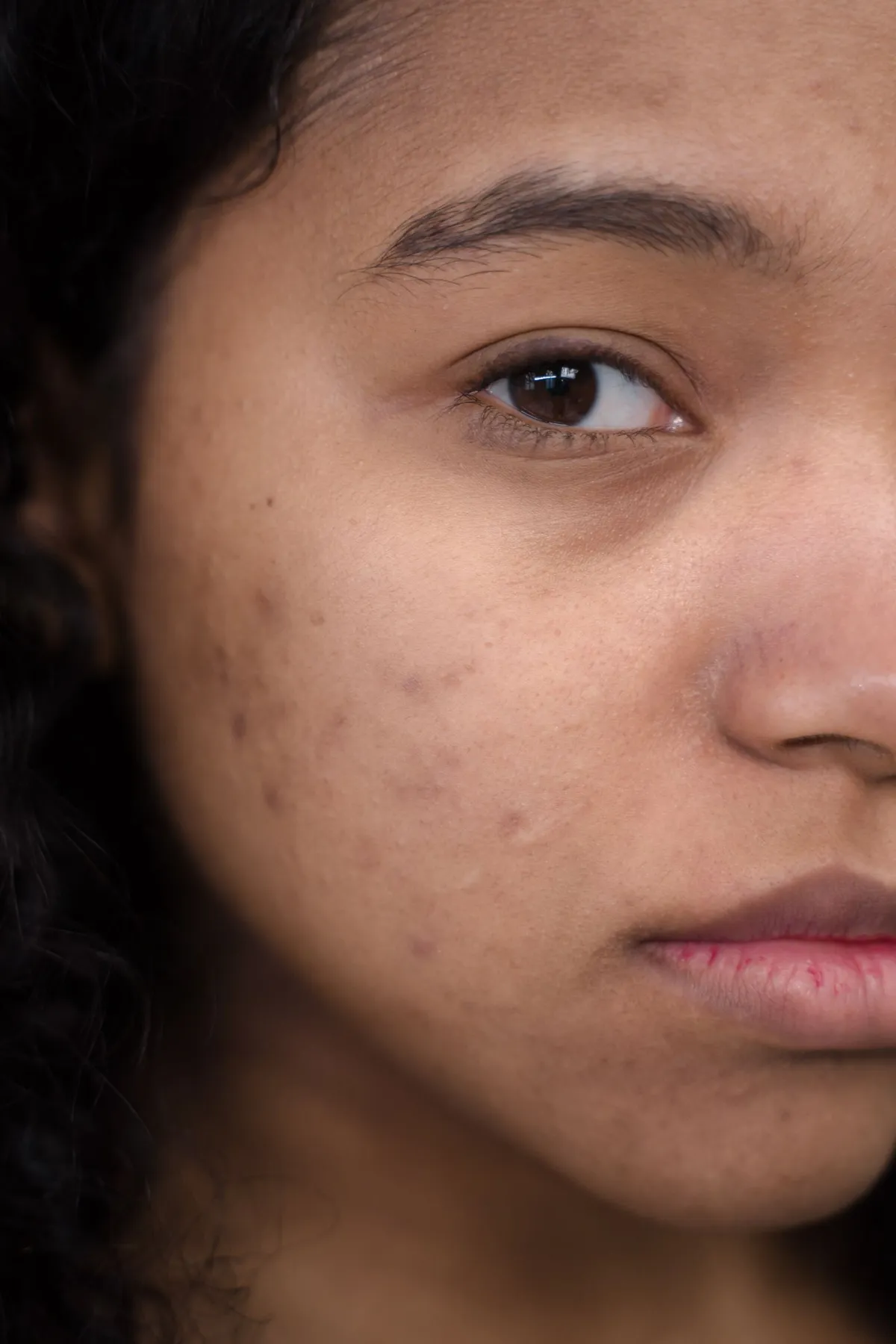
Acne scars can persist for years, even after the condition has been completely brought under control. Some of them form small, deep depressions in the skin that do not improve significantly with creams, cosmetic treatments or superficial peels.
At Clínica Valorian, in Marbella, we offer the medical treatment TCA CROSS, a specialised technique to improve certain atrophic acne scars through the localised application of trichloroacetic acid.
Its aim is to stimulate tissue repair and the formation of new collagen, encouraging a progressive improvement in the depth and appearance of scars.
What is TCA CROSS?
TCA CROSS stands for Chemical Reconstruction of Skin Scars, that is, the chemical reconstruction of cutaneous scars.
Unlike a conventional chemical peel, which is applied over a large surface of the skin, TCA CROSS involves applying a small amount of high-concentration trichloroacetic acid directly onto specific scars.
This localised application triggers a controlled tissue repair response that stimulates collagen remodelling.
Over the following weeks, this process can reduce the depth of the scars and improve the regularity of the skin surface.
The Doctor Explains: how TCA CROSS works, what results to expect and what its risks areFor which scars is it indicated?
TCA CROSS is particularly well suited to deep atrophic scars caused by acne.
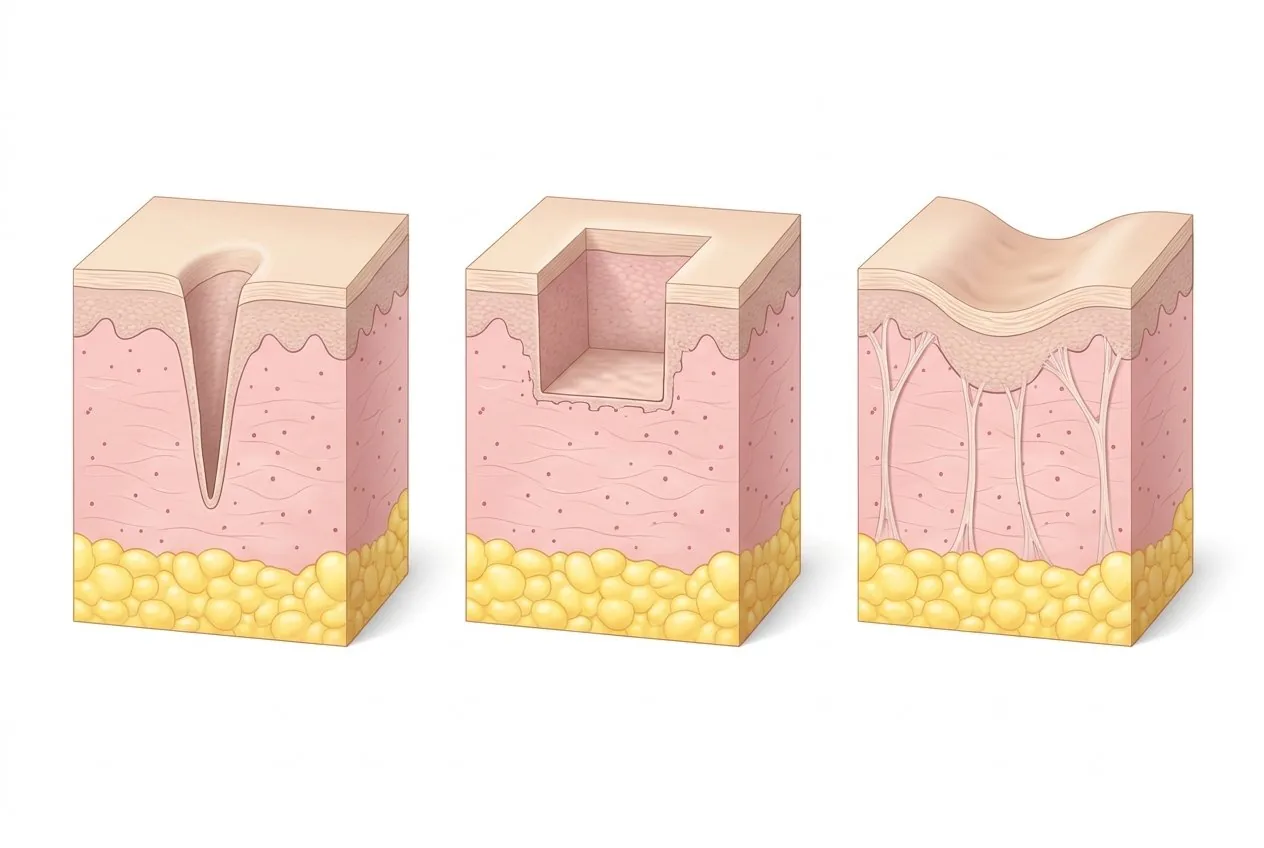
Ice pick
Main indication
Boxcar
Selected cases
Rolling
Other priority techniques
Ice Pick Acne Scars
These are narrow, deep, pinpoint scars that resemble tiny holes in the skin. They are one of the primary indications for TCA CROSS treatment.
Boxcar Acne Scars
These are skin depressions with well-defined edges. Some small, deep scars of this type may benefit from the technique.
Rolling Acne Scars
These are broader, wave-like depressions, frequently associated with fibrous adhesions. In these cases, TCA CROSS is generally not the primary treatment, and other techniques — such as subcision — may be more appropriate.
What is subcision and when is it indicated Guide: which technique for each scar typeHow is the treatment performed?
The procedure is carried out in a medical consultation, following an assessment of the skin and the characteristics of the scars.
The doctor applies the acid very precisely and exclusively to the selected scars, avoiding unnecessary treatment of the surrounding healthy skin.
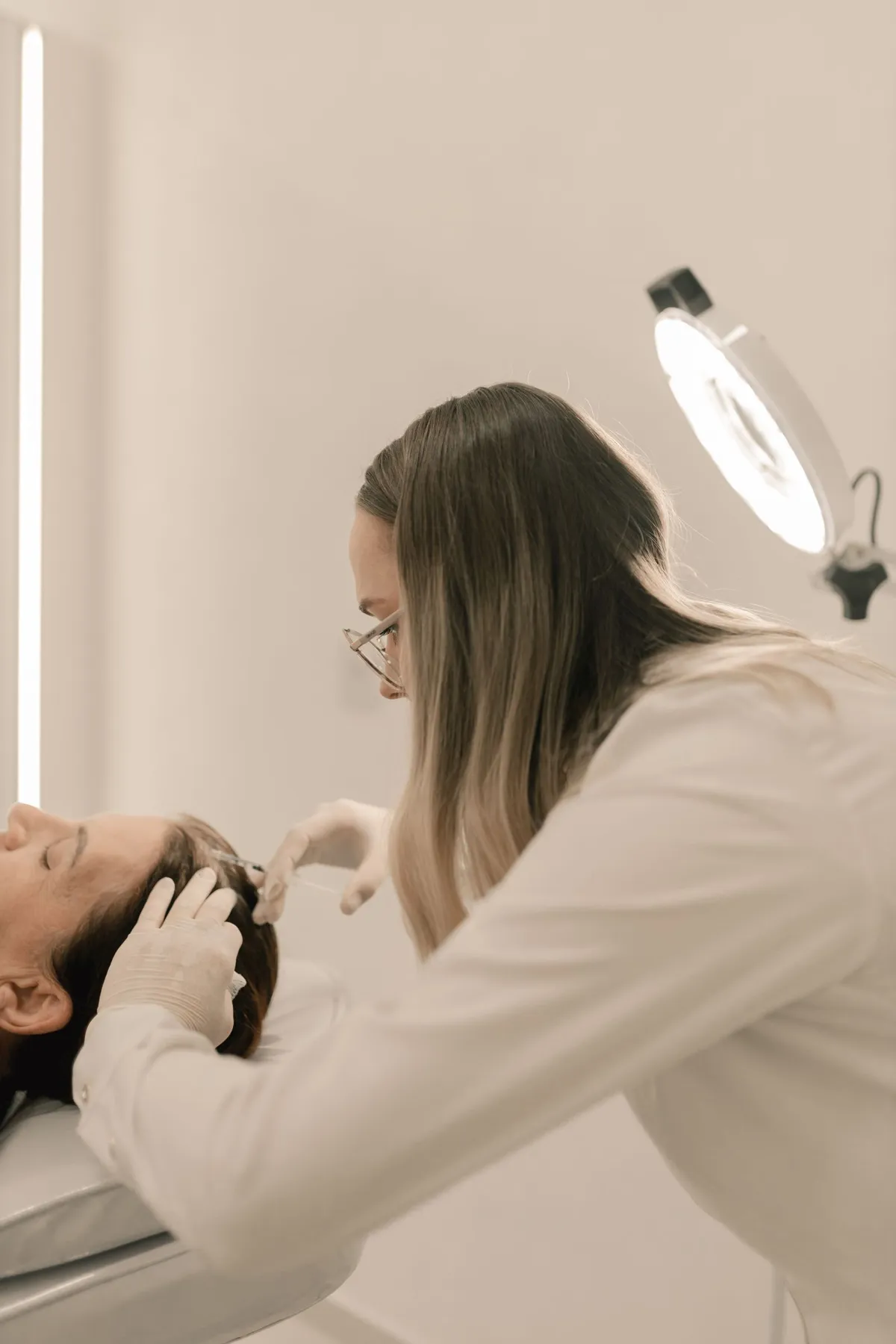
The treatment produces a localised reaction that initiates the tissue repair and remodelling process.
The duration of the session depends on the number of scars to be treated.
How many sessions are needed?
Improvement is progressive and usually requires several sessions.
Many patients may need between 3 and 6 sessions, although the number and intervals are determined individually based on the depth of the scars, the skin phototype, and the cutaneous response.
Results are not immediate: collagen remodelling continues for weeks and months.
Recovery and aftercare
After the treatment, redness, small scabs, and a localised inflammatory reaction may appear.
These scabs usually fall off spontaneously over the following days.
It is essential to avoid picking at them, follow the medical instructions, and use adequate sun protection.
In certain patients, particularly those with higher phototypes, there is a greater risk of post-inflammatory hyperpigmentation.
For this reason, patient selection, the application technique, and aftercare are essential.
Can it be combined with fractional CO₂ laser?
Yes. Acne scars do not always present the same morphology or depth, so a combined treatment may be appropriate.
TCA CROSS allows targeted action on specific deep scars, while fractional CO₂ laser can be used to improve other textural irregularities and selected scars.
At Clínica Valorian, the indication for TCA CROSS, fractional CO₂ laser, or other procedures is established through an individualised medical evaluation.
Combined treatments are planned sequentially when indicated, respecting the skin's recovery times.
Fractional CO₂ Laser at Clínica ValorianIs it a safe treatment?
TCA CROSS is a medical procedure that must be performed by professionals with training and experience in skin reconstruction techniques.
Although it is generally well tolerated in properly selected patients, it may cause hyperpigmentation, hypopigmentation, prolonged redness, infection, or even worsening of certain scars.
Not all patients or all scars are suitable candidates.
A prior medical assessment allows indications, precautions, and realistic expectations to be established.
Personalised Treatment at Clínica Valorian
At Clínica Valorian, we believe that each acne scar requires a specific assessment.
Not all scars respond in the same way, and sometimes the best strategy involves combining different medical procedures.
Our goal is to progressively improve skin texture through individualised treatments, based on medical criteria and adapted to each patient's characteristics.
Request a medical assessment of your acne scars at Clínica Valorian, Marbella.
Frequently asked questions
Does TCA CROSS completely remove acne scars?
Not necessarily. Its goal is to reduce their depth and improve their appearance, although the response varies depending on each scar.
Is it painful?
It may produce a brief sensation of stinging or localised burning during application.
When do results start to become visible?
Improvement is usually gradual, as collagen remodelling takes place over the following weeks and months.
Can it be performed on darker skin tones?
It may be considered for certain higher phototypes, but requires special caution due to the risk of pigmentary changes.
What is the difference between TCA CROSS and a conventional peeling?
TCA CROSS targets specific, deep points, whereas a conventional peeling is applied over larger areas to treat other skin irregularities.

Subcision for rolling scars
A medical technique designed to release the fibrous bands that pull certain acne scars downward. At Clínica Valorian we do not perform it, but we assess your scars and guide you.
Acne scar guide: which technique for each type
Every acne scar has a different shape and responds to different techniques. This guide helps you understand your case before your medical assessment.
Medical peel
Supervised skin renewal.
Master Index
Related content
Patient guides
The doctor answers
Frequently asked questions
Request this consultation
Prefer to message us?
Request information via WhatsApp