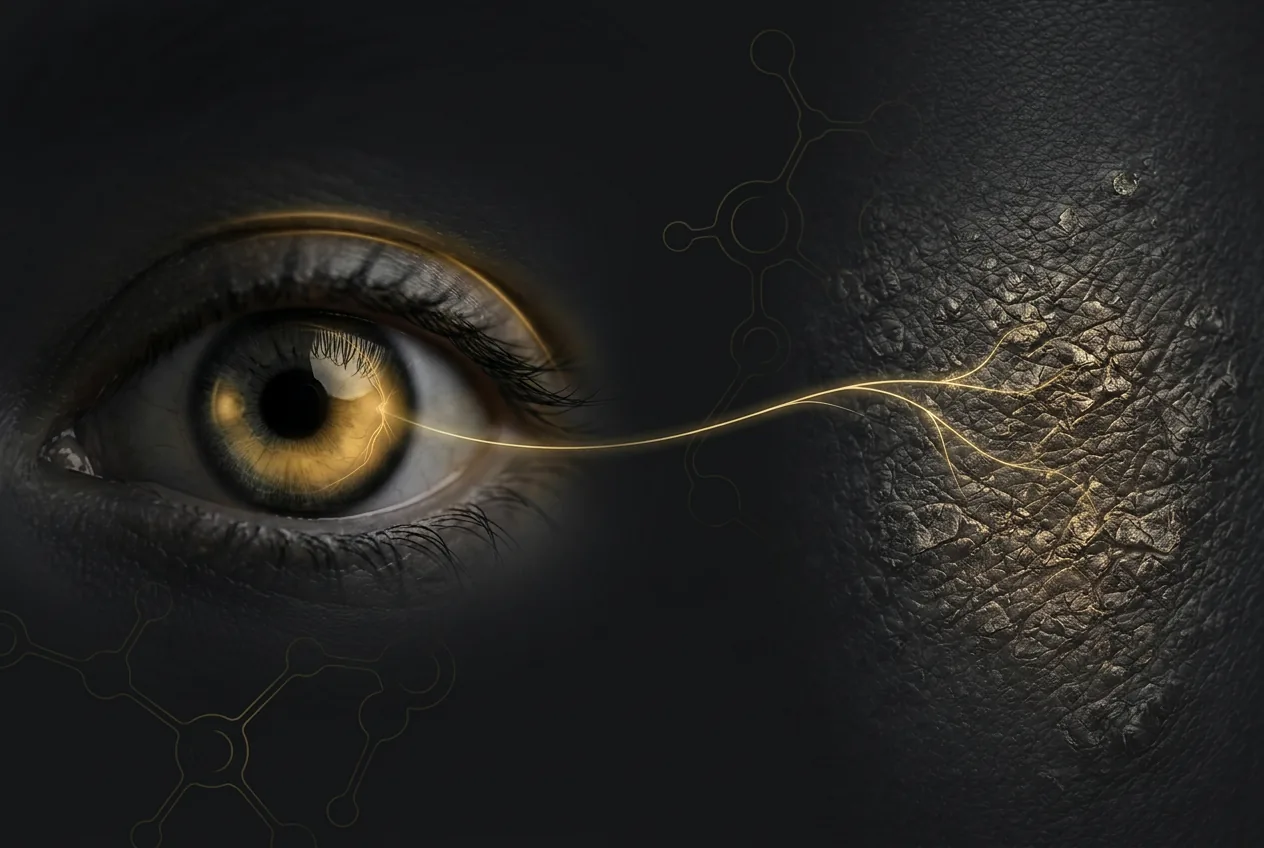
Everything about hormonal acne: causes, diagnosis and treatment
Medical guide to acne in adult women

Hormonal acne is a frequent cause of acne in adult women. It can appear even with normal hormonal tests and requires a diagnosis based on the clinical history, the examination and, when indicated, complementary studies. There are effective and personalised treatments that make it possible to control the disease and to prevent scars.
Hormonal acne is much more frequent than people think
Many women consult because they present persistent pimples since adolescence or because acne appears for the first time in adulthood.
They frequently hear phrases such as:
- "The tests are normal."
- "The hormones are fine."
- "It will pass."
However, the reality is more complex.
Hormonal acne can exist even when the hormonal tests are apparently normal.
Understanding how hormones act on the skin makes it possible to understand why it occurs and how it can be treated.
What is hormonal acne?
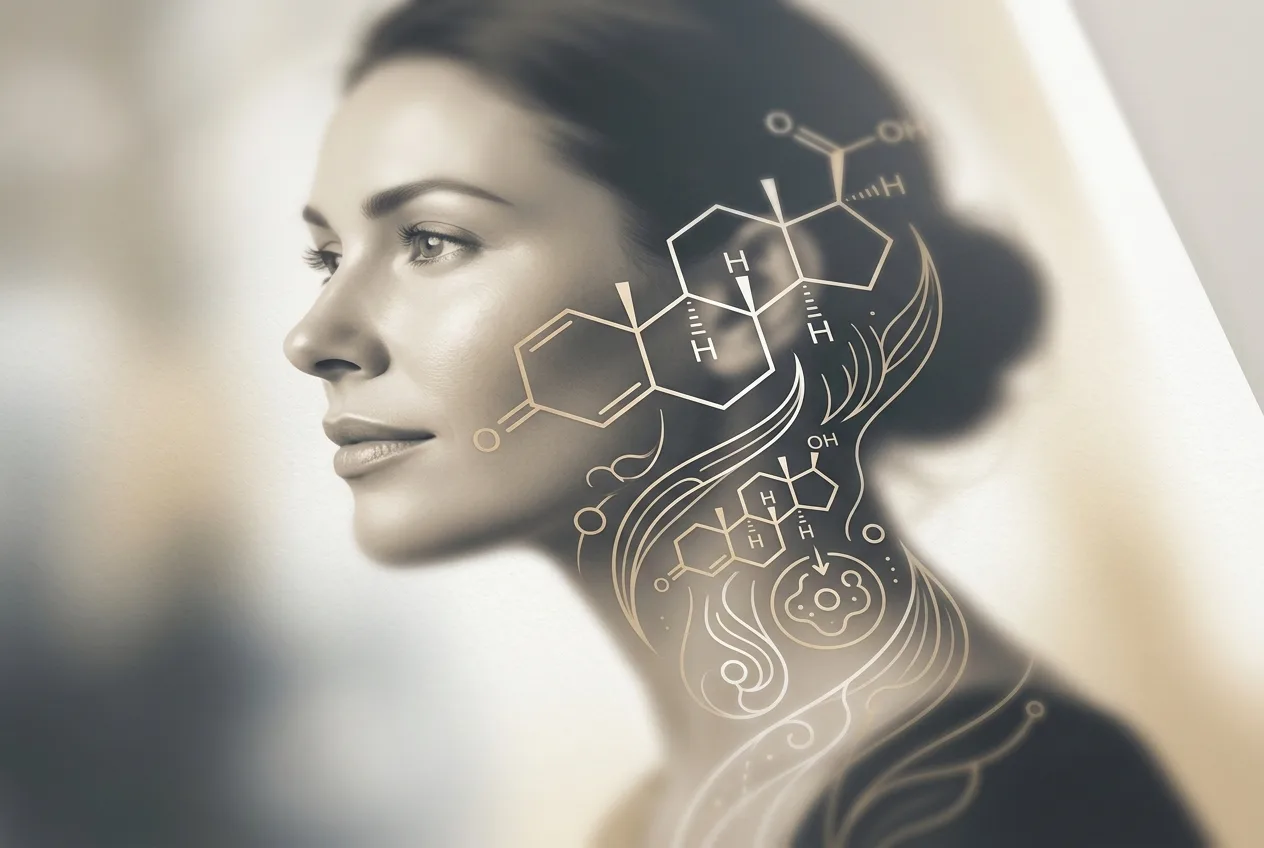
Hormonal acne is a form of acne in which hormones, especially androgens, play an important role in the development of the disease.
These androgens stimulate the sebaceous gland, increasing the production of sebum and favouring the obstruction of the hair follicle.
Subsequently inflammation, bacteria of the skin itself and acne lesions appear.
Does it only affect women?
No.
It can also appear in men.
However, it is especially frequent in adult women, between 20 and 45 years of age.
Which hormones are involved?
The most important are the androgens, among them:
- Testosterone.
- Free testosterone.
- DHEA-S.
- Androstenedione.
Nevertheless, other hormones can also influence indirectly:
- Insulin.
- IGF-1.
- Cortisol.
- Thyroid hormones.
- Prolactin.
The hormonal balance is complex and does not depend on a single hormone.
Can hormonal acne exist with a normal test?
Yes.
This is one of the most important concepts.
A "normal" test does not rule out hormonal acne.
There are several reasons:
- Some women present a greater sensitivity of the skin receptors to androgens.
- The values may be within the reference range, but relatively high for that patient.
- Not all hormonal alterations appear reflected in a routine test.
Therefore, the diagnosis must not be based only on a blood test, but on the clinical history, the examination and the pattern of the acne.
How does it usually present?
It frequently appears on:
- The jaw.
- The chin.
- The jawline.
- The neck.
The lesions are usually:
- Inflammatory.
- Painful.
- Deep.
- Persistent.
- Recurrent.
Many patients report a worsening before menstruation.
Which diseases can be associated?
In some cases it is advisable to rule out diseases such as:
- Polycystic ovary syndrome (PCOS).
- Non-classical adrenal hyperplasia.
- Thyroid alterations.
- Hyperprolactinaemia.
Most women with hormonal acne do not necessarily present an important endocrine disease, but it is fundamental to identify those patients who do require a specific study.
When to request a hormonal study?
Not all patients need a test.
It is usually indicated when there are signs suggestive of hyperandrogenism, such as:
- Menstrual irregularity.
- An important increase in body hair.
- Androgenetic alopecia.
- A sudden onset of acne in adulthood.
- Very resistant acne.
- Suspicion of polycystic ovary syndrome.
The interpretation of these studies must always be carried out in the clinical context.
Does diet have an influence?
In some people, yes.
The following can especially influence:
- Diets with a high glycaemic load.
- An excess of refined sugars.
- Some dairy products, especially skimmed milk.
There is no universal diet for all patients, but a balanced diet can be part of the treatment.
What is the treatment?
It depends on each patient. It may include:
Topical treatments:
- Retinoids.
- Azelaic acid.
- Benzoyl peroxide.
- Topical antibiotics in specific situations.
Oral treatments. When the hormonal component is important, the following may be considered, among others:
- Selected hormonal treatments.
- Contraceptives suitable for certain patients.
- Spironolactone in correctly selected women and under medical supervision.
- Isotretinoin when it is indicated.
The treatment must be individualised and take into account the age, the medical history, the desire for pregnancy and the possible side effects.
What is the role of spironolactone?
Spironolactone is a medication used for years which, in addition to other medical indications, can be very useful in certain women with hormonal acne.
It acts by reducing the effect of androgens on the sebaceous gland.
It is not indicated for all patients and must always be prescribed and controlled by a doctor, assessing possible contraindications, interactions and the need for clinical follow-up.
In well-selected patients it can offer a very significant improvement.
Can it be cured?
In many cases it can be excellently controlled.
Some women need treatments for several months and others require maintenance strategies to avoid relapses.
The objective is not only to eliminate the current pimples, but to prevent new lesions and to avoid scars.
Frequent mistakes
- Thinking that hormonal acne only affects adolescents.
- Believing that "normal" hormones rule out this form of acne.
- Constantly changing cosmetics.
- Delaying the medical consultation.
- Manipulating the lesions.
- Stopping the treatment too early.
Myths and facts
- Myth: If my hormones are normal, my acne cannot be hormonal. Fact: This is not true. Many women present hormonal acne with tests within the reference ranges.
- Myth: Hormonal acne disappears on its own. Fact: In some patients it persists for years if it is not treated.
- Myth: It only affects adolescents. Fact: It is very frequent in adult women.
- Myth: Washing the face a lot eliminates hormonal acne. Fact: Excessive cleansing can irritate the skin and worsen the barrier function.
- Myth: Hormonal treatment works for all patients. Fact: It must be individualised after a complete medical assessment.
The essential points to remember
- Hormonal acne is very frequent, especially in adult women.
- A normal hormonal test does not exclude this diagnosis.
- The clinical pattern and the examination are as important as the laboratory tests.
- There are very effective treatments, including some aimed at modulating the effect of androgens in selected patients.
- An early treatment reduces the risk of scars and improves the quality of life.
- The individualised medical assessment is fundamental to choose the most appropriate strategy.
Frequently asked questions
How do I know if my acne is hormonal?
The pattern of the lesions, their location, the age of onset and the clinical history guide the diagnosis. Occasionally complementary tests are necessary.
Is it mandatory to do a test?
No. It will depend on each case and on the associated clinical signs.
Can I have hormonal acne even if my periods are normal?
Yes.
Does spironolactone work?
In many correctly selected women it can be a very effective treatment.
Will I need treatment for a long time?
It depends on the individual evolution. Some patients require maintenance treatment.
Does stress have an influence?
Yes. It can favour outbreaks, although it is not usually the main cause.
Can diet worsen it?
In some people, yes, especially diets with a high glycaemic load.
Does make-up produce hormonal acne?
No, as long as appropriate products are used and removed correctly.
Does hormonal acne leave scars?
It can do so if it is not treated early.
Does it have a solution?
In the vast majority of cases it can be controlled very well with a personalised treatment.
Need personalised guidance?
This guide is for information only and does not replace a medical consultation. For an assessment tailored to your case, you may request a consultation.
Request a consultationTopics