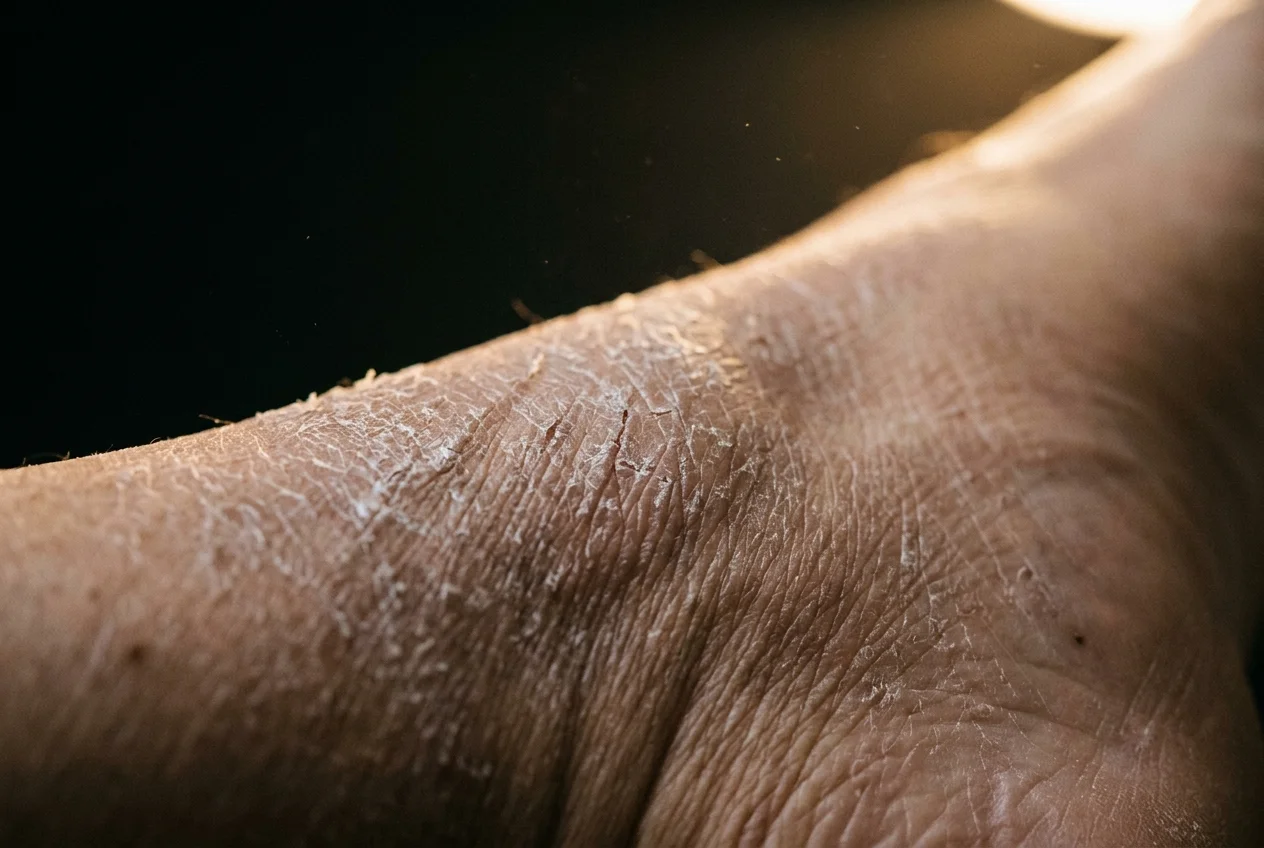
Cutaneous xerosis or dry skin is a very common problem that causes tightness, scaling and itching. Learn about its causes, the most effective treatments and the daily care to maintain healthy, hydrated skin.
What is cutaneous xerosis?
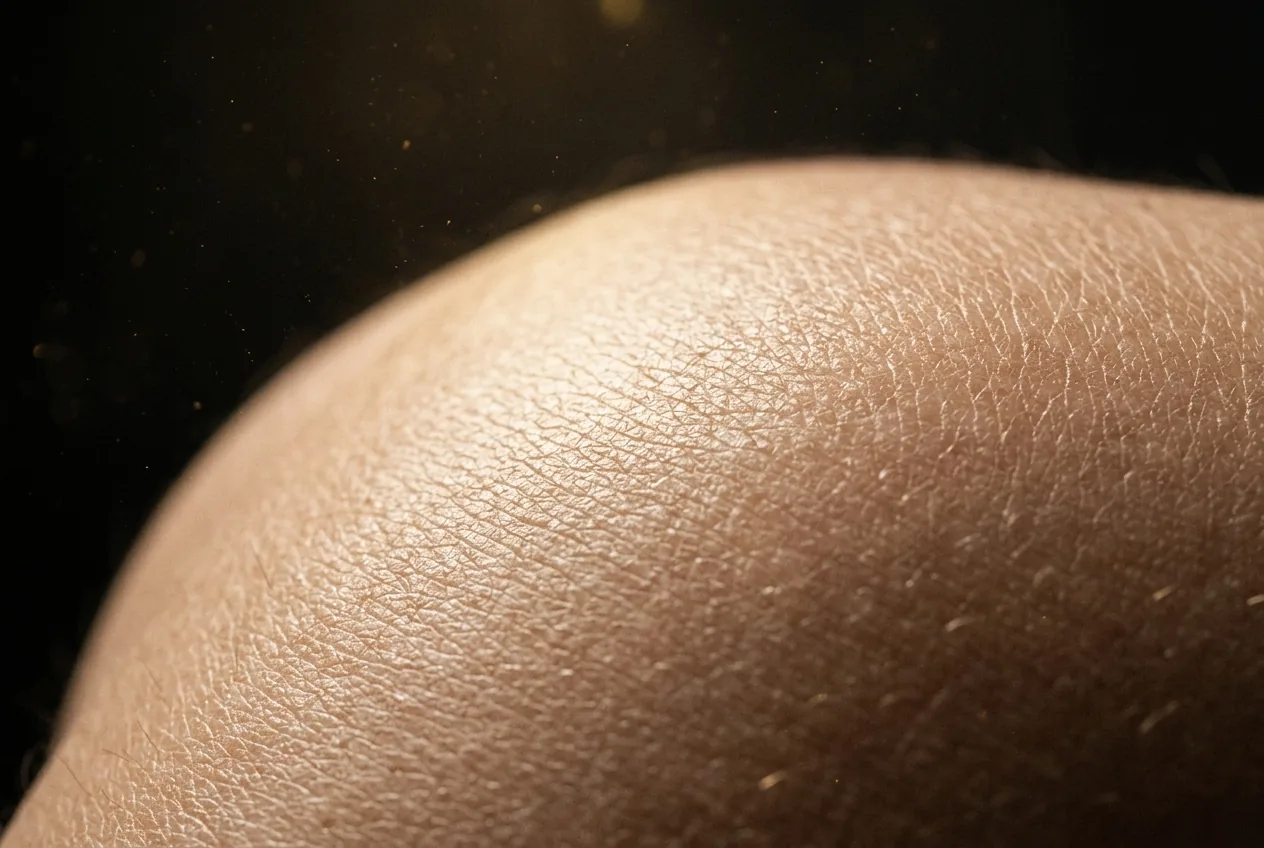
Cutaneous xerosis is the medical term used to describe excessively dry skin. It is a very common problem that can affect people of any age, although it is especially common in older people.
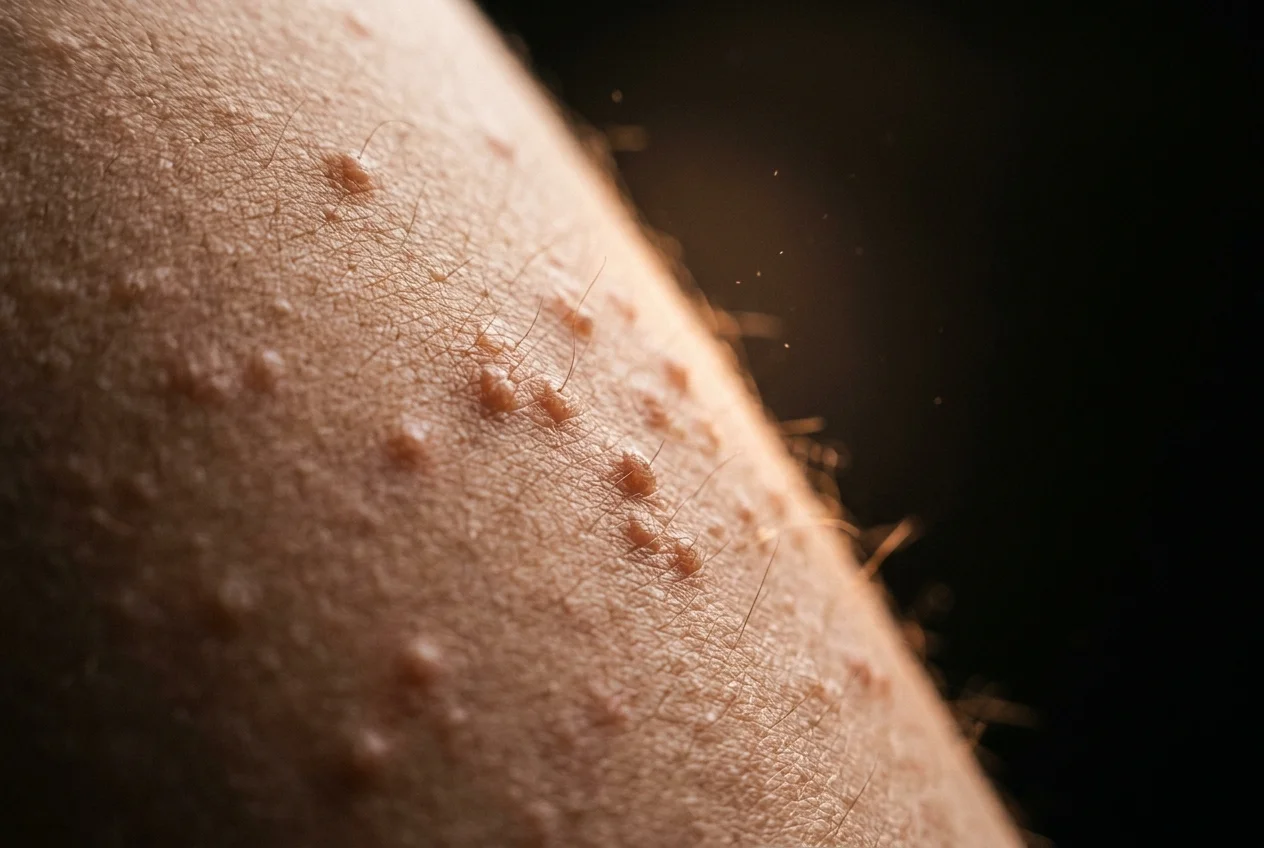
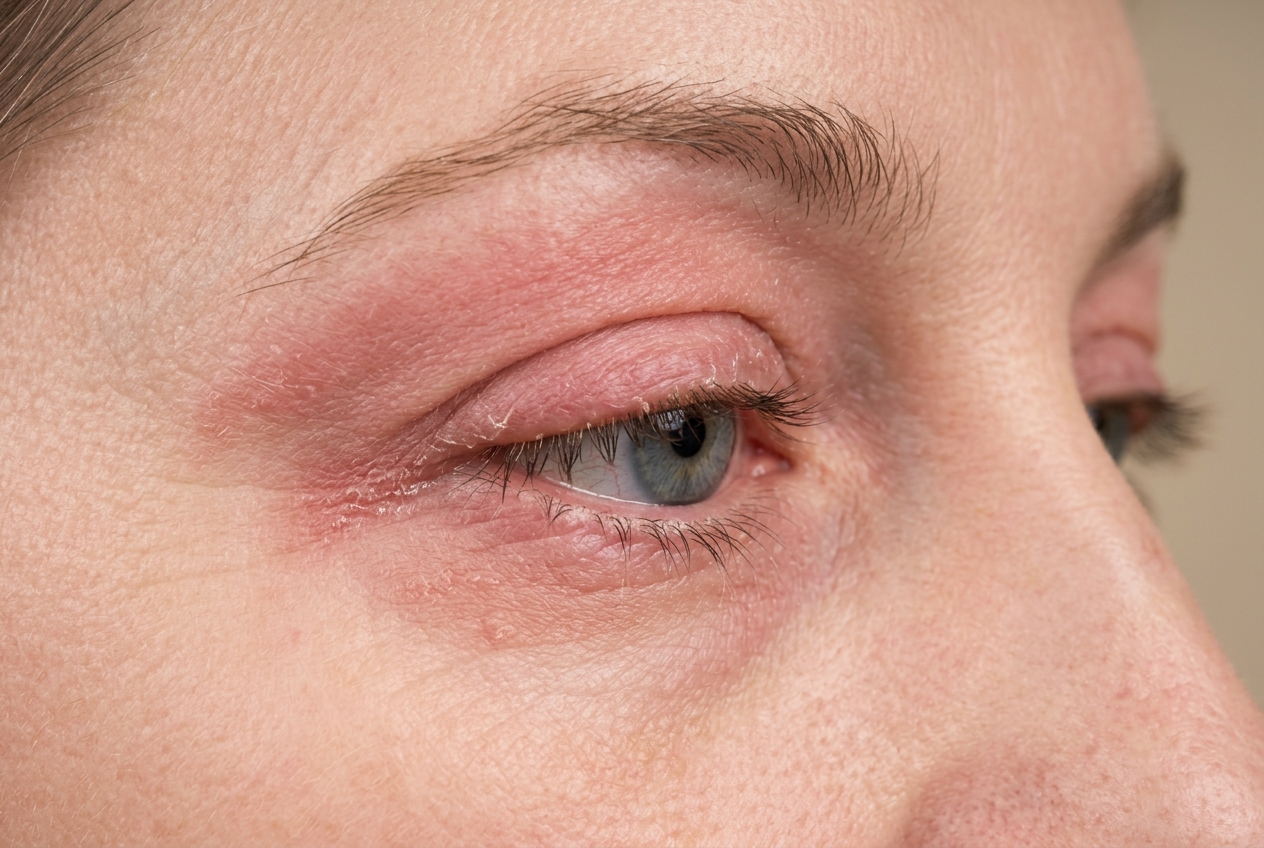
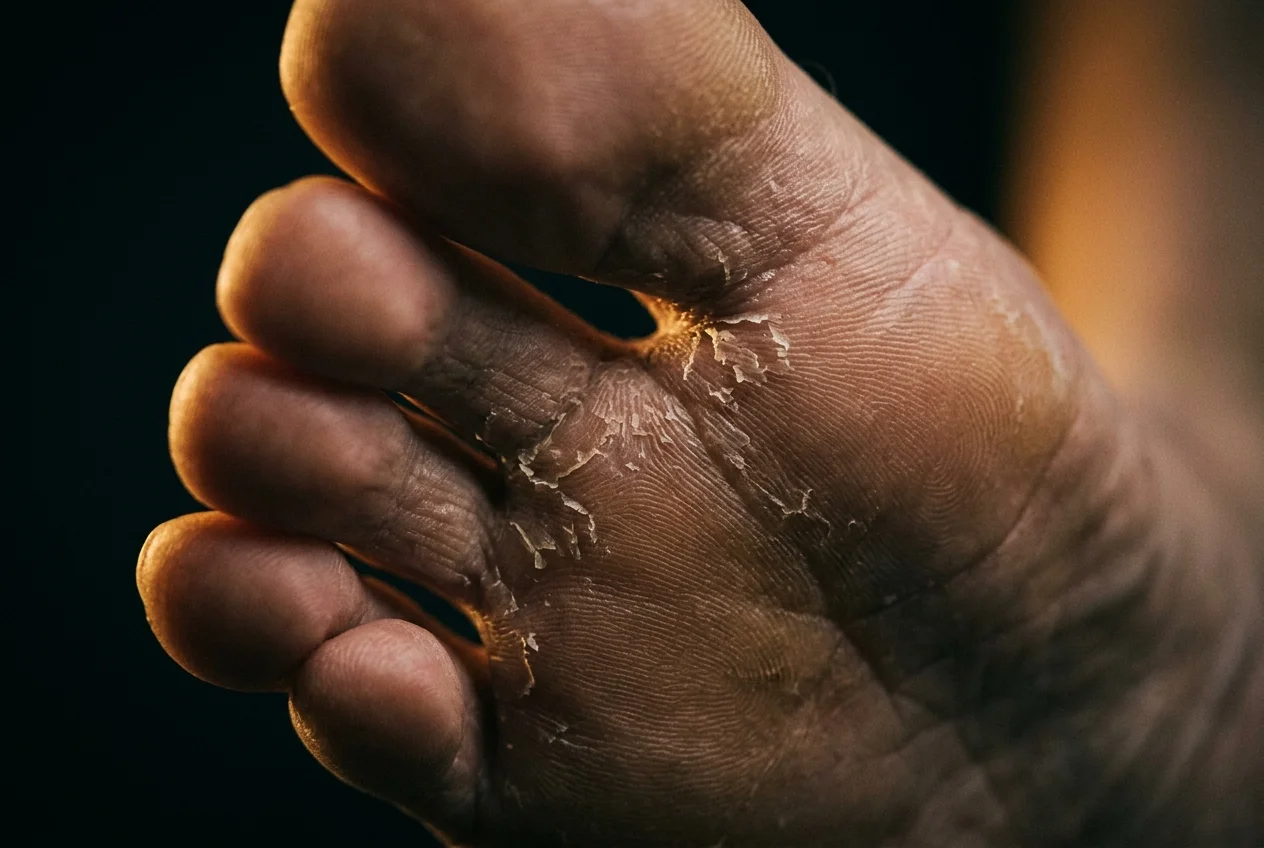
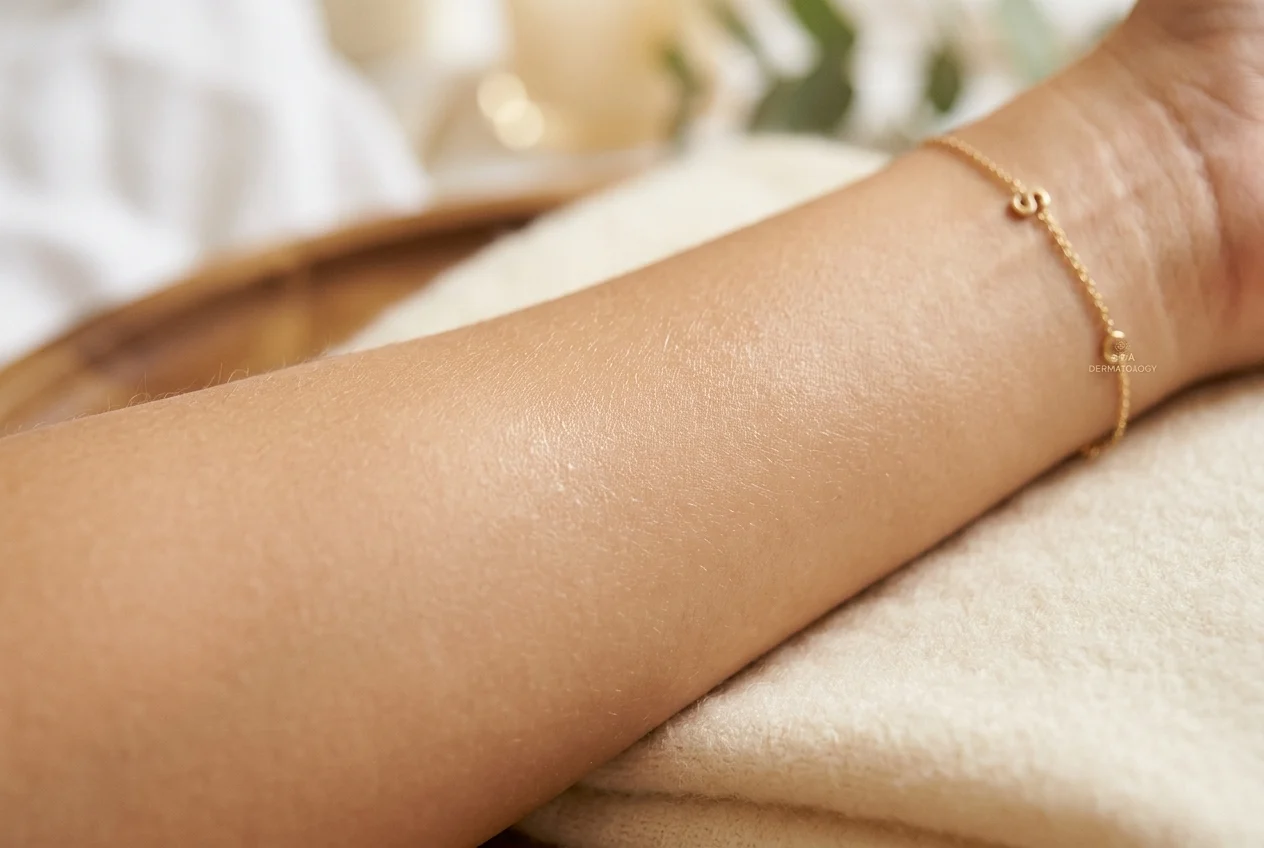
Dry skin loses part of its ability to retain water and protect the body against external aggressions. As a result, it becomes rough, tight, scaly and, at times, causes intense itching.
Although xerosis is not usually a serious disease, it can favour the appearance of eczema, cracks and infections if it is not treated properly.
Dry skin is not contagious.
Why does it appear?
This is one of the questions patients ask most. The answer is that dry skin is not usually due to drinking too little water. In most cases, the problem is in the protective barrier of the skin.
There are many factors that favour xerosis.
Age-related factors
Over the years: the skin produces less oil, its ability to retain water decreases and the skin barrier becomes less effective. This is why dry skin is much more common from the age of 60.
Environmental factors
- Cold climate.
- Low ambient humidity.
- Heating.
- Air conditioning.
- Wind.
Daily habits
- Long showers.
- Very hot water.
- Harsh soaps.
- Excessive hygiene.
- Frequent use of hydroalcoholic gels.
Associated diseases
Dry skin can also appear in people with atopic dermatitis, psoriasis, diabetes, kidney failure or hypothyroidism.
Why does it worsen in winter?
Because during the cold months ambient humidity decreases and the skin loses water more easily.
What are the symptoms?
Symptoms can range from a slight feeling of tightness to intense dryness. The most common are:
- Rough skin.
- Scaling.
- A feeling of tightness.
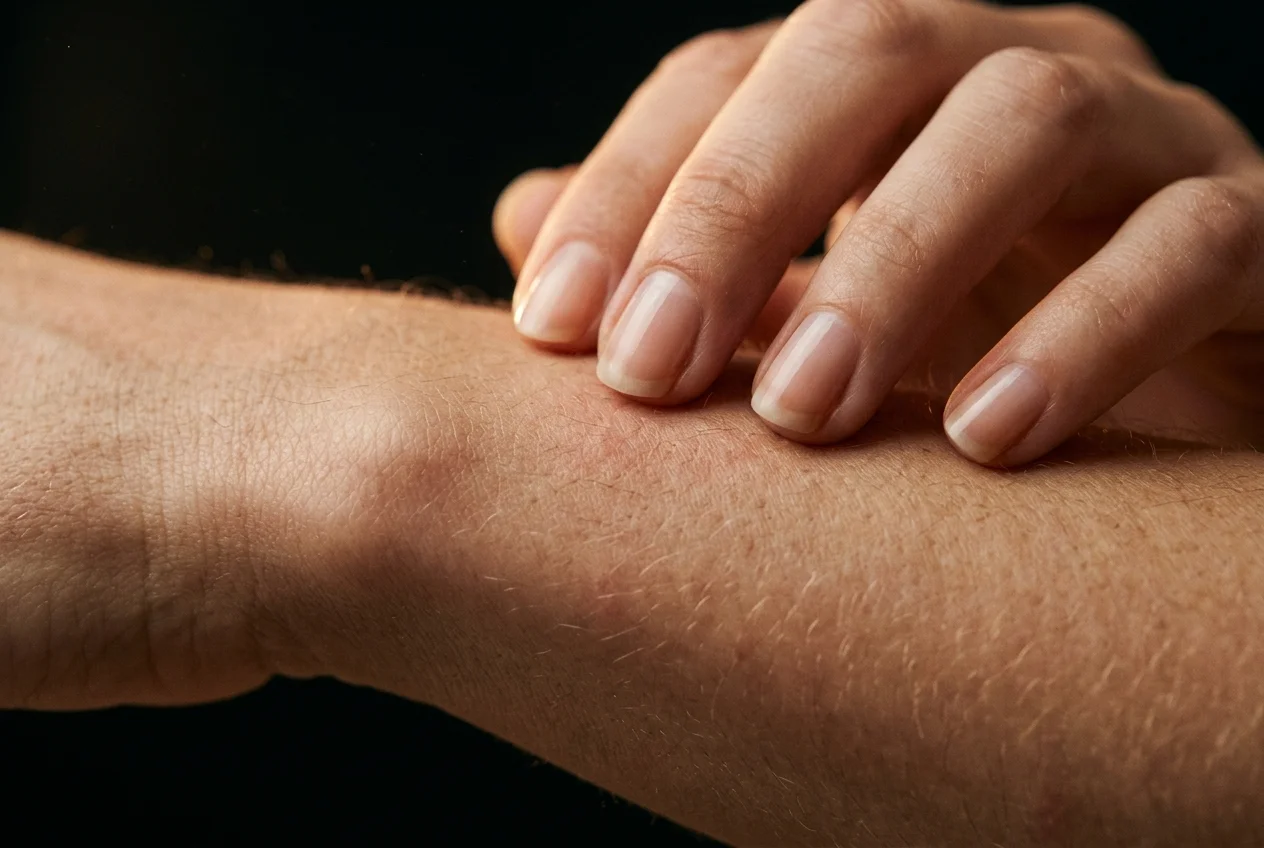
- Itching.
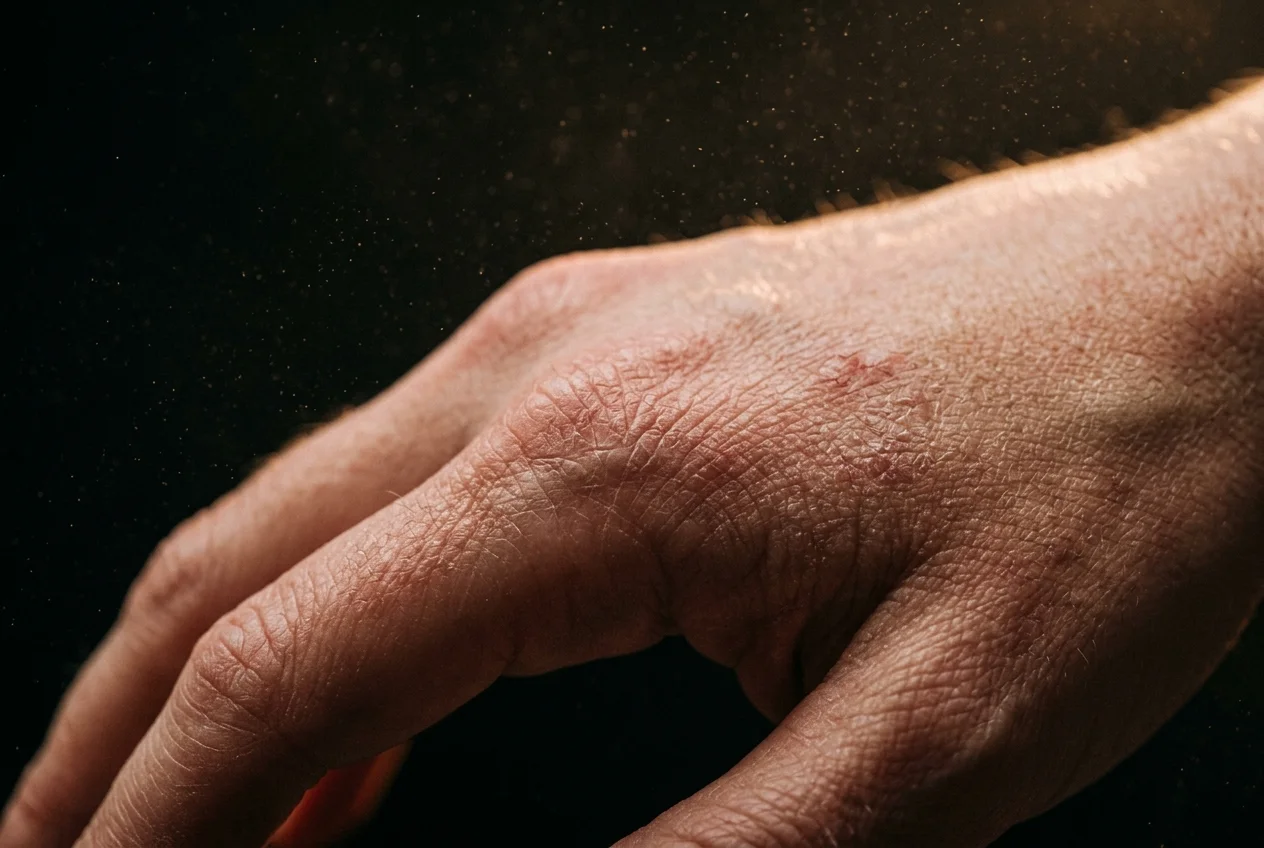
- Redness.
- Painful cracks.
- Small fissures, especially on the hands and legs.
The areas most frequently affected are:
- The legs.
- The arms.
- The hands.
- The elbows.
- The feet.
In older people an associated eczema can appear due to persistent scratching. Dry skin is not contagious.
How is it diagnosed?
Diagnosis is usually made by examining the skin. In most cases complementary tests are not necessary.
When the dryness is very intense, appears suddenly or is accompanied by other symptoms, the doctor may assess whether there is an underlying disease responsible.
What treatments are available?
One of the most common questions is: is there an effective treatment? Yes. The aim of treatment is to restore the protective barrier of the skin and reduce water loss.
The most commonly used options are:
- Moisturising creams.
- Emollient creams.
- Urea products.
- Ceramide creams.
- Glycerine products.
- Lactic acid creams in some patients.
When inflammation or eczema appears, it may be necessary to add specific treatments for a limited time.
Why is it important to use the cream every day?
Because moisturising works while it is maintained regularly. If treatment is stopped, the skin usually dries out again progressively.
What can you do day to day?
Daily care is the most important treatment. It is recommended to:
- Shower with lukewarm water.
- Limit the length of the shower to a few minutes.
- Use mild, fragrance-free cleansers.
- Dry the skin with small pats, without rubbing.
- Apply moisturiser in the first minutes after showering.
- Moisturise the skin once or twice a day.
- Use humidifiers if the environment is very dry.
- Drink water according to the body's usual needs to maintain good general hydration.
Consistency is much more important than using many different products.
When should you seek prompt medical advice?
Seek medical assessment if:
- The dryness does not improve with good moisturising.
- Deep, painful cracks appear.
- There is bleeding.
- You notice signs of infection.
- The itching prevents you from sleeping.
- The skin changes appearance abruptly or very intense scaling appears.
Myths and facts
- Myth: Dry skin appears because I don't drink enough water. Fact: In most cases the problem is in the skin barrier, not in the amount of water you drink.
- Myth: The hotter the shower water, the better for the skin. Fact: Very hot water removes part of the skin's natural oil and favours dryness.
- Myth: All moisturising creams are the same. Fact: There are different formulations and some are much more effective at repairing the skin barrier.
- Myth: I should only use cream when I notice dry skin. Fact: Daily moisturising helps prevent the skin from drying out again.
- Myth: Dry skin is a normal part of ageing and has no treatment. Fact: Although it is common with age, there are very effective measures to improve it.
The key points to remember
- Dry skin is very common, especially with age.
- It is not usually due to drinking too little water.
- The main cause is the alteration of the skin's protective barrier.
- Daily moisturising is the most important treatment.
- Very hot showers favour dryness.
- Creams with urea or ceramides are usually particularly useful.
- Winter usually worsens the symptoms.
- A good daily routine helps prevent cracks, itching and eczema.
Frequently asked questions
Is dry skin a disease?
Not always. In many people it is a characteristic of the skin or a consequence of ageing.
Can it cause itching?
Yes. It is one of the most common symptoms.
What is the best time to apply the cream?
Just after showering, when the skin still retains part of its moisture.
Should I use soap every day?
Yes, but it is advisable to use mild cleansers and only on the necessary areas.
Can dry skin cause wounds?
Yes. When the dryness is intense, painful cracks can appear.
Will drinking more water solve the problem?
Not necessarily. Skin hydration depends mainly on the state of the skin barrier.
Can I use body oil?
Yes. In some people it can help as a complement to moisturising creams.
Does heating make dry skin worse?
Yes. It reduces ambient humidity and favours water loss from the skin.
Will I need to use cream all year round?
It depends on each person, although many need it continuously.
Can dry skin be prevented?
In many cases yes, through good moisturising and appropriate care.
Need personalised guidance?
This guide is for information only and does not replace a medical consultation. For an assessment tailored to your case, you may request a consultation.
Request a consultation