Periocular dermatitis
Everything you need to know about dermatitis around the eyes
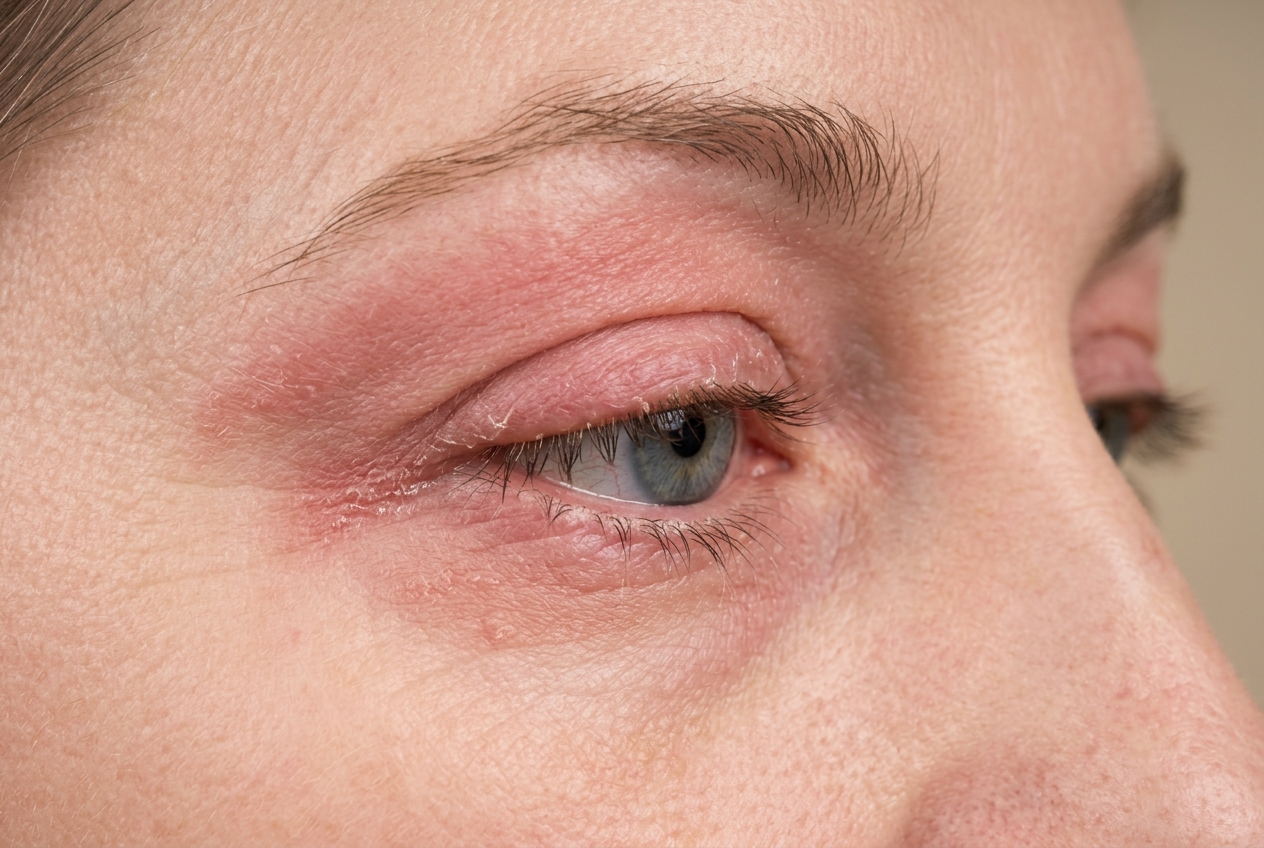
Periocular dermatitis is a common inflammation of the skin around the eyes, caused by irritation, contact allergies or inflammatory skin diseases. Learn about its causes, symptoms, diagnosis and treatment.
What is periocular dermatitis?
Periocular dermatitis is an inflammation of the skin that appears around the eyes, especially on the upper and lower eyelids or at the outer corners.
It is a very common condition because the skin of the eyelids is the thinnest and most delicate in the whole body, which makes it especially sensitive to irritants, allergens and environmental factors.
Although it rarely represents a serious problem, it can be very bothersome and significantly affect quality of life.
It should not be confused with perioral dermatitis, which appears around the mouth; when the same process affects the mouth, nose and eyes at once, these are simply different locations.
Is it contagious?
No. Periocular dermatitis is not passed from one person to another and, in most cases, it is not caused by an infection.
Why does it appear?
There are multiple causes and, frequently, several act at the same time. The most common are:
- Atopic dermatitis.
- Allergic contact dermatitis.
- Irritant contact dermatitis.
- Cosmetics, facial creams, sunscreen, make-up and make-up removers.
- Hair dyes and nail polish (when the eyes are touched afterwards).
- Eye drops and preservatives present in artificial tears.
- Environmental allergens such as pollen or dust mites.
- Prolonged use of topical corticosteroids.
- Skin diseases such as rosacea or seborrhoeic dermatitis.
What are the symptoms?
Is it an allergy? The three main types
Not always. Many periocular dermatitis cases are not allergic. There are three main groups:
1. Irritant dermatitis. This is the most common. The skin reacts because its protective barrier is altered.
2. Allergic dermatitis. It occurs when the immune system develops an allergy to a specific substance. To identify it, patch testing (Patch Test) may be needed.
3. Dermatitis associated with skin diseases, such as atopic dermatitis, rosacea, seborrhoeic dermatitis or, less frequently, psoriasis.
Which products commonly trigger it?
Among the most frequent culprits are:
- Anti-wrinkle creams, retinol, exfoliating acids and highly concentrated vitamin C.
- Fragrances and preservatives.
- Waterproof make-up, eyelash glues, extensions and eyelash tints.
- Sunscreen, shampoos and nail polish.
- Eye drops.
It is worth remembering that even a product used for years can start to cause an allergy.
How is it diagnosed?
The skin specialist usually makes the diagnosis through:
- Clinical history.
- Physical examination.
- A review of all the products used.
In some patients, patch testing (Patch Test), an ophthalmological assessment or microbiological studies may be requested if an infection is suspected.
Treatment
Treatment depends on the cause and generally combines three pillars:
1. Remove the trigger. This is the most important step. Without identifying the cause, the dermatitis usually returns.
2. Repair the skin barrier. Repairing creams, moisturisers specific for eyelids, fragrance-free products and mild cleansers are recommended.
3. Medication. Depending on each case, low-potency topical corticosteroids for a few days, calcineurin inhibitors (tacrolimus or pimecrolimus), antihistamines if there is a lot of itching, or antibiotics if a secondary infection appears may be used.
Self-medication with corticosteroids around the eyes is not advisable.
What should I avoid during flare-ups?
- Make-up.
- Retinol and exfoliating acids.
- Perfumes and new cosmetics.
- Rubbing the eyes.
- Very hot water.
- Harsh make-up removal wipes.
How long does it take to heal and can it come back?
If the cause is correctly identified, many cases improve in one or two weeks. However, when the trigger persists, flare-ups can recur for months.
Periocular dermatitis tends to relapse if contact with the allergen continues, irritation persists, atopic dermatitis or rosacea are not controlled, or the responsible products are used again.
When should I see a skin specialist?
Seek a medical assessment if you have:
- Repeated episodes.
- Significant swelling of the eyelids.
- Intense pain.
- Changes in vision.
- Abundant discharge.
- Lesions that do not improve after 1–2 weeks.
- Suspected allergy to cosmetics or medicines.
Clínica Valorian tips
- Use hypoallergenic cosmetics.
- Introduce only one new product at a time.
- Avoid applying facial treatments very close to the eyelid margin.
- Wash your hands before touching your eyes.
- If you use nail polish or hair dyes and have repeated flare-ups, discuss it with your skin specialist.
- Do not use corticosteroids for weeks without medical supervision.
Key points
Periocular dermatitis is a very common condition usually caused by irritation, contact allergies or inflammatory skin diseases. Identifying the trigger and restoring the skin barrier are the keys to lasting improvement. An early diagnosis by a skin specialist helps avoid relapses and choose the most appropriate treatment for each patient.
Frequently asked questions
Is periocular dermatitis contagious?
No.
Is it the same as perioral dermatitis?
No. Perioral dermatitis appears around the mouth, while periocular dermatitis affects the eye area, although they can coexist in the same patient.
Can it be caused by make-up?
Yes. It is one of the most common causes.
Can I keep wearing make-up?
During a flare-up it is preferable to temporarily stop make-up until the skin recovers.
Can stress make it worse?
Yes. Stress can promote flare-ups in predisposed people.
Can it affect vision?
Skin dermatitis does not usually affect vision, although significant inflammation requires medical assessment.
Are allergy tests necessary?
Only in certain cases, especially when the dermatitis is persistent or recurrent.
How long does it take to improve?
If the cause is identified, many cases improve within one or two weeks.
Need personalised guidance?
This guide is for information only and does not replace a medical consultation. For an assessment tailored to your case, you may request a consultation.
Request a consultation