Athlete's foot (tinea pedis)
Fungal infection of the feet
Athlete's foot is a very frequent fungal infection that affects the feet and produces itching, scaling and cracks. Learn how it is spread, how to treat it correctly and what measures help to prevent new infections.
What is athlete's foot?
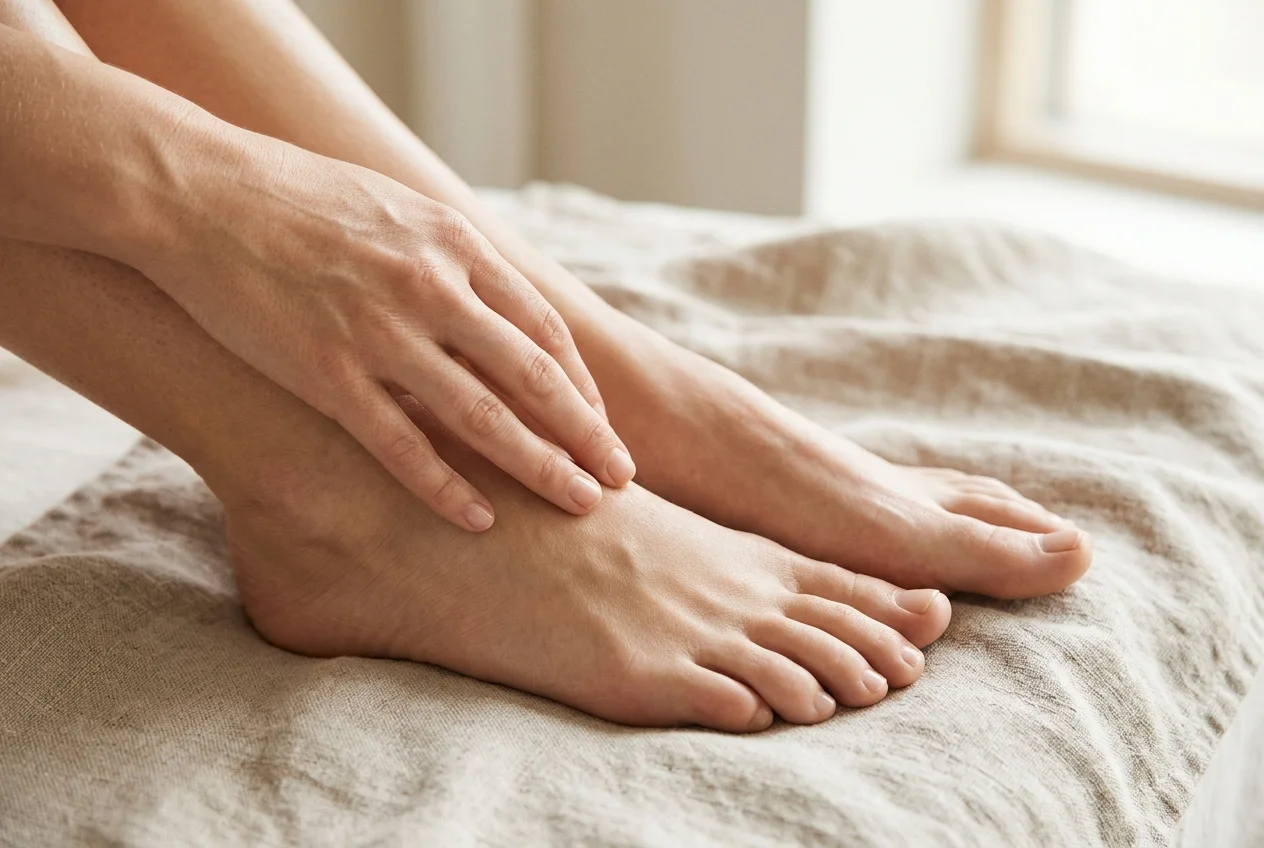
Athlete's foot, also known as ringworm of the feet or tinea pedis, is a superficial infection of the skin caused by dermatophyte fungi. It is the most frequent cutaneous mycosis in the world and especially affects adolescents and adults.
Although it can appear in anyone, it is more usual in those who have increased sweating of the feet or use closed footwear for many hours. The name «athlete's foot» is due to the fact that it is frequent in athletes, but anyone can develop it.
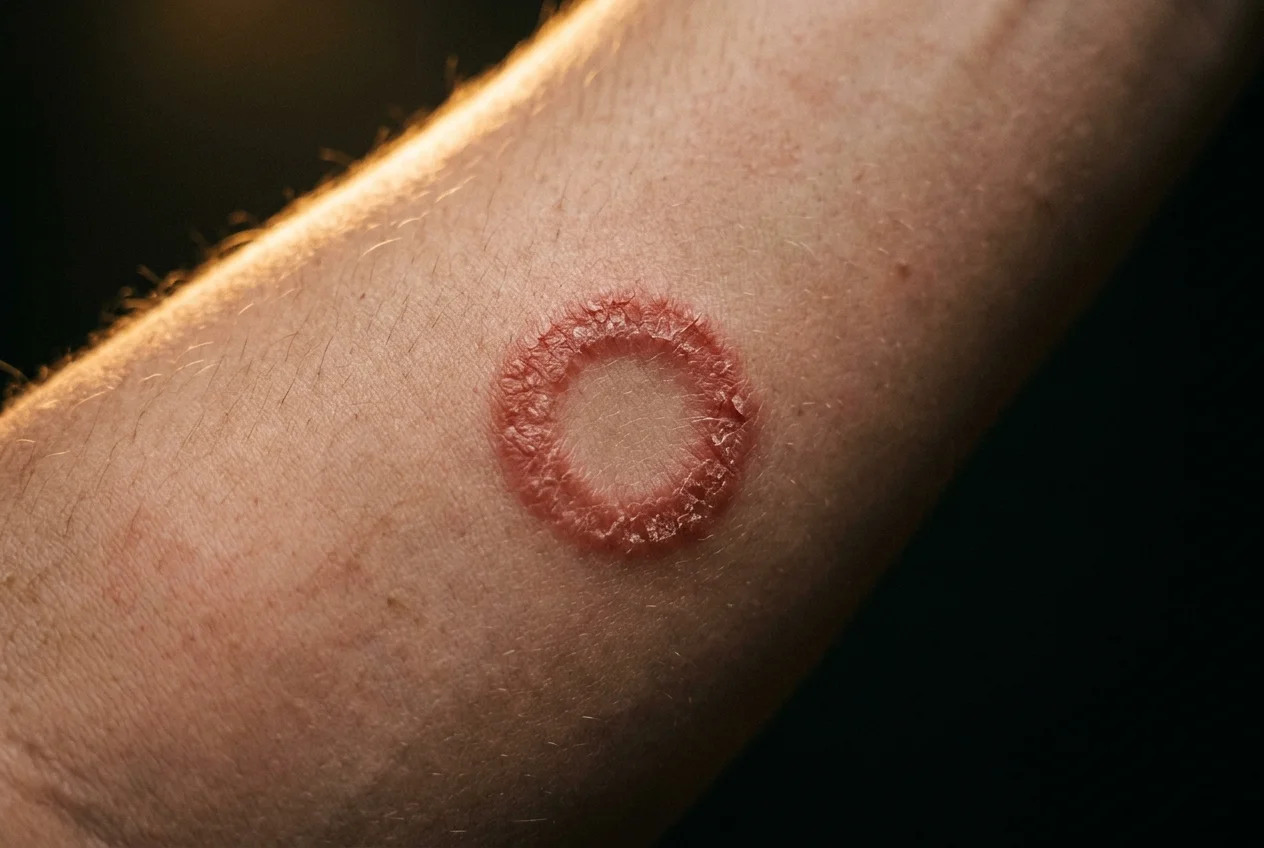
If it is not treated properly, the infection can spread to the nails (onychomycosis), the hands or even favour bacterial infections such as cellulitis.
Why does it appear?
The responsible fungi belong mainly to the genera Trichophyton, Epidermophyton and Microsporum (less frequent). These fungi proliferate especially in warm, humid and poorly ventilated environments.
How is it spread? The infection can be acquired by contact with pool floors, communal showers, changing rooms, gyms, saunas, humid rugs, contaminated towels and infected footwear. It can also be transmitted from one foot to the other or from infected nails.
What factors favour its appearance? Excessive sweating (hyperhidrosis), prolonged use of trainers or closed footwear, synthetic socks, remaining many hours with humid feet, diabetes, poor circulation, immunosuppression, obesity and sharing public showers barefoot.
What are the symptoms?
The symptoms depend on the type of athlete's foot.
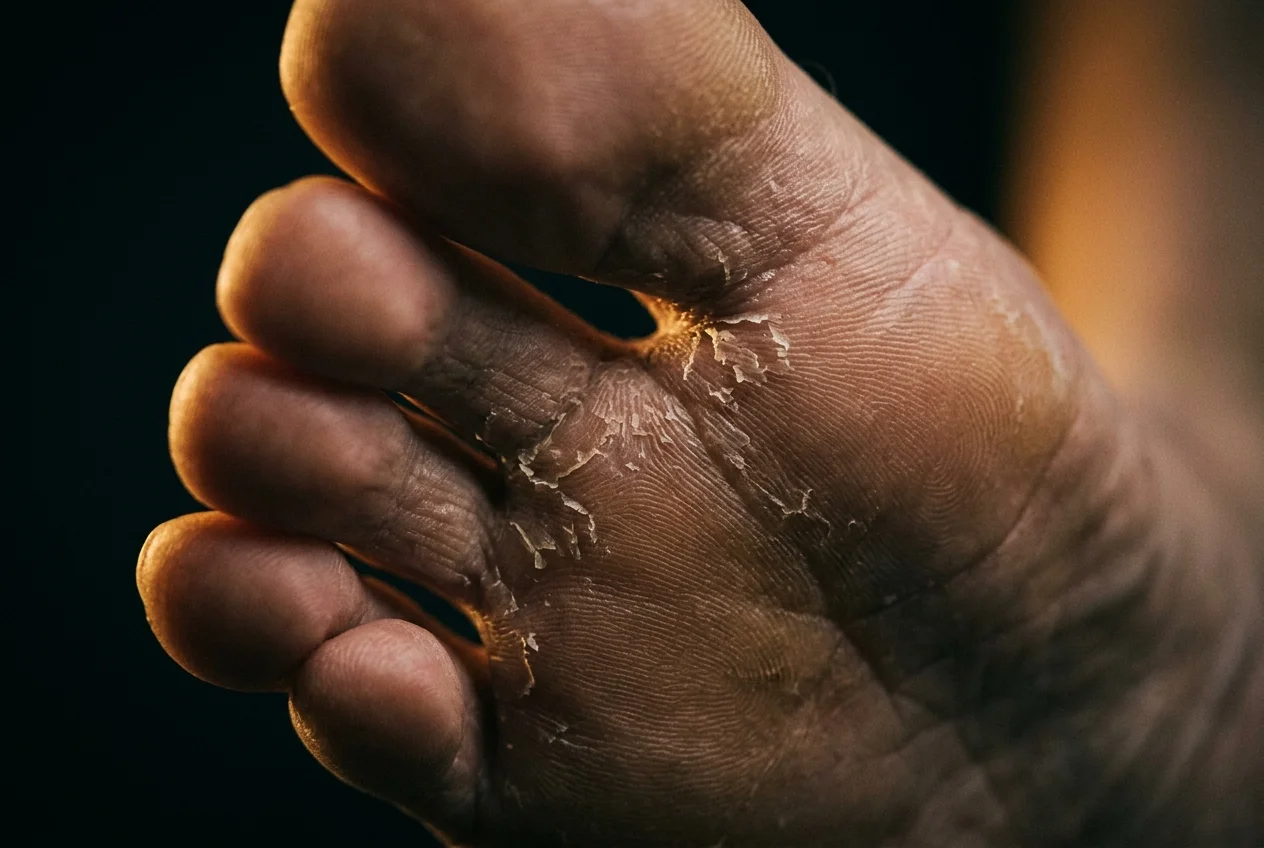
Interdigital form (the most frequent). It produces intense itching, scaling, whitish and macerated skin and painful cracks. It appears especially between the fourth and fifth toes.
Plantar form («moccasin type»). It is characterised by diffuse scaling, intense dryness, thickening of the skin, fissures and involvement of the whole sole and edges of the foot.
Vesicular form. It produces small very itchy blisters, burning and inflammation. It is more frequent in the plantar arch.
Can it smell bad? Yes. When there is an associated bacterial superinfection, bad odour, discharge and more intense pain can appear.
How is it diagnosed?
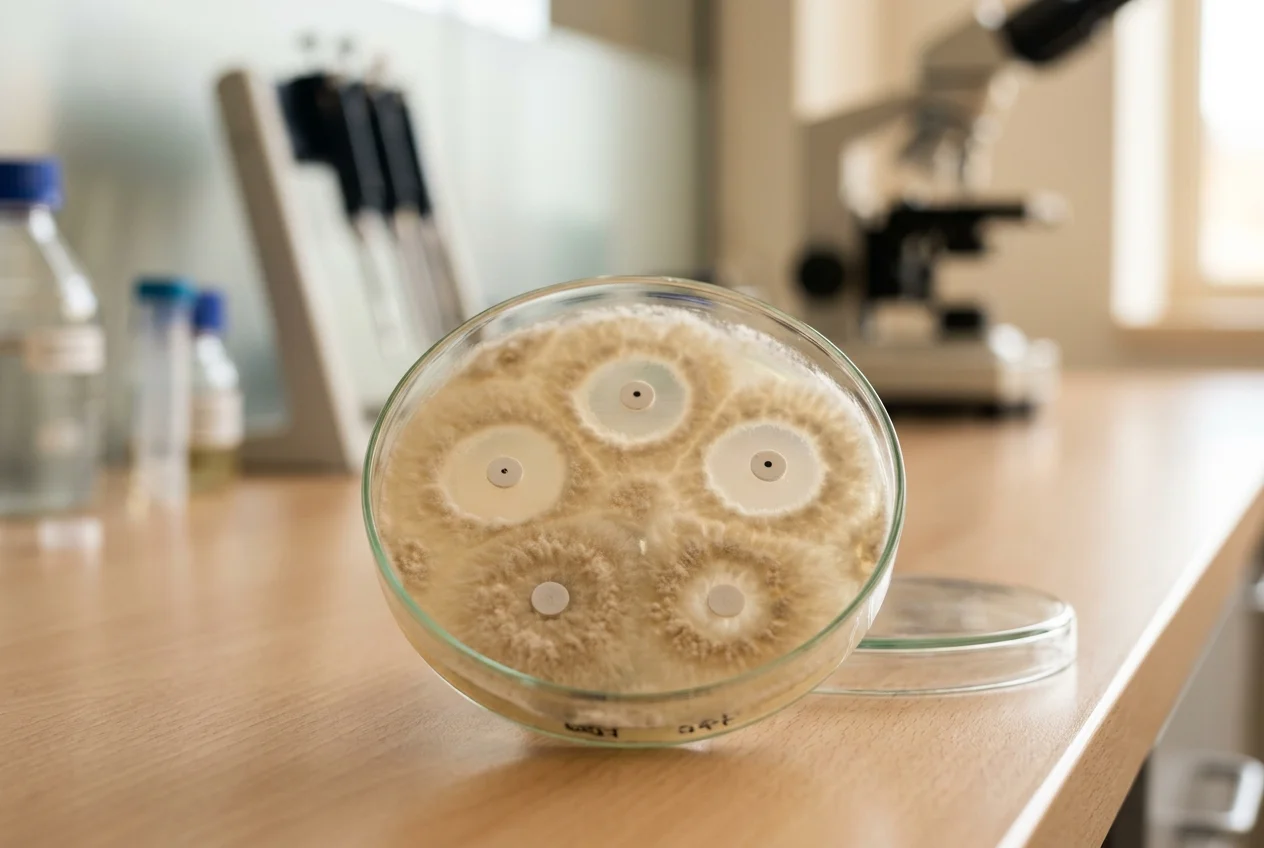
In most cases the diagnosis is made through clinical examination. When there are doubts, a microscopic examination with potassium hydroxide (KOH), a mycological culture and dermatoscopy can be requested.
These tests make it possible to confirm the presence of the fungus and differentiate it from other diseases such as eczema or psoriasis.
What treatments are available?
Treatment will depend on the extent and severity of the infection.
Topical antifungals. They are the treatment of choice in most cases. The most used are terbinafine, clotrimazole, miconazole, ketoconazole, econazole and bifonazole. They are generally applied for 2 to 4 weeks, prolonging the treatment approximately one week after the disappearance of the lesions.
Oral antifungals. They may be necessary when the infection is very extensive, there are frequent relapses, there is nail involvement or the topical treatment has not been enough. The most used are terbinafine, itraconazole and fluconazole.
Treatment of complications. If there is an associated bacterial infection, it may be necessary to add antibiotics, according to the medical assessment.
When an oral antifungal is needed, the choice depends on the type of fungus and on each person. You can see their differences in our comparison of oral antifungals.
What can you do day to day?
Hygiene measures are fundamental to achieve cure and avoid relapses. It is recommended to dry the feet carefully after showering, especially between the toes, change socks every day or even several times a day if there is a lot of sweating, use cotton socks or breathable fabrics, alternate footwear to allow it to dry completely, choose well-ventilated shoes, avoid walking barefoot in pools, gyms or public showers, use flip-flops in sports facilities and not share towels or footwear.
Can you keep going to the pool, the sea, the sauna or playing sport? Doctor Vallecillo explains it in detail in this "Ask the doctor" consultation.
How to disinfect the footwear?
A frequent cause of relapses is using contaminated shoes. During treatment it is recommended to alternate footwear daily, let the shoes dry completely between uses, use antifungal powders or sprays when indicated and change the insoles if they present bad odour or persistent humidity.
What happens if I also have fungi on the nails?
Onychomycosis can act as a reservoir of fungi. If it is not treated, it can favour the repeated reappearance of athlete's foot.
For this reason, when both infections exist, it is usually necessary to treat the nails and the skin simultaneously.
When should you seek prompt medical advice?
You should consult if you have intense pain, if pus appears, if there is redness that ascends up the foot, if you have fever, if you are diabetic, if you are immunosuppressed, if the infection does not improve after several weeks of treatment or if it affects the nails or spreads to other areas of the body.
Myths and facts
- Myth: Athlete's foot only affects athletes. Fact: It can appear in anyone.
- Myth: If the itching disappears I can stop the treatment. Fact: It is important to complete the treatment to avoid relapses.
- Myth: Alcohol or bleach eliminate the fungi. Fact: No. They can irritate the skin and do not replace antifungals.
- Myth: Only the skin has to be treated. Fact: If there are also fungi on the nails, it is important to treat them to avoid new infections.
- Myth: Athlete's foot appears due to lack of hygiene. Fact: No. Humidity, sweating and contact with contaminated surfaces are much more important factors.
The key points to remember
- Athlete's foot is a very frequent fungal infection that mainly affects the spaces between the toes and the sole of the foot.
- Humidity and sweating favour its appearance.
- Topical antifungals are the first-choice treatment in most cases.
- Drying the feet well, changing socks daily and disinfecting the footwear are fundamental measures to avoid relapses.
- If there are fungi on the nails, they must be treated to prevent new infections.
- Consult if you have intense pain, pus, fever or if you have diabetes or immunosuppression.
Frequently asked questions
Is it contagious?
Yes. It can be transmitted by direct contact or through contaminated surfaces.
Can it reappear?
Yes. Relapses are frequent if the predisposing factors persist or the footwear is not disinfected.
Can I go to the pool?
Yes, although you must use flip-flops and maintain the treatment until complete cure.
Should I change socks every day?
Yes. If there is a lot of sweating it may be advisable to change them more than once a day.
Why does it always come back?
The most frequent causes are insufficient treatment, contaminated footwear, fungi on the nails and excessive sweating.
Can it spread to the hands?
Yes. Ringworm of the hand (tinea manuum) can appear by self-inoculation when scratching or manipulating the feet.
Should I use antifungal powders?
They can be useful in some people with hyperhidrosis or frequent relapses, always following medical recommendation.
Does moisturising cream cure it?
No. It only improves dryness, but does not eliminate the fungus.
Can it produce painful cracks?
Yes. Especially between the toes and in the plantar form.
Is there a cure?
Yes. Most patients are completely cured with appropriate antifungal treatment and correct hygiene and prevention measures.
Need personalised guidance?
This guide is for information only and does not replace a medical consultation. For an assessment tailored to your case, you may request a consultation.
Request a consultation