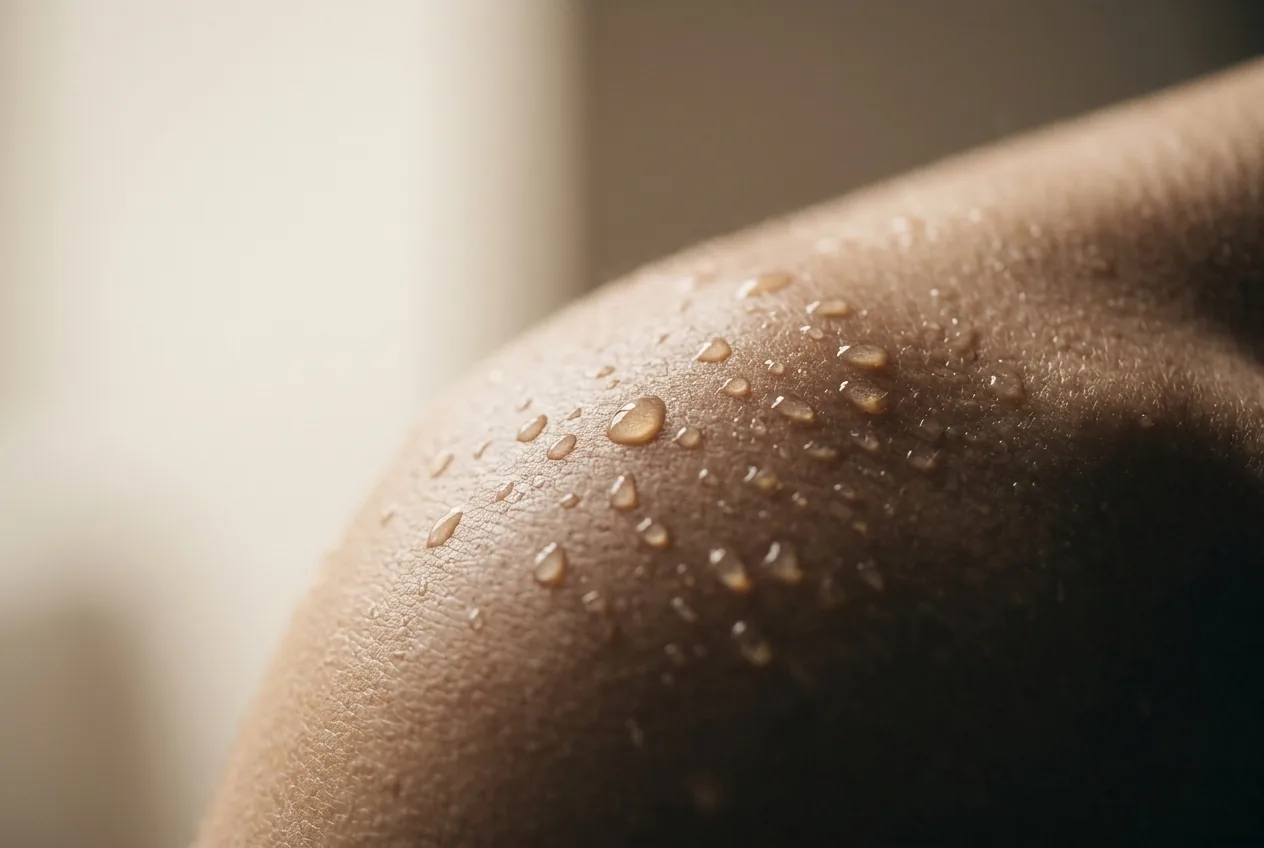

Hyperhidrosis causes excessive sweating that can affect quality of life. Learn why it appears, how it is diagnosed and which are the most effective treatments to control it.
What is hyperhidrosis?
Hyperhidrosis is a disease characterised by excessive sweat production, far greater than that needed to regulate body temperature.
People with hyperhidrosis can sweat even when it is not hot, they are not exercising and they do not feel nervous.
Sweating can affect one or several areas of the body, the most common being:
- The armpits.
- The palms of the hands.
- The soles of the feet.
- The face.
- The scalp.
Although it does not pose a health risk, it can significantly affect quality of life, making everyday activities such as writing, shaking hands, using electronic devices or choosing clothing difficult.
Hyperhidrosis is not contagious.
Why does it appear?
This is usually the first question patients ask. The answer depends on the type of hyperhidrosis.
Primary hyperhidrosis
It is the most common form. In these cases, the sweat glands are completely normal, but receive an excess of stimuli from the nervous system. In other words, the body produces more sweat than it really needs. It is not a disease of the glands, but an excess of activation. It usually begins during childhood or adolescence and it is common for other family members to have the same problem.
Secondary hyperhidrosis
In some people excessive sweating can be a consequence of another disease or of certain medications. Possible causes include:
- Thyroid disorders.
- Diabetes.
- Some infections.
- Menopause.
- Certain drug treatments.
Therefore, when sweating appears suddenly or affects the whole body, a medical work-up may be necessary.
Why do I sweat even when I am not hot?
Because the nervous system activates the sweat glands even when the body does not need to cool down.
Why does it worsen when I am nervous?
Emotions, stress or anxiety can increase the activity of the sweat glands, although they are not the cause of the disease.
What are the symptoms?
The symptoms include:
- Profuse sweating.
- Constantly moist hands.
- Wet armpits even with light clothing.
- Excessive sweating of the feet.
- Needing to change clothes several times a day.
- Difficulty holding objects or writing.
In primary hyperhidrosis, sweating is usually symmetrical, localised, more intense during the day and less during sleep.
In addition to the physical problem, many people experience:
- Embarrassment.
- Insecurity.
- Avoidance of social contact.
- Work-related limitations.
How is it diagnosed?
Diagnosis is usually based on the medical history and examination. The doctor will assess:
- When it began.
- Which areas are affected.
- Whether it occurs during sleep.
- Whether there is a family history.
- Whether there may be an underlying disease responsible.
In some cases blood tests may be requested to rule out secondary causes. Complex tests are usually not necessary.
What treatments are available?
One of the questions we receive most is: is there a solution? The answer is yes. We currently have very effective treatments. The choice depends on the intensity and the location. The options include:
Medical antiperspirants
They are the initial treatment in many patients. They contain aluminium salts at concentrations higher than those of usual deodorants.
Topical medications
There are new topical treatments that help reduce sweat production in certain areas.
Botulinum toxin
It is one of the most effective treatments for axillary hyperhidrosis. It consists of small injections that temporarily block the nerve signal responsible for sweating.
Why does botulinum toxin work?
Because it prevents the nerve from stimulating the sweat gland. The gland remains normal, but stops receiving the order to produce sweat. The effect usually lasts between 4 and 9 months, depending on each patient.
Iontophoresis
Especially useful for hyperhidrosis of the hands and feet.
Oral medication
In some selected patients medications that reduce sweating can be used.
Surgery
Reserved only for very specific cases when other treatments have not been effective.
What can you do day to day?
In addition to medical treatment, some simple measures can help:
- Wear breathable clothing.
- Prefer natural fabrics.
- Change clothes when necessary.
- Maintain good hygiene without excessive washing.
- Use footwear that favours ventilation.
- Keep the skin well dry to prevent infections.
It is important to remember that hygiene does not eliminate hyperhidrosis, as the problem is not related to cleanliness.
When should you seek prompt medical advice?
Seek medical assessment if:
- Sweating appears suddenly without an obvious cause.
- Sweating affects the whole body.
- It is accompanied by weight loss, fever or general malaise.
- It interferes with your work, studies or social life.
- The usual treatments are not effective.
Myths and facts
- Myth: I sweat a lot because I have poor hygiene. Fact: No. Hyperhidrosis has no relation to personal hygiene.
- Myth: It is normal to sweat this much. Fact: No. When sweating interferes with daily life, it is a treatable disease.
- Myth: Nerves are the only cause. Fact: Stress can worsen the symptoms, but does not explain most cases.
- Myth: There is no treatment. Fact: We currently have very effective treatments, including botulinum toxin for certain patients.
- Myth: Deodorant cures hyperhidrosis. Fact: Deodorant reduces odour, but does not significantly decrease sweat production.
The key points to remember
- Hyperhidrosis is a disease characterised by excessive sweating.
- It is not related to poor hygiene.
- It can affect the armpits, hands, feet or face.
- There are effective treatments for most patients.
- Botulinum toxin is one of the best options for axillary hyperhidrosis.
- In some cases it is necessary to rule out diseases that may cause secondary hyperhidrosis.
- Treatment must be tailored to each patient and to the location of the sweating.
Frequently asked questions
Is hyperhidrosis hereditary?
Often yes. Many patients have relatives with the same problem.
Is it dangerous?
No, but it can greatly affect quality of life.
Is botulinum toxin safe?
Yes. Administered by an experienced doctor it is a safe and very effective treatment.
How long does the effect of botulinum toxin last?
Usually between 4 and 9 months.
Is the treatment painful?
The discomfort is usually mild and there are techniques to make the procedure more comfortable.
Will I sweat again when the effect wears off?
Yes. The treatment is not permanent and can be repeated when necessary.
Does stress worsen hyperhidrosis?
Yes, although it is not usually the main cause.
Can it affect only the hands?
Yes. It is a very common location.
Does hyperhidrosis disappear with age?
In some people it improves, although this does not always happen.
Can I lead a completely normal life?
Yes. With appropriate treatment, most patients regain an excellent quality of life.
Need personalised guidance?
This guide is for information only and does not replace a medical consultation. For an assessment tailored to your case, you may request a consultation.
Request a consultation