Boils (furuncles)
Deep hair follicle infection
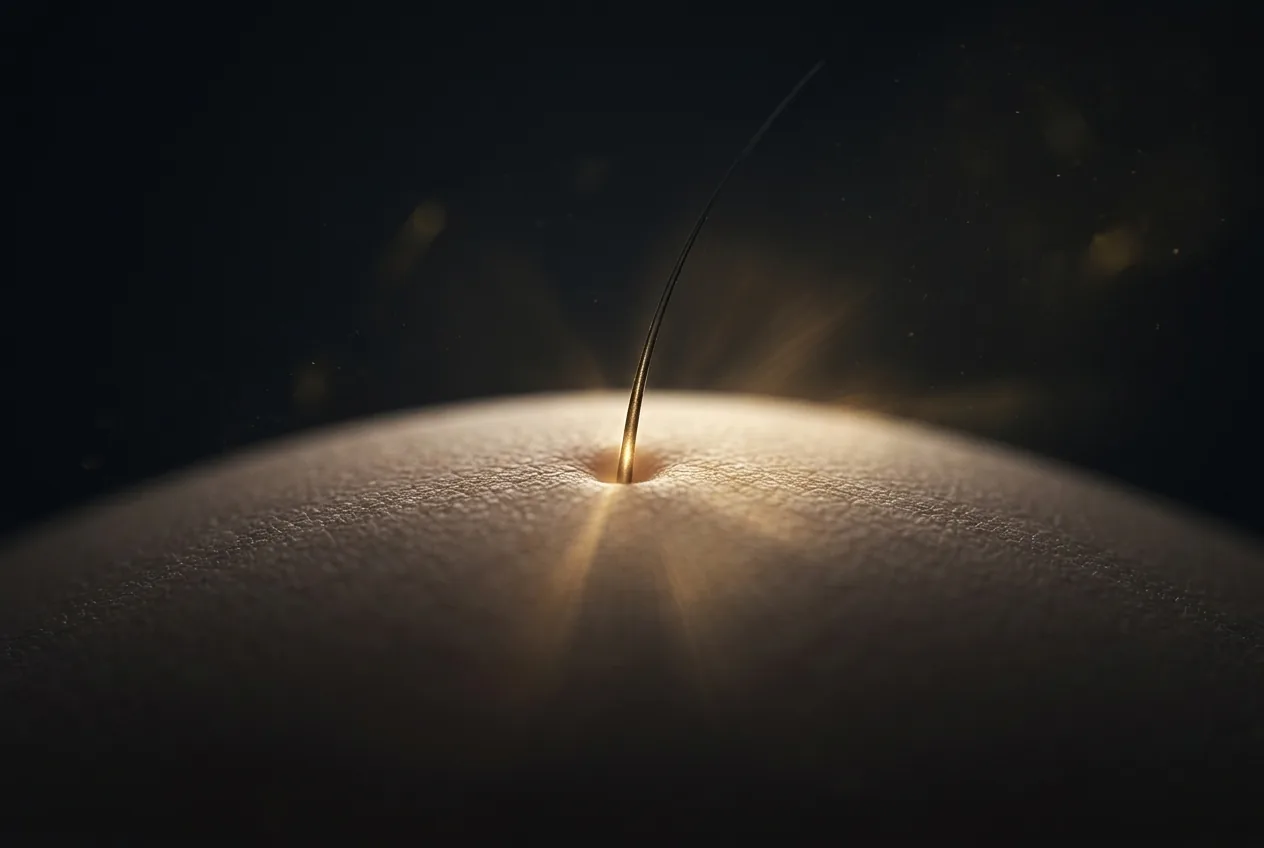
Boils are deep infections of the hair follicles that produce pain and accumulation of pus. Learn about their causes, treatment, prevention measures and when you should consult a doctor.
What is a boil?
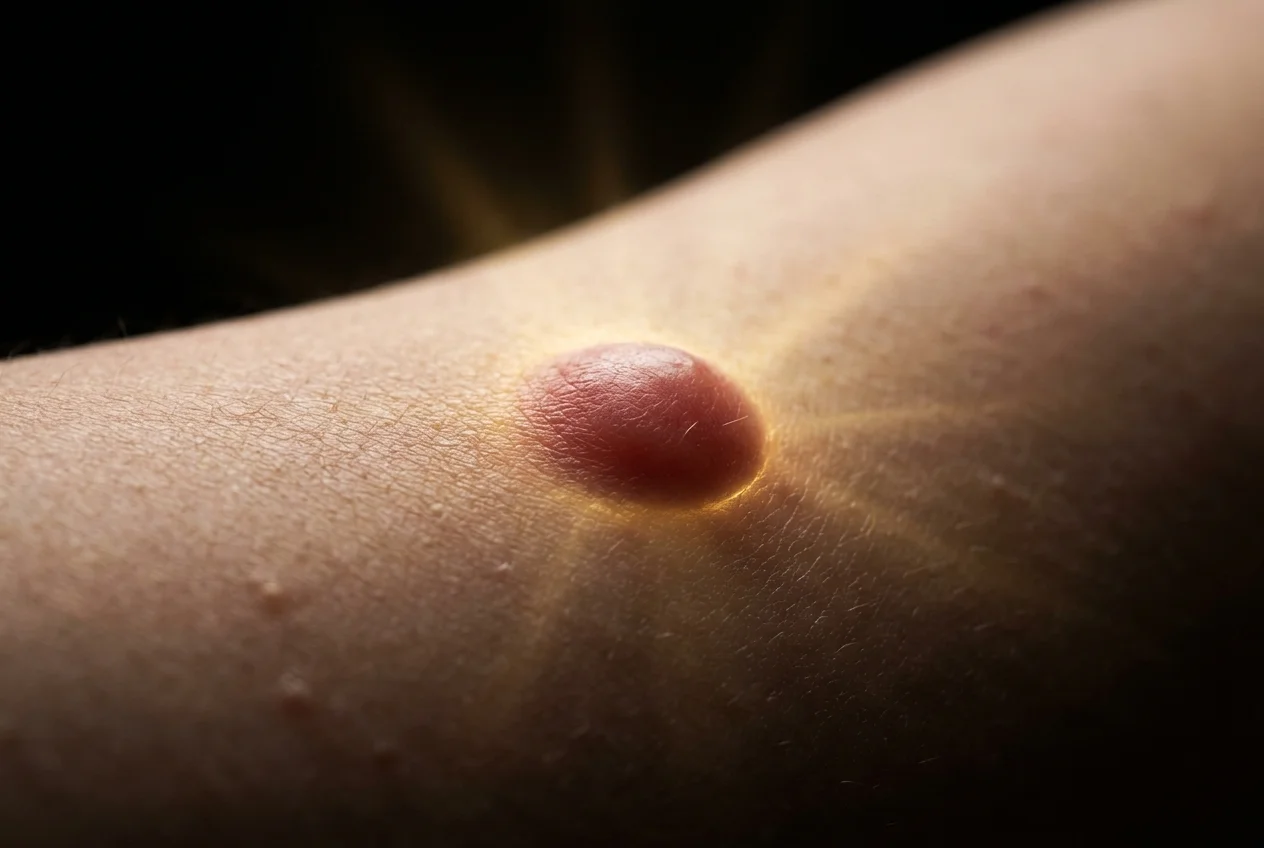
A boil (furuncle) is a deep bacterial infection of a hair follicle that causes the formation of a painful nodule filled with pus. The bacterium responsible in most cases is Staphylococcus aureus, although other bacteria can also produce it.
As the infection progresses, the boil increases in size and usually develops a whitish or yellowish point in the centre, through which the pus can drain.
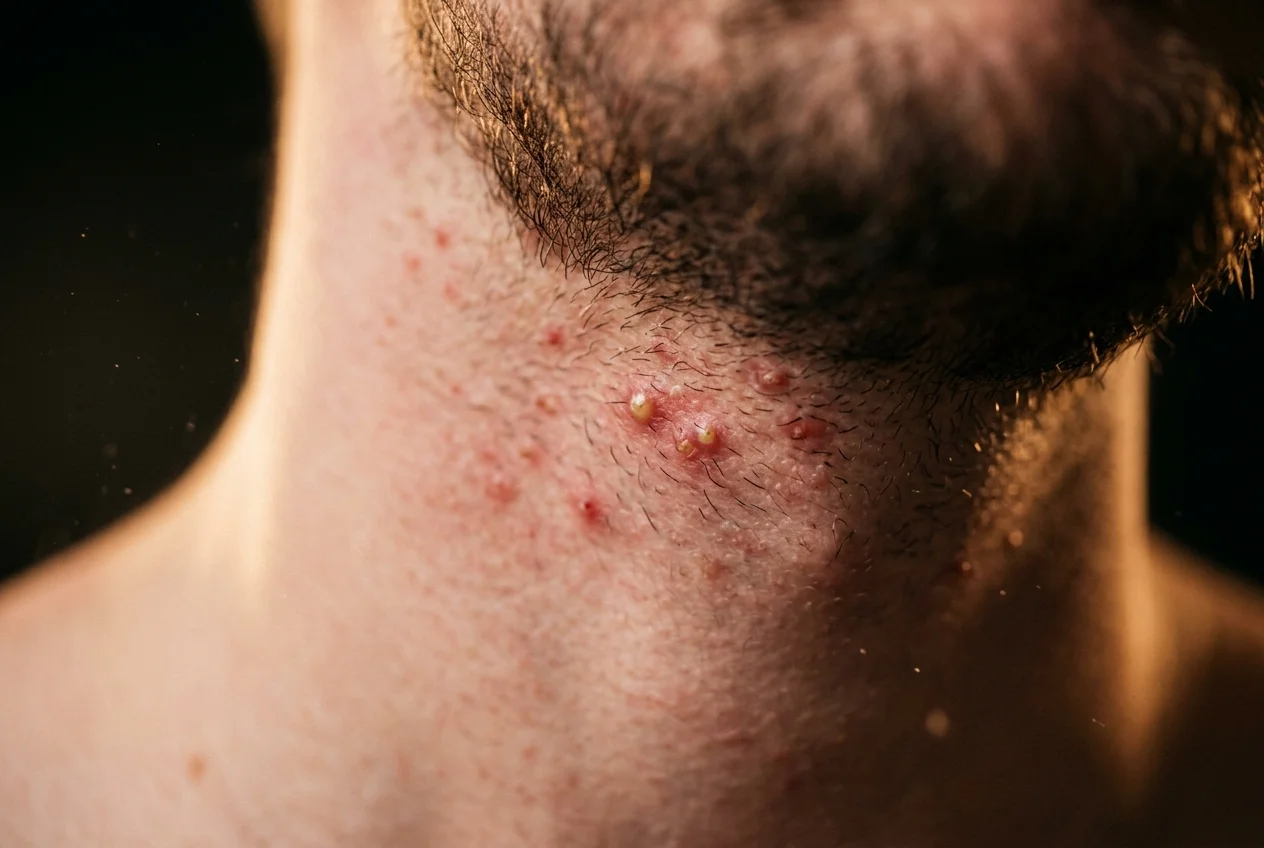
When several neighbouring boils join together forming a more extensive lesion, it is called a carbuncle.
Why does it appear?
The boil appears when bacteria penetrate a hair follicle and multiply inside it.
Who is at greater risk? It is more frequent in people with diabetes, obesity, atopic dermatitis, a weakened immune system, excessive sweating, continuous friction of the skin, frequent shaving or colonisation by Staphylococcus aureus in the nose or on the skin.
Why do they always come out in the same place? Some areas undergo more rubbing, moisture or sweating, such as the armpits, the groin, the buttocks, the neck and the thighs. In addition, some people are chronic carriers of Staphylococcus aureus, which favours relapses.
Is it the same as a pimple? No. An acne pimple is usually more superficial and related to inflammation of the sebaceous gland, while a boil is a deeper and more painful infection.
What are the symptoms?
The boil usually begins as a small red and painful lump. Over the days a progressive increase in size, intense pain, redness, local heat, swelling and accumulation of pus in the centre appear.
When the boil drains, thick pus usually comes out and improvement subsequently begins.
In more extensive cases fever, general malaise and inflammation of the nearby lymph nodes may appear.
How is it diagnosed?
Diagnosis is usually made through clinical examination.
In patients with repeated infections or extensive lesions, a culture of the pus to identify the bacterium and know its sensitivity to antibiotics, a blood test if diabetes or other predisposing diseases are suspected, or a study to rule out colonisation by Staphylococcus aureus when the episodes are recurrent may be requested.
What treatments are available?
Treatment will depend on the size of the boil and the severity of the infection.
Warm compresses. Applying local heat for 10-15 minutes, several times a day, can favour spontaneous drainage.
Drainage. When there is a significant collection of pus, the most effective treatment is usually drainage performed by a healthcare professional. Trying to open a boil at home can worsen the infection.
Antibiotics. Not all boils need antibiotics. They are recommended when the lesion is large, there are several boils, there is fever, cellulitis appears around it or the patient has diseases that increase the risk of complications.
Why should I not squeeze it? Because manipulating it can favour the spread of the infection, increase inflammation, leave a larger scar and facilitate the appearance of new infections.
What can you do day to day?
To favour healing and prevent new episodes it is recommended to:
- Not manipulate the boil.
- Wash the area with water and a gentle cleanser.
- Keep the lesion covered if it oozes.
- Wash your hands before and after touching the area.
- Not share towels, razors or clothing during the infection.
- Control diseases such as diabetes.
- Consult if the episodes are repeated.
When should you seek prompt medical advice?
You should see a doctor if the boil rapidly increases in size, is accompanied by fever, several boils appear at the same time, the pain is very intense, the lesion is on the face (especially around the nose or eyes), the redness spreads, it does not improve after several days or you have low defences or diabetes.
Myths and facts
- Myth: Boils appear due to lack of hygiene. Fact: Hygiene plays a role, but most are due to an infection by bacteria that normally live on the skin or in the nose.
- Myth: They must be squeezed to get the pus out. Fact: No. Manipulating them can worsen the infection and favour complications.
- Myth: They all need antibiotics. Fact: Many small boils resolve with drainage and local care.
- Myth: They are contagious just by touching a person. Fact: The bacterium can be transmitted by direct contact or through contaminated objects, but not everyone will develop a boil.
- Myth: When the pus comes out it is already completely cured. Fact: The wound must continue to be cared for until its complete healing.
The key points to remember
- The boil is a deep infection of a hair follicle usually caused by Staphylococcus aureus.
- It produces a red, painful lump filled with pus.
- It should not be manipulated or squeezed.
- Some cases require drainage and antibiotics.
- If the boils are repeated, it is advisable to look for predisposing factors.
- Early treatment reduces the risk of complications and scars.
Frequently asked questions
Is it an infected pimple?
Not exactly. It is a deep infection of a hair follicle.
Can I pierce it at home?
No. Drainage should be performed by a professional when indicated.
Is it contagious?
The bacterium can be transmitted, but that does not mean another person will develop a boil.
Can it come out again?
Yes. Some people have recurrent furunculosis.
Why do I get them frequently?
It can be due to diabetes, colonisation by Staphylococcus aureus, friction, sweating or immune system alterations.
Can I shower?
Yes. Maintaining good hygiene helps recovery.
Will it leave a scar?
Deep boils can leave a small scar, especially if they are manipulated.
What is the difference between a boil and an abscess?
The boil starts in a hair follicle. An abscess can appear in any area of the skin or subcutaneous tissue and is usually a larger collection of pus.
Will I need a culture?
Only in certain cases, especially when the infections are repeated or do not respond to the usual treatment.
Is it curable?
Yes. Most heal completely with adequate treatment.
Need personalised guidance?
This guide is for information only and does not replace a medical consultation. For an assessment tailored to your case, you may request a consultation.
Request a consultationTopics