Erysipelas
Superficial bacterial skin infection
Erysipelas is an acute bacterial infection of the skin that causes redness, heat, pain and fever. Learn about its causes, treatment and how to prevent relapses through adequate skin care.
What is erysipelas?
Erysipelas is an acute bacterial infection of the skin that mainly affects the most superficial layers of the dermis and the lymphatic vessels. It is caused, in most cases, by bacteria of the streptococcus group, especially Streptococcus pyogenes.
Although it is a form of skin infection related to bacterial cellulitis, erysipelas usually has well-defined edges, a more abrupt onset and a more superficial inflammation.
With adequate treatment, most patients recover completely.
Why does it appear?
The bacteria penetrate the skin through a small entry point that can sometimes go unnoticed. The most frequent are cracks between the toes due to athlete's foot, wounds or cuts, insect bites, ulcers, dermatitis or eczema and surgical wounds.
Who is at greater risk? Erysipelas is more frequent in people with diabetes, venous insufficiency, lymphoedema, obesity, advanced age, immunosuppression or a history of erysipelas.
Why can it recur? If the predisposing factors, such as lymphoedema or athlete's foot, are not corrected, the infection can reappear.
What are the symptoms?
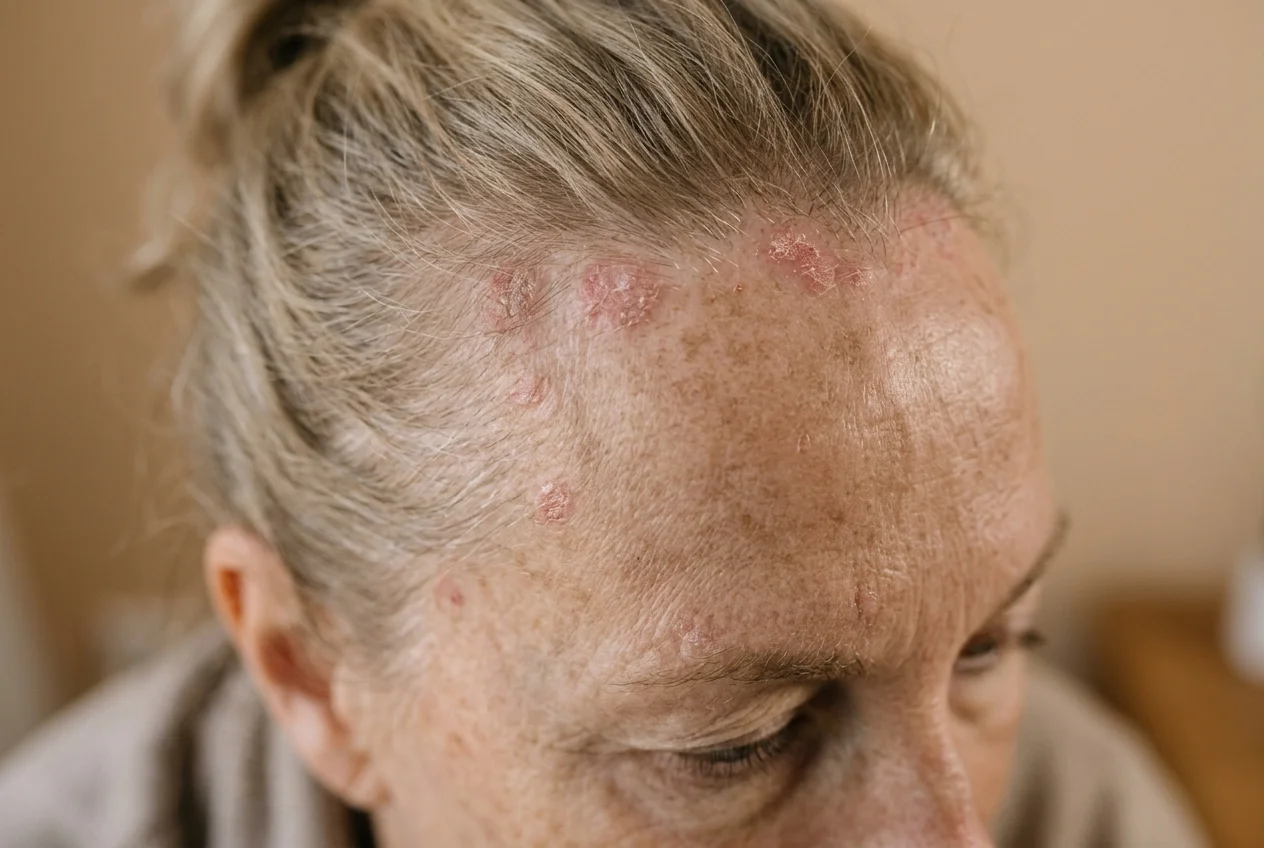
Erysipelas usually begins abruptly. The most frequent symptoms are intense redness of the skin, pain, local heat, swelling, well-demarcated edges and a sensation of tension.
It is frequently accompanied by general symptoms such as fever, chills, general malaise and tiredness.
The most affected areas are the legs and the face. Swollen lymph nodes and reddish lines due to inflammation of the lymphatic vessels (lymphangitis) may also appear.
How is it diagnosed?
Diagnosis is mainly clinical. The doctor will assess the appearance of the lesion, the presence of fever, the rapid evolution and the possible entry point.
In some cases a blood test, blood cultures if a severe infection is suspected, or an ultrasound when an abscess or a deep vein thrombosis needs to be ruled out may be requested.
What treatments are available?
Erysipelas requires treatment with antibiotics.
Oral antibiotics. They are sufficient in most mild or moderate cases.
Intravenous antibiotics. They are used when the infection is extensive, there is significant impairment of the general condition, the patient cannot take oral medication or there are significant risk factors.
Complementary measures. Relative rest, elevating the affected limb, maintaining good hydration, analgesics or anti-inflammatories when indicated and treating the entry point to avoid relapses.
When does it start to improve? Most patients begin to improve between 24 and 72 hours after starting antibiotic treatment. It is important to always complete the prescribed treatment.
What can you do day to day?
To prevent new episodes it is recommended to:
- Treat athlete's foot and other skin infections.
- Moisturise the skin if it is dry or cracked.
- Care correctly for any wound.
- Control diabetes.
- Use compression stockings when indicated for venous insufficiency or lymphoedema.
- Maintain a healthy weight.
When should you seek prompt medical advice?
You should seek urgent care if you have a high fever, intense chills, rapid increase in redness, very intense pain, blisters or dark areas, difficulty walking due to pain or confusion or deterioration of the general condition.
You should also consult if you do not improve after 48 hours of treatment or if the symptoms worsen.
Myths and facts
- Myth: Erysipelas and cellulitis are exactly the same disease. Fact: They are very similar infections, but erysipelas affects more superficially and usually presents well-defined edges.
- Myth: It is a contagious disease. Fact: It is not usually transmitted through ordinary contact with other people.
- Myth: When the fever disappears I can stop the antibiotic. Fact: You must always complete the treatment indicated by your doctor.
- Myth: It only appears after major wounds. Fact: A small crack between the toes can be enough for bacteria to enter.
- Myth: If I have already had erysipelas, I will not have it again. Fact: It can recur if the predisposing factors persist.
The key points to remember
- Erysipelas is a superficial bacterial skin infection, usually caused by streptococci.
- It produces a red, hot, painful and well-demarcated plaque, usually accompanied by fever.
- It must be treated early with antibiotics.
- It is important to identify and treat the entry point to prevent relapses.
- Most patients progress favourably with adequate treatment.
Frequently asked questions
Is it an emergency?
Yes. It should be assessed and treatment started as soon as possible.
Is it the same as bacterial cellulitis?
They are very similar infections, although erysipelas is usually more superficial and with more defined boundaries.
Will I need hospital admission?
Only in severe cases or when there are significant risk factors.
Can it leave after-effects?
Most heal without after-effects when treated early.
Can it reappear?
Yes. Especially if there is lymphoedema, venous insufficiency or fungal infections on the feet.
Can I walk?
Yes, although during the first days relative rest and elevating the affected limb are usually recommended.
What happens if it is not treated?
The infection can spread and produce serious complications, including sepsis.
How can I prevent it?
By treating the entry points, caring for the skin and controlling the predisposing factors.
Is it curable?
Yes. With adequate antibiotic treatment, the prognosis is usually excellent.
Will I need check-ups?
It will depend on the evolution and on whether there are repeated episodes.
Need personalised guidance?
This guide is for information only and does not replace a medical consultation. For an assessment tailored to your case, you may request a consultation.
Request a consultation