Basal cell carcinoma
The most common skin cancer
Basal cell carcinoma is the most frequent skin cancer. Learn about its symptoms, risk factors, treatment options and why early detection makes it possible to reach very high cure rates.
What is basal cell carcinoma?
Basal cell carcinoma (BCC) is the most frequent type of skin cancer. It originates in the basal cells of the epidermis, the deepest layer of the skin.
Fortunately, it is also the skin cancer with the best prognosis. In the vast majority of cases it grows slowly and almost never produces metastases. However, if it is not treated, it can increase in size and progressively destroy the skin and nearby tissues.
Therefore, although it is usually not an aggressive tumour, it must be diagnosed and treated as soon as possible.
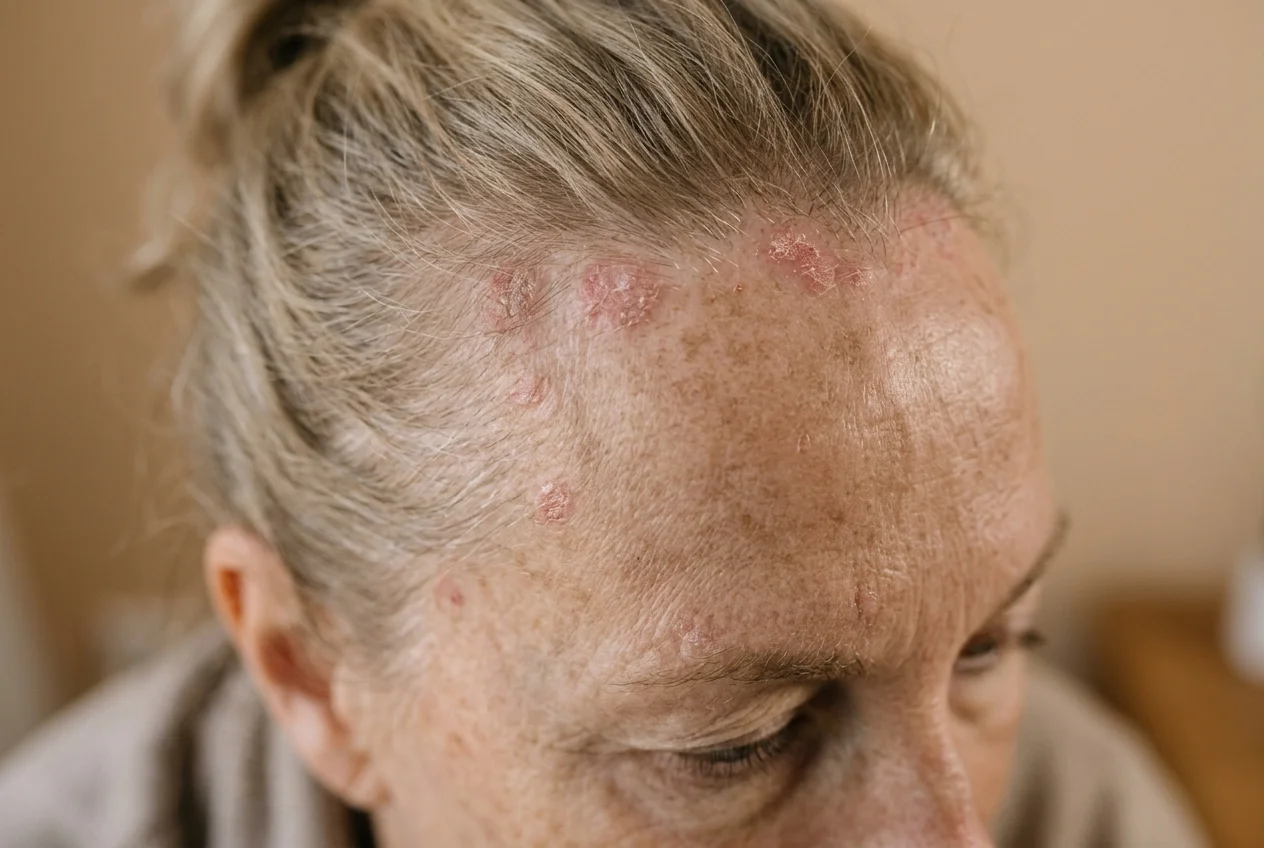
It appears most frequently on the most sun-exposed areas: the nose, face, ears, scalp, neck and décolletage.
Why does it appear?
The main cause is the damage accumulated by ultraviolet (UV) radiation throughout life. Each sun exposure produces small alterations in the DNA of the skin cells. Over the years, these alterations can give rise to the development of a basal cell carcinoma.
Who is at greater risk? People with the following have a higher risk: fair skin; light eyes or blond or red hair; a history of sunburns; intense sun exposure over years; outdoor professions or activities; advanced age; a personal history of skin cancer; immunosuppressive treatments or diseases that reduce the defences.
Why does it appear on the nose or the face? Because they are the areas that receive the greatest amount of solar radiation throughout life.
Can it appear even though I have always protected myself? Yes. Sun damage is cumulative and many people received intense exposure during childhood or youth, before adopting adequate photoprotection measures.
What are the symptoms?
Basal cell carcinoma can have different appearances. The most frequent forms are:
- A small shiny or pearly lump.
- A pink lesion that grows slowly.
- A wound that does not heal.
- A crust that disappears and reappears.
- A lesion that bleeds easily after slight friction.
Some basal cell carcinomas present small blood vessels visible on their surface (telangiectasias). Others can look like a whitish scar or a slightly reddish plaque.
They generally do not cause pain, especially in the initial stages.
How is it diagnosed?
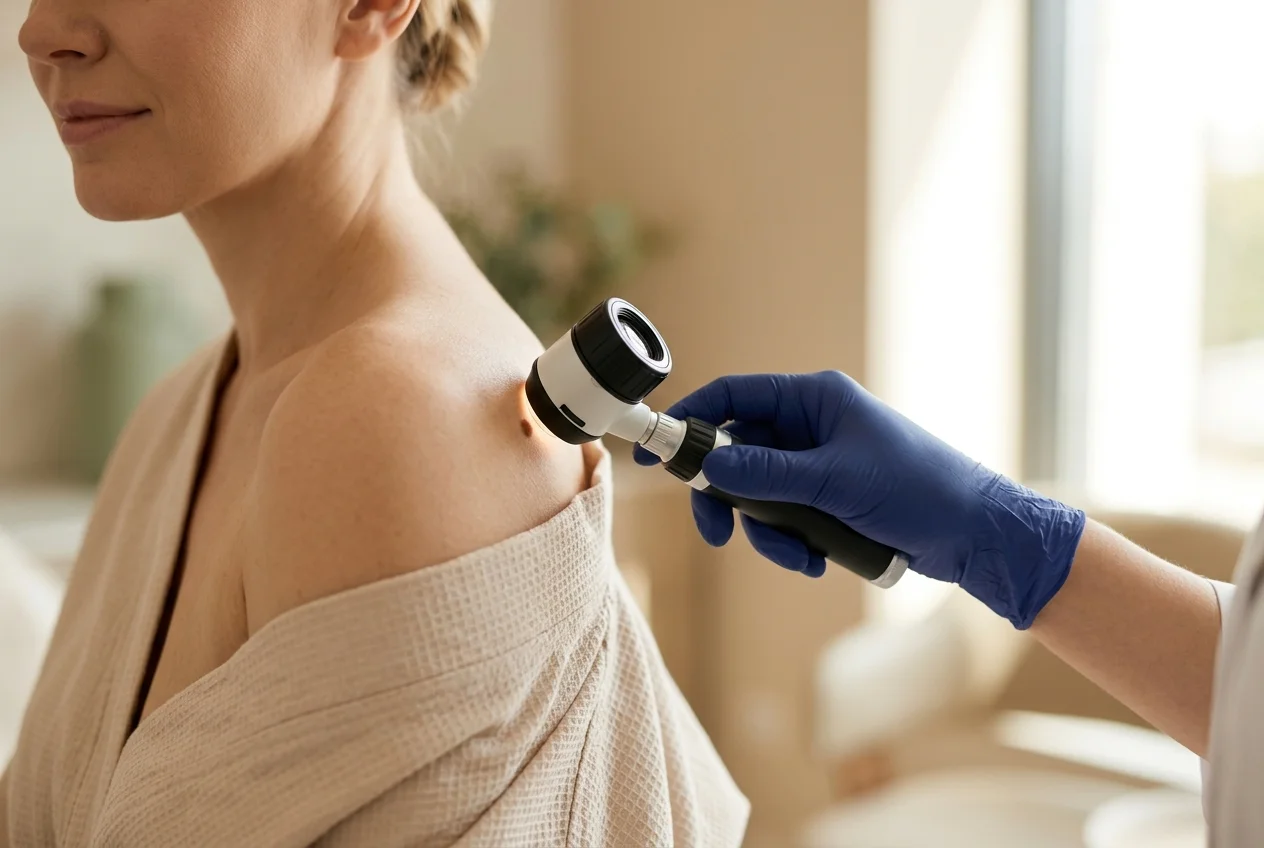
Diagnosis begins with a clinical examination of the skin. The doctor will use a dermatoscope, which allows the characteristic structures of basal cell carcinoma to be observed.
When there is a suspicion, a biopsy or the complete removal of the lesion is performed.
The definitive diagnosis is always confirmed through the histopathological study.
What treatments are available?
One of the most frequent questions is: «Can it be cured?» The answer is yes. When treated early, the cure rate is very high.
Surgery
It is the treatment of choice in most cases. It makes it possible to completely remove the tumour and confirm that the margins are free of disease.
Mohs micrographic surgery
It is the reference treatment for certain tumours located in delicate areas such as the nose, eyelids, lips or ears. It makes it possible to preserve the maximum possible amount of healthy skin and offers the highest cure rates.
Topical treatments
In some superficial carcinomas, specific creams such as imiquimod or 5-fluorouracil can be used, always under medical indication.
Photodynamic therapy
It can be a good option in some selected superficial carcinomas.
Radiotherapy
It is reserved for patients in whom surgery is not possible or not indicated.
Can it come back? Yes. Although the treated tumour has been completely cured, people who have developed a basal cell carcinoma have a higher risk of presenting new tumours in the future. For this reason periodic check-ups are essential.
What can you do day to day?
After treatment it is recommended to:
- Use sunscreen SPF 50+ daily when there is sun exposure.
- Avoid sunburns.
- Wear a hat and protective clothing.
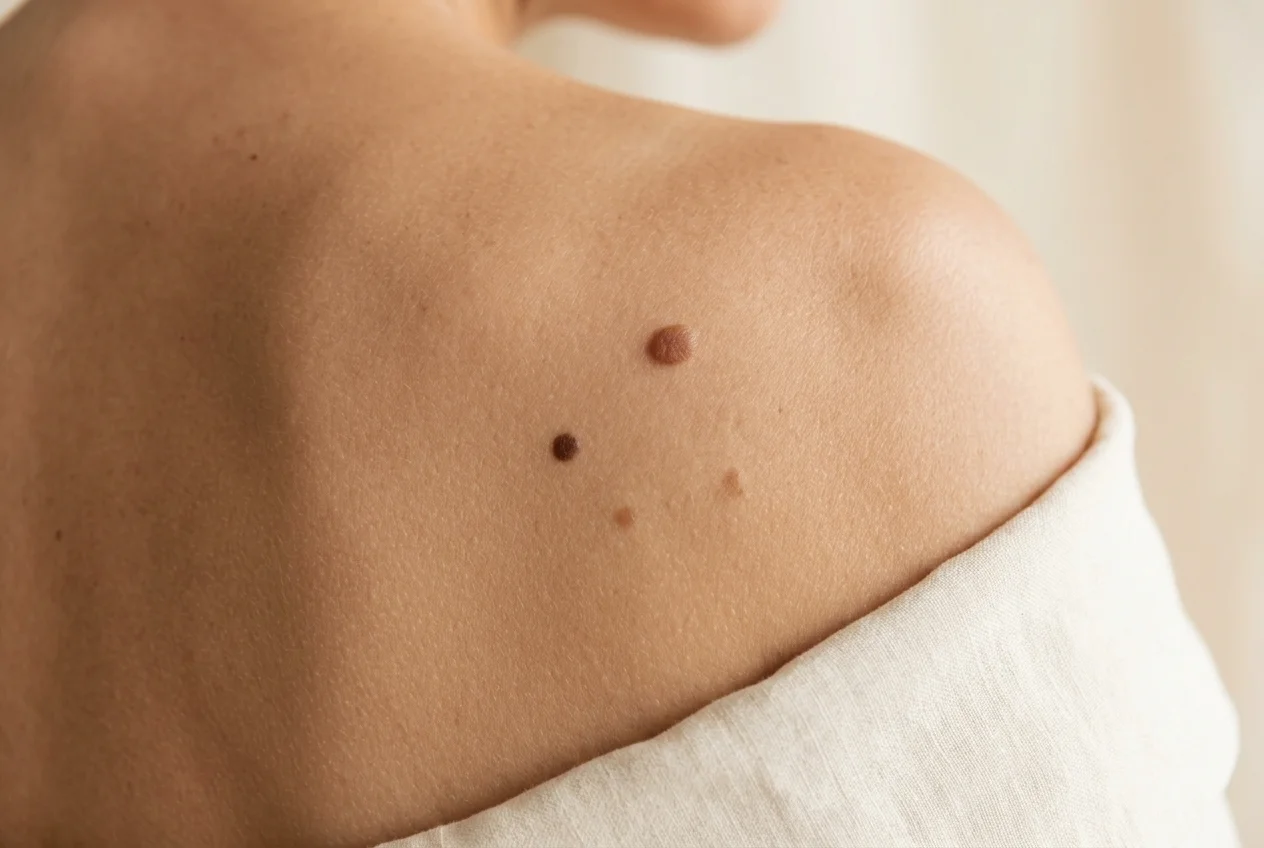
- Examine the skin once a month.
- Attend all the check-ups indicated by your doctor.
These measures reduce the risk of developing new tumours.
When should you seek prompt medical advice?
Request a medical assessment if you have:
- A wound that does not heal.
- A lesion that bleeds repeatedly.
- A shiny lump that slowly increases in size.
- A persistent crust.
- A lesion that always reappears in the same place after healing.
After having had a basal cell carcinoma, you should also consult if any new suspicious lesion appears.
Myths and facts
- Myth: Basal cell carcinoma is not a cancer. Fact: It is, although it usually grows slowly and has an excellent prognosis when treated early.
- Myth: If it does not hurt, it does not need to be treated. Fact: Many basal cell carcinomas are completely painless at first.
- Myth: It can disappear on its own. Fact: No. Without treatment it will continue to grow slowly.
- Myth: If I never go to the beach, I cannot have it. Fact: Daily sun exposure accumulated over years also increases the risk.
- Myth: After removing it I no longer need check-ups. Fact: Having had a basal cell carcinoma increases the risk of developing other skin tumours.
The key points to remember
- Basal cell carcinoma is the most frequent skin cancer.
- It grows slowly and rarely produces metastases.
- Accumulated sun exposure is its main cause.
- A wound that does not heal or a lesion that bleeds should be evaluated.
- Surgery is the most usual treatment and offers excellent results.
- Medical check-ups and sun protection are essential to prevent new tumours.
Frequently asked questions
Is it a serious cancer?
Generally no. It is the skin cancer with the best prognosis when treated early.
Can it produce metastases?
It is exceptional. The vast majority remains localised in the skin.
Can it destroy the skin?
Yes. If not treated, it can progressively invade nearby tissues.
Does surgery leave a scar?
Yes, although the best possible functional and aesthetic result is normally sought.
What is Mohs surgery?
It is a specialised technique that allows the tumour to be completely removed while preserving the maximum possible amount of healthy skin.
Will I need check-ups after treatment?
Yes. Periodic check-ups are essential.
Can I sunbathe again?
Yes, but always with adequate photoprotection and avoiding sunburns.
Can another basal cell carcinoma appear?
Yes. Having had one increases the risk of developing new tumours in the future.
Is it hereditary?
Most are not, although some rare genetic diseases increase the risk.
Is it curable?
Yes. Diagnosed and treated early, the cure rates are very high.
Need personalised guidance?
This guide is for information only and does not replace a medical consultation. For an assessment tailored to your case, you may request a consultation.
Request a consultationTopics