Moles (melanocytic nevi)
When to watch them and the ABCDE rule
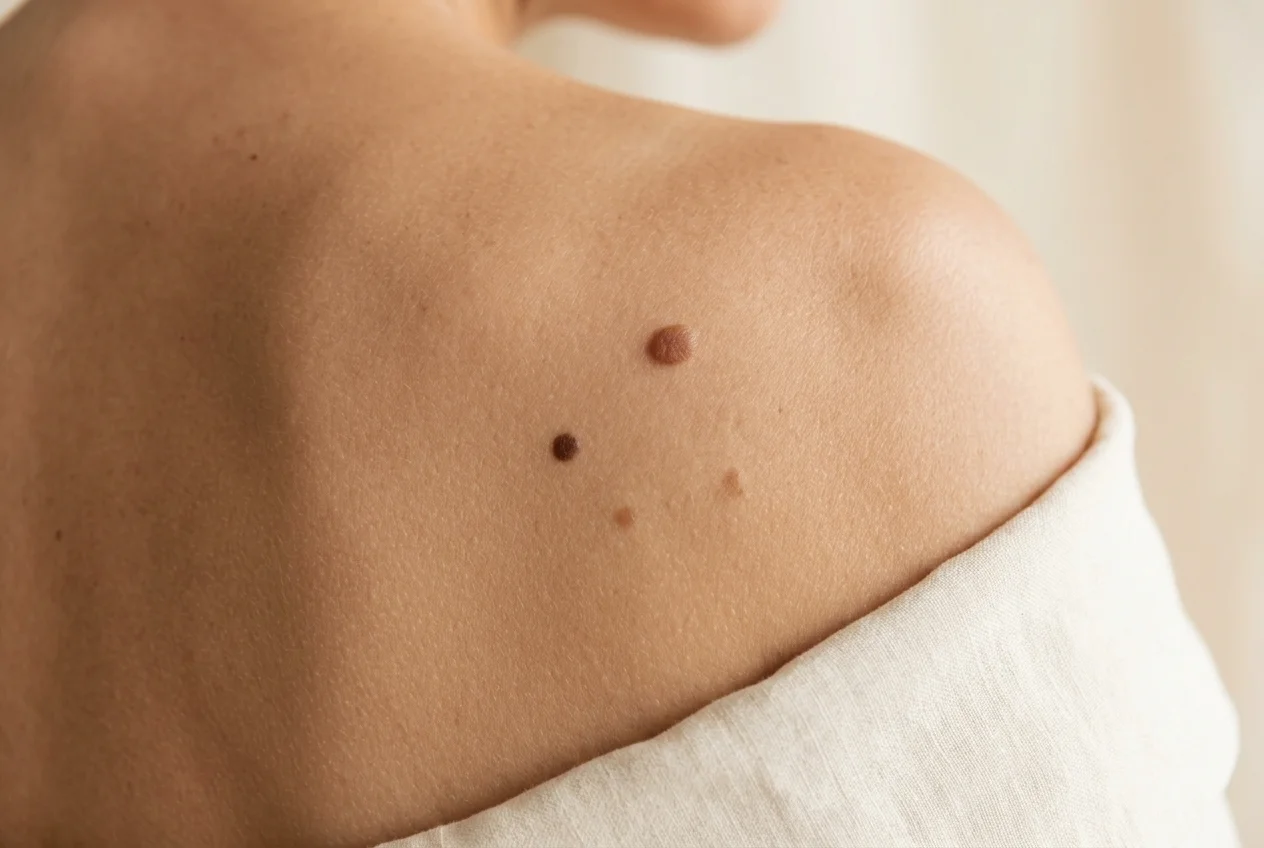
Moles or melanocytic nevi are generally benign lesions. Learn to recognise the warning signs, the ABCDE rule, the ugly duckling sign and when to seek an early melanoma check-up.
What are moles?
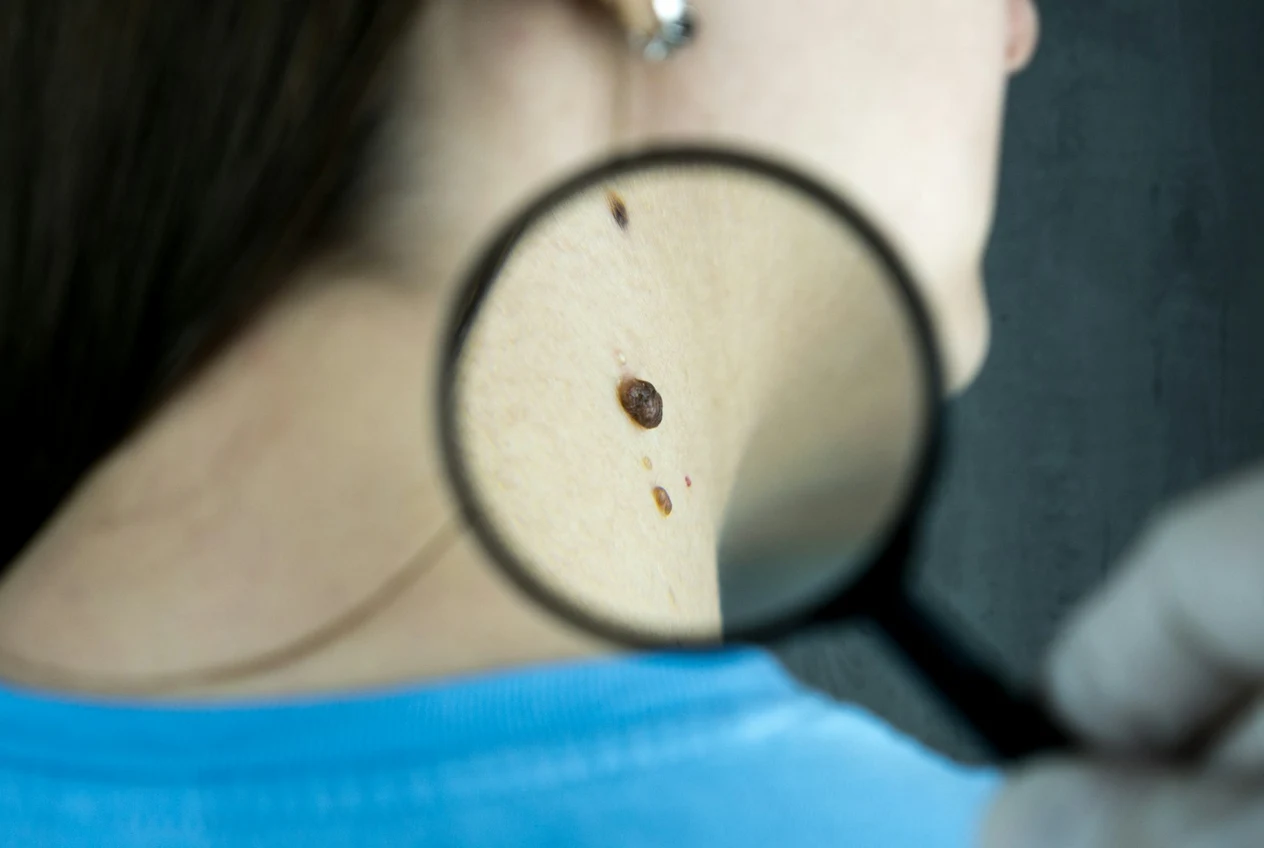
Moles, medically called melanocytic nevi, are benign accumulations of melanocytes, the cells responsible for producing melanin, the pigment that gives colour to our skin.
Most people have between 10 and 40 moles, although this number can vary considerably according to genetic predisposition, skin type and sun exposure during childhood and adolescence.
The vast majority of moles are completely benign and remain stable for many years.
However, it is important to know them and monitor them, since some pigmented lesions may correspond to a melanoma or another type of skin cancer.
Why do they appear?
This is one of the most frequent questions in consultation. Moles appear through the combination of several factors.
Genetic predisposition
Each person is born with a genetic tendency to develop a greater or lesser number of moles. It is common for several members of the same family to have a similar number of nevi.
Sun exposure
Ultraviolet radiation favours the appearance of new moles, especially during childhood and adolescence. Repeated sunburns increase this risk.
Age
Many moles appear during childhood and continue to develop until approximately 30 or 40 years of age. Afterwards they may remain stable, lighten or even slowly disappear.
Why do new moles appear in adulthood? It is relatively normal to develop a new mole in adulthood. However, the appearance of a new pigmented lesion after the age of 40 deserves a medical assessment to confirm that it really is a benign nevus.
Why do some change over time? Some moles evolve slowly as part of their natural history. They can rise slightly, lose pigment or become lighter over the years. However, rapid or striking changes should always be evaluated by a doctor.
What are the symptoms?
Most moles have the following characteristics:
- Uniform colour.
- Well-defined borders.
- Rounded or oval shape.
- A size generally smaller than 6 millimetres.
- Slow evolution.
They can be flat or raised; light or dark brown; black; skin-coloured; with or without hair.
Under normal conditions they do not cause pain, itching or bleeding.
How is it diagnosed?
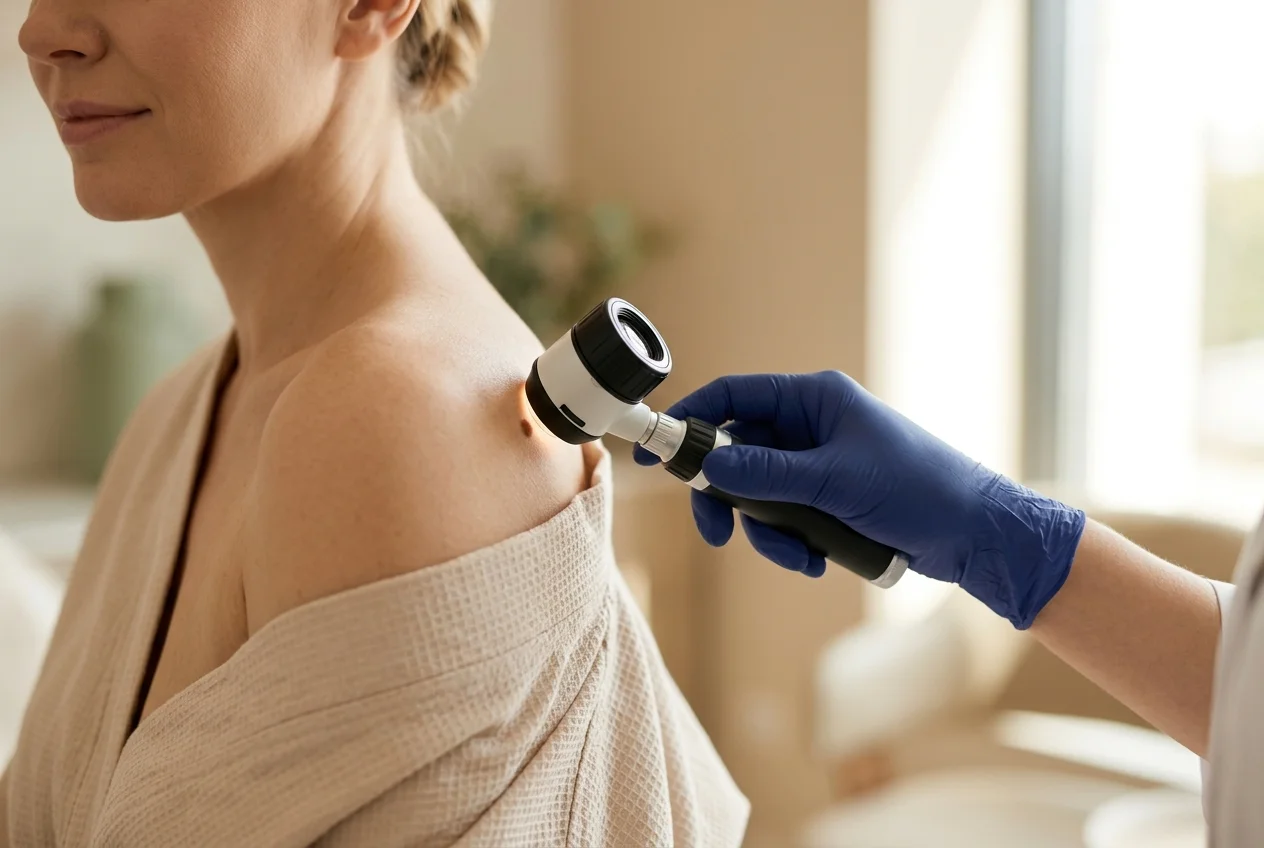
Diagnosis is based on clinical examination. The doctor will use a dermatoscope, an instrument that allows structures invisible to the naked eye to be observed and a benign mole to be differentiated very precisely from other pigmented lesions.
In some patients the following is also recommended: full-body photography, digital mole mapping and serial digital dermatoscopy to monitor specific lesions.
In case of doubt, the only definitive method consists of removing the lesion and analysing it through a histopathological study.
What treatments are available?
One of the most frequent questions is: «Is it necessary to remove all moles?» The answer is no. Benign moles do not need treatment.
Their removal is only recommended when: there is a suspicion of melanoma, they present concerning changes, they are continuously traumatised, they cause discomfort or the patient wishes to remove them for aesthetic reasons, whenever possible.
Surgical removal
It is the treatment of choice when there is clinical suspicion or when a definitive diagnosis is desired. The lesion is always sent to the laboratory for analysis.
Is it advisable to remove a mole with laser? In general, no. Moles should not be treated with laser when there is the possibility of analysing them afterwards, since laser destroys the tissue and prevents its histopathological study. For this reason, the usual treatment of melanocytic nevi remains surgery when indicated.
Do moles grow back? If removal is complete, normally not. Sometimes a small amount of pigment cells may persist and a «recurrent nevus» may appear, which should be assessed by the doctor.
What can you do day to day?
To take proper care of your moles, it is recommended to:
- Use sunscreen SPF 50+ every day when there is sun exposure.
- Avoid sunburns.
- Know the usual appearance of your moles.
- Examine the skin once a month in front of a mirror.
- Request periodic check-ups if you have many moles or a family history of melanoma.
Self-examination does not replace the medical check-up, but it helps to detect changes early.
When should you seek prompt medical advice?
You should request a medical assessment as soon as possible if you notice that a mole:
- Changes in size.
- Changes in shape.
- Changes colour.
- Has several different colours.
- Has irregular borders.
- Bleeds spontaneously.
- Causes persistent itching.
- Ulcerates.
- Is clearly different from the rest of your moles (the so-called «ugly duckling sign»).
You should also consult if a new mole with a striking appearance appears in adulthood.
Myths and facts
- Myth: If a mole has a hair, it cannot be bad. Fact: The presence of hair does not guarantee that a mole is benign. What matters is its overall appearance.
- Myth: If I touch a mole, it can turn into cancer. Fact: No. Manipulating a mole does not cause a melanoma.
- Myth: All moles should be removed. Fact: Only those that present suspicious changes, cause discomfort or have a medical or aesthetic indication.
- Myth: Large moles are always dangerous. Fact: Size alone does not determine whether a mole is benign or malignant.
- Myth: If a mole changes, it always means cancer. Fact: Some changes are normal, but any striking modification should be evaluated by a doctor.
The key points to remember
- Moles or melanocytic nevi are generally benign lesions.
- Most appear during childhood and youth.
- Sun exposure influences their development.
- It is not necessary to remove all moles.
- Dermatoscopy makes it possible to study them with great precision.
- You should consult if you notice changes in a mole or a lesion different from the rest appears.
- Sun protection and periodic check-ups help to detect melanoma early.
Frequently asked questions
How many moles is it normal to have?
Most adults have between 10 and 40 moles, although some people have many more.
Can moles turn into melanoma?
Most never will. However, some melanomas can develop on a pre-existing mole, so it is important to monitor any change.
How often should I check my moles?
It depends on individual risk. In many people an annual check-up is sufficient, although some patients need more frequent controls.
What is the ABCDE rule?
It is a tool to detect possible signs of melanoma: A) Asymmetry; B) Irregular borders; C) Uneven colour; D) Diameter greater than 6 mm (although some melanomas are smaller); E) Evolution or changes.
What is the «ugly duckling»?
It is a mole that has an appearance clearly different from the rest of a person's moles. It should be assessed by a doctor.
Can I sunbathe if I have many moles?
Yes, but always with adequate sun protection and avoiding sunburns.
Can children have moles?
Yes. Many appear during childhood and adolescence.
Is it advisable to have a mole map done?
In people with numerous moles, a family history of melanoma or higher risk, it can be a very useful tool.
Does the dermatoscope hurt?
No. It is a quick, painless and non-invasive examination.
Can I lead a normal life?
Yes. Having moles does not prevent a completely normal life. The important thing is to protect the skin from the sun and to have check-ups when indicated.
Need personalised guidance?
This guide is for information only and does not replace a medical consultation. For an assessment tailored to your case, you may request a consultation.
Request a consultationTopics