
How is squamous cell carcinoma of the skin recognised?
Answered by Doctor Florian A. Vallecillo Cabrera
Quick read
Hello,
Squamous cell carcinoma (also known as spinocellular carcinoma) is the second most common form of skin cancer. It is associated with cumulative sun damage and sometimes develops from a pre-existing actinic keratosis.
What does it look like?
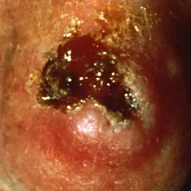
It typically appears as a firm, rough lump with a thick crust or scale, reddish or skin-coloured in appearance.
It can grow relatively quickly over the course of weeks or a few months, and may ulcerate (form an open sore), bleed or become painful.
It can sometimes resemble a growing wart, or a wound that does not heal and has a raised edge.
It occurs most frequently in areas with high sun exposure: the face, ears, lower lip, bald scalp and the backs of the hands.
Signs that should prompt you to seek advice
a lesion that grows or hardens within a few weeks;
a sore that does not heal, bleeds or repeatedly forms a crust;
pain or tenderness in the affected area;
a lesion that develops on skin that has been heavily sun-damaged.
What should you do?
Squamous cell carcinoma requires an in-person medical assessment without delay, because — unlike basal cell carcinoma — it can spread if left untreated. When diagnosed early, treatment is generally very effective.
Kind regards,
Doctor Florian A. Vallecillo Cabrera
Informational answer, medically validated. It does not replace an in-person consultation or an individual diagnosis.
Have a similar question? Message us and we'll guide you.
Ask via WhatsApp