
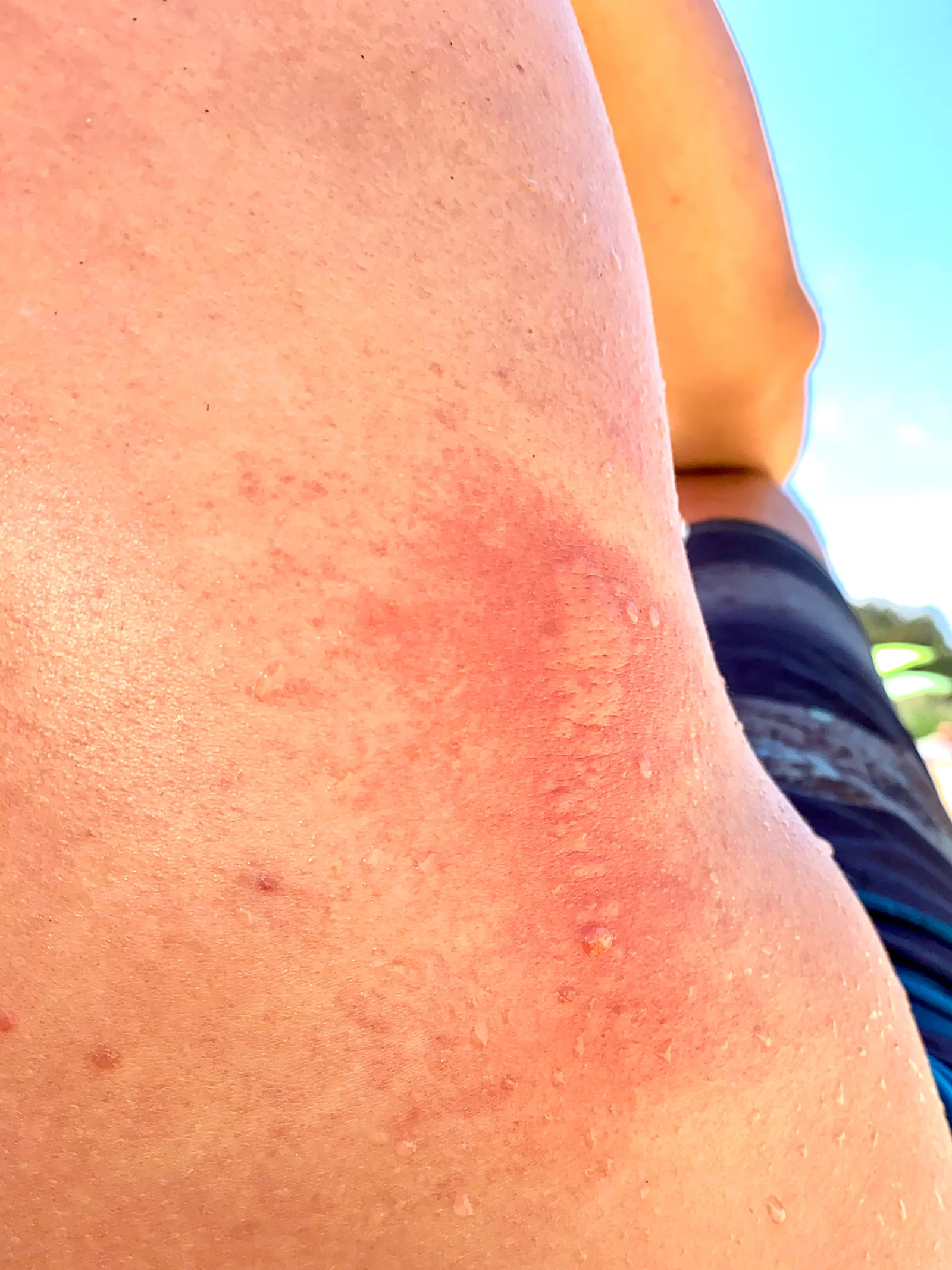
A jellyfish stung me on the forearm three weeks ago. The lesion has improved, but I still have quite a significant mark. Is it normal for it to take so long to disappear? What should I do to help my skin recover?
Answered by Doctor Florian A. Vallecillo Cabrera · Carolina
Quick read
Hello Carolina,
The first thing I want to convey is reassurance. Three weeks after a jellyfish sting, a visible mark can still remain on the skin, especially if the initial reaction was intense.
A jellyfish sting is not simply a superficial irritation. Its tentacles contain microscopic structures called nematocysts that release toxic substances into the skin. This can cause pain, inflammation, redness and linear lesions that even reproduce the shape of the tentacle contact.
In most cases the acute phase improves within a few days, but the inflammation left in the skin can take much longer to disappear.
How long can the mark last?
It is very variable.
After a significant reaction, the skin may keep a reddish, brown or purplish colour for several weeks. In some people post-inflammatory hyperpigmentation appears afterwards — that is, the inflammation goes away but a residual mark remains.
This pigmentation may need several weeks or even a few months to fade progressively.
Therefore, if after three weeks the lesion is clearly improving, is not growing, does not hurt and shows no signs of infection, the fact that a mark still exists does not necessarily mean that something abnormal is happening.
Here, patience is also part of the treatment.
What should you do immediately after a jellyfish sting?
If it happens again, the first thing is to calmly leave the water.
If any tentacle remnants are stuck to the skin, they should be removed carefully, preferably with tweezers or without touching them directly with your hands.
The area can initially be rinsed with sea water, avoiding rubbing the skin vigorously. I do not recommend scratching, rubbing with a towel or using improvised home remedies.
First-aid treatment can vary depending on the jellyfish species and the geographical region, so products such as vinegar should not be considered a universal recommendation for all stings.
When there is significant pain, the controlled application of heat can help with certain stings.
And, of course, if immediately after the sting there is difficulty breathing, intense dizziness, vomiting, loss of consciousness, generalised swelling or a major allergic reaction, it is a medical emergency.
What do I do now, three weeks later?
At this point we are no longer treating the venom, but the inflammatory consequences it has left on the skin.
If there is still inflammation, itching or significant redness, it may be necessary to consider a topical anti-inflammatory treatment for a few days. I do not recommend starting corticosteroids or other medicines on your own without first examining the lesion.
If what mainly remains is a mark, my priority would be simple: protect the skin and give it time to recover.
Use a broad-spectrum SPF 50+ sunscreen daily on the area and avoid exposing the lesion directly to the sun.
This is especially important because ultraviolet radiation can make post-inflammatory hyperpigmentation darken and take much longer to fade.
You can also use a simple repairing moisturiser, without fragrances or potentially irritating substances.
During this phase I would avoid exfoliants, acids, retinoids and other aggressive treatments on the area until the skin has fully recovered.
Will it leave a permanent scar?
Not necessarily.
Often what the patient interprets as a scar is actually residual pigmentation caused by the inflammation, and it can fade progressively.
However, the most intense reactions may, exceptionally, leave persistent pigmentation changes or a true scar. There are also delayed inflammatory reactions to jellyfish stings that can reappear weeks later.
That is why, if after several weeks the lesion remains very inflamed, itches intensely again, becomes thicker, blisters appear or you see no progressive improvement, I recommend having a medical assessment of the skin.
You should also seek advice sooner if local warmth, increasing pain, discharge, pus, fever or redness spreading around the lesion appear, because a secondary infection may have developed.
In your case, if three weeks have passed and you tell me the lesion is improving, I would be patient. Protect the area very well from the sun, moisturise it and avoid manipulating it.
The skin has its own repair times and, after a significant inflammatory reaction, it does not always regain its normal appearance in just a few days.
Warm regards,
Informational answer, medically validated. It does not replace an in-person consultation or an individual diagnosis.
Have a similar question? Message us and we'll guide you.
Ask via WhatsApp