Everything about melasma: causes, diagnosis, treatment and how to prevent relapses
Complete medical guide to melasma

Melasma is a chronic disease of the pigmentation that causes spots on the face. Solar radiation, visible light, heat and hormones are involved in its development. A personalised treatment, together with rigorous photoprotection and appropriate maintenance, makes it possible to effectively control the disease and to reduce the relapses.
Melasma is much more than a simple spot
Many people think that melasma consists only of some dark spots on the face.
However, today we know that it is a chronic and complex skin disease, in which hormonal, genetic, vascular, inflammatory and environmental factors are involved.
Melasma does not represent a risk to health, but it can have an important psychological impact and affect self-esteem.
Although there is currently no definitive cure, the vast majority of patients can achieve a very significant improvement with an appropriate treatment and a constant maintenance.
What is melasma?
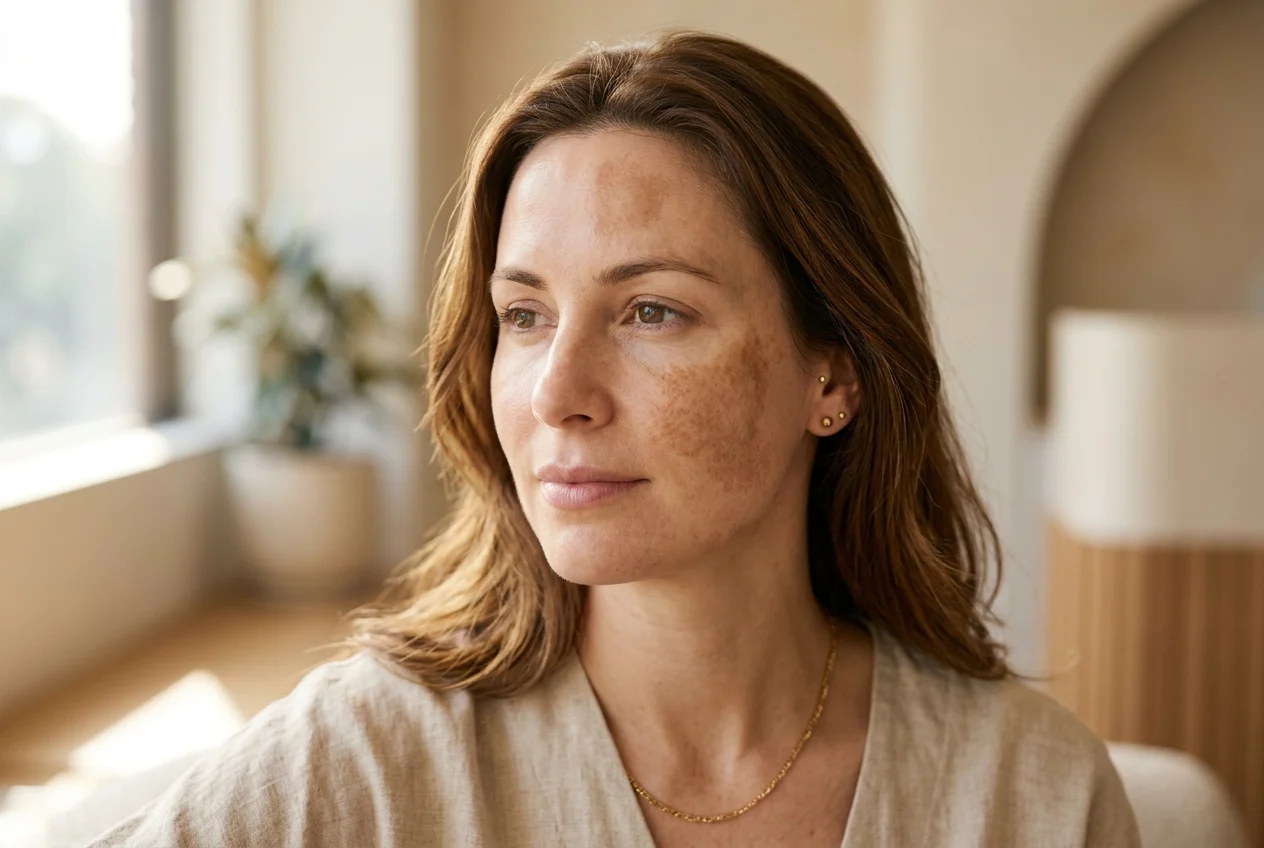
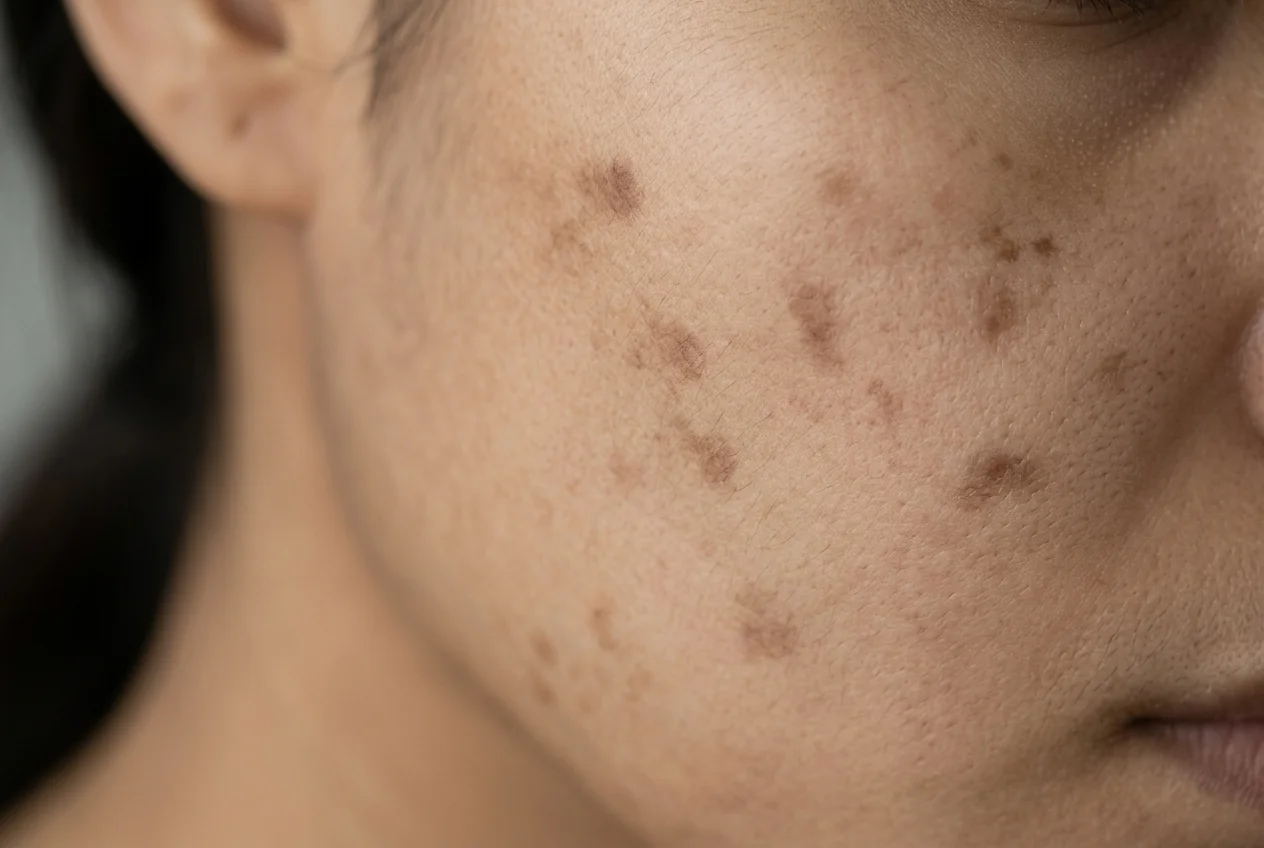
Melasma is an acquired alteration of the pigmentation characterised by the appearance of brown or greyish spots, generally symmetrical, in areas exposed to the sun.
The most frequent locations are:
- The forehead.
- The cheeks.
- The upper lip.
- The nose.
- The chin.
In some patients it can also affect the neck and forearms.
Whom does it affect?
It is much more frequent:
- In women.
- Between 25 and 50 years of age.
- In people with phototypes III, IV and V.
- In people with a family history.
It can also appear in men, although with a much lower frequency.
Why does it appear?
Melasma does not have a single cause.
It is currently considered a multifactorial disease. Among the factors involved the following stand out:
- A genetic predisposition.
- Ultraviolet radiation.
- Visible light.
- Infrared radiation and heat.
- Hormonal changes.
- Pregnancy.
- Hormonal contraceptives.
- Hormonal therapy.
- Skin inflammation.
- Alteration of the barrier function.
- Vascular factors.
All this abnormally stimulates the melanocytes, the cells responsible for producing melanin.
What role do hormones play?
Hormones play a very important role in many patients.
Melasma frequently appears:
- During pregnancy.
- After starting hormonal contraceptives.
- With some hormonal treatments.
However, many patients develop melasma without presenting any detectable hormonal alteration.
The sun is not the only culprit
Although ultraviolet radiation remains one of the main triggers, today we know that:
- Visible light also participates.
- Heat favours pigmentation.
- Inflammation contributes to the maintenance of the disease.
For this reason some patients worsen even when using sunscreen correctly.
What does it look like?
Spots generally appear:
- Light brown.
- Dark brown.
- Greyish in some cases.
- With poorly defined borders.
- Symmetrical.
They do not produce pain or itching.
How is it diagnosed?
The diagnosis is usually clinical.
Occasionally the skin health specialist may use:
- Dermatoscopy.
- Wood's light.
- Clinical photography for follow-up.
The biopsy is rarely necessary.
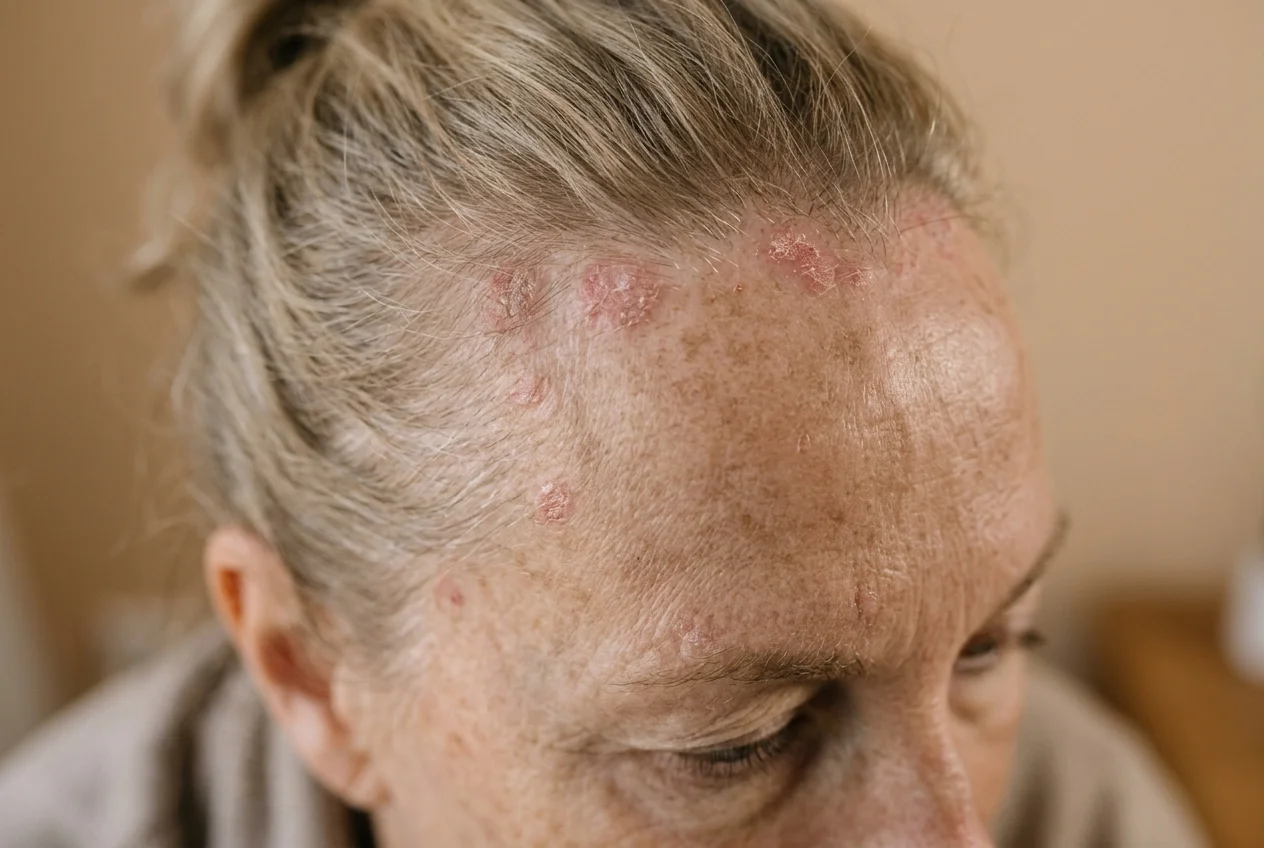
Can it be confused with other diseases?
Yes.
It must be differentiated from:
- Solar lentigines.
- Post-inflammatory hyperpigmentation.
- Nevus of Ota.
- Ochronosis.
- Other pigmentary alterations.
Therefore a correct diagnosis is important before starting depigmenting treatments.
Is there a definitive cure?
No.
This is one of the most important aspects that the patient must understand.
Melasma is a chronic disease with a tendency to reappear.
The objective of the treatment is to:
- Lighten the spots.
- Control the disease.
- Reduce the relapses.
- Maintain the improvement for as long as possible.
The treatment must be personalised
There is no single cream that works for all patients.
The treatment depends on:
- The depth of the pigment.
- The phototype.
- The intensity of the melasma.
- The skin type.
- The sun exposure habits.
- Pregnancy or breastfeeding.
- Previous treatments.
Topical treatments
Different active ingredients can be used, among them:
- Hydroquinone (when it is indicated and during controlled periods).
- Azelaic acid.
- Topical tranexamic acid.
- Retinoids.
- Niacinamide.
- Vitamin C.
- Kojic acid.
- Cysteamine acid.
- Personalised compounded formulas.
The choice depends on each patient.
Oral treatments
In carefully selected patients, oral tranexamic acid can be an effective therapeutic option.
It is not indicated for all patients and requires a prior medical assessment to rule out contraindications, especially those related to thrombotic risk.
Chemical peels
Peels can help in certain cases.
However:
- They must be carried out by experienced professionals.
- A peel that is too aggressive can worsen melasma through post-inflammatory hyperpigmentation.
Lasers and technologies
For years it was thought that the laser was the definitive solution.
We now know that it must be used with great caution.
Some devices can improve certain patients, but others can produce relapses or even worsen the pigmentation.
Energy-based treatment must be individualised and never replaces photoprotection or medical treatment.
Photoprotection is the basis of the treatment
Without good photoprotection it is very difficult to control melasma.
It is recommended:
- A broad-spectrum sunscreen SPF 50.
- Reapplication when necessary.
- A wide-brimmed hat.
- Seeking shade.
- Avoiding prolonged exposures.
In many patients, tinted sunscreens that incorporate iron oxides are also especially useful, since they help to protect against part of the visible light.
Does melasma come back?
Frequently, yes.
It does not mean that the treatment has failed.
It simply reflects the chronic nature of the disease.
Therefore maintenance is as important as the initial treatment.
Which mistakes are frequent?
- Stopping the treatment on improving.
- Being exposed to the sun thinking that "it has already disappeared".
- Using home remedies.
- Carrying out aggressive peels without supervision.
- Buying depigmenting agents on the Internet without a diagnosis.
Emotional impact
Although melasma does not represent a risk to health, many people experience:
- A decrease in self-esteem.
- Insecurity.
- Anxiety.
- Frustration due to the relapses.
Understanding that it is a chronic disease helps to maintain realistic expectations.
Myths and facts
- Myth: Melasma is only a superficial spot. Fact: It is a complex disease in which multiple biological mechanisms are involved.
- Myth: Once removed, it will not come back. Fact: It has a tendency to reappear if the treatment and photoprotection are not maintained.
- Myth: The stronger the peel, the better. Fact: Treatments that are too aggressive can worsen the pigmentation.
- Myth: Sunscreen on its own eliminates melasma. Fact: It is essential, but it usually must be combined with specific treatments.
- Myth: All patients need the same treatment. Fact: The treatment must always be individualised.
The essential points to remember
- Melasma is a chronic pigmentary disease, not a simple spot.
- Ultraviolet radiation, visible light, heat and hormones play an important role.
- The treatment must be adapted to each patient and combine photoprotection with depigmenting therapies.
- Daily photoprotection is the fundamental pillar of the treatment.
- Relapses are frequent and do not mean that the treatment has failed.
- With an appropriate medical follow-up, most patients achieve a very important and lasting improvement.
Frequently asked questions
Does melasma disappear completely?
It can improve extraordinarily, but it usually requires maintenance to avoid relapses.
Can pregnancy produce melasma?
Yes. It is one of the most frequent triggers.
Does the sun worsen it?
Yes, but visible light and heat can also have an influence.
Can I wear make-up?
Yes. In addition, some make-up products with iron oxides provide additional protection against visible light.
Do natural treatments work?
There is no solid scientific evidence supporting most home remedies.
Is the laser always the best option?
No. It should only be indicated in selected patients.
Can melasma be prevented?
Not always, but good photoprotection clearly reduces the risk of worsening.
Is it contagious?
No.
Is it a cancer?
No. It is a benign alteration of the pigmentation.
Does it have a solution?
Yes. Although there is no definitive cure, there are very effective treatments to control the disease and to significantly improve the appearance of the skin.
Need personalised guidance?
This guide is for information only and does not replace a medical consultation. For an assessment tailored to your case, you may request a consultation.
Request a consultation