Melasma is a common pigmentation alteration that causes brown patches on the face, related to the sun, hormones and genetic predisposition. Learn about its causes, the available treatments and how to prevent its recurrence.
What is melasma?
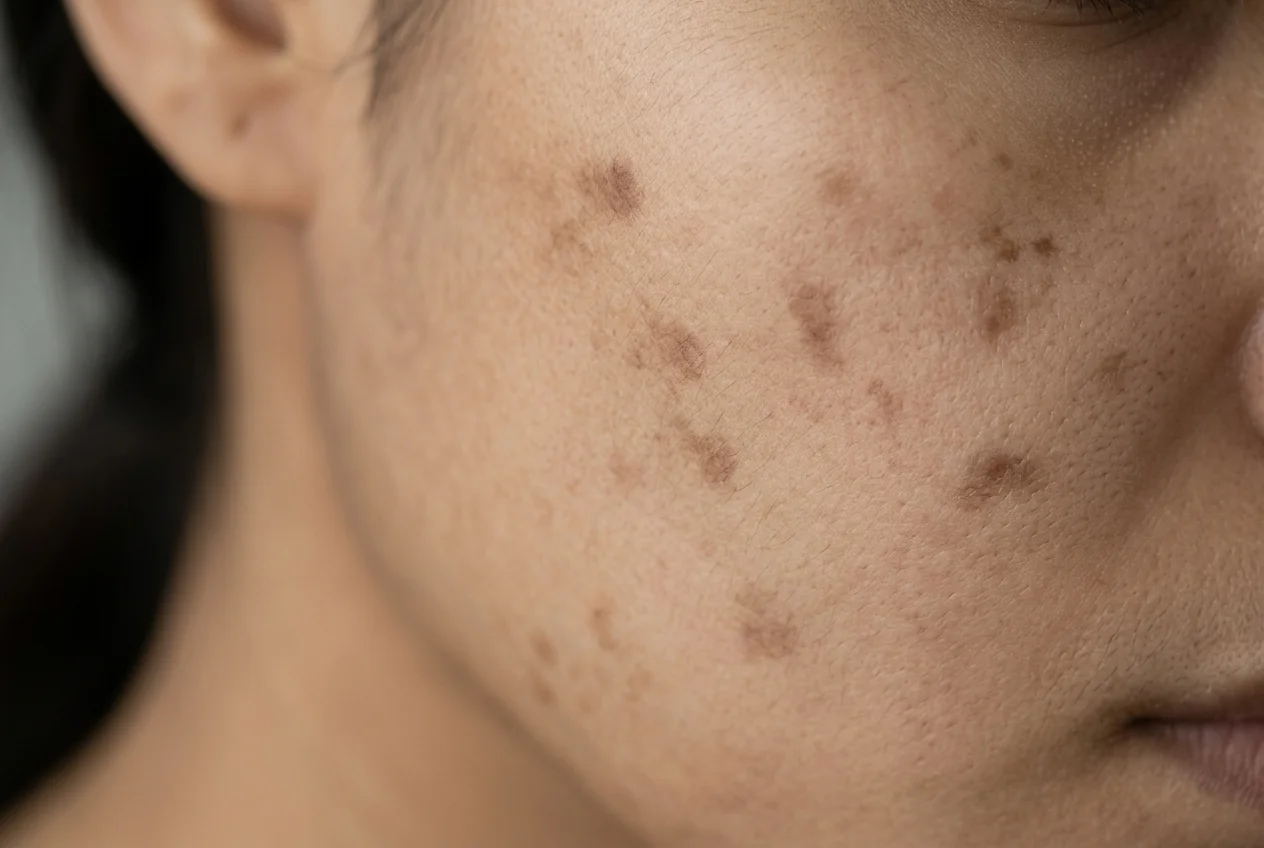
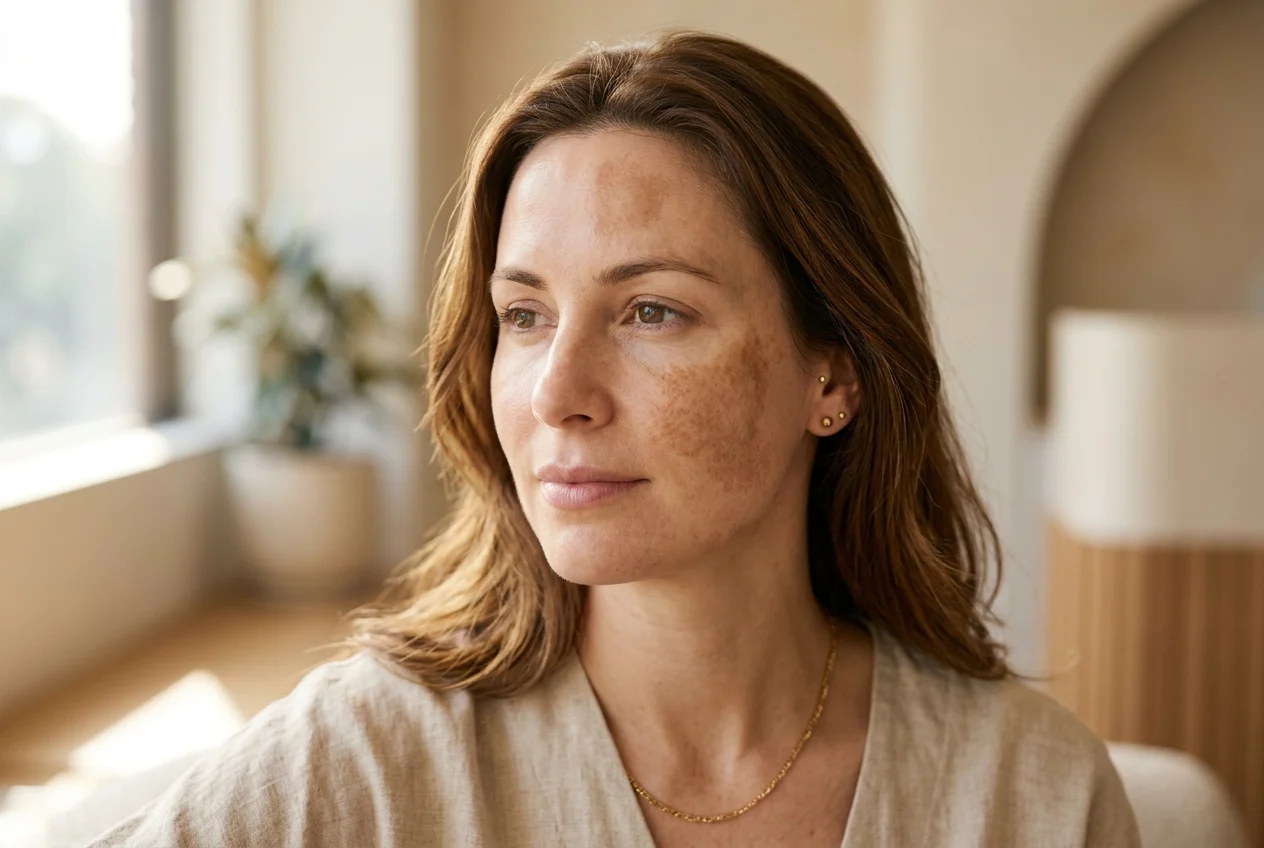
Melasma is a common alteration of skin pigmentation that causes the appearance of brown or greyish patches, usually symmetrically, on sun-exposed areas.
The most common locations are:
- Forehead.
- Cheeks.
- Upper lip.
- Nose.
- Chin.
It is much more frequent in women, especially between the ages of 20 and 50, although it can also appear in men.
Melasma is not a dangerous disease and does not increase the risk of skin cancer, but it can have a significant aesthetic and emotional impact.
Why does it appear?
This is undoubtedly the most frequent question in consultation. The reality is that melasma does not have a single cause; it appears through the combination of several factors.
The sun: the main culprit
Ultraviolet (UV) radiation and visible light stimulate the melanocytes, the cells that produce melanin. Therefore, even a few minutes of daily sun exposure can make the patches appear or darken.
Why does it appear during pregnancy? During pregnancy certain hormones increase, making melanocytes much more sensitive to sunlight. For this reason melasma is also called the «mask of pregnancy». In some women it improves after childbirth, although in others it can persist.
Why do the patches appear if I take contraceptives? Hormonal contraceptives and hormone replacement therapy can also favour the development of melasma in predisposed people.
Why do some people have it and others don't? There is a genetic predisposition. It is common for other family members to also have melasma.
Why does it come back every summer? Because melanocytes retain a kind of «memory». Although the patches improve with treatment, new sun exposure can again stimulate melanin production. For this reason, melasma is a chronic disease with a tendency to recur.
What are the symptoms?
Melasma produces:
- Brown or greyish patches.
- Irregular but well-defined borders.
- Symmetrical distribution.
- Absence of pain.
- Absence of itching.
The patches appear mainly on sun-exposed areas. They do not cause scaling or raising of the skin. The main problem is usually aesthetic.
How is it diagnosed?
Diagnosis is usually made through clinical examination. The doctor may use a dermatoscope and, in some cases, a Wood's lamp, which helps to assess the depth of the pigment.
Only exceptionally are other tests necessary. It is important to differentiate melasma from other causes of facial patches.
What treatments are available?
One of the most frequent questions is: can melasma be cured? The answer is that we can improve it very significantly, but there is currently no definitive cure.
Treatment has two objectives: to reduce the excess pigment and to prevent it from reappearing.
Photoprotection
This is the most important part of treatment. You should use:
- Sunscreen SPF 50+ every day.
- Preferably with protection against visible light (iron oxides), especially in people with melasma.
- A hat and physical protection measures whenever possible.
Depigmenting creams
Depending on each patient, the following may be used: hydroquinone, azelaic acid, topical tranexamic acid, kojic acid, vitamin C, retinoids or depigmenting combinations prescribed by the doctor.
Chemical peels
In selected patients they can help improve pigmentation.
Laser and other technologies
Some lasers and energy devices can be useful in selected cases, but they must be indicated with great caution, since inappropriate treatment can worsen melasma.
Oral tranexamic acid
In certain carefully selected patients and after assessing possible contraindications, it can be used under medical supervision.
Why does treatment take several months? Because the accumulated melanin needs time to be eliminated and because melanocytes continue to respond to light. Improvement is usually gradual and requires perseverance.
Why do the patches come back? Because treatment controls the disease but does not eliminate the skin's predisposition to produce excess pigment. That is why daily sun protection is as important as the creams.
What can you do day to day?
In addition to medical treatment, it is advisable to:
- Apply sunscreen SPF 50+ every morning, even in winter.
- Reapply protection during prolonged sun exposure.
- Wear a hat and sunglasses.
- Avoid intense sun exposure.
- Follow the treatment consistently.
- Do not use depigmenting products without medical supervision.
- Consult before starting hormonal treatments if you have already had melasma.
Consistency is usually the key to success.
When should you seek prompt medical advice?
Seek medical assessment if:
- Patches appear suddenly without a clear cause.
- A patch rapidly changes colour or appearance.
- There are doubts about the diagnosis.
- The treatment stops being effective.
- The patches significantly affect your quality of life.
Myths and facts
- Myth: Melasma appears because my liver is diseased. Fact: No. Melasma is not related to liver diseases.
- Myth: It only appears during pregnancy. Fact: Pregnancy is a common triggering factor, but it can also appear due to the sun, contraceptives or genetic predisposition.
- Myth: Once the patches disappear, I am cured. Fact: Melasma tends to reappear if good photoprotection is not maintained.
- Myth: The stronger the peel, the better the results. Fact: Overly aggressive treatments can worsen the pigmentation.
- Myth: Sunscreen is only necessary in summer. Fact: Sun protection must be maintained throughout the year.
The key points to remember
- Melasma is a benign alteration of skin pigmentation.
- The sun is the main triggering and aggravating factor.
- Hormones and genetic predisposition also play an important role.
- Daily sun protection is the basis of treatment.
- There are effective medical treatments that can significantly lighten the patches.
- Improvement is usually slow and requires perseverance.
- Melasma tends to reappear, so maintenance treatment is essential.
Frequently asked questions
Does melasma go away on its own?
In some cases related to pregnancy it may improve after childbirth, but it often requires treatment.
Is it a cancer?
No. It is a benign alteration of pigmentation.
Can it appear in men?
Yes. Although it is less frequent, it can also affect men.
Does make-up worsen melasma?
No. Some make-up with protection against visible light can even be beneficial.
Will I need treatment for a long time?
In many patients yes, since melasma tends to reappear.
Is laser always the best option?
No. Some patients improve with laser, but in others it can worsen the disease if it is not well indicated.
Can I sunbathe?
Yes, but always with very strict photoprotection.
Will the patches come back?
It is possible. That is why maintenance treatment is so important.
Do depigmenting creams work?
Yes, when used correctly and under medical supervision.
Can I lead a normal life?
Yes. With appropriate treatment and good sun protection, most patients manage to control melasma very well.
Need personalised guidance?
This guide is for information only and does not replace a medical consultation. For an assessment tailored to your case, you may request a consultation.
Request a consultation