Solar urticaria
Immediate hives and itching after the sun
Solar urticaria is a rare allergic reaction that causes hives and itching a few minutes after sun exposure. Discover its causes, diagnosis, treatment and how to prevent flares.
What is solar urticaria?
Solar urticaria is a rare disease in which the skin develops an immediate allergic reaction after exposure to sunlight or, in some cases, to certain sources of artificial light.
It belongs to the group of photodermatoses, but it is different from the more common sun allergy (polymorphic light eruption). Its main characteristic is that the symptoms appear within minutes after exposure and disappear relatively quickly once light exposure stops.
Although most episodes only affect the skin, in rare cases general symptoms may appear that require urgent medical attention.
Why does it appear?
The exact cause is not completely known. It is believed that solar radiation modifies certain substances present in the skin, turning them into allergens. The immune system then releases histamine and other inflammatory substances, triggering a reaction similar to urticaria.
What type of light produces it? Depending on the patient, the reaction can be triggered by UVA radiation, UVB radiation, visible light or a combination of several wavelengths. For this reason, some people react even through glass or on cloudy days.
Why does it appear suddenly? It can develop in people who had never before had problems with the sun. There is not always an identifiable cause.
Is it hereditary? Generally no. Most cases appear in isolation.
What are the symptoms?
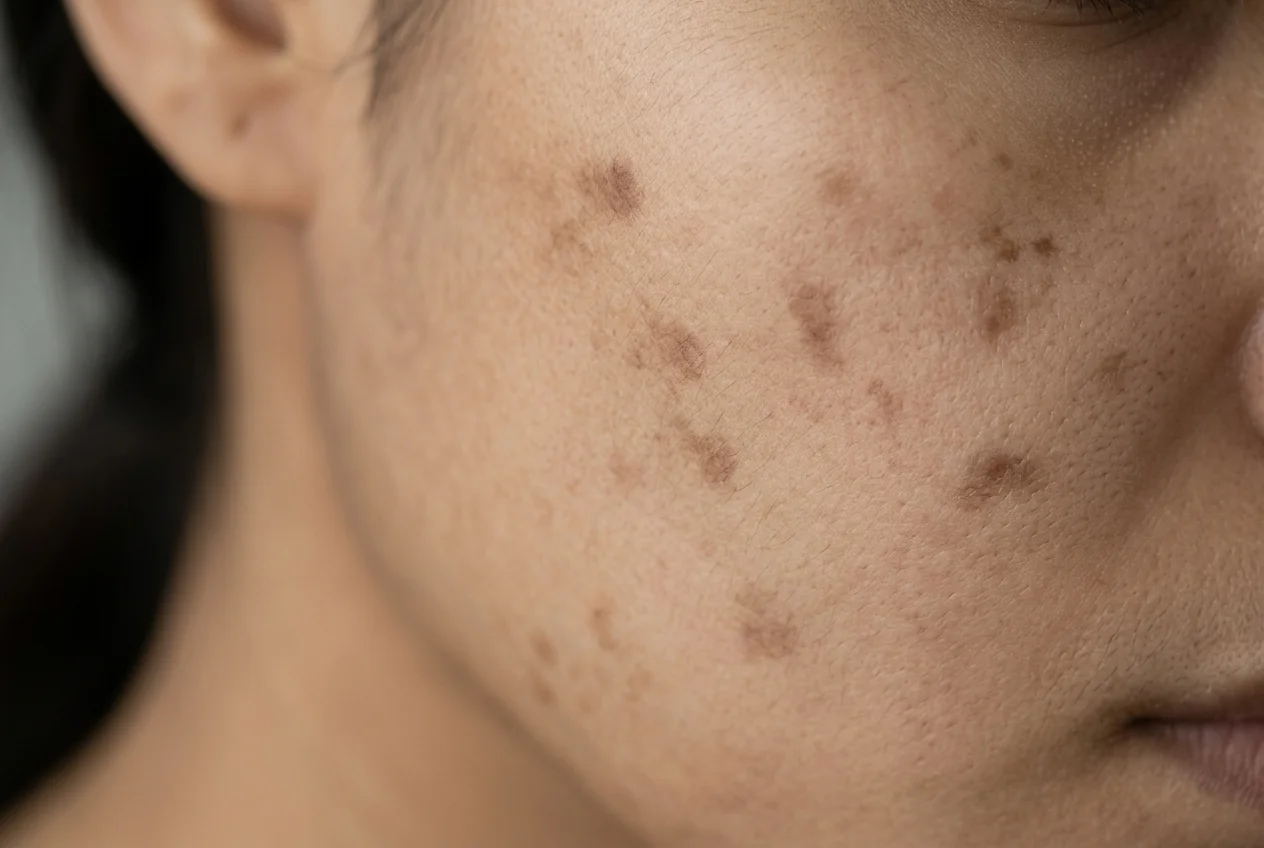
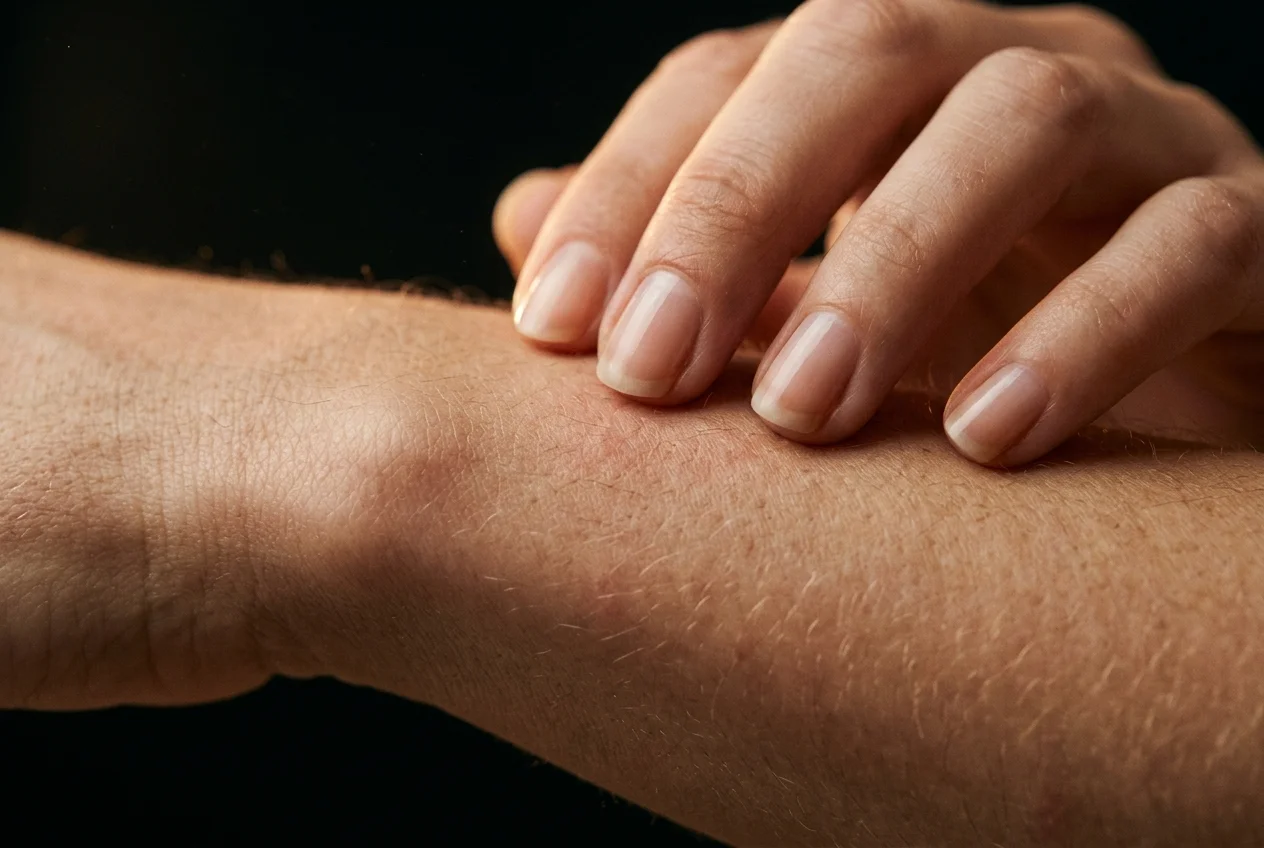
Symptoms appear between a few seconds and about 30 minutes after sun exposure. The most frequent manifestations are raised wheals (hives), redness, intense itching, a burning sensation and stinging.
The lesions affect only the sun-exposed areas and usually disappear between one and two hours after stopping exposure.
In the most intense cases significant swelling, pain, dizziness, headache, nausea, difficulty breathing and a drop in blood pressure (very rare) may appear. When general symptoms appear it is considered a medical emergency.
How is it diagnosed?
Diagnosis is based on the clinical history, the speed with which the lesions appear and their disappearance when light is avoided.
To confirm the diagnosis, the doctor may perform a phototest, which consists of exposing small areas of skin to different types of radiation to identify which one triggers the reaction.
Occasionally, tests may also be requested to rule out other photosensitive diseases.
What treatments are available?
Treatment depends on the intensity of the symptoms and the frequency of the episodes.
Avoid the triggering exposure. Whenever possible, exposure to the responsible type of radiation should be limited.
Antihistamines. They are the first-line treatment. They reduce itching and the appearance of hives and, in many patients, allow a practically normal life.
Photoprotection. It is essential to use sunscreen SPF 50+ with high UVA protection, clothing with ultraviolet protection, a wide-brimmed hat and sunglasses.
Phototherapy. In some patients, a controlled and progressive exposure can be carried out to increase the skin's tolerance to the sun.
Advanced treatments. In severe or resistant cases, treatments such as omalizumab, ciclosporin or other selected immunomodulators may be used. These treatments must always be indicated by a specialist.
What can you do day to day?
If you suffer from solar urticaria, the following may help you:
- Check the UV index before outdoor activities.
- Avoid the hours of maximum radiation.
- Seek shade.
- Wear protective clothing.
- Apply sunscreen correctly, although remember that in some patients it does not completely prevent the reaction.
- Carry the medication prescribed by your doctor.
With adequate treatment, many people manage to control the disease satisfactorily.
When should you seek prompt medical advice?
You should seek urgent care if, after sun exposure, you have difficulty breathing, swelling of the lips, tongue or throat, intense dizziness, loss of consciousness, significant palpitations or very extensive wheals accompanied by general malaise.
You should also consult if the flares are frequent or increasingly intense.
Myths and facts
- Myth: It is a simple heat allergy. Fact: No. The reaction is caused by light and not by temperature.
- Myth: It is the same as a sunburn. Fact: No. A burn appears after prolonged exposure, while solar urticaria can develop within a few minutes.
- Myth: With a sunscreen it will disappear completely. Fact: Sunscreen helps, but in some patients the responsible radiation partially gets through it.
- Myth: It is contagious. Fact: No. It cannot be transmitted to other people.
- Myth: I will never be able to go out in the sun again. Fact: With a good diagnosis and treatment, many patients can carry out outdoor activities with certain precautions.
The key points to remember
- Solar urticaria is an immediate allergic reaction triggered by sunlight.
- Symptoms appear within a few minutes and usually disappear quickly when exposure is avoided.
- Antihistamines are the main treatment.
- Photoprotection and suitable clothing are essential.
- In severe cases general symptoms may appear that require urgent attention.
- An early diagnosis makes it possible to control the disease and improve quality of life.
Frequently asked questions
Is it a frequent disease?
No. It is one of the rarest photodermatoses.
Can it appear at any age?
Yes, although it usually begins in young adults.
Is it dangerous?
Most cases only affect the skin, but episodes with difficulty breathing or dizziness require urgent attention.
Do antihistamines cure the disease?
No. They control the symptoms, but do not eliminate the cause.
Can it disappear over the years?
In some patients it improves spontaneously, although in others it can persist for years.
Can I do outdoor sports?
Yes, as long as you adopt protective measures and follow your doctor's recommendations.
Will I need tests?
Often yes, especially a phototest to identify the responsible radiation.
Can it appear even with clothing?
Only if the clothing lets radiation through or areas remain uncovered. Clothing with UV protection offers much greater protection.
Is there a vaccine?
No.
Is there a treatment?
Yes. Most patients improve significantly with antihistamines, photoprotection and, in some cases, specialised treatments.
Need personalised guidance?
This guide is for information only and does not replace a medical consultation. For an assessment tailored to your case, you may request a consultation.
Request a consultation