Everything about skin cancer: a complete guide to understand, prevent and detect the disease in time
Melanoma, carcinomas and prevention

Skin cancer includes basal cell carcinoma, squamous cell carcinoma and melanoma. Ultraviolet radiation is the main risk factor, but early detection makes it possible to treat most cases with excellent results. Photoprotection, self-examination and medical skin check-ups are fundamental for prevention.
Skin cancer is the most frequent cancer in humans
Every year millions of new cases of skin cancer are diagnosed worldwide.
The good news is that, when it is detected early, the vast majority of skin cancers can be treated with excellent results.
For this reason, prevention, photoprotection and early diagnosis constitute the most effective tools to reduce their impact.
Knowing how it appears, who has the greatest risk and what the warning signs are can make a decisive difference.
What is skin cancer?
Skin cancer appears when some skin cells accumulate alterations in their DNA that allow them to grow in an uncontrolled way.
These alterations usually develop slowly over the years as a consequence of the accumulated exposure to different environmental factors and of the genetic predisposition.
Not all skin cancers are the same.
Their behaviour, severity and treatment depend on the type of tumour.
The three large groups
Although there are many different skin tumours, most belong to three large categories.
Basal cell carcinoma. It is the most frequent skin cancer. It is characterised by:
- Slow growth.
- A very low capacity to produce metastases.
- A tendency to destroy the neighbouring tissues if it is not treated.
It usually appears in areas very exposed to the sun: nose, face, ears and neck.
Squamous cell carcinoma. It is the second most frequent skin cancer. It presents a greater capacity for invasion than the basal cell carcinoma. In some cases it can produce metastases, especially when it is not diagnosed early or appears in immunosuppressed patients.
Melanoma. Melanoma represents a much smaller percentage of skin cancers, but it is the most aggressive. It originates in the melanocytes, the cells responsible for producing melanin. When it is detected in the initial phases it presents a very high cure rate. When the diagnosis is delayed the risk of spread increases. Therefore, early diagnosis is fundamental.
Why does it appear?
Skin cancer does not have a single cause.
Its appearance depends on the interaction between environmental and genetic factors. The main risk factors are:
- Natural ultraviolet radiation.
- Tanning beds.
- Repeated sunburn.
- Sun exposure accumulated over years.
- Fair skin.
- Light eyes.
- Blonde or red hair.
- A large number of moles.
- A family history.
- A personal history of skin cancer.
- Immunosuppression.
- Advanced age.
Ultraviolet radiation: the main enemy
Ultraviolet radiation produces cumulative lesions in the DNA of the skin cells.
Our organism has repair mechanisms.
However, when the damage exceeds that repair capacity, mutations begin to accumulate that can favour the appearance of cancer.
This process usually develops over years or even decades.
What role does sunburn play?
Sunburn is a marker of intense damage from ultraviolet radiation.
Especially during childhood and adolescence, it increases the future risk of melanoma.
Therefore, avoiding sunburn constitutes one of the main objectives of photoprotection.
Which people have a greater risk?
The following present a greater risk:
- People with numerous moles.
- People with atypical moles.
- Light phototypes.
- A family history of melanoma.
- Immunosuppressed patients.
- Transplant recipients.
- Workers with high sun exposure.
- People with a history of significant sunburn.
These people usually benefit from periodic medical skin check-ups.
How to recognise a possible melanoma?
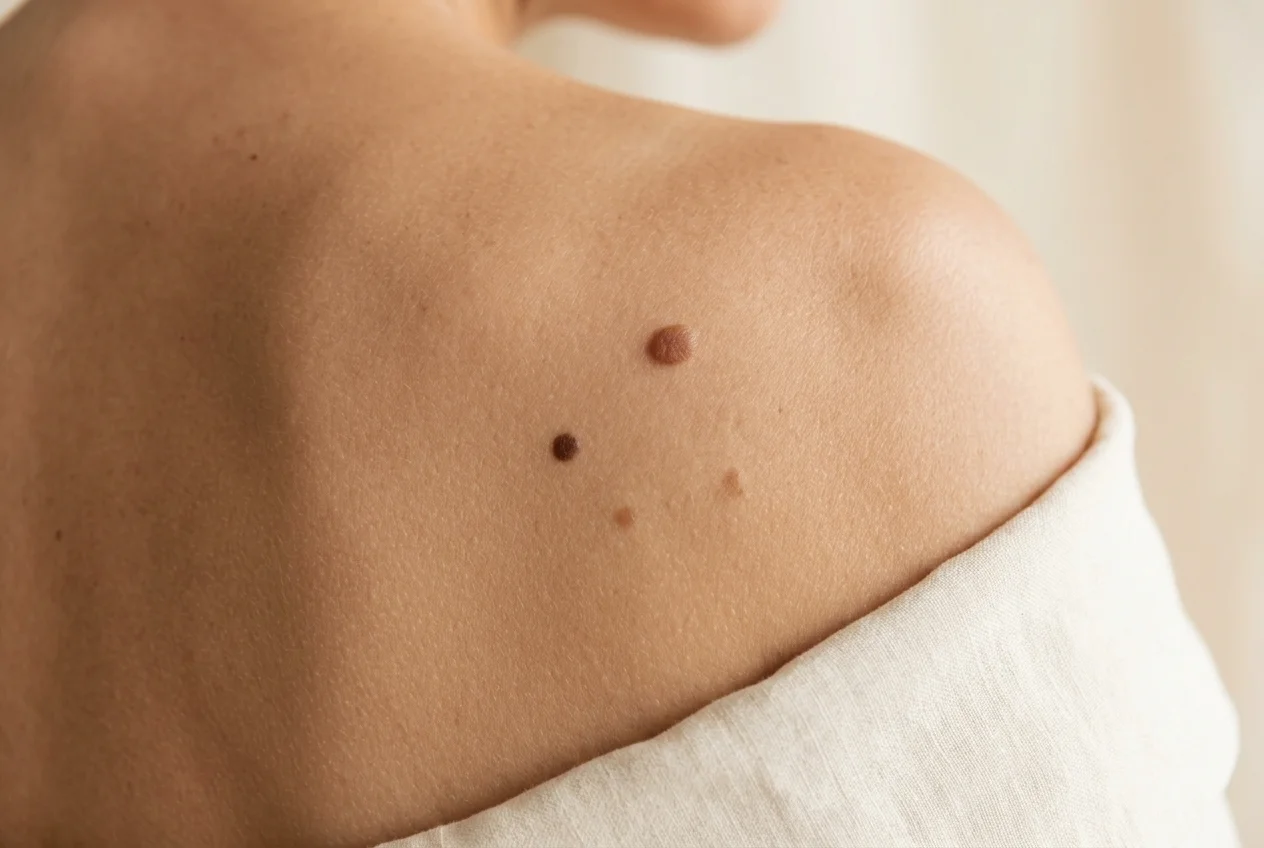
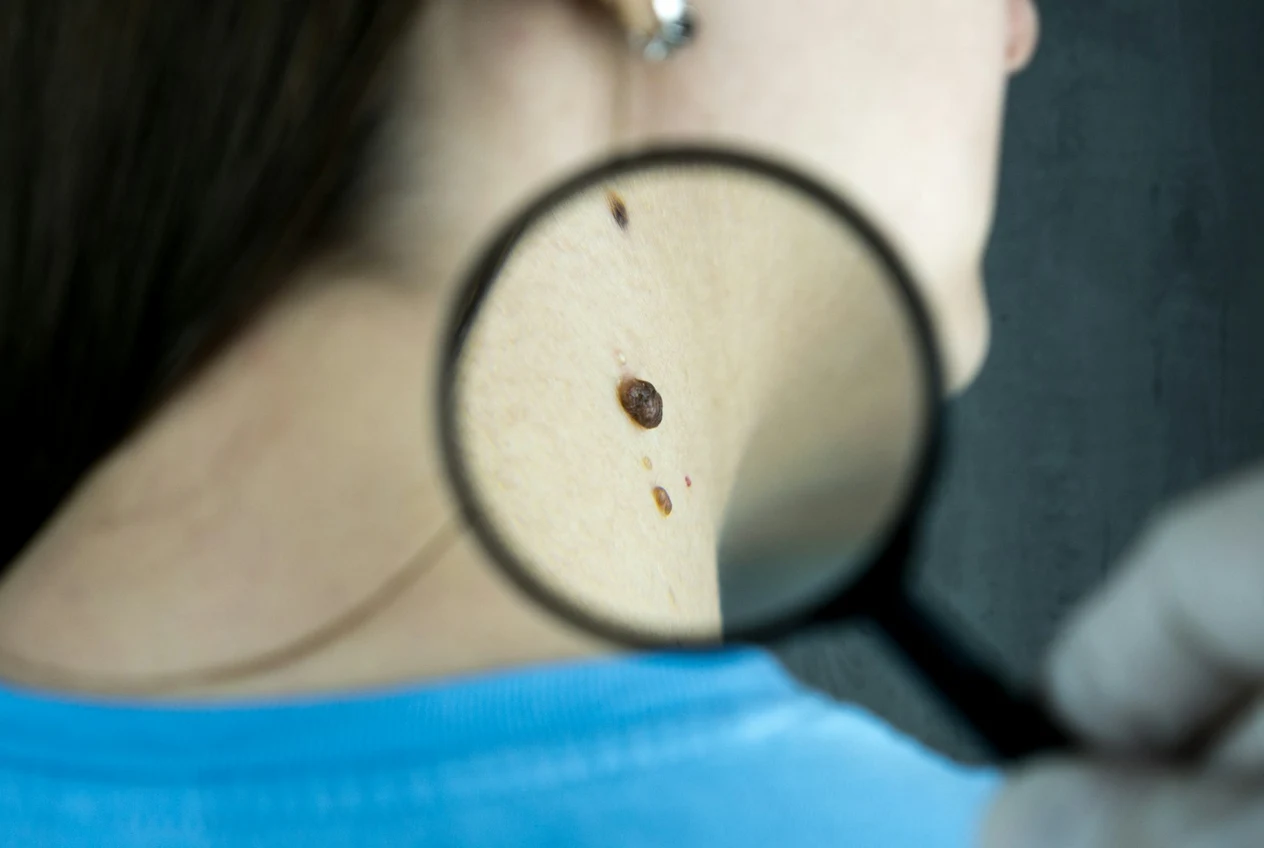
The ABCDE rule continues to be a useful tool.
- A Asymmetry.
- B Irregular borders.
- C Uneven colour.
- D Increasing diameter (although it can appear at any size).
- E Evolution or change.
In addition, there is another very important concept: the "ugly duckling" sign. A mole that is clearly different from the rest of a person's moles deserves a medical assessment, even if it does not meet all the ABCDE criteria.
Warning signs of carcinomas
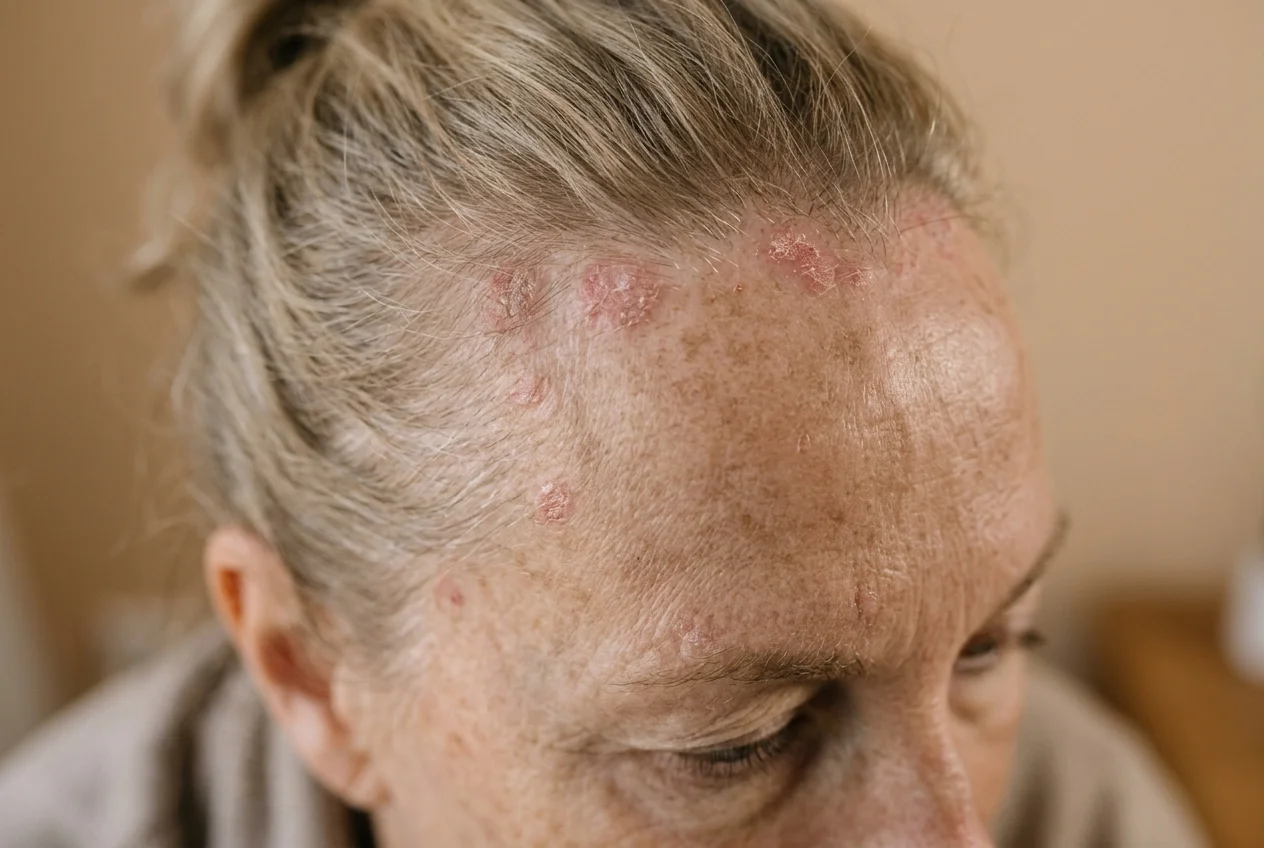
You should consult if a lesion appears that:
- Does not heal.
- Bleeds easily.
- Forms crusts repeatedly.
- Grows slowly over months.
- Presents a shiny or pearly border.
- Produces a persistent ulcer.
Can all moles turn into melanoma?
No.
Most melanomas appear de novo, that is, on previously normal skin.
Only a minority develop from a previous mole.
Therefore it is important to monitor both existing moles and any new lesion.
How is it diagnosed?
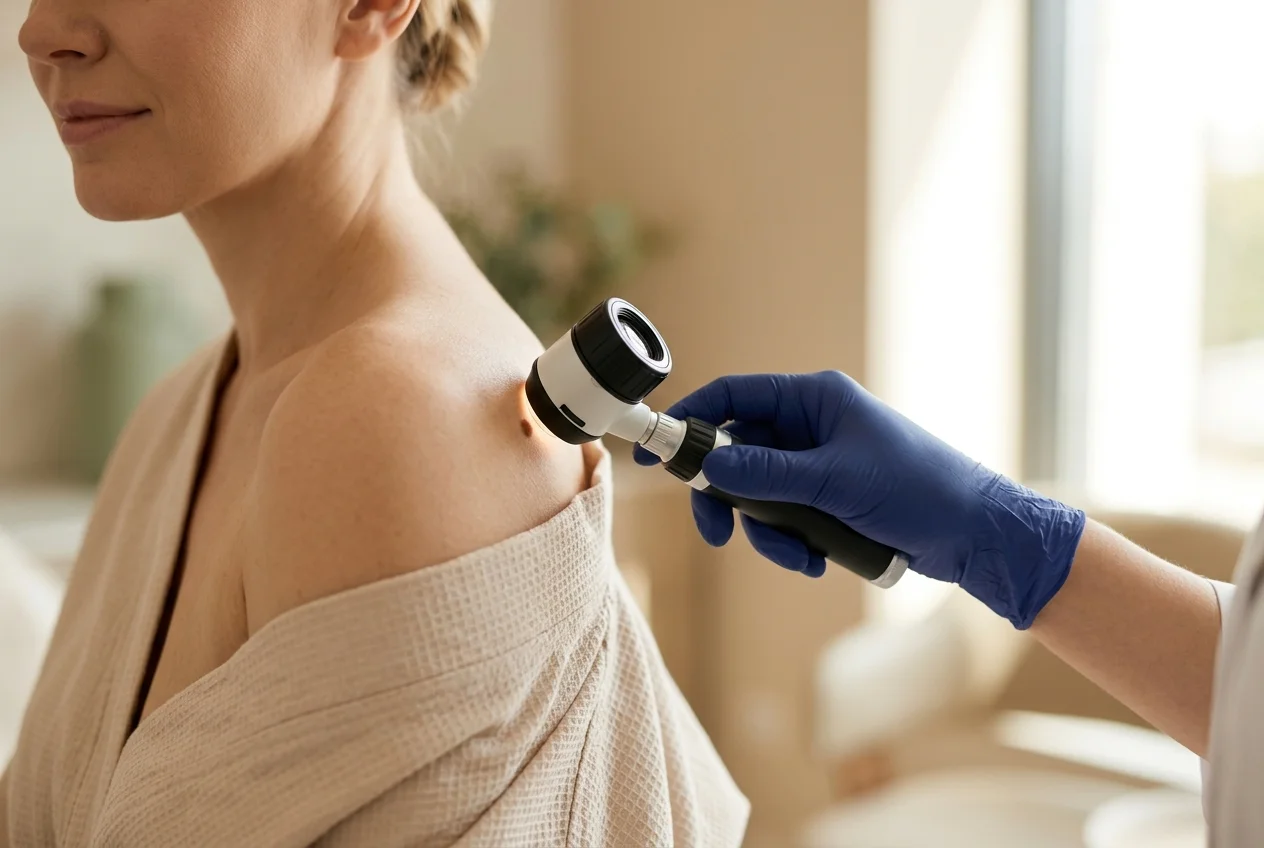
The diagnosis begins with a complete clinical examination.
The skin health specialist may use:
- Dermatoscopy.
- Serial body photography.
- Digital follow-up of moles in selected patients.
If there is suspicion, the lesion must be biopsied or removed for its anatomopathological study.
The biopsy does not "awaken" the cancer or favour its spread; it is the necessary procedure to confirm the diagnosis.
Treatment
The treatment depends on the type of tumour and its stage. It may include:
- Surgery.
- Mohs micrographic surgery in selected cases.
- Cryotherapy in specific precancerous lesions.
- Topical treatments for certain superficial lesions.
- Radiotherapy in specific situations.
- Immunotherapy.
- Targeted therapies.
- Chemotherapy in very specific cases.
Currently, the advances in immunotherapy have very significantly changed the prognosis of many patients with advanced melanoma.
Can it be prevented?
To a large extent, yes.
The most effective measures are:
- Avoiding sunburn.
- Seeking shade.
- Using protective clothing.
- A wide-brimmed hat.
- Approved sunglasses.
- Sunscreen as a complementary measure.
- Not using tanning beds.
- Examining the skin periodically.
Self-examination
It is recommended to examine the skin approximately once a month.
You should observe:
- The face.
- The scalp.
- The trunk.
- The palms.
- The soles.
- The spaces between the fingers.
- The nails.
- The genital area when possible.
Photographs can help to detect changes over time.
How often should I see a skin health specialist?
It will depend on your individual risk.
People with a history of melanoma, numerous atypical moles or a family history usually require personalised periodic check-ups.
There is no universal frequency valid for everyone.
Myths and facts
- Myth: Only melanoma is skin cancer. Fact: Basal cell and squamous cell carcinomas are much more frequent.
- Myth: If a lesion does not hurt, it cannot be a cancer. Fact: Many initial skin cancers do not produce pain.
- Myth: Moles must never be touched. Fact: When there is suspicion, removal is the correct procedure.
- Myth: Sunscreen allows sun exposure without risk. Fact: Sunscreen reduces part of the damage, but does not replace shade, protective clothing or the limitation of exposure.
- Myth: Skin cancer always appears in older people. Fact: Although the risk increases with age, melanoma can also appear in young adults.
The essential points to remember
- Skin cancer is the most frequent cancer, but also one of those with the best prognosis when it is diagnosed early.
- The three large groups are basal cell carcinoma, squamous cell carcinoma and melanoma.
- Ultraviolet radiation is the main environmental factor involved in its development.
- Sunburn, especially during childhood, increases the future risk of melanoma.
- Monthly self-examination and medical skin check-ups in people at risk make it possible to detect lesions at very initial phases.
- In the face of any lesion that changes, bleeds, does not heal or is different from the rest, consult a skin health specialist.
Frequently asked questions
What is the most frequent skin cancer?
Basal cell carcinoma.
What is the most dangerous?
Melanoma is the one that presents the greatest capacity to produce metastases.
Should all moles be checked?
Not all require frequent check-ups, but any lesion that changes must be assessed.
Does skin cancer have a cure?
When it is detected early, most cases can be treated with excellent results.
Do tanning beds increase the risk?
Yes. The scientific evidence demonstrates that they increase the risk of melanoma and of other skin cancers.
Can I have cancer without realising it?
Yes. Many skin tumours are initially asymptomatic.
Does sunscreen completely prevent cancer?
No. It is part of prevention, but it must be combined with other photoprotection measures.
Does the biopsy make the cancer spread?
No. It is a myth without a scientific basis.
Should children protect themselves especially?
Yes. Avoiding sunburn in childhood is one of the best preventive strategies.
What is the best tool against skin cancer?
The combination of intelligent photoprotection, periodic self-examination and early diagnosis.
Need personalised guidance?
This guide is for information only and does not replace a medical consultation. For an assessment tailored to your case, you may request a consultation.
Request a consultation