
What does an actinic keratosis look like and how can I recognize it? Is it dangerous?
Answered by Doctor Florian A. Vallecillo Cabrera
Quick read
Hello,
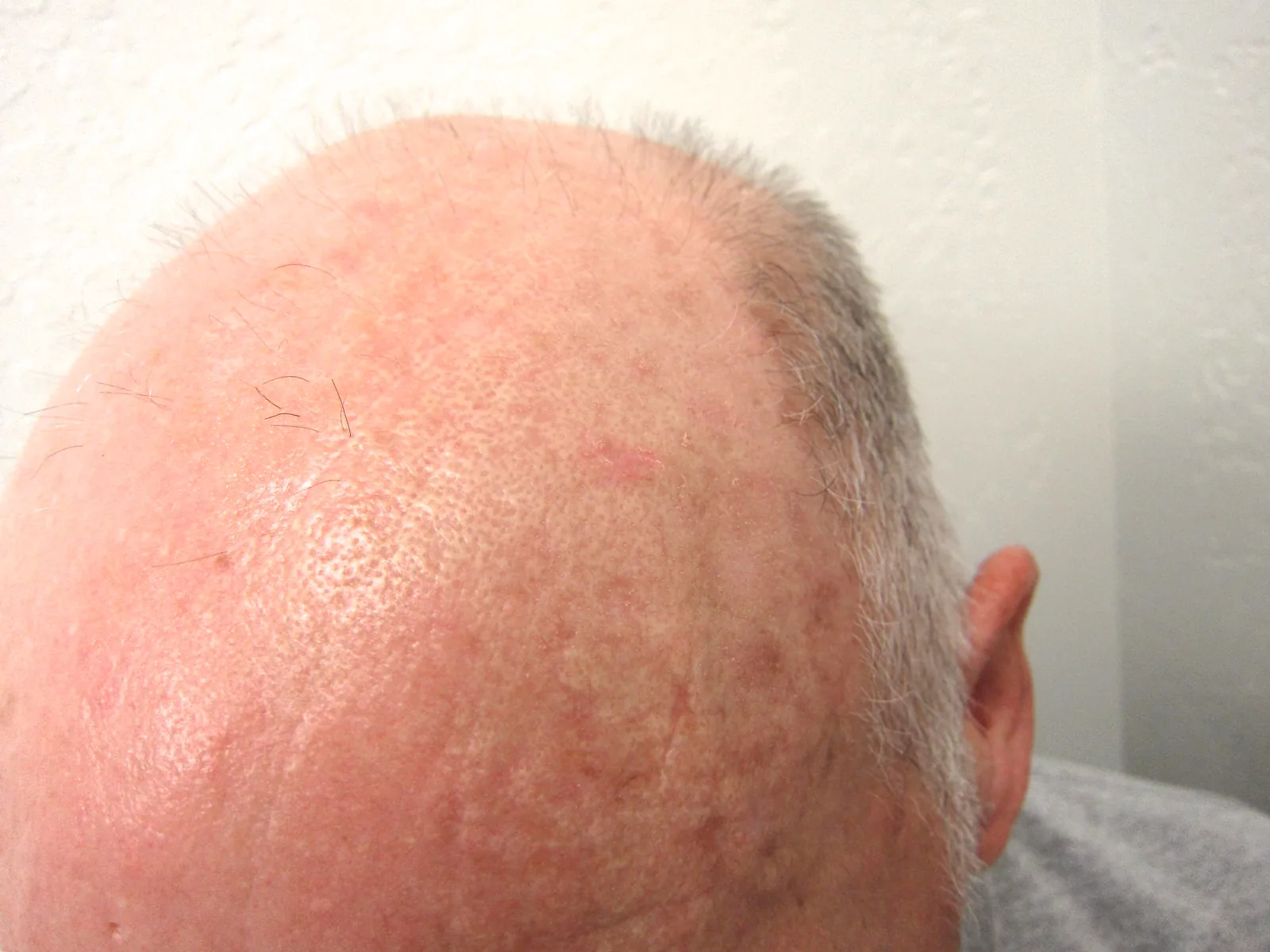
Actinic keratosis is a very common lesion caused by cumulative sun damage built up over the years. It appears most often on areas most exposed to the sun: the face, forehead, hairless scalp, ears, back of the hands and forearms.
What does it look like?
It is usually a small area that feels rough and uneven to the touch, often easier to notice with a finger than to see. It may have a dry scale or an adherent crust, and can be pinkish, reddish, yellowish or skin-coloured.
There are frequently several lesions grouped together in the same area, and the surrounding skin shows other signs of sun damage, such as spots or wrinkles.
Sometimes it itches slightly, flakes or bleeds when rubbed.
Why does it matter?
Actinic keratosis is considered a pre-cancerous lesion. Most do not progress, but a small proportion may transform over time into squamous cell carcinoma. That is why it is important not to ignore it.
Signs that should prompt you to seek medical advice
a lesion that grows, thickens or becomes hard;
a lesion that ulcerates, bleeds or fails to heal;
a lesion that becomes painful or tender;
any rapid change in appearance.
What should you do?
The most appropriate step is an in-person medical assessment. Many actinic keratoses are treated simply and effectively when diagnosed early, and a routine check-up also allows the rest of the skin to be monitored.
Above all, prevention: daily sun protection, avoiding peak sun radiation hours and regularly examining the areas most exposed to the sun.
Warm regards,
Doctor Florian A. Vallecillo Cabrera
Informational answer, medically validated. It does not replace an in-person consultation or an individual diagnosis.
Have a similar question? Message us and we'll guide you.
Ask via WhatsApp