How to choose a sunscreen: the medical guide to protect your skin correctly
Medical guide to photoprotection
Choosing an appropriate sunscreen depends on the skin type, the exposure and the correct application. No sunscreen offers absolute protection; the prevention of skin cancer requires combining photoprotection, adequate clothing, shade and responsible habits in the sun.
The best sunscreen is not necessarily the most expensive
Every year new sunscreens appear with increasingly striking promises.
- "Total protection."
- "Invisible screen."
- "Absolute blocking."
- "Protection throughout the day."
The scientific reality is different.
There is no sunscreen capable of blocking 100 % of ultraviolet radiation or of allowing unlimited exposure to the sun.
Sunscreen is an extraordinarily useful tool, but it must be part of a global photoprotection strategy.
What should a sunscreen really do?
A good sunscreen should help to protect the skin against the harmful effects of ultraviolet radiation.
Its objective is to reduce:
- Sunburn.
- Photoageing.
- The accumulated damage of DNA.
- The appearance of spots.
- The risk of developing skin cancer.
However, no sunscreen replaces common sense or allows staying longer in the sun.
Photoprotection is not only a cream
Protection against the sun begins long before applying a cosmetic.
The most effective measures are:
- Avoiding exposure during the central hours of the day.
- Seeking shade whenever possible.
- Using protective clothing.
- Wearing a wide-brimmed hat.
- Using approved sunglasses.
- Applying sunscreen correctly.
Sunscreen should be understood as a complementary measure, not as a permission to expose oneself for hours.
What does SPF mean?
SPF (Sun Protection Factor) indicates the level of protection against UVB radiation, which is mainly responsible for sunburn.
In general terms:
- SPF 30 filters approximately 97 % of UVB radiation.
- SPF 50 filters around 98 %.
The difference exists, but it is much smaller than many people imagine.
What really matters is to apply a sufficient quantity and to reapply when necessary.
Does SPF 50 mean total protection?
No.
An SPF 50 does not completely protect against the sun.
In addition:
- No sunscreen lasts all day.
- Sweat reduces its efficacy.
- Bathing decreases protection.
- Rubbing with clothing or a towel removes part of the product.
For this reason, reapplication remains fundamental.
Mineral filters or organic filters?
There are currently two main types of sun filters.
Mineral filters. They usually contain zinc oxide and/or titanium dioxide.
Their main advantages are:
- Very good tolerance.
- Suitable for sensitive skin.
- Very useful in children.
- Recommended in rosacea, atopic dermatitis or after certain medical skin procedures.
Modern formulations are much more cosmetic than those of a few years ago and increasingly leave less white residue.
Organic filters. They absorb part of the ultraviolet radiation through different molecules. Current formulations are very effective and allow light, transparent and pleasant textures.
The choice must be individualised according to the skin type, tolerance and personal preferences.
The most important thing is not the type of filter, but the use of a product that the patient can apply correctly every day.
Which sunscreen to choose according to the skin type?
Oily or acne-prone skin:
- Light textures.
- Non-comedogenic finish.
- Gel or fluid.
Dry skin:
- More nourishing creams.
- Good moisturising capacity.
Sensitive or rosacea-prone skin:
- Simple formulas.
- Without fragrances when possible.
- Very good tolerance.
- Mineral filters are usually an excellent option.
Children:
- Products specifically formulated for the paediatric age.
- Very good tolerance.
- Preferably accompanied by physical measures such as clothing, cap and shade.
What does "water resistant" mean?
Many sunscreens indicate:
- Water resistant.
- Very water resistant.
This does not mean that the protection remains intact after bathing.
After swimming, drying with a towel or sweating intensely, it is advisable to reapply the product.
During the summer or when practising water sports, these formulations can offer a more lasting protection, but never a permanent one.
How much should we apply?
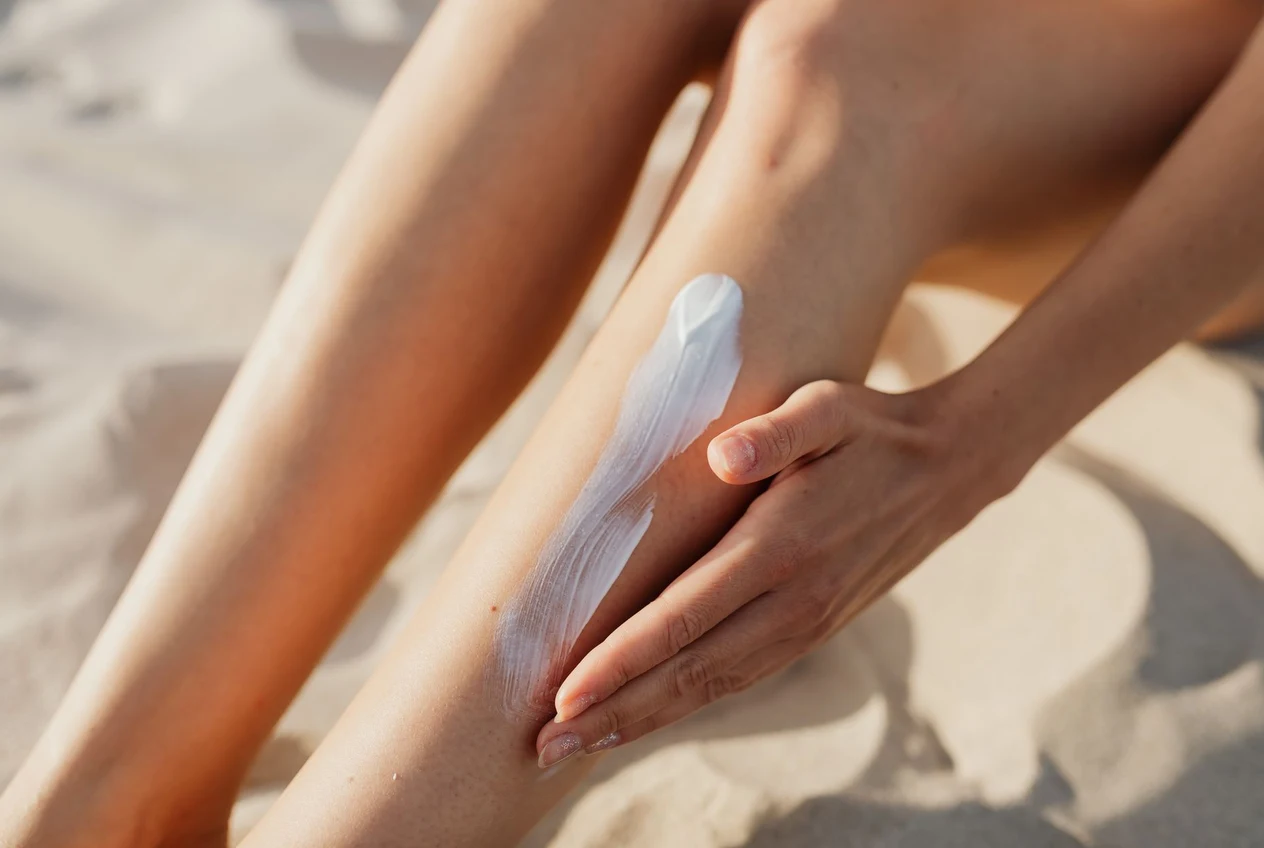
One of the most frequent mistakes consists of applying very little sunscreen.
Most people use approximately half of the necessary quantity.
As a consequence, the real protection is considerably lower than the one indicated on the packaging.
It is preferable to apply a generous and uniform quantity over all the exposed skin.
How often should it be reapplied?
In general:
- Every two hours during continued exposure.
- After bathing.
- After sweating intensely.
- After drying with a towel.
Is it necessary to use sunscreen in winter?
Yes.
Ultraviolet radiation is present throughout the year.
In daily life, especially on the face, the neck and the hands, photoprotection remains advisable.
And if I am in the shade?
Shade reduces exposure a lot, but does not completely eliminate ultraviolet radiation.
The light reflected by:
- Sand.
- Water.
- Snow.
- Cement.
can also reach the skin.
Is make-up with SPF enough?
Usually not.
Many cosmetics contain sun protection, but the quantity applied is usually insufficient to reach the indicated SPF.
Make-up with SPF can provide additional protection, but it should not replace sunscreen when there is significant exposure.
What is the biggest mistake?
Thinking that sunscreen allows staying longer in the sun.
That is probably one of the most important mistakes.
Sunscreen reduces the damage produced by radiation, but does not turn an excessive exposure into a safe exposure.
The best prevention of skin cancer remains to avoid repeated sunburn and to limit intense and unnecessary exposures.
Does the perfect sunscreen exist?
No.
The best sunscreen is the one that:
- Adapts to your skin type.
- Is pleasant to use.
- Is applied in a sufficient quantity.
- Is used every day when it is indicated.
- Is reapplied correctly.
Consistency is much more important than the brand.
Myths and facts
- Myth: With an SPF 50 I can stay all day in the sun. Fact: No. No sunscreen allows unlimited exposure.
- Myth: Sunscreen completely prevents skin cancer. Fact: It reduces the damage caused by ultraviolet radiation and is part of prevention, but it must be combined with other photoprotection measures.
- Myth: Mineral filters are the only safe ones. Fact: Mineral filters offer excellent tolerance, especially on sensitive skin, but authorised organic filters have also demonstrated a good safety and efficacy profile.
- Myth: If it is cloudy I do not need sunscreen. Fact: A large part of ultraviolet radiation passes through the clouds.
- Myth: Applying sunscreen only once in the morning is enough. Fact: During a prolonged exposure it must be reapplied periodically.
The essential points to remember
- Sunscreen is a fundamental tool, but it does not replace the other photoprotection measures.
- No sunscreen offers absolute protection or allows prolonging sun exposure safely.
- Mineral filters stand out for their excellent tolerance and are especially useful on sensitive skin.
- The quantity applied and the reapplication are as important as the chosen SPF.
- The best strategy consists of combining sunscreen, clothing, a hat, sunglasses and seeking shade.
- The prevention of skin cancer depends on a set of healthy habits, not on a single product.
Frequently asked questions
Which SPF should I choose?
In most situations an SPF 50 is recommended for skin exposed to the sun.
Is a mineral sunscreen better?
On sensitive skin, in rosacea, dermatitis or after medical skin procedures it is usually an excellent option because of its tolerance.
What does "broad spectrum" mean?
That it protects against both UVB radiation and UVA radiation.
Should I use sunscreen every day?
Yes, especially on the face when there is habitual exposure to sunlight.
When should I reapply it?
Every two hours during continued exposure and always after bathing or intense sweating.
Does sunscreen prevent the production of vitamin D?
Under normal conditions of use, it does not usually cause a vitamin D deficiency.
Do children need special sunscreen?
Yes. In addition to sunscreen, clothing, shade and avoiding intense exposure should be prioritised.
What happens if I apply too little?
The real protection decreases considerably.
Can I use last year's sunscreen?
If it has expired or has been exposed to high temperatures for a long time, it is preferable to replace it.
What is the best sunscreen?
The one you will use correctly every day and that adapts to the needs of your skin.
Need personalised guidance?
This guide is for information only and does not replace a medical consultation. For an assessment tailored to your case, you may request a consultation.
Request a consultation