Melanoma is the most aggressive skin cancer, but detected early it has an excellent prognosis. Learn about its risk factors, symptoms, diagnostic methods and the most current treatments.
What is melanoma?
Melanoma is a skin cancer that originates in the melanocytes, the cells responsible for producing melanin, the pigment that gives colour to the skin.
Although it represents a small percentage of all skin cancers, it is the most aggressive, since it has the capacity to spread to other organs if it is not diagnosed and treated in time. The good news is that, when it is detected in its initial stages, the chances of cure are very high.
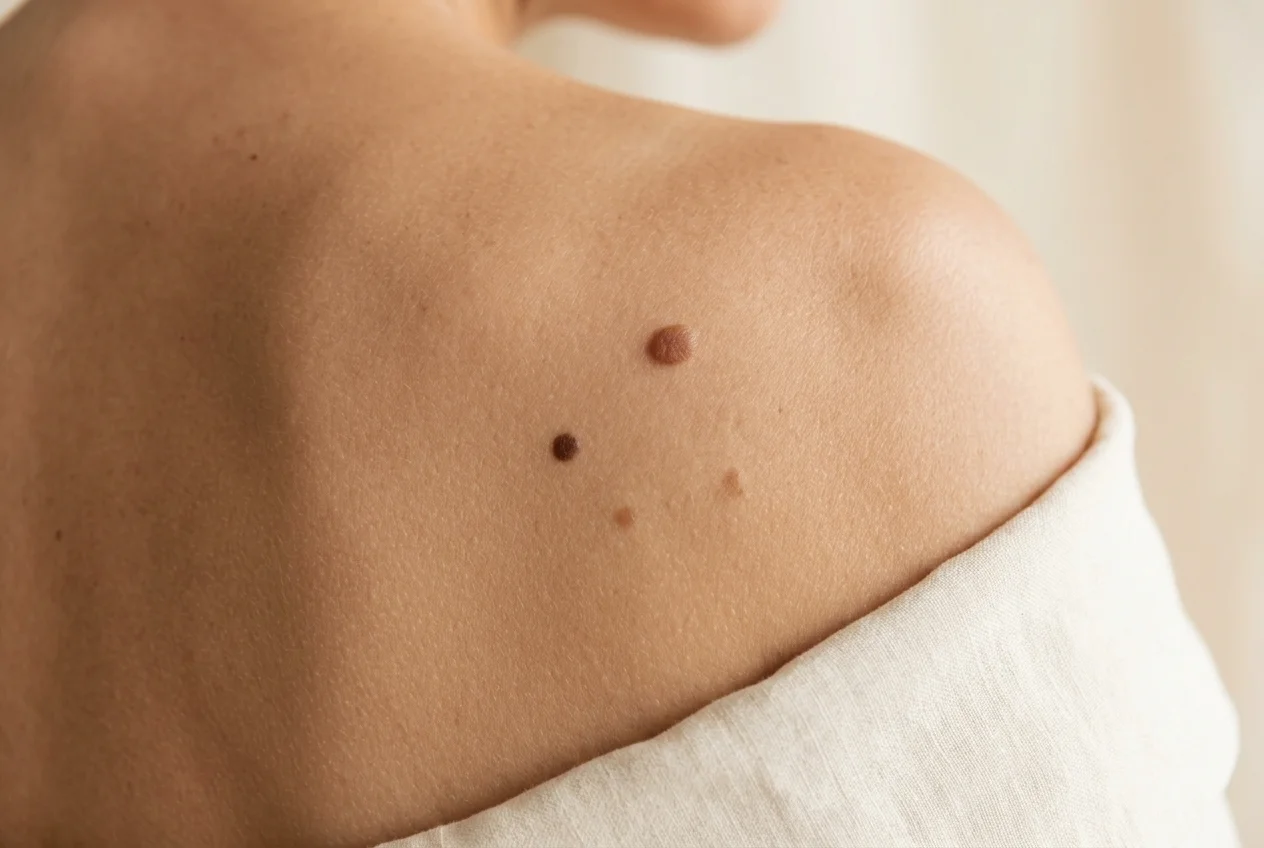
Melanoma can appear on an already existing mole or on previously normal skin, without any prior mole. In fact, most melanomas appear de novo, that is, on healthy skin.
Why does it appear?
Melanoma is the result of the combination of genetic and environmental factors.
Sun exposure. Ultraviolet (UV) radiation is the main environmental factor. Intense sunburns, especially during childhood and adolescence, significantly increase the risk of developing a melanoma years later.
Genetic predisposition. Some people have a greater susceptibility due to their genetic inheritance. The risk is higher in people with: fair skin; light eyes; blond or red hair; a large number of moles; atypical moles; a family history of melanoma.
Why does it appear if I never sunbathe? Because not all melanomas are exclusively related to sun exposure. Genetic predisposition and other biological factors also play a role. In addition, some melanomas appear on areas with little sun exposure.
Can it appear under a nail or on the sole of the foot? Yes. There are melanomas that appear on the palms of the hands, the soles of the feet, under the nails or on the mucous membranes. For this reason, any new or changing pigmented lesion should be evaluated regardless of its location.
What are the symptoms?
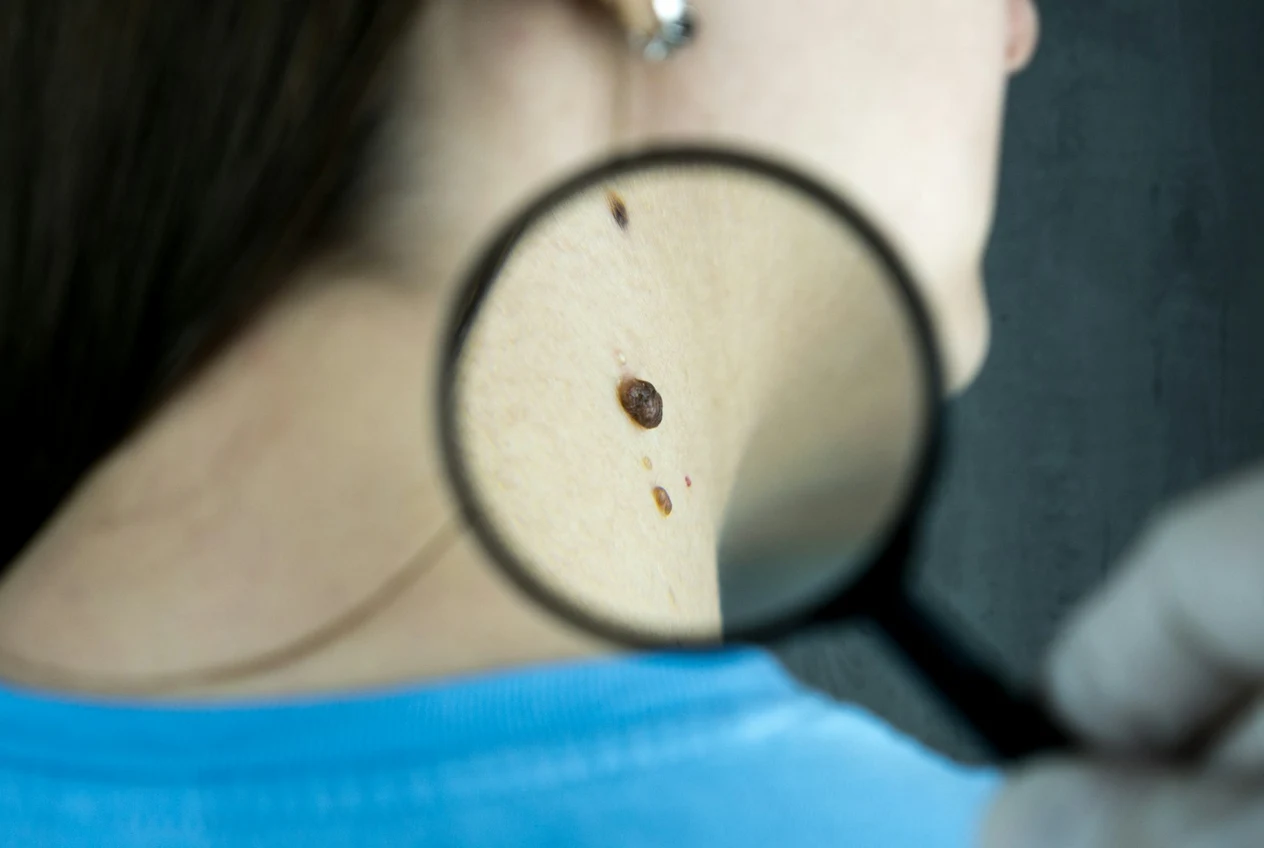
Melanoma can have a very variable appearance. The simplest way to identify a suspicious lesion is to remember the ABCDE rule:
- A – Asymmetry: one half is different from the other.
- B – Borders: irregular, poorly defined or notched.
- C – Colour: several shades (brown, black, blue, red, white or grey).
- D – Diameter: greater than 6 mm, although many melanomas are smaller.
- E – Evolution: any change in size, shape, colour or symptoms.
Another very important sign is the «ugly duckling sign». It consists of identifying a mole or spot that has a clearly different appearance from the rest of a person's pigmented lesions.
Other symptoms may include persistent itching, bleeding, crust formation, ulceration or rapid growth.
How is it diagnosed?
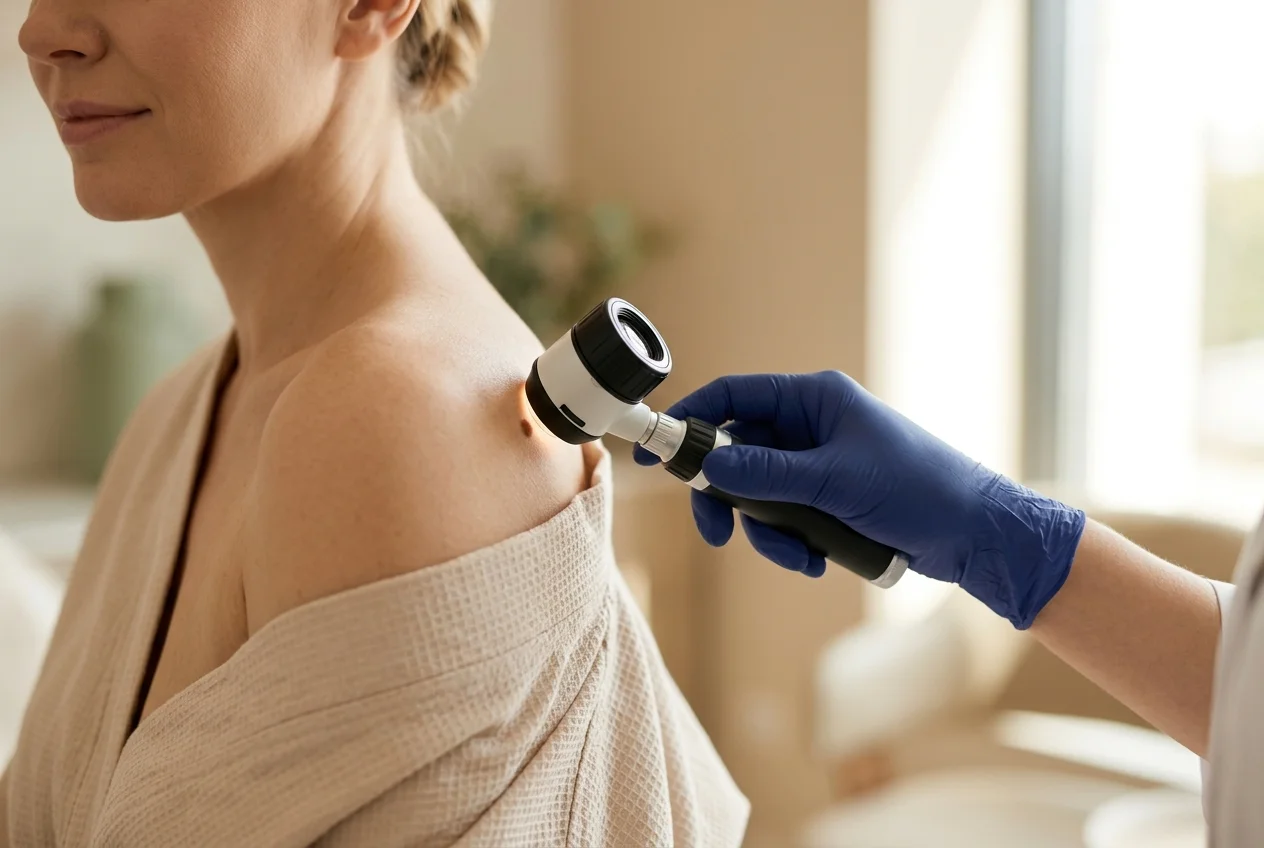
Diagnosis begins with a complete examination of the skin. The doctor will use a dermatoscope, which makes it possible to analyse the structures of the melanoma with great precision.
If there is a clinical suspicion, the next step is to perform a complete removal of the lesion whenever possible. The definitive diagnosis is obtained through the histopathological study.
Once the melanoma is confirmed, the report will indicate fundamental aspects such as the thickness of the tumour (Breslow index), the presence or absence of ulceration, the number of mitoses and the stage of the disease.
In certain patients, additional tests may be necessary, such as imaging studies or the sentinel lymph node biopsy.
What treatments are available?
One of the most frequent questions is: «Can melanoma be cured?» The answer is yes, especially when it is diagnosed early. Treatment will depend on the stage of the melanoma.
Surgery
It is the fundamental treatment. After the initial removal, it is usually necessary to widen the margins around the scar to ensure the complete elimination of the tumour.
Sentinel lymph node biopsy
In certain melanomas with a higher risk of spread, this technique may be recommended to assess whether there are tumour cells in the lymph nodes.
Immunotherapy
It has revolutionised the treatment of advanced melanoma. These medicines stimulate the immune system to recognise and destroy the tumour cells.
Targeted therapies
Some melanomas present specific genetic alterations (such as mutations in the BRAF gene) that can be treated with targeted drugs.
Why is it so important to detect it early? Because the prognosis depends largely on the thickness of the melanoma. The thinner the tumour at the time of diagnosis, the greater the chances of cure through surgery.
What can you do day to day?
To reduce the risk of melanoma it is recommended to:
- Use sunscreen SPF 50+ when there is sun exposure.
- Avoid sunburns.
- Not use tanning beds.
- Examine the whole skin once a month.
- Photograph the moles if the doctor recommends it.
- Attend periodic check-ups if you have numerous moles or a family history.
Knowing your own skin is one of the best tools for detecting early changes.
When should you seek prompt medical advice?
Request an urgent medical assessment if you notice:
- A mole that changes in size, shape or colour.
- A new lesion very different from the rest.
- A mole that bleeds for no reason.
- A pigmented lesion that causes persistent itching.
- A rapidly growing black spot.
- A new dark band under a nail, especially if it widens or affects the nearby skin.
When in doubt, it is preferable to consult early.
Myths and facts
- Myth: All melanomas appear on a mole. Fact: Most appear on previously healthy skin.
- Myth: If a mole has a hair, it cannot be a melanoma. Fact: The presence of a hair does not rule out a melanoma.
- Myth: If a mole does not hurt, it cannot be dangerous. Fact: Many initial melanomas are completely painless.
- Myth: Only older people develop melanoma. Fact: It can appear at any age, even in young adults.
- Myth: Manipulating a mole causes a melanoma. Fact: No. Touching or rubbing a mole does not cause cancer.
The key points to remember
- Melanoma is the skin cancer with the greatest capacity to produce metastases.
- Detected early, the chances of cure are very high.
- The ABCDE rule and the «ugly duckling» sign help to recognise suspicious lesions.
- Most melanomas appear on previously healthy skin.
- Surgery is the main treatment in the initial stages.
- Immunotherapy has very significantly improved the treatment of advanced melanoma.
- Examining the skin periodically and consulting at any change can save lives.
Frequently asked questions
Is melanoma always fatal?
No. Detected in the initial stages, most patients are completely cured.
How can I tell if a mole is dangerous?
The ABCDE rule and the «ugly duckling» sign help to identify suspicious lesions, but the definitive diagnosis is up to the doctor.
Are all melanomas black?
No. Some are brown, reddish, pinkish and even practically skin-coloured.
Is it necessary to remove all moles?
No. Only those that present suspicious features or a medical indication.
What is the Breslow index?
It is the measure of the thickness of the melanoma and one of the most important factors for determining the prognosis.
Can I prevent melanoma?
It cannot be prevented 100%, but photoprotection and early detection significantly reduce the risk and improve the prognosis.
Will I need check-ups after treatment?
Yes. Follow-up is essential to detect possible recurrences or new melanomas.
Are my children at greater risk if I have had a melanoma?
Yes. A family history increases the risk, although it does not mean they will necessarily develop one.
Does the dermatoscope detect melanoma?
It helps to identify suspicious lesions with great precision, but the definitive diagnosis requires a histopathological study.
Can I live a normal life after treatment?
In most cases, yes. It will be important to keep the recommended check-ups and adequate sun protection.
Need personalised guidance?
This guide is for information only and does not replace a medical consultation. For an assessment tailored to your case, you may request a consultation.
Request a consultationTopics