Squamous cell carcinoma
Cutaneous squamous cell carcinoma

Squamous cell carcinoma is the second most frequent skin cancer. Discover its symptoms, causes, risk factors, treatments and the importance of early diagnosis to achieve a complete cure.
What is squamous cell carcinoma?
Squamous cell carcinoma, also called cutaneous squamous cell carcinoma, is the second most frequent skin cancer, after basal cell carcinoma. It originates in the squamous cells of the epidermis, the most superficial layer of the skin.
Unlike basal cell carcinoma, squamous cell carcinoma has a greater capacity to invade nearby tissues and, in some cases, to produce metastases. However, when it is diagnosed and treated early, the chances of cure are very high.
Most cases appear on sun-exposed areas, although it can also develop on old scars, chronic wounds or areas of persistent inflammation.
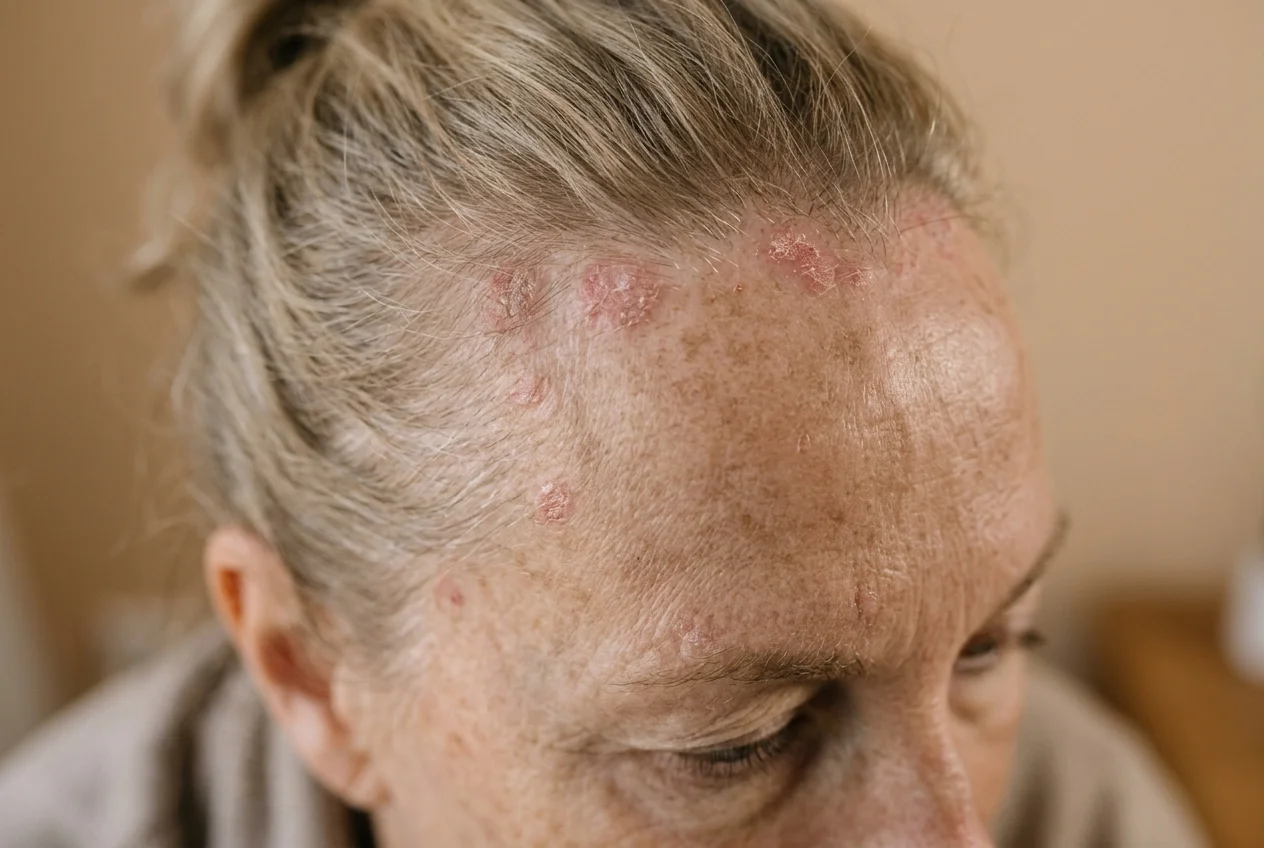
The most frequent locations are the face, ears, lips, scalp, back of the hands and forearms.
Why does it appear?
The main cause is the damage accumulated by ultraviolet (UV) radiation. Repeated sun exposure produces alterations in the DNA of the skin cells that, over time, can give rise to the development of this tumour.
Who is at greater risk? The risk increases in people with: fair skin; advanced age; intense or prolonged sun exposure; outdoor professions; a history of actinic keratoses; a history of skin cancer; a weakened immune system (for example, after an organ transplant); old scars or chronic wounds.
Can it appear on an actinic keratosis? Yes. Many actinic keratoses remain stable for years, but some can evolve towards a squamous cell carcinoma. For this reason it is important to treat them.
Can it appear without having had much sun? Yes, although it is less frequent. It can develop on scars, chronic ulcers, old burns or certain inflammatory skin diseases.
What are the symptoms?
Squamous cell carcinoma can present in different ways. The most frequent manifestations are:
- A hard lesion that increases in size.
- A reddish, scaly plaque.
- A persistent crust.
- A wound that does not heal.
- A lesion that bleeds easily.
- A nodule with a rough or warty surface.
Unlike basal cell carcinoma, it usually grows more rapidly. It can cause pain, tenderness, bleeding and repeated crust formation.
How is it diagnosed?
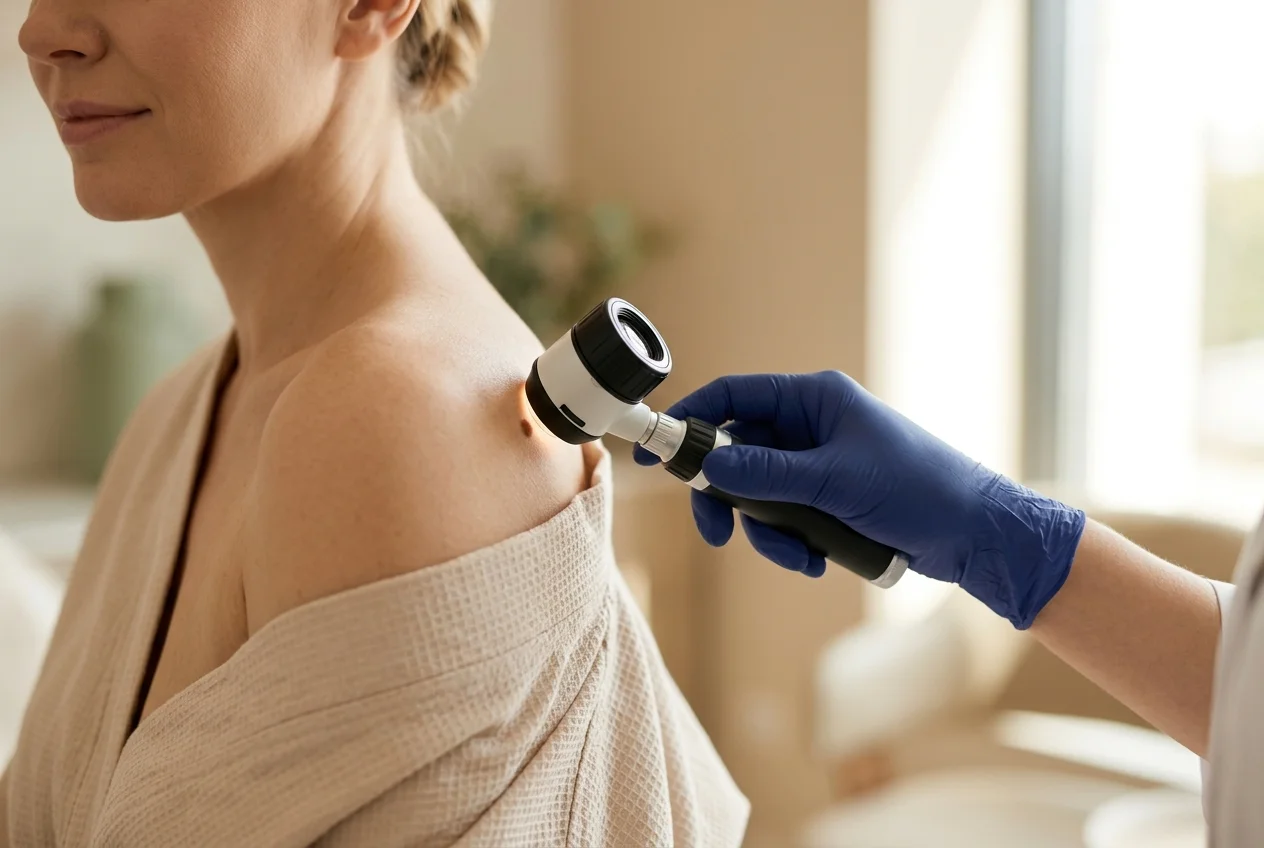
Diagnosis begins with a complete clinical examination of the skin. The doctor will examine the lesion using dermatoscopy, a technique that allows structures invisible to the naked eye to be observed.
When there is a clinical suspicion, it will be necessary to perform a biopsy or the complete removal of the lesion. The definitive diagnosis is always confirmed through the histopathological study.
In some higher-risk tumours, additional tests may be requested to assess whether there is involvement of the lymph nodes or other organs.
What treatments are available?
One of the most frequent questions is: «Can it be cured?» The answer is yes, especially when it is diagnosed early. Treatment will depend on the size of the tumour, its depth, its location and its microscopic characteristics.
Surgery
It is the treatment of choice in most cases. It makes it possible to completely remove the tumour and confirm that the margins are free of disease.
Mohs micrographic surgery
It is indicated for certain high-risk squamous cell carcinomas or those located in areas where it is important to preserve as much healthy tissue as possible.
Radiotherapy
It may be recommended when surgery is not possible or as a complementary treatment in some high-risk tumours.
Systemic treatments
In advanced cases or when there is metastatic disease, immunotherapy or targeted therapies may be used in selected situations.
Can it come back? Yes. Some squamous cell carcinomas can reappear in the same area if they are not completely removed. In addition, having had one increases the risk of developing new skin cancers in the future.
What can you do day to day?
After treatment it is recommended to:
- Use sunscreen SPF 50+ daily.
- Avoid sunburns.
- Not use tanning beds.
- Periodically examine the whole skin.
- Attend all the check-ups indicated by the doctor.
- Seek prompt advice if a new suspicious lesion appears.
When should you seek prompt medical advice?
Request a medical assessment if you have:
- A wound that does not heal.
- A persistent crust that continually reappears.
- A lesion that grows rapidly.
- A hard lump on the skin.
- A lesion that bleeds easily.
- A significant change in a previously known actinic keratosis.
If you have already been treated for a squamous cell carcinoma, also consult if any new suspicious lesion appears.
Myths and facts
- Myth: Squamous cell carcinoma is the same as basal cell carcinoma. Fact: No. Both are skin cancers, but squamous cell carcinoma has a greater capacity to invade tissues and produce metastases.
- Myth: If the lesion does not hurt, it cannot be a cancer. Fact: Many squamous cell carcinomas are painless in their initial stages.
- Myth: It only appears in older people. Fact: It is more frequent with age, but it can also appear earlier in people with intense sun exposure or risk factors.
- Myth: After removing it I am completely cured. Fact: Most are cured, but periodic check-ups are necessary because there is a risk of new tumours.
- Myth: Actinic keratoses do not need treatment. Fact: Some can evolve towards a squamous cell carcinoma, so they must be evaluated and treated.
The key points to remember
- Squamous cell carcinoma is the second most frequent skin cancer.
- It is mainly related to accumulated sun damage.
- It can develop on an actinic keratosis.
- It has a greater capacity for invasion and metastasis than basal cell carcinoma.
- Surgery is the most usual treatment and offers excellent results when the diagnosis is early.
- Medical check-ups and sun protection are essential to prevent new tumours.
Frequently asked questions
Is it a serious cancer?
It can be if it is not diagnosed in time. Detected early, the prognosis is usually excellent.
Can it produce metastases?
Yes. Although it is not frequent, the risk is higher than in basal cell carcinoma.
Will I need surgery?
In most cases, yes.
Is a biopsy necessary?
Usually yes, to confirm the diagnosis.
Does surgery leave a scar?
Yes, although the best possible functional and aesthetic result is sought.
Will I have to have check-ups?
Yes. They are essential to detect possible recurrences or new tumours.
Can I sunbathe again?
Yes, but always with adequate photoprotection and avoiding sunburns.
Can I develop another skin cancer?
Yes. Having had a squamous cell carcinoma increases the risk of presenting new skin tumours.
Can it be prevented?
To a large extent yes, through adequate sun protection and the early treatment of actinic keratoses.
Is it curable?
Yes. When it is diagnosed in the initial stages, the cure rates are very high.
Need personalised guidance?
This guide is for information only and does not replace a medical consultation. For an assessment tailored to your case, you may request a consultation.
Request a consultationTopics