Reactions to insect bites
Types, treatment and warning signs

Reactions to insect bites can vary from mild inflammation to a serious allergic reaction. Discover how to differentiate them, which treatments are most effective and when it is necessary to see the doctor.
What are reactions to insect bites?
Reactions to insect bites are the response of the immune system to the saliva or venom that certain insects inject when they bite.
The intensity of the reaction can vary enormously between people. While some only present a small mark for a few hours, others develop very significant inflammation or, in exceptional cases, a serious allergic reaction (anaphylaxis).
It is important to differentiate a normal inflammatory reaction, an intense local reaction, a generalised allergic reaction and a secondary infection, as the treatment is different in each situation.
Why do they appear?
When an insect bites, it introduces different substances into the skin. These substances can trigger a normal inflammatory response, a localised allergic reaction, a generalised allergic reaction or an exaggerated response of the immune system.
The intensity depends on various factors: the type of insect, the amount of venom or saliva inoculated, individual sensitivity, previous exposures and the existence of allergic diseases.
What types of reactions exist?
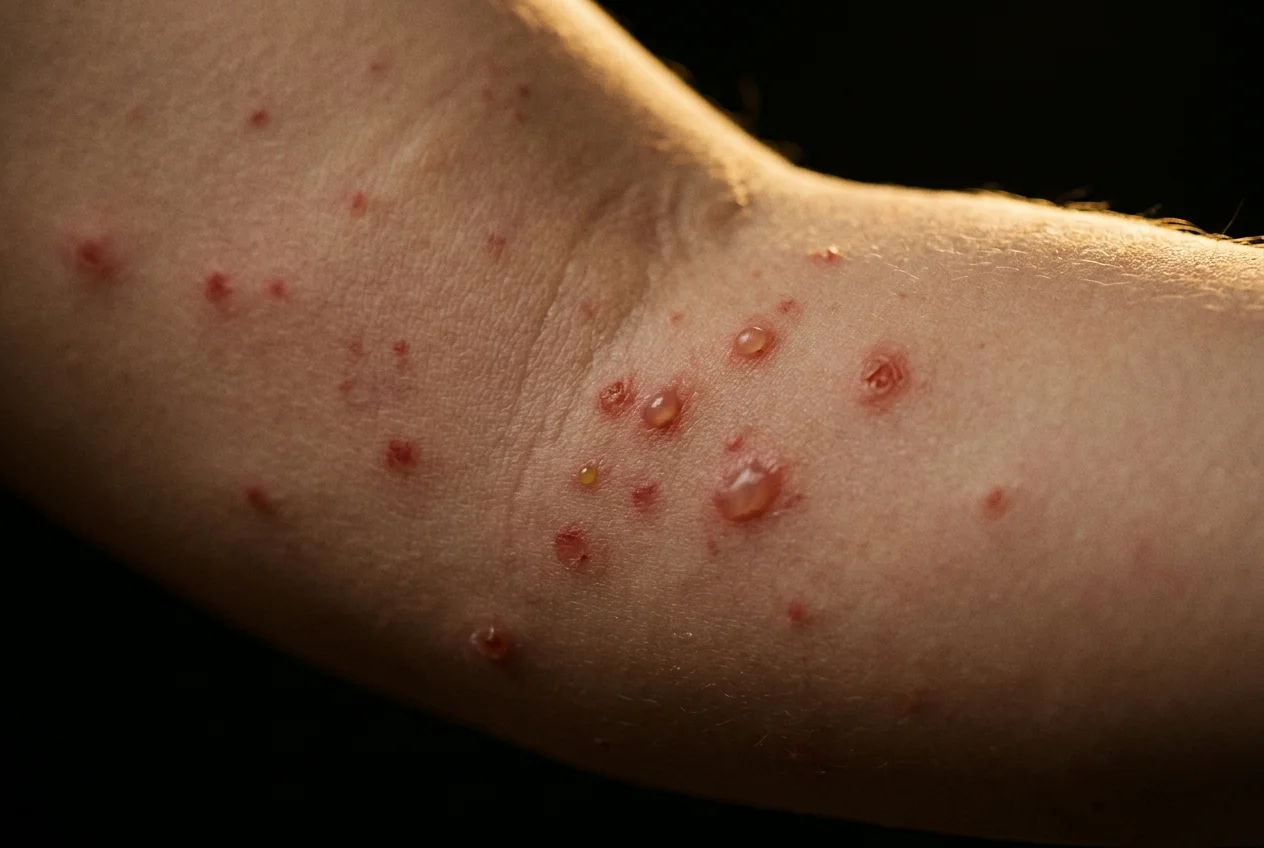
Normal local reaction. It is the most frequent. It produces a small welt, itching, redness and limited swelling. It usually disappears in a few days.
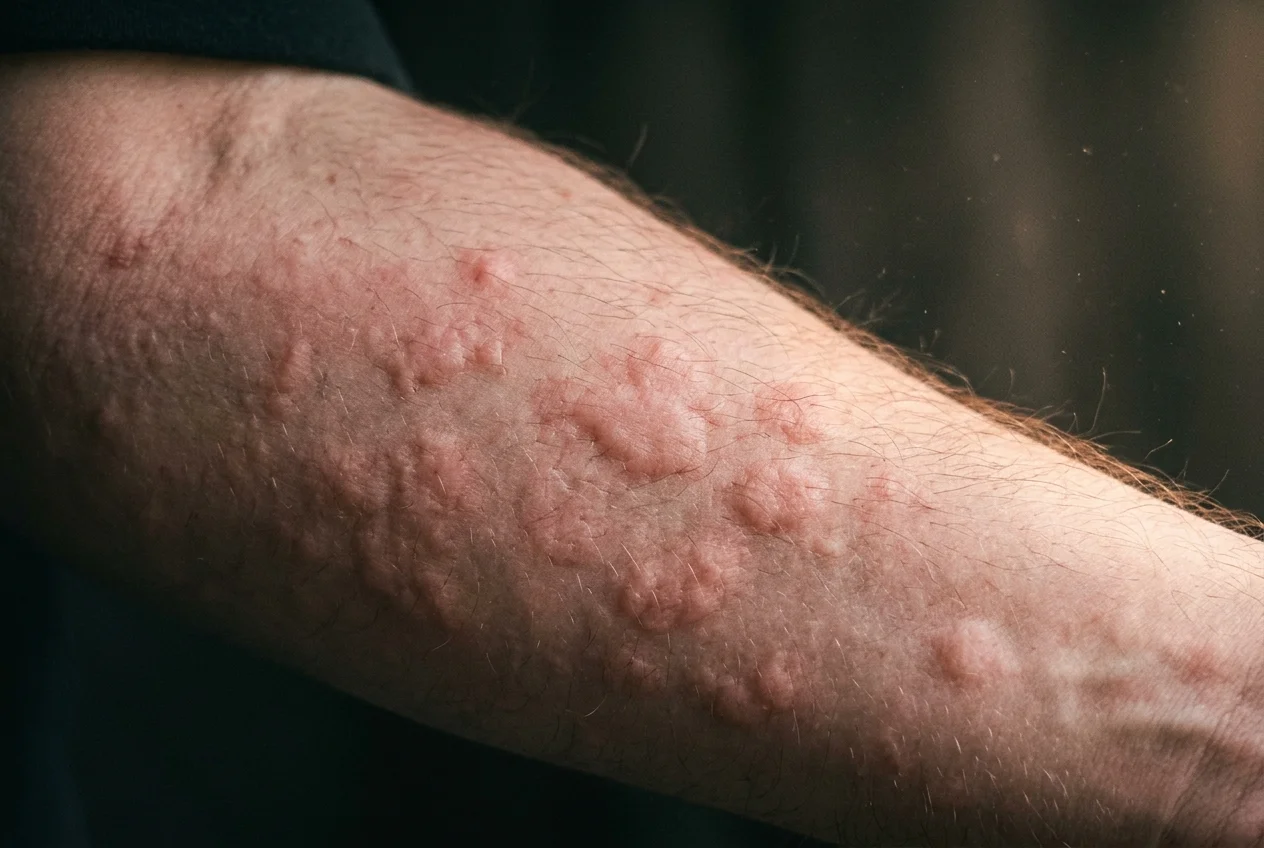
Intense local reaction. In some people much greater inflammation appears: swelling of more than 10 cm, significant redness, sensation of heat, pain and intense itching. It can increase during the first 24-48 hours and take up to a week or more to disappear. Although it can be confused with an infection, most of the time it is not.
Generalised allergic reaction (urticaria). Some people develop a reaction that affects the whole body: welts all over the body, generalised itching, diffuse redness and swelling of the eyelids or lips. It must be assessed by a doctor.
Anaphylaxis. It is the most serious complication, although fortunately very rare. The symptoms include difficulty breathing, swelling of the tongue or throat, hoarse voice, feeling of choking, dizziness, loss of consciousness and a drop in blood pressure. It is a medical emergency that requires immediate treatment with adrenaline and urgent assistance.
What are the symptoms?
Depending on the type of reaction, itching, pain, redness, swelling, local heat, welts, blisters, extensive inflammation, urticaria or respiratory difficulty can appear.
In children it is frequent for local reactions to be especially striking, without this necessarily implying greater seriousness.
How is it diagnosed?
The diagnosis is mainly based on the clinical history, the appearance of the lesions, the time elapsed since the bite and the evolution of the symptoms.
In patients with suspected serious allergy, it may be necessary to carry out a study by the Allergology specialist through specific tests.
What treatments are available?
Treatment depends on the type of reaction.
Mild reactions. Local cold, elevation of the limb if there is a lot of swelling and avoiding scratching are usually enough.
Intense itching. It may be necessary to use oral antihistamines, soothing creams and topical corticosteroids for a few days when indicated.
Very significant local reactions. In some patients the doctor may indicate oral corticosteroids for a brief period, antihistamines and analgesics if there is pain.
Anaphylaxis. It requires immediate intramuscular adrenaline, urgent medical care and hospital observation. People with a history of anaphylaxis should have self-injectable adrenaline and know how to use it.
Can a bite become infected?
Yes, although it is not usual. Generally the infection appears due to repeated scratching. The signs of infection include pus, increasing pain, redness that continues to increase several days later, fever and intense heat.
In these cases the doctor should be consulted.
What can you do day to day?
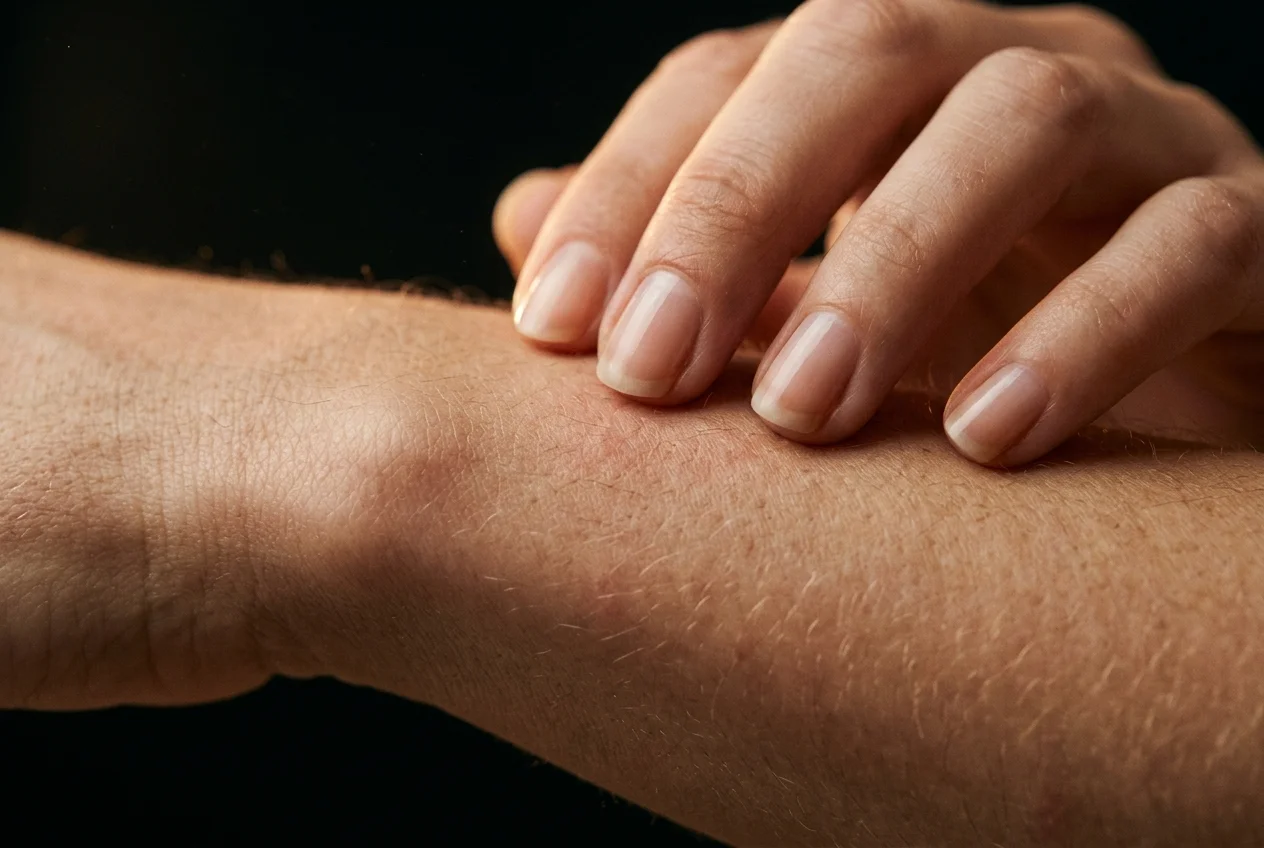
To relieve the discomfort, do not scratch the lesions, apply local cold for 10-15 minutes several times a day, keep the skin clean, wear loose clothing if there is a lot of inflammation and keep the nails short, especially in children.
If there is a significant reaction on a limb, raising it can help to reduce the swelling.
How to prevent new reactions?
It can help to use approved repellents, wear protective clothing in areas with many insects, avoid intense perfumes when there are bees or wasps, not walk barefoot in gardens or on grass, keep food and drinks covered outdoors and check for the presence of wasp nests near the home.
People with a confirmed allergy to hymenoptera venom should follow the allergist's recommendations and consider immunotherapy (vaccine) when indicated.
When should you seek prompt medical advice?
You should go urgently if you have difficulty breathing, swelling of the tongue, lips or throat, generalised welts, dizziness or loss of consciousness, chest pain or repeated vomiting after the bite.
You should also consult if the inflammation continues to increase after several days, if pus appears, if you have fever, if the bite affects the eye or the inside of the mouth or if you have multiple bites simultaneously.
Myths and facts
- Myth: A very large reaction means the bite is infected. Fact: No. Most are intense inflammatory reactions without infection.
- Myth: All people with a significant reaction will develop anaphylaxis. Fact: Extensive local reactions do not necessarily imply a greater risk of a serious allergic reaction.
- Myth: The more it itches, the more serious it is. Fact: Intense itching does not always indicate seriousness.
- Myth: Antibiotics help the inflammation disappear sooner. Fact: They are only useful when there is a bacterial infection.
- Myth: Vaccines against wasps work for everyone. Fact: Immunotherapy is only indicated in selected patients with a confirmed allergy to hymenoptera venom.
The key points to remember
- Most reactions to bites are mild and disappear spontaneously.
- Very large inflammation does not necessarily mean that there is an infection.
- Local cold, antihistamines and, in some cases, corticosteroids help to relieve the symptoms.
- Antibiotics are only indicated when there is a bacterial infection.
- Difficulty breathing, swelling of the throat or dizziness require urgent medical care.
- People with a confirmed serious allergy should be assessed by Allergology and may benefit from specific immunotherapy.
Frequently asked questions
Is it normal for the swelling to increase the next day?
Yes. Many local reactions reach their maximum intensity between 24 and 48 hours.
How long can an intense local reaction last?
Between several days and one or two weeks.
Does ice help?
Yes. It reduces inflammation and relieves pain and itching.
Can I scratch?
It is preferable to avoid it, as it increases the risk of infection and prolongs the inflammation.
Are reactions worse in children?
Frequently the lesions look more striking, but they usually evolve favourably.
Do I need antibiotics?
No, unless there is a bacterial infection.
Which insects produce the most serious allergies?
Mainly bees and wasps.
Should I go to the allergist?
Yes, if you have had a generalised reaction or anaphylaxis after a bite.
Can an intense reaction recur?
Yes. Sensitive people can present similar reactions again with new bites.
Do they have a good prognosis?
Yes. Most reactions evolve favourably and disappear without leaving sequelae.
Need personalised guidance?
This guide is for information only and does not replace a medical consultation. For an assessment tailored to your case, you may request a consultation.
Request a consultationTopics