Sun protection during pregnancy
Prevention of melasma and skin care

During pregnancy, hormonal changes increase the risk of melasma and pigmentation alterations. Daily photoprotection, together with physical measures such as hats and seeking shade, constitutes the best strategy to keep healthy skin and to prevent persistent spots.
Why is it especially important to protect the skin during pregnancy?
Pregnancy produces numerous hormonal changes that affect the skin.
These changes make many women more prone to developing spots, to presenting a greater sensitivity to the sun or to noticing changes in already existing skin lesions.
For this reason, photoprotection constitutes one of the most important preventive measures throughout the entire gestation.
What changes does the skin undergo?
During pregnancy the following may appear:
- Melasma or the "mask of pregnancy".
- Darkening of the nipples and areolas.
- The linea alba that becomes a linea nigra.
- Greater pigmentation of scars or moles.
- Greater skin sensitivity.
Sun exposure can intensify many of these changes.
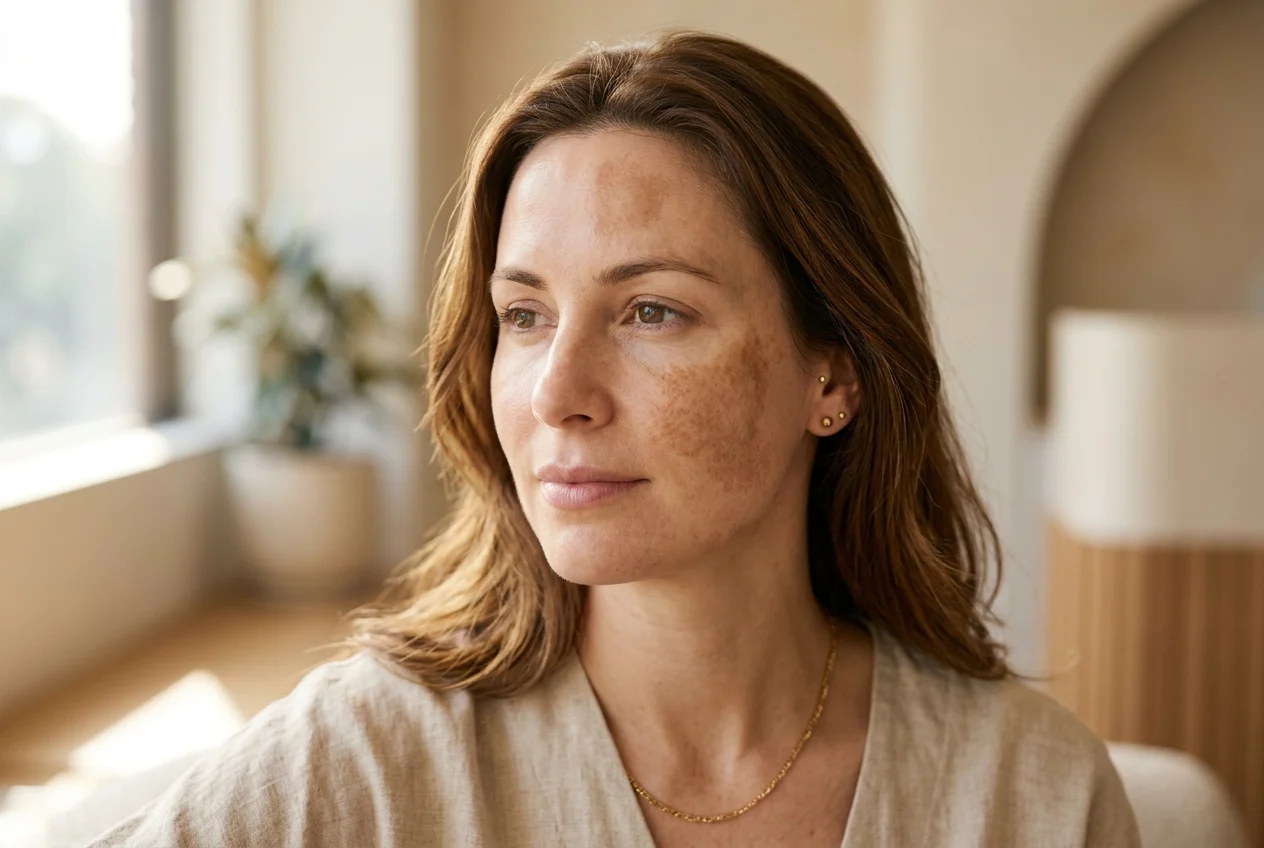
Melasma: the most frequent spot
Melasma consists of the appearance of brown spots, generally symmetrical, on:
- The forehead.
- The cheeks.
- The upper lip.
- The chin.
Its appearance is favoured by the hormones of pregnancy and by ultraviolet radiation.
Although it usually improves after childbirth, in some women it may persist for years.
How to prevent melasma?
Prevention begins before the spots appear.
It is recommended to:
- Use a broad-spectrum sunscreen (UVA and UVB) every day.
- Choose an SPF 50+, especially in spring and summer.
- Reapply the protection when there is prolonged exposure.
- Seek the shade.
- Use a wide-brimmed hat and sunglasses.
- Avoid direct exposure during the hours of greatest solar intensity.
In women with a tendency to melasma, tinted sunscreens containing iron oxides can provide additional protection against visible light.
Should I use sunscreen even if I am not going to the beach?
Yes.
Ultraviolet radiation is present throughout the year and also during everyday activities such as walking, driving or sitting on a terrace.
Protection should be part of the daily routine.
Which sunscreen is advisable?
The most important thing is that it is:
- Broad-spectrum.
- SPF 50+ when the exposure is significant.
- Suitable for sensitive skin.
- Well tolerated to favour its daily use.
The best sunscreen is the one that the patient uses correctly and consistently.
Is sunscreen safe during pregnancy?
Sunscreens that are marketed and used according to the recommendations are, in general, safe during pregnancy.
If there are doubts about a specific product, it is advisable to consult it with the doctor specialised in skin health or the obstetrician.
What happens with moles during pregnancy?
It is relatively frequent for some moles to appear to change slightly due to the growth of the skin or to hormonal modifications.
However, any mole that changes in shape, colour, size or that bleeds must be assessed by a doctor specialised in skin health.
Pregnancy does not protect against melanoma nor does it justify delaying a medical consultation.
Other tips to take care of the skin
In addition to photoprotection:
- Maintain good hydration of the skin.
- Use gentle products if you present greater sensitivity.
- Avoid cosmetic or medical treatments that are not recommended during gestation.
- Always consult before starting depigmenting treatments or aesthetic procedures.
After childbirth
In many women, the pigmentary alterations improve spontaneously during the months following childbirth.
If the spots persist, the doctor specialised in skin health can assess specific treatments once the pregnancy is over and, when appropriate, taking breastfeeding into account.
Myths and facts
- Myth: Melasma always disappears after childbirth. Fact: In many women it improves, but in others it can persist if the skin is not adequately protected from the sun.
- Myth: I only need sunscreen in summer. Fact: Ultraviolet radiation is present throughout the year.
- Myth: If I am pregnant I cannot use sunscreen. Fact: Photoprotection is one of the most important measures to take care of the skin during gestation.
- Myth: All changes in moles are normal during pregnancy. Fact: Any suspicious change must be evaluated by a doctor specialised in skin health.
- Myth: Pregnancy spots cannot be prevented. Fact: Although they cannot always be avoided, good photoprotection significantly reduces the risk and the intensity of melasma.
The essential points to remember
- Pregnancy increases the predisposition to developing melasma and other pigmentation alterations.
- Daily photoprotection is the best preventive measure.
- The use of a hat, sunglasses and seeking shade complement the sunscreen.
- Tinted sunscreens can be especially useful in women with a tendency to melasma.
- Any suspicious change in a mole must be evaluated by a doctor specialised in skin health.
- Taking care of the skin during pregnancy helps to prevent problems that can persist after childbirth.
Frequently asked questions
Why do spots appear during pregnancy?
Mainly because of the combination of hormonal changes and exposure to ultraviolet radiation.
What is melasma?
It is a facial hyperpigmentation that is frequent during pregnancy.
Should I use sunscreen every day?
Yes, especially on the face and other exposed areas.
What SPF should I use?
Usually an SPF 50+ is recommended when there is significant sun exposure.
Are tinted sunscreens useful?
Yes. In women with melasma they can offer additional protection against visible light thanks to iron oxides.
Can I sunbathe while pregnant?
Yes, but in moderation and following all the photoprotection measures.
What do I do if I notice a different mole?
Request a medical skin assessment without delay.
Will the spots disappear after childbirth?
Many improve, although some can persist and require later treatment.
Can I use depigmenting agents during pregnancy?
Not all of them are suitable. Always consult before using them.
What is the best prevention?
Daily, consistent and well-applied photoprotection.
Need personalised guidance?
This guide is for information only and does not replace a medical consultation. For an assessment tailored to your case, you may request a consultation.
Request a consultation