6 min read
Adult acne: why it appears and how to treat it
By Clínica Valorian
Adult acne affects up to 15% of women. Hormonal causes, effective medical treatments and how to prevent scarring.
Key points
- Adult acne affects up to 15% of women and is driven mainly by hormonal factors (American Academy of Dermatology).
- Unlike teenage acne, it tends to concentrate on the lower face, the chin and the jawline.
- Treating acne requires consistency: most medical regimens take between 8 and 12 weeks to show clear results.
- 43% of acne patients develop some degree of scarring, which is why early treatment is the best prevention (PubMed study, 2017).
Adult acne is caused mainly by hormonal changes and is usually treated with a combination of topical medications, oral treatment when necessary, and a consistent skincare routine. It affects far more people than is generally believed, especially women, and responds well to treatment when approached with medical judgement and patience.
If you are over 25 and still breaking out, you are not a rare exception. Up to 15% of women live with acne in adulthood, according to the American Academy of Dermatology. Below we explain why this happens, how it differs from teenage acne, and what really works to keep it under control.
Why does adult acne appear, and what role do hormones play?
Adult acne is largely driven by hormones. Up to 15% of women are affected, according to the American Academy of Dermatology (American Academy of Dermatology, Skin Conditions by the Numbers). Androgens stimulate the sebaceous glands, which produce more oil, clog pores and promote the bacteria responsible for inflammation.
Fluctuations related to the menstrual cycle, pregnancy, perimenopause or polycystic ovary syndrome account for many cases in women. This is why adult female acne often worsens in the days leading up to a period.
There are other triggers worth knowing about:
- Sustained stress, which raises cortisol levels and sebum production.
- Overly heavy cosmetics and sunscreens that clog pores.
- Certain medications, such as some corticosteroids or poorly chosen contraceptives.
- Genetic factors and a naturally seborrhoeic skin type.
Identifying the main trigger completely changes the treatment approach. A patient with persistent hormonal acne needs a different strategy from someone experiencing occasional breakouts caused by a new cosmetic product.
How does it differ from teenage acne?
Adult acne and teenage acne share the same underlying mechanism, but behave differently. According to the American Academy of Dermatology, 85% of people between the ages of 12 and 24 experience at least mild acne, whereas in adults the prevalence is lower but more persistent and more closely linked to hormones.
Location is one of the clearest clues. Teenage acne spreads across the forehead, nose and cheeks — the so-called T-zone. Adult acne, particularly in women, concentrates on the lower part of the face: the chin, jawline and neck.
The type of lesion also differs. In adults, deep, inflamed and painful spots predominate, with fewer surface blackheads. The skin also tends to be less oily and more sensitive, which means the strength of products must be carefully adjusted to avoid irritation.
These differences matter because many adults repeat the aggressive treatments they used in their youth, dry out their skin and make the condition worse. At Clínica Valorian we begin with a diagnosis of the acne type and skin type before recommending any course of action.
What medical treatments are effective, and why does consistency matter?
Acne treatment is effective when it combines the right medication with consistency. Most medical regimens take between 8 and 12 weeks to show clear improvement, and several months to achieve the full result. Stopping too early is the most common mistake and the reason why many people believe nothing works for them.
The most common medical options are:
- Topical treatments: retinoids, benzoyl peroxide and topical antibiotics for inflammation and pore blockage.
- Oral treatments: antibiotics in limited courses, hormonal therapy in selected women and, in severe cases, isotretinoin under strict supervision.
- In-clinic procedures: medical cleansing and, in some cases, peels that help renew the skin.
A chemical peel can accelerate improvement in texture and early marks; we explain the types and recovery in our guide on chemical peels: types, results and recovery.
The key is not to self-medicate. Hormonal adult acne, for example, is rarely resolved with over-the-counter creams alone. An assessment by Dr. Florian A. Vallecillo Cabrera makes it possible to choose the right combination and adjust doses as the skin responds.
How can you prevent marks and scars?
The best way to avoid scars is to treat acne early and not to pick at spots. 43% of acne patients develop some degree of scarring, and 69% of those with marks had only mild or moderate acne at the time of assessment (study published on PubMed, Tan et al., 2017). In other words, apparently mild acne can also leave its mark.
Bursting or scratching lesions increases inflammation and breaks down tissue, which multiplies the risk of permanent marks. Post-inflammatory hyperpigmentation — those dark spots that remain after a spot — is particularly common in Mediterranean skin types and in areas with high sun exposure.
To prevent marks, it is advisable to:
- Start treatment as soon as possible, without waiting for the acne to worsen.
- Avoid touching or squeezing lesions.
- Use sun protection every day to prevent marks from darkening.
Once a scar has already formed, there are dermatological treatments that can improve its appearance. The essential thing is to act promptly on active inflammation to avoid reaching that point.
What skincare practices complement acne treatment?
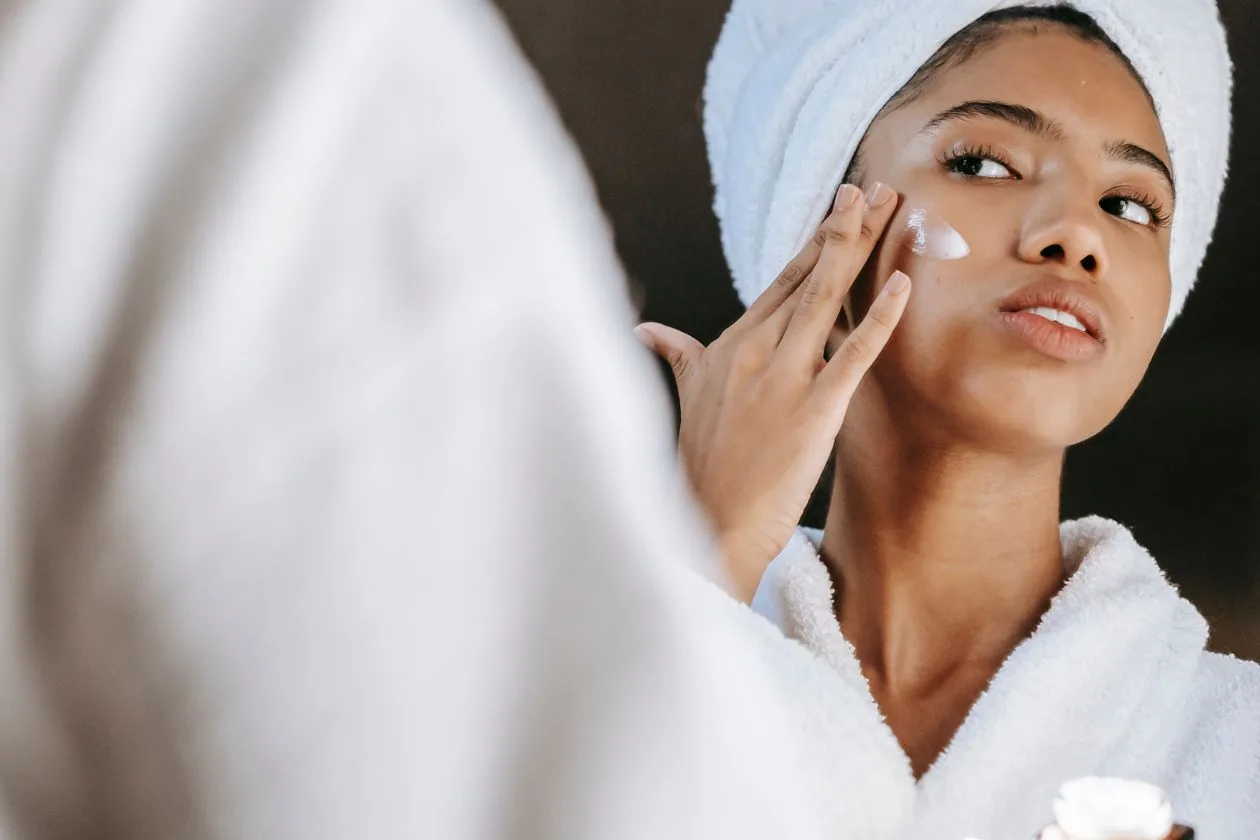
A well-chosen skincare routine enhances medical treatment and reduces flare-ups. The goal is to control sebum and inflammation without damaging the skin barrier, which in adults tends to be more fragile than in teenagers.
A simple, sustainable routine works better than one with ten products:
- Gentle cleansing twice a day, avoiding soaps that dry out the skin.
- Lightweight, non-comedogenic moisturising, even if your skin is oily.
- Suitable active ingredients such as retinoids or acids, always prescribed and without layering them all at once.
- Daily sun protection, essential on the Costa del Sol and while using retinoids.
Choosing products according to your skin type prevents irritation that can be mistaken for breakouts. At Clínica Valorian we help you build that foundation step by step, tailored to your skin and compatible with whatever medical treatment you are following.
Consistency is once again key. Cosmetics do not replace medical treatment, but they maintain results and shorten breakouts when used correctly and continuously.
What to do now
If you have spent months trying creams without results, the next useful step is to stop experimenting on your own and request a dermatology assessment. An accurate diagnosis of your acne type and skin type is what makes the difference between going around in circles and starting a treatment that truly works. At Clínica Valorian, in Marbella, Dr Florian A. Vallecillo Cabrera can design a personalised plan and support you through the weeks it takes to achieve clear skin.
Frequently asked questions
At what age does adult acne go away?
There is no fixed age at which it disappears. Adult acne can persist into your 30s, 40s or even beyond, especially in women due to its hormonal component. With appropriate medical treatment it can be managed at any age.
Is adult acne always hormonal?
Not always, but hormones are the most common factor, particularly in women. Stress, certain cosmetics, some medications and genetics also play a role. A medical assessment identifies the predominant cause in each individual case.
How long does acne treatment take to work?
Most medical treatments need between 8 and 12 weeks to show clear improvement, and several months for the full result. Stopping too soon is the most common reason they do not work.
How can acne scars be prevented?
The most effective approach is to treat acne early and avoid picking at spots. The sooner inflammation is brought under control, the lower the risk of scarring. Scars that have already formed can be improved with dermatological treatments.
Topics