
6 min read
Longevity supplements: what science says
By Clínica Valorian

Which longevity supplements have real evidence behind them, what is anti-ageing marketing, and why it is worth getting tested before taking them.
Key points
- Very few supplements have solid evidence that they extend life; most anti-ageing claims are based on laboratory or animal studies, not on humans.
- Vitamin D and omega-3 may help in specific cases, but their benefit depends on your clinical situation, not on taking them by default.
- A prior blood test avoids supplementing blindly and detects real deficiencies that are genuinely worth correcting.
- Self-medicating with supplements carries risks: interactions with medications, excessive doses, and spending money on products with no proven effect.
- The safest approach is to integrate any supplement into a medically supervised plan that is reviewed on a regular basis.
The short answer is that no supplement has been shown in humans to extend life, and most anti-ageing products marketed as miraculous are backed by laboratory or animal studies. A few compounds do have genuine medical value when they correct a real deficiency, and that is the distinction almost nobody explains. In this article we review which longevity supplements have scientific evidence behind them, what belongs to anti-ageing marketing, and why the first step should always be a blood test, not a purchase.
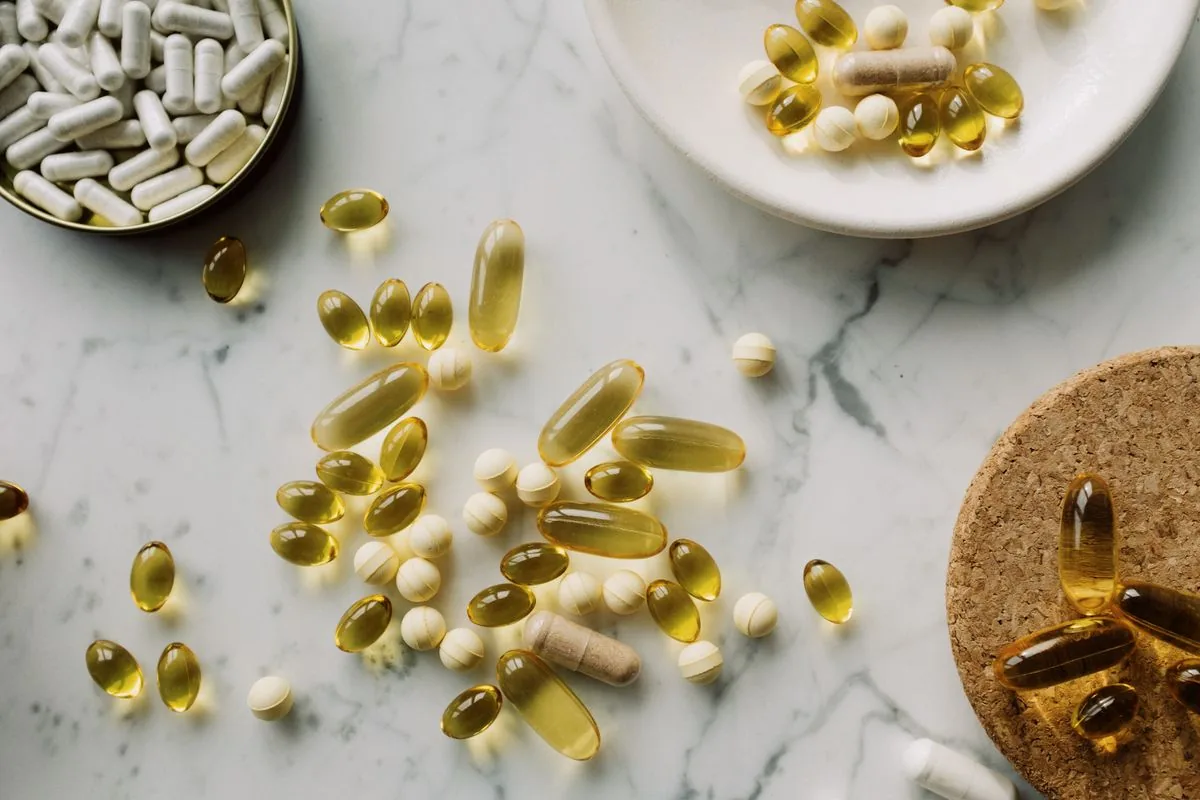
Which longevity supplements have real evidence
It is worth starting by separating two ideas the market deliberately conflates: correcting a deficiency and extending life. Replacing a missing nutrient improves your health. Taking that same nutrient when it is not missing rarely adds anything, and there is no proof that it adds years.
With that criterion in mind, these are the compounds with the most serious backing:
- Vitamin D. It is useful when there is a deficiency, something common in people with limited sun exposure, darker skin or advanced age. Correcting a confirmed deficiency makes clinical sense. Taking it by default, without measuring levels, does not. We cover this in our guide on vitamin D, its deficiency and how to improve it.
- Omega-3. It may play a role in specific cardiovascular profiles, although the evidence regarding its effect on overall mortality is weak. It is not a bottled life insurance policy.
- Creatine. It is one of the few supplements with a solid foundation for maintaining muscle mass and strength when combined with exercise, something that matters greatly as we age.
- Magnesium. It is involved in numerous bodily functions, and replenishing it helps when a real deficiency exists.
A fact that often comes as a surprise: in large trials with older adults, a daily multivitamin was associated with a memory improvement equivalent to roughly three years of cognitive ageing, according to the published results of the COSMOS trial. It is an interesting finding, but it speaks to cognitive function in a specific group, not to extending life, and it does not justify taking everything just in case.
Myths and exaggerated claims in the anti-ageing market
The anti-ageing business sells expectations above all else. Many products rely on a plausible biological mechanism observed in a laboratory dish or in mice, and assume that this effect translates to humans. It almost never does.
The clearest example today is NAD+ precursors, such as NMN. They reliably raise NAD+ levels in the blood, which sounds promising. The problem is that human trials have not found real functional improvements in strength, mobility, or physical performance in older adults. Raising a biomarker is not the same as living better or longer.
Other warning signs worth recognising:
- Promises to "reverse ageing" or "activate longevity genes" with no clinical trials in humans to back them up.
- Formulas with fifteen ingredients at tiny doses, designed for the label, not to work.
- Testimonials and before/after images instead of studies.
- The word "natural" used as a guarantee of safety, when natural does not mean harmless.
Real longevity has less to do with a bottle and more to do with unglamorous factors such as sleep, diet, exercise, and prevention. On this last point, we wrote about it in nutrition and longevity: eating to live longer and better.
The importance of prior testing before supplementing
Supplementing without testing is shooting in the dark. A vitamin D deficiency, for example, looks nothing alike from one person to the next — some people have perfect levels without taking anything, while others have low levels despite taking good care of themselves. Without a blood test, there is no way to know.
A well-designed prior assessment makes it possible to:
- Identify real deficiencies that are genuinely worth correcting.
- Avoid supplementing a nutrient you already have at adequate levels.
- Adjust the dose to your specific situation rather than following the one on the packaging.
- Establish a baseline to check, later on, whether the supplement is working.
This is the approach we follow at Clínica Valorian: measure before recommending. Longevity medicine makes sense when it starts from your own data, not from a trend. A check-up with blood work turns supplementation into an informed, measurable decision.
Risks of self-medicating with supplements
The idea that supplements "can't cause harm" is false. Because they are over-the-counter products, it is easy to forget that they are still active substances with doses, interactions, and limits.
The most common risks of taking them on your own are:
- Interactions with medications. Several supplements interfere with anticoagulants, antihypertensives, antidepressants, or thyroid treatments. Combining them without supervision can reduce the effectiveness of the drug or amplify its effects.
- Excessive doses. Fat-soluble vitamins such as A, D, and E accumulate in the body and become toxic in excess. More is not better.
- Masking an underlying problem. Fatigue or hair loss may be caused by a medical condition that a supplement covers up without resolving.
- Spending without benefit. A large proportion of anti-ageing products have no proven effect, meaning the only guaranteed result is the cost.
The risk profile increases if you take several medications, if you have a chronic illness, or if you combine multiple supplements at the same time without anyone reviewing the full picture.
How to integrate supplements into a medically supervised plan
A well-used supplement is one piece of a broader strategy, not the strategy itself. The right way to approach it follows a simple sequence.
- Clinical and laboratory assessment. First and foremost, a review of your medical history, lifestyle habits, and actual levels through blood tests.
- Identify what is truly needed. Correct confirmed deficiencies and rule out anything that offers no benefit in your specific case.
- Prioritise the foundations. Sleep, nutrition, physical activity, and risk factor management matter more than any capsule.
- Personalised protocol. Dosage, duration, and combinations tailored to you — never a generic list copied from the internet.
- Periodic reassessment. Repeat blood tests to check whether the supplement is fulfilling its purpose or whether it should be discontinued.
Working with a medical team helps you avoid the most common pattern: accumulating bottles without knowing whether they are doing anything. It also allows supplementation to be integrated with the rest of your health — from your skin to disease prevention — rather than treating it as a separate compartment.
The next time you are tempted by a supplement marketed as the key to longevity, reverse the usual order: instead of buying it and hoping for the best, request a blood test and a medical assessment. You will know what you truly need, avoid unnecessary risks, and put your money where the science actually supports a benefit. That is the real first step towards ageing better.
Frequently asked questions
Is there any supplement that has been proven to extend life?
To date, no supplement has been shown in humans to extend life. Some correct specific deficiencies and improve certain aspects of health, but that is not the same as living longer.
Should I take vitamin D for longevity?
Only if a test confirms that you have a deficiency. Supplementing without knowing your levels provides no clear benefit and, at consistently high doses, can be counterproductive.
What about NMN and NAD+ precursors?
They raise NAD+ blood levels, but human trials have not demonstrated functional improvements in strength, mobility or life expectancy. They remain a promise, not a proven reality.
Is it dangerous to combine supplements with my medications?
It can be. Several supplements interact with anticoagulants, antihypertensives or other medications. That is why it is worth reviewing them with your doctor before starting.
Topics