Physical exercise and skin health: a natural treatment to age better
Benefits for healthy ageing

Regular physical activity favours skin health by improving circulation, decreasing inflammation and enhancing the natural repair mechanisms. Combined with good sleep, a balanced diet and photoprotection, it constitutes one of the pillars of healthy ageing.
Exercise also benefits the skin
When we think of the benefits of physical exercise, we usually think of the heart, the muscles or weight control.
However, the skin also obtains important benefits.
Regular physical activity improves circulation, favours the oxygenation of the tissues, reduces chronic inflammation, helps to control stress and contributes to keeping healthier skin for longer.
It does not replace a good diet, sleep or photoprotection, but it constitutes one of the fundamental pillars of healthy ageing.
What happens in the skin when we exercise?
During physical activity, blood flow increases.
As a consequence:
- More oxygen reaches the skin.
- The supply of nutrients improves.
- The elimination of metabolism products is favoured.
- The activity of numerous repair mechanisms increases.
Over time, these changes contribute to keeping healthier skin.
Exercise helps to combat inflammation
Many chronic diseases are associated with a persistent low-grade inflammatory state.
Exercise performed regularly helps to reduce that systemic inflammation.
This benefit can indirectly favour skin health and contribute to the control of inflammatory diseases when it is part of a healthy lifestyle.
Exercise and skin ageing
Ageing depends on multiple factors:
- Genetics.
- Ultraviolet radiation.
- Diet.
- Sleep.
- Tobacco.
- Alcohol.
- Stress.
Physical exercise acts on many of these mechanisms.
Various studies suggest that physically active people present a better skin function and characteristics compatible with a healthier ageing.
Does exercise favour collagen?
Exercise does not directly produce collagen as if it were a medical treatment.
However, it improves the biological environment in which the fibroblasts work:
- Better circulation.
- Less inflammation.
- Better hormonal balance.
- Less oxidative stress.
- Better quality of sleep.
All of this favours skin with a greater repair capacity.
Exercise improves sleep… and sleep improves the skin
There is a very close relationship.
Physically active people usually sleep better.
And quality sleep favours:
- Skin regeneration.
- DNA repair.
- Collagen synthesis.
- Immune function.
For this reason, many of the benefits of exercise also occur indirectly.
Exercise helps to control stress
Physical activity decreases anxiety levels and favours emotional well-being.
This can contribute to improving diseases such as:
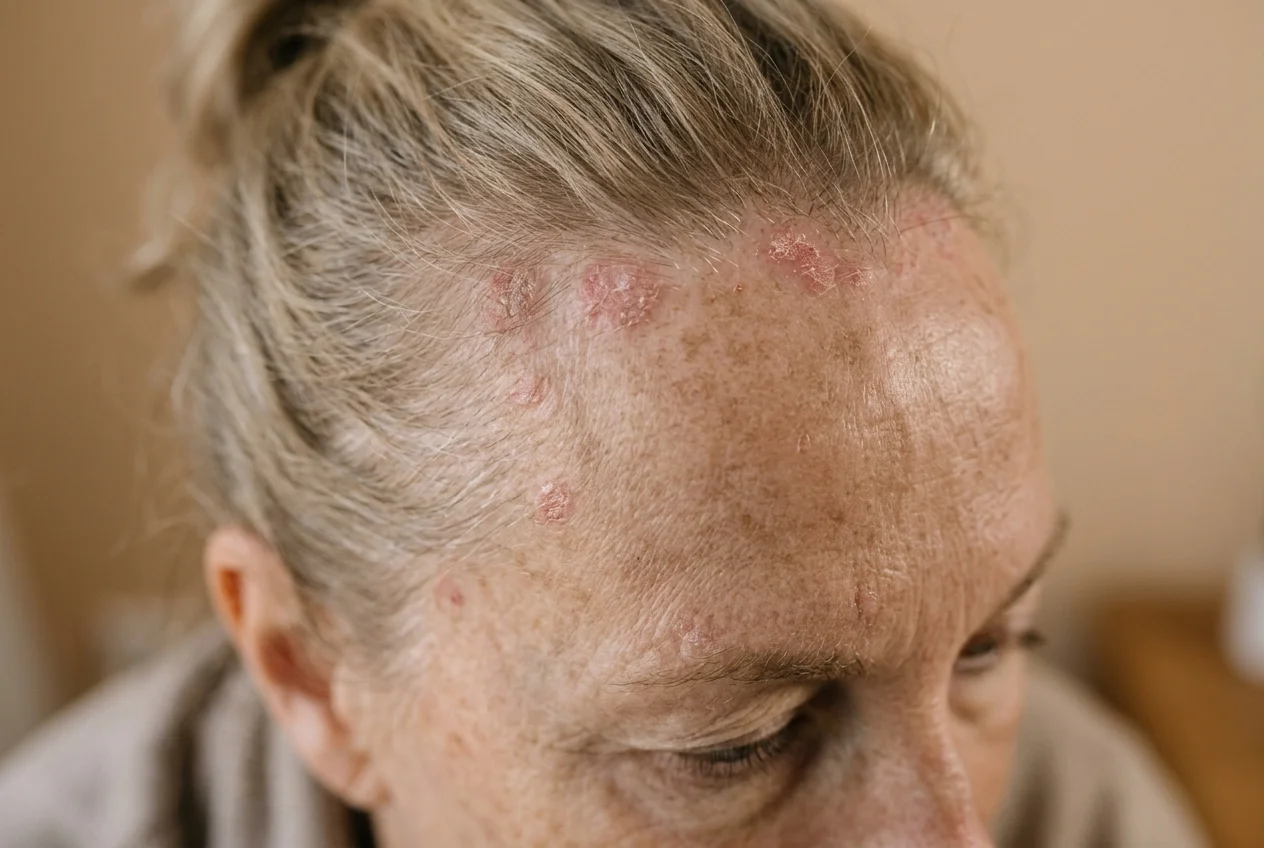
- Psoriasis.
- Atopic dermatitis.
- Rosacea.
- Acne.
- Urticaria.
- Chronic pruritus.
It does not replace medical skin treatment, but it can be part of a comprehensive approach.
Is sweat bad for the skin?
No.
Sweat is a completely normal physiological mechanism.
However, when it remains for a long time on the skin, it can favour irritations in some people.
After exercise it is advisable to:
- Shower.
- Change the damp clothing.
- Clean the skin gently.
- Apply hydration when necessary.
Can exercise worsen some diseases?
In certain situations, yes. For example:
- Heat can trigger rosacea flare-ups.
- Sweat can irritate some dermatitis.
- Friction can favour flare-ups of hidradenitis suppurativa.
- The chlorine in pools can dry out atopic skin.
In most cases these problems can be prevented with simple measures and should not be a reason to abandon physical activity.
Exercise also benefits the hair
Good circulation and a metabolically healthy organism favour the normal functioning of the hair follicle.
Although exercise does not cure androgenetic alopecia, it is part of a lifestyle that benefits hair health.
Is there too much exercise?
Yes.
Excessive training, without sufficient rest, can produce:
- An increase in cortisol.
- Greater oxidative stress.
- A decrease in performance.
- Fatigue.
- Hormonal alterations.
- Insufficient recovery.
As happens with almost everything in medicine, balance is the best strategy.
Exercise and sun exposure
Many people practise sport outdoors.
In these cases it is fundamental to:
- Use photoprotection.
- Wear a cap or hat when possible.
- Seek shade during the central hours of the day.
- Reapply the sunscreen during prolonged activities.
- Maintain good hydration.
Exercise benefits the skin. Excessive ultraviolet radiation does not.
How much exercise does science recommend?
The World Health Organization recommends for most adults:
- Between 150 and 300 minutes per week of moderate-intensity aerobic physical activity, or
- Between 75 and 150 minutes of intense activity.
In addition, it is recommended to perform strength exercises at least two days per week.
Consistency is much more important than extreme intensity.
Myths and facts
- Myth: Sweating eliminates the toxins from the skin. Fact: Sweat helps to regulate body temperature. The elimination of most waste substances corresponds mainly to the liver and the kidneys.
- Myth: Exercise eliminates wrinkles. Fact: It does not eliminate wrinkles, but it favours a healthier ageing.
- Myth: The more exercise, the better for the skin. Fact: Overtraining can also have negative effects.
- Myth: If I have psoriasis or dermatitis I should not do sport. Fact: In most cases exercise is beneficial and only requires adapting some care.
- Myth: Exercise replaces medical skin treatments. Fact: No. It is an extraordinary complement, but it does not replace medical treatment when a disease exists.
The essential points to remember
- Physical exercise improves circulation and favours the oxygenation of the skin.
- It reduces chronic inflammation and contributes to a healthier ageing.
- It indirectly favours skin repair by improving sleep and reducing stress.
- It must be part of a healthy lifestyle together with a good diet and adequate rest.
- Overtraining and excessive sun exposure can diminish some of its benefits.
- The best physical activity is the one that can be maintained consistently throughout life.
Frequently asked questions
Does exercise improve the skin?
Yes. It favours circulation, reduces inflammation and improves the general state of the organism.
Can it help healthy ageing?
Yes. It is part of the fundamental pillars of longevity.
Is it bad to sweat?
No. It is a normal physiological process.
Should I shower after exercise?
Yes, especially if the sweat remains for a long time on the skin.
Can it worsen rosacea?
Intense heat can favour flare-ups in some people, but there are measures to minimise this effect.
Does exercise improve acne?
It does not cure it, but a healthy lifestyle can contribute to the overall control of the disease.
What type of exercise is best?
The one that can be maintained regularly throughout life, combining aerobic activity, strength and mobility exercises.
Is strength training important?
Yes. It helps to maintain muscle mass, improves metabolism and is part of a healthy ageing.
Should I use sunscreen if I do sport outdoors?
Whenever there is significant sun exposure.
What is the best exercise for the skin?
The one practised regularly, accompanied by good rest, a healthy diet and photoprotection.
Need personalised guidance?
This guide is for information only and does not replace a medical consultation. For an assessment tailored to your case, you may request a consultation.
Request a consultationTopics