
Scientific Article: Modulation of the follicular microenvironment as an emerging preclinical therapy for pattern hair loss
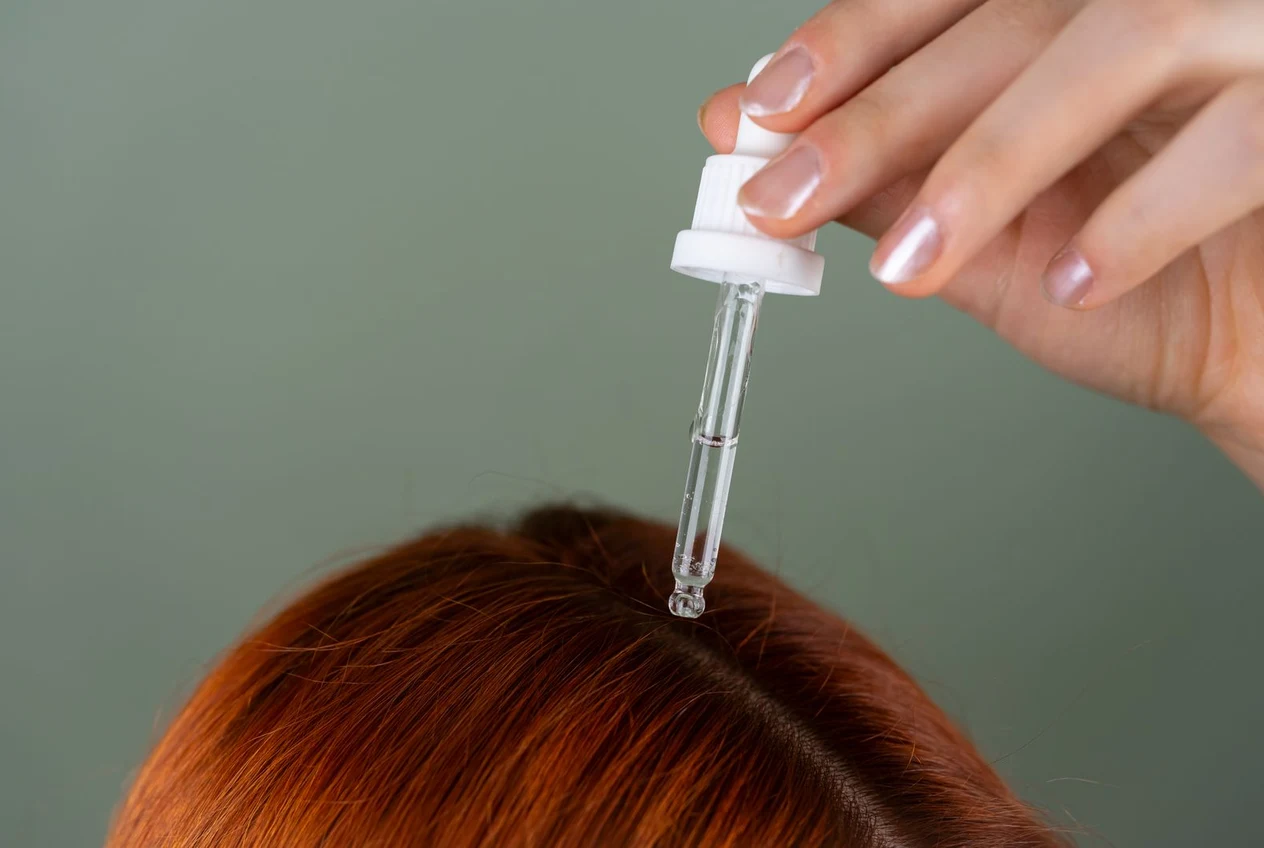
Follicular microenvironment modulation is emerging as a promising experimental strategy for pattern hair loss, but in 2026 the evidence base remains predominantly preclinical. New mouse, biomaterials, and TGF-β/BMP signaling studies strengthen the biological rationale, while real-world clinical management still depends on therapies supported by more direct human data.
Introduction
Pattern hair loss, encompassing male androgenetic alopecia and female pattern hair loss, remains one of the most common causes of progressive hair thinning. In routine care, treatment still relies mainly on approaches supported by direct human evidence: hormonal modulation, prolongation of anagen, cosmetic measures, and in selected cases hair restoration surgery. Recent literature, however, increasingly points to a more integrative biological level: the follicular microenvironment. The idea is that the hair follicle does not function in isolation, but within a complex tissue niche composed of dermal papilla cells, bulge stem cells, perifollicular fibroblasts, extracellular matrix, vascular and neural inputs, immune cells, and molecular signals that shape growth, quiescence, and stress responses [1][4][5].
Based on the 2026 literature, modulation of the follicular microenvironment should be viewed as an emerging and predominantly preclinical strategy. The biological rationale is compelling, but most available evidence comes from mouse models, mechanistic studies, and early bioengineering platforms rather than robust clinical trials in patients with pattern hair loss [1][4][5]. Its current value is therefore translational and hypothesis-generating, not that of an established therapeutic standard.
What is the follicular microenvironment?
The follicular microenvironment can be defined as the local ecosystem that sustains hair follicle homeostasis. It includes keratinocytes, epithelial stem cells, dermal papilla cells, fibroblasts, immune components, blood vessels, nerve endings, and a network of paracrine mediators. Among the pathways highlighted in recent work are TGF-β and BMP, both involved in quiescence, cyclic activation, differentiation, and adaptation to stress [5].
This framework matters clinically because pattern hair loss is unlikely to be explained by androgens alone. Androgens remain central to progressive follicular miniaturization in predisposed individuals, but clinical variability suggests that the local environment modulates how strongly that androgenic signal is translated into tissue-level change. In women with female pattern hair loss, a 24-month single-center retrospective comparative study found clinical utility for both spironolactone and bicalutamide, reinforcing that hormonal mechanisms remain highly relevant in current treatment practice [2]. Interest in the microenvironment therefore does not replace the androgen-centered model; rather, it may help explain why similar hormonal exposure can produce different degrees of miniaturization, perifollicular inflammation, and regenerative reserve.
New preclinical evidence in 2026
One of the most notable advances is a DHT-treated mouse model in which tolerogenic dendritic cell-conditioned medium promoted hair growth by modulating the follicular microenvironment [1]. This is important because it shifts attention from the isolated follicular cell toward local immune regulation. Conceptually, it suggests that a tolerogenic immune signal may help create a niche more permissive for sustained hair growth [1]. At the same time, it remains animal evidence and cannot be interpreted as direct proof of efficacy in human androgenetic alopecia.
Another relevant line of research comes from regenerative medicine. A two-layer electrospun nanofibrous mat loaded with chitosan nanoparticles, growth factors, and hair follicle bulge stem cells promoted wound healing in rats [4]. Although the primary endpoint was not pattern hair loss, the study is still meaningful for this field because it demonstrates the feasibility of building bioactive platforms that organize cells, signals, and structural support around follicular units [4]. From a microenvironment perspective, such systems raise the possibility of future strategies designed to restore depleted or dysfunctional follicular niches.
A further experimental study evaluated an EGCG-Biotin-Pal-GHK composition that modulated TGF-β and BMP pathways in the scalp microenvironment for stress-induced alopecia [5]. Its significance lies in identifying plausible signaling targets within the follicular niche beyond the classic androgen axis. Still, this work addressed stress-induced alopecia, and by itself does not establish effectiveness in pattern hair loss [5].
What these findings mean for pattern hair loss
Taken together, these studies support a coherent hypothesis: the miniaturized follicle may reflect not only androgen signaling, but also a disturbed microenvironment characterized by immune dysregulation, maladaptive differentiation cues, tissue stress, and insufficient trophic support [1][4][5]. That hypothesis fits the clinical heterogeneity of pattern hair loss and the observation that some patients respond only partially to hormonal or growth-promoting therapies.
However, a biologically persuasive hypothesis is not the same as a validated treatment. As of 2026, there are no robust clinical trials showing that targeted modulation of the follicular microenvironment is a standard therapy for pattern hair loss [1][4][5]. The practical interpretation should therefore remain cautious: this is currently a promising research direction, not an established intervention.
Relationship to current clinical therapies
Recent human evidence still favors more familiar clinical approaches. In female pattern hair loss, the spironolactone versus bicalutamide comparative study provides useful real-world effectiveness and safety data over 24 months, although its retrospective design limits causal inference [2]. In male androgenetic alopecia, a study of local pharmacokinetics and tolerability evaluated topically applied bimatoprost to the scalp, adding early information about local exposure and tolerability but not, on its own, defining a new standard of care [7].
These publications are instructive because they underscore what is required for clinical translation: safety characterization, dosing data, reproducible patient-centered outcomes, and comparison with existing therapies [2][7]. Follicular microenvironment modulation has not yet met that threshold.
Assessment, quality of life, and supportive care
Although not focused on pattern hair loss, several 2026 publications are relevant to how the field should evolve methodologically. A consensus-based treatment algorithm for alopecia areata integrated disease severity, quality of life, and disease dynamics, highlighting that hair disorders should not be assessed by hair counts alone, but also by functional and psychosocial burden [6]. In parallel, artificial intelligence-based 3D assessment in alopecia areata illustrates how more objective quantification could strengthen response measurement in future hair-loss trials [8].
In addition, a narrative review of global cranial prosthesis policies for medical hair loss reminds clinicians that comprehensive management extends beyond molecular biology. Access to prosthetic options also affects quality of life and care equity [3]. While that review is not a therapeutic study of pattern hair loss, it contributes an important public-health perspective for patients with clinically significant hair loss [3].
Limitations and future directions
The main limitation of this area is the gap between biological sophistication and clinical validation. Available studies are heterogeneous in model, purpose, and outcomes, and several address adjacent conditions rather than pattern hair loss strictly defined, even if they remain informative for understanding the follicular niche [1][4][5]. It is still unclear which component of the microenvironment should be targeted, in which patients, with which biomarkers, and by what delivery route.
Future priorities likely include local immunomodulation, biomaterials capable of restoring follicular niche architecture, more precise tuning of TGF-β/BMP signaling, and objective digital outcome tools [1][4][5][8]. Until well-designed human studies become available, modulation of the follicular microenvironment should be described rigorously as an experimental strategy with high translational interest.
Conclusion
The 2026 update confirms that the follicular microenvironment is a key concept for understanding hair biology and the complexity of pattern hair loss. New studies strengthen the plausibility of targeting immune signals, bioactive matrices, and TGF-β/BMP pathways to create a more growth-permissive follicular niche [1][4][5]. Even so, the evidence remains predominantly preclinical. In practice, therapies supported by direct human data still occupy the foreground, while follicular microenvironment modulation remains a promising but not yet established path [2][7].
References
[1] . Tolerogenic dendritic cell-conditioned medium promotes hair growth by modulating follicular microenvironment in a DHT-treated mouse model. Molecular and cellular biochemistry (2026). https://pubmed.ncbi.nlm.nih.gov/42579087/ [2] . Spironolactone versus Bicalutamide for Female Pattern Hair Loss: A 24-Month Unicenter Retrospective Comparative Study of Effectiveness and Safety. Dermatology and therapy (2026). https://pubmed.ncbi.nlm.nih.gov/42565959/ [3] Anaeme A, Lu J, Mann C. Global landscape of cranial prosthesis policies for medical hair loss: a narrative review. Frontiers in public health (2026). https://pubmed.ncbi.nlm.nih.gov/42529207/ [4] . Two-layered electrospun nanofibrous mat loaded chitosan nanoparticles, growth factors and hair follicle bulge stem cells can promote wound healing in rat. Regenerative medicine (2026). https://pubmed.ncbi.nlm.nih.gov/42549962/ [5] . EGCG-Biotin-Pal-GHK Composition Modulates TGF-β and BMP Pathways in Scalp Microenvironment for Treating Stress-Induced Alopecia. European journal of pharmacology (2026). https://pubmed.ncbi.nlm.nih.gov/42575238/ [6] Lynde CW, Guenther L, Andriessen A, Hanna S. A consensus-based treatment algorithm for alopecia areata in adolescents and adults: integrating severity, quality of life, and disease dynamics. Frontiers in medicine (2026). https://pubmed.ncbi.nlm.nih.gov/42529768/ [7] . Local Pharmacokinetics and Tolerability of Topically-Applied Bimatoprost to the Scalp of Male Patients With Androgenetic Alopecia. Clinical and translational science (2026). https://pubmed.ncbi.nlm.nih.gov/42631654/ [8] . Artificial Intelligence-based 3D Assessment of Alopecia Areata Using Clinical Photographs. Journal of the American Academy of Dermatology (2026). https://pubmed.ncbi.nlm.nih.gov/42632516/
References
- Tolerogenic dendritic cell-conditioned medium promotes hair growth by modulating follicular microenvironment in a DHT-treated mouse model.Source
- Spironolactone versus Bicalutamide for Female Pattern Hair Loss: A 24-Month Unicenter Retrospective Comparative Study of Effectiveness and Safety.Source
- Global landscape of cranial prosthesis policies for medical hair loss: a narrative review.Source
- Two-layered electrospun nanofibrous mat loaded chitosan nanoparticles, growth factors and hair follicle bulge stem cells can promote wound healing in rat.Source
- EGCG-Biotin-Pal-GHK Composition Modulates TGF-β and BMP Pathways in Scalp Microenvironment for Treating Stress-Induced Alopecia.Source
- A consensus-based treatment algorithm for alopecia areata in adolescents and adults: integrating severity, quality of life, and disease dynamics.Source
- Local Pharmacokinetics and Tolerability of Topically-Applied Bimatoprost to the Scalp of Male Patients With Androgenetic Alopecia.Source
- Artificial Intelligence-based 3D Assessment of Alopecia Areata Using Clinical Photographs.Source